On April 15, 1945, the Bergen-Belsen concentration camp was liberated.
Categories
Bergen-Belsen Liberated
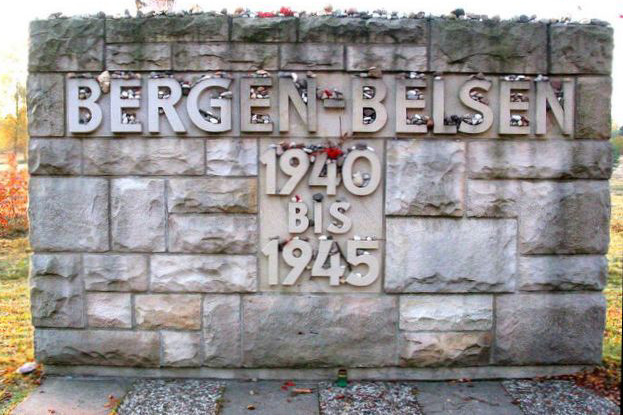
On April 15, 1945, the Bergen-Belsen concentration camp was liberated.

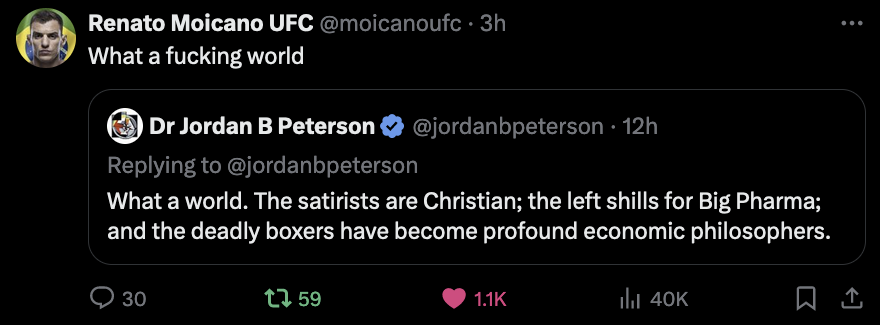
“I love America. I love the Constitution. I love the First Amendment. I want to carry . . . fucking guns. I love private property. And let me tell something: if you care about your fucking country, read Ludwig von Mises and the Six Lessons of the Austrian Economic School, motherfuckers.”
This rant by Brazilian fighter Renato Moicano, after a UFC victory, Joe Rogan in the ring officiating, went viral this weekend. But what does the fighter mean? What are the “six lessons” that Mises listed? Mises wrote a lot, after all.
A lot more than six lessons!
Turns out, “Money Moicano” is referring to the short book Ludwig von Mises wrote that is entitled, in America, Economic Policy. The book consists of six lectures, which is why, in Brazil, the book is called Six Lessons:
The lessons of each section could be listed like this:
Moicano’s rant has conjured up quite a bit of interest and appreciation:
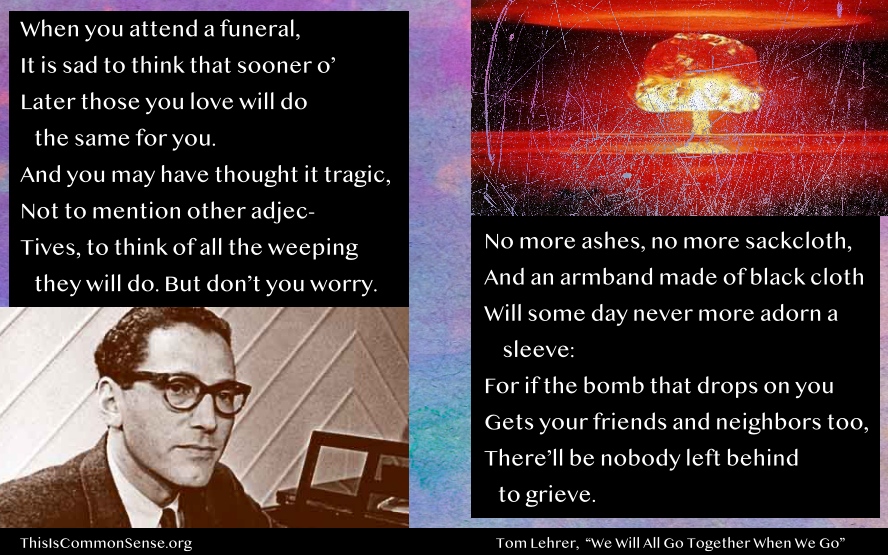
When you attend a funeral,
It is sad to think that sooner o’
Later those you love will do the same for you.
And you may have thought it tragic,
Not to mention other adjec-
Tives, to think ofall the weeping they will do. But don’t you worry.No more ashes, no more sackcloth,
Tom Lehrer, beginning of the song “We Will All Go Together When We Go,” An Evening (Wasted) With Tom Lehrer (1959), track 2.
And an armband made of black cloth
Will some day never more adorn a sleeve:
For if the bomb that drops on you
Gets your friends and neighbors too,
There’ll be nobody left behind to grieve.
On April 14, 1775, the Society for the Relief of Free Negroes Unlawfully Held in Bondage, the first American organization committed to the abolition of slavery, was formed in Philadelphia.
On April 14, 1818, Noah Webster published his American Dictionary of the English Language, one of the first lexicons to include distinctly American words. The dictionary, which took him more than two decades to compile, introduced more than 10,000 “Americanisms.”
On April 14, 1988, representatives of the Soviet Union, Afghanistan, the United States, and Pakistan signed an agreement calling for the withdrawal of Soviet forces from Afghanistan. In exchange for an end to the disputed Soviet occupation, the United States agreed to end its arms support for the Afghan anti-Soviet factions, and Afghanistan and Pakistan agreed not to interfere in each other’s affairs.

“At least 15 federal agencies knew from the beginning of the pandemic that EcoHealth Alliance and the Wuhan Institute of Virology were seeking federal funding in 2018 to create a virus genetically very similar if not identical to COVID-19,” informs Senator Rand Paul (R-Ky.) “Disturbingly, not one of these 15 agencies spoke up to warn us that the Wuhan Institute of Virology had been pitching this research.”
According to information on the U.S. Senate’s Homeland Security page, foreknowledge of the gain-of-function research program that led to the development of SARS-Cov-2 may have been rather widespread:
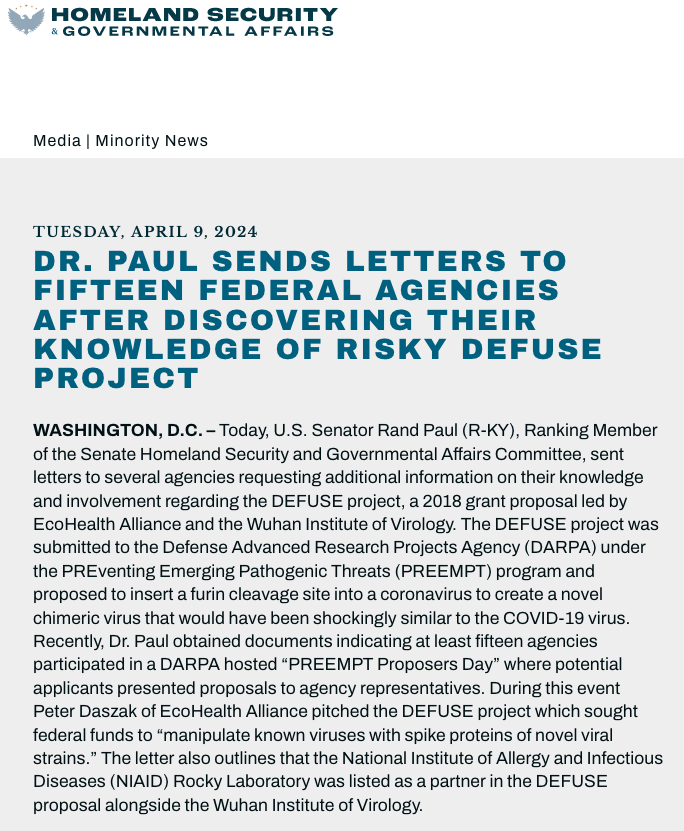
“Despite at least fifteen federal agencies having knowledge of the DEFUSE project in 2018,” the page continues, “its existence was not revealed to the public until 2021 and the involvement of NIH Rocky Mountain Lab in the initial proposal has never been previously disclosed. Dr. Paul expressed that the failure of these agencies to disclose their awareness of the risky research proposed in the DEFUSE project raises serious concerns.”
This reminds Common Sense of a catchphrase of the Watergate era: “What did the president know, and when did he know it?” But in 2020, the U.S. President was kept in the dark about the origin of the novel coronavirus — as was the American public. But a whole lot of members of the Administrative State knew a whole lot that they did not let on.
Who knew about the U.S.-subsidized origin of the Wuhan Institute-created virus, and when did they know it?

Past coverage of the origin of the “novel coronavirus” here at Common Sense is extensive, but these four articles might be a place to start:
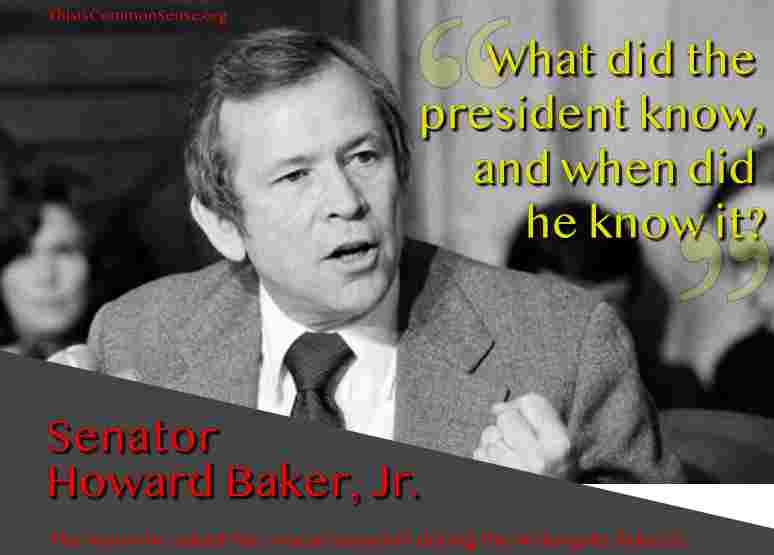
What did the president know, and when did he know it?
Senator Baker’s key question in the Watergate scandal.
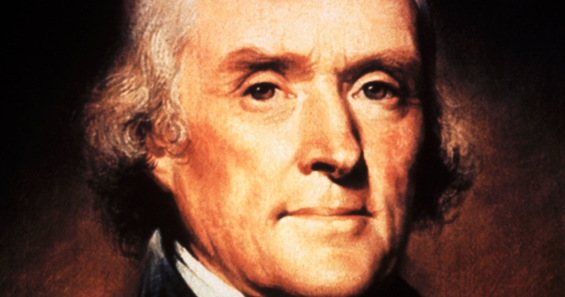
On April 13, 1743, Thomas Jefferson was born. Author of Notes on the State of Virginia and the first draft of the United States’ Declaration of Independence, Jefferson was also a scientist, philosopher, inventor, diplomat, and American politician. He also composed music, designed buildings, and translated works from his favorite French writers, whom he had met in his diplomatic missions to Paris: Volney and de Tracy.
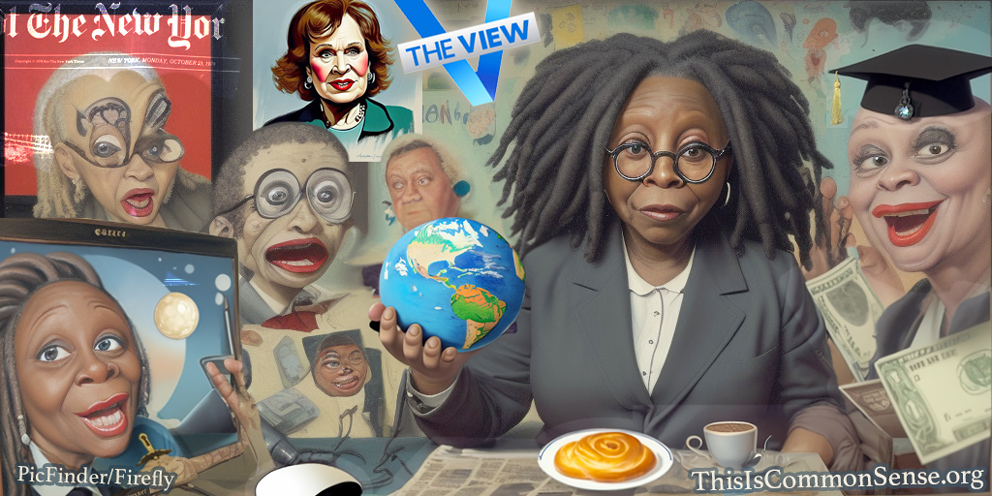
I’m not sure. She sure seemed to be saying that the recent eclipse and climate change were integrally related.
But the banter of the women was so light-hearted that maybe we shouldn’t hold her to
Besides, Whoopi was there to provide rational pedantry — no matter how inaccurate she was. (Contra Ms. Goldberg, there are thousands of cicada species, and you may respectably pronounce the word in a variety of ways). It could be that Sunny was merely trying to be funny about the Sun.
As the man said at the end of Chinatown, “Forget it, it’s
But how hopeless was Rep. Sheila Jackson Lee’s little lecture to the students at Booker T. Washington High School? She was instructing the students and taking credit for their “opportunity” to go outside and see
“A Full Moon is that complete, rounded circle which is made up mostly of gases,” she mis-explained, “and that’s why the question is why or how could we as humans live on the Moon? Are the gases such that we could
Well, no, the Moon is not mostly composed of gases. It possesses the scantest of atmospheres, but does have water — or so I last read.
Even eclipsing The View, sending embarrassing, ultra-ignorant politicians to teach astronomy in the inner cities
This is Common Sense. I’m Paul Jacob.
Illustration created with PicFinder and Firefly
See all recent commentary
(simplified and organized)
See recent popular posts
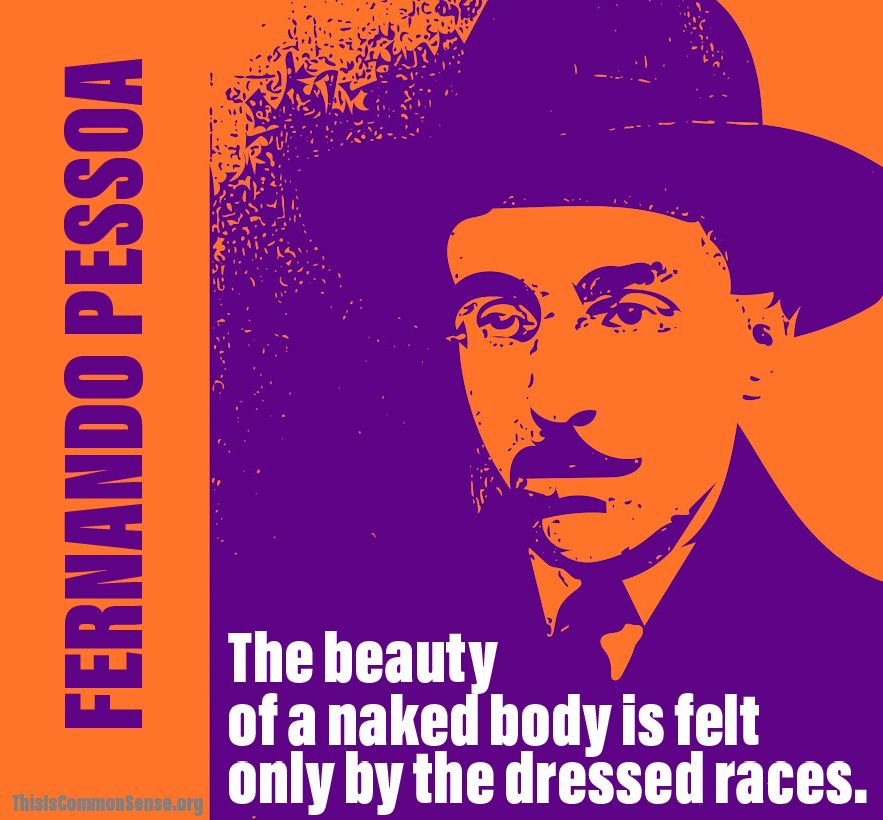
A beleza de um corpo nu só o sentem as raças vestidas.
The beauty of a naked body is felt only by the dressed races.
Fernando Pessoa, The Book of Disquiet (1982), trans. Richard Zenith.
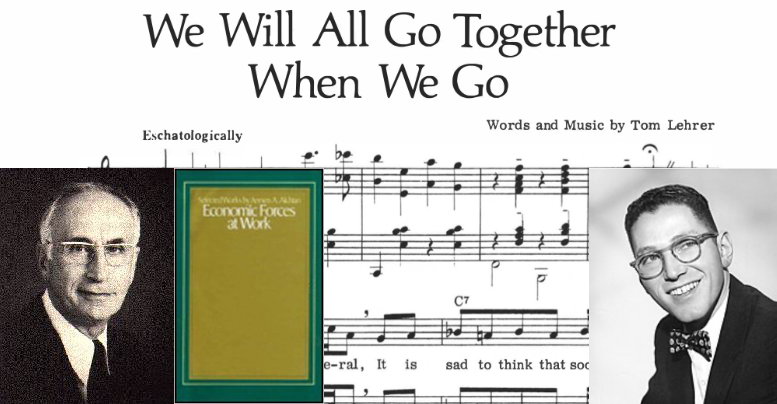
On April 12, 1914, American economist Armen Alchian was born. His contributions to economic theory and teaching were many and varied — his textbook, co-authored with William R. Allen, University Economics (also titled Exchange and Production), was widely considered one of the finest intermediate texts in microeconomics — but he remains perhaps best known for his work on property rights.
Alchian died in 2014, in late February, at the age of 99.
Fourteen years later, on April 9, 1928, American mathematician, singer-songwriter, satirist, and pianist Tom Lehrer was born. He is best known for the pithy, humorous songs he recorded in the 1950s and ’60s, often parodying popular song forms, though he usually created original melodies when doing so. Standouts in black humor as in “I Hold Your Hand in Mine,” “The Irish Ballad,” and “Poisoning Pigeons in the Park” vie for fan attention with songs dealing with social and political issues of the day, particularly when he wrote for the U.S. version of the television show That Was the Week That Was. These latter included “Pollution,” “We Will All Go Together When We Go” (a rousing nuclear Armageddon anthem), “Werner von Braun” (an arch look at America’s paperclip hero), and “The Vatican Rag” (memorializing Vatican III reforms).
In October and November of 2020, Mr. Lehrer relinquished all his musical works into the public domain. See his still-existing website Tom Lehrer Songs.