The dead might as well try to speak to the living as the old to the young.
Willa Cather, One of Ours (1922).
Categories
Willa Cather
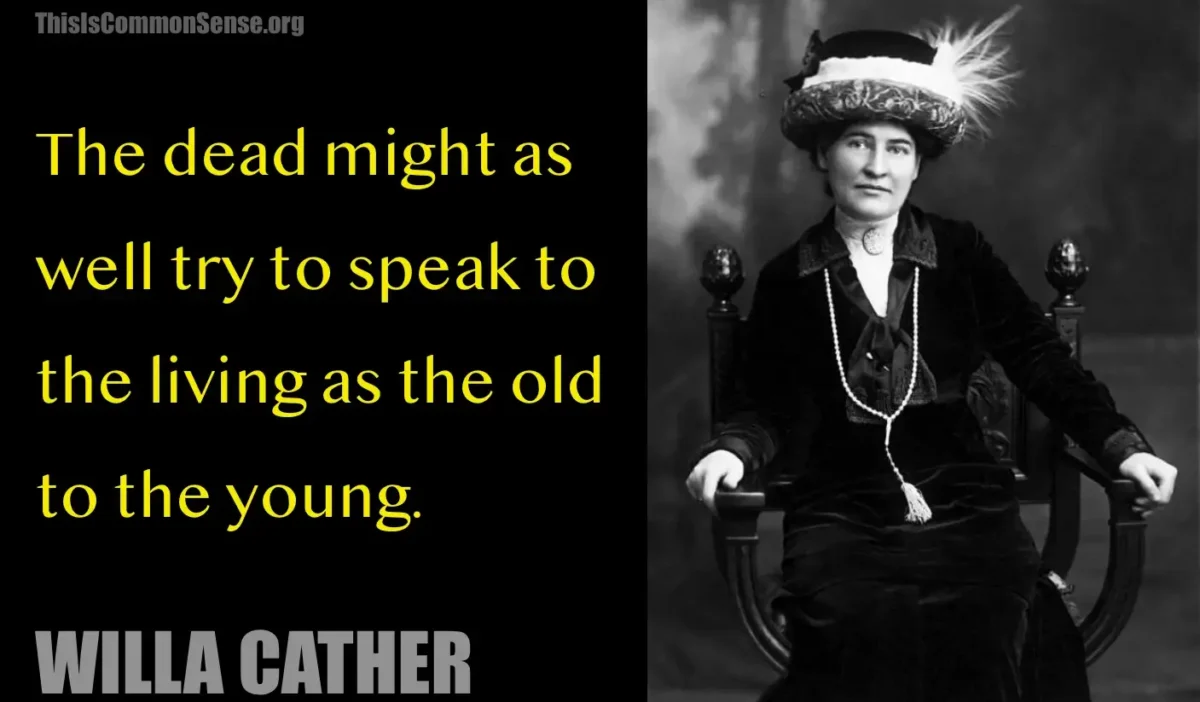
The dead might as well try to speak to the living as the old to the young.
Willa Cather, One of Ours (1922).

February 26th marks the Dominican Republic’s Independence Day.

At issue? The president’s authority to impose tariffs, or alter them. Donald Trump — a life-long tariff proponent — took the International Emergency Economic Powers Act (IEEPA) as an excuse to levy broad new duties on imports from multiple countries. That act delegated to the executive the power to use tariffs as emergency foreign policy measures.
On February 20, the majority on the court gave a decisive No to the President’s use of IEEPA to impose tariffs.*
I generally oppose Congress delegating powers to the executive branch and support free trade. But what does the Constitution actually say? Could dissenters Kavanaugh, Thomas and Alito have a point?
Kavanaugh’s humungous written opinion claims that tariffs are a traditional, common, and lawful means of “regulat[ing] . . . importation” in foreign-policy crises; he says the majority’s narrow reading ignores text, history, precedent, and the special deference due the President in external affairs. “The text of IEEPA authorizes the President to regulate importation,” explains Kavanaugh, “and tariffs are a means of doing so.”
Thomas stresses that IEEPA’s emergency-declaration process provides political accountability, so judicial second-guessing is unwarranted. Further, he argues that from the Founding, “regulate importation” has always included duties; early Congresses and Presidents (Monroe, Jackson, etc.) routinely delegated and adjusted tariffs. While matters of rights cannot be delegated, Thomas argues that privileges can, and have, and that this has long been recognized in constitutional law.
The key question, as Kavanaugh advances, is the balance of power. “Congress retains the ultimate authority to clarify, amend, or repeal IEEPA,” he reasonably asserts, “if it believes the President’s exercise of emergency powers has gone too far.”
This issue became a federal court case because Congress is dysfunctional.
Which puts the issue back in our lap. Where voters can have some control. How? Through elections, pressure, or pushing . . . term limits.
This is Common Sense. I’m Paul Jacob.
* Other avenues may remain open. And Trump is jumping on them.
Illustration created with Nano Banana
See all recent commentary
(simplified and organized)
See recent popular posts
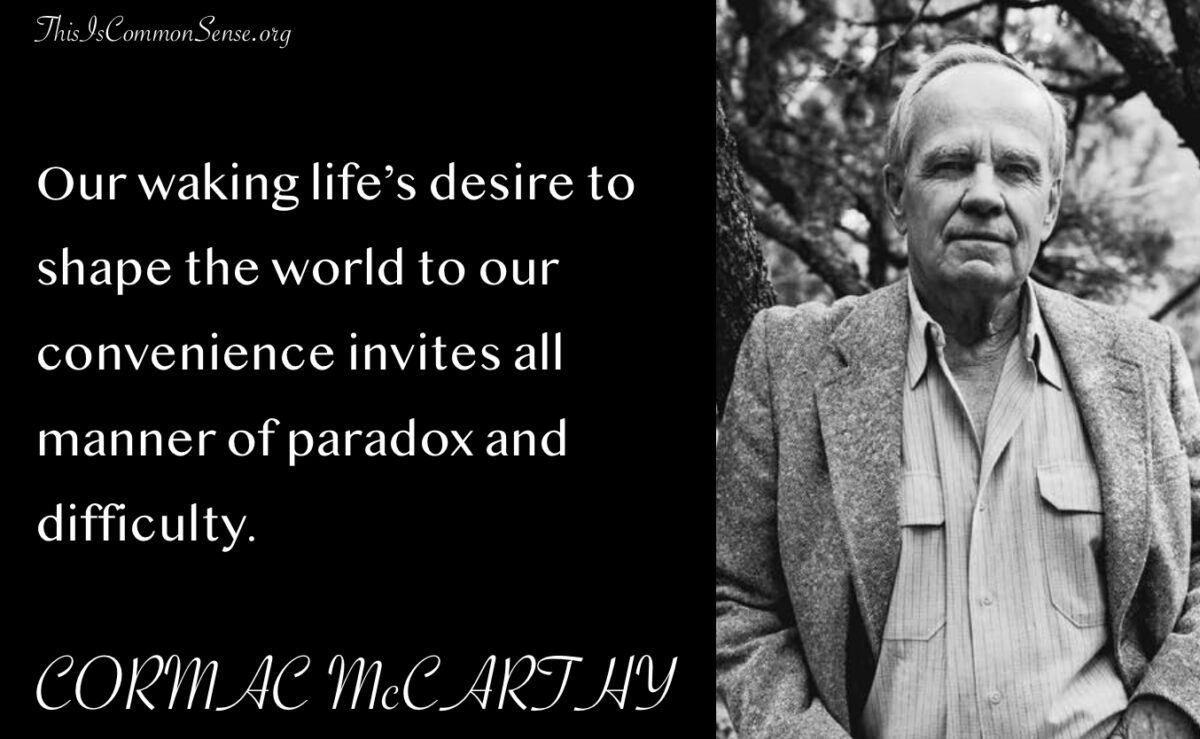
Our waking life’s desire to shape the world to our convenience invites all manner of paradox and difficulty.
Cormac McCarthy, Cities of the Plain (1998).
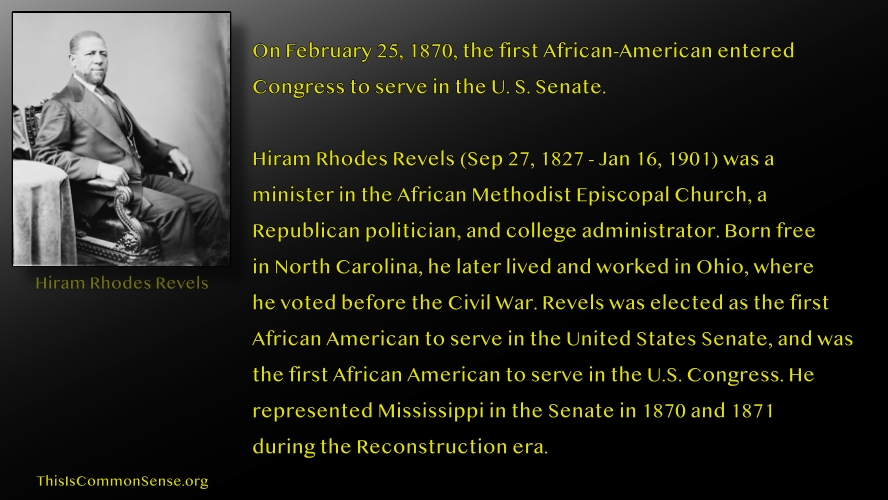
On February 25, 1870, the first African-American entered Congress to serve in the U. S. Senate.
Hiram Rhodes Revels (Sep 27, 1827 – Jan 16, 1901) was a minister in the African Methodist Episcopal Church, a Republican politician, and college administrator. Born free in North Carolina, he later lived and worked in Ohio, where he voted before the Civil War. Revels (pictured above) was elected as the first African American to serve in the United States Senate, and was the first African American to serve in the U.S. Congress. He represented Mississippi in the Senate in 1870 and 1871 during the Reconstruction era.

Patrick Hall was the government agent who whipped out his badge on a couple of Arkansans. Why? They had been wantonly using their First Amendment rights to petition their government last week outside Little Rock’s Unitarian Universalist Church.
“I did feel a little bit intimidated,” volunteer petitioner Julie Taylor acknowledged, after being questioned and ID’d by Barney Fife — er, Mr. Hall.
Samantha Boyd, a spokesperson for the secretary of state’s office, confirmed that Hall had stopped the petition circulators, demanding and photographing their IDs.
“Our office would like to emphasize that no one is ever required to provide proof of identification or engage with our employees,” she said, defending his actions, “it is voluntary,”
She further explained that Hall’s was a “non-law enforcement position created to organize any reports of petition fraud.” So, why brandish the badge? And what reports did he hope to “organize” by playing cop?
Amusingly, one of Officer Hall’s questions regarded whether Taylor needed to check his ID to collect his signature on her two petitions. While a statute requiring petitioners to view the government ID of every would-be petition signer had passed Arkansas’s legislature, it was recently blocked by a federal judge because it “likely infringed on First Amendment rights.”
So, here is Secretary of State Cole Jester’s office using a pretend policeman to harass citizens engaged in First Amendment activity in order to push compliance with a law that has been enjoined for its obvious unconstitutionality.
One of the petitions Taylor was carrying “would give citizens a fundamental right to sign and circulate petitions,” and — as the organization that sponsored it (Protect AR Rights) puts it — “protect the process from irregular, unauthorized, or politically motivated interference.”
Viva la initiative!
This is Common Sense. I’m Paul Jacob.
Illustration created with Nano Banana
See all recent commentary
(simplified and organized)
See recent popular posts

I favor the policy of economy, not because I wish to save money, but because I wish to save people. The men and women of this country who toil are the ones who bear the cost of the Government. Every dollar that we carelessly waste means that their life will be so much the more meager. Every dollar that we prudently save means that their life will be so much the more abundant. Economy is idealism in its most practical form.
Calvin Coolidge, Calvin Coolidge, Inaugural Address (March 4,1925).

On February 24, 1803, the Supreme Court, in Marbury v. Madison, established the principle of judicial review. William Marbury was a businessman appointed as a “midnight judge” by lame duck president John Adams. He became the plaintiff in Marbury v. Madison.
On February 24, 1917, United States ambassador to the United Kingdom, Walter Hines Page, was shown the intercepted Zimmermann Telegram, in which Germany offered to give the American Southwest back to Mexico were Mexico to declare war on the United States.
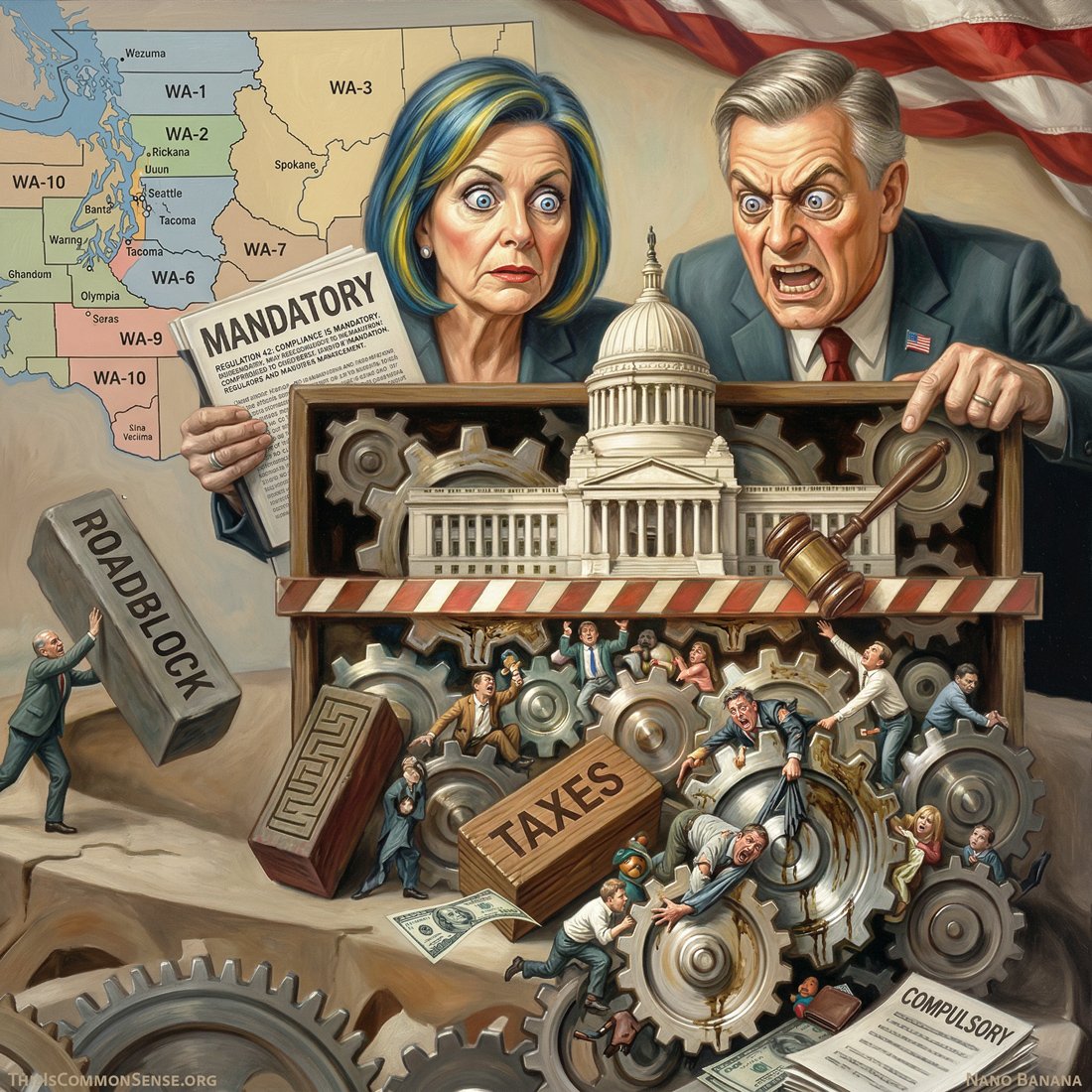
Who’s the “they”? Democrats running the State legislature, who had, Eyman says, been “pushing this thing really hard this session.”
But they gave up. The opposition to the bill was just too strong. Democrats let it die before the scheduled vote on the Senate floor.
So what was wrong with the bill?
“SB 5973 would have required a minimum of 1,000 signatures to be submitted to the Secretary of State from those who support the measure, before the issue is given an official title and signature gathering can begin to ensure ‘viability’ of the issue,” explains Carleen Johnson of The Center Square. It would “also have banned the practice of paying signature gatherers for the number of signatures they acquire.”
It was, as opponents called it, an “initiative killer.” You can see why fighting the bill was so important.
And remember, “initiative killers” are everywhere — at least everywhere initiative and referendum rights are in place.
Politicians, who allegedly serve citizens, don’t like it when citizens work around their machinations. So they regularly throw up roadblocks to the initiative process — anything to make it harder for citizens to limit their incessant lust for more taxes, terms of office, etc.
Citizen activists all across the country have their work cut out for them. But, until the next major legislative attack (tomorrow): celebrate!
And don’t forget to thank Tim Eyman and other Washington activists for stepping up to defend everyone’s rights.
This is Common Sense. I’m Paul Jacob.
Illustration created with Nano Banana
See all recent commentary
(simplified and organized)
See recent popular posts
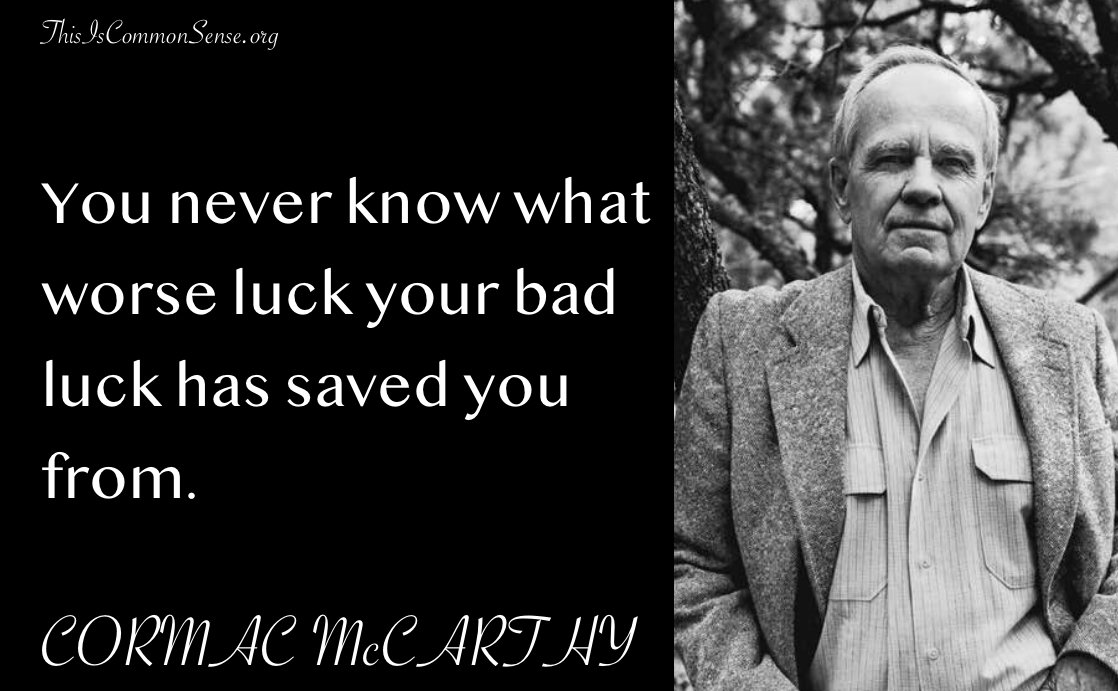
You never know what worse luck your bad luck has saved you from.
Cormac McCarthy, No Country for Old Men (2005).