Has it ever struck you that there’s a thin man inside every fat man, just as they say there’s a statue inside every block of stone?
George Orwell, Coming Up for Air (1939), Part 1, Ch. 3.
Categories
George Orwell
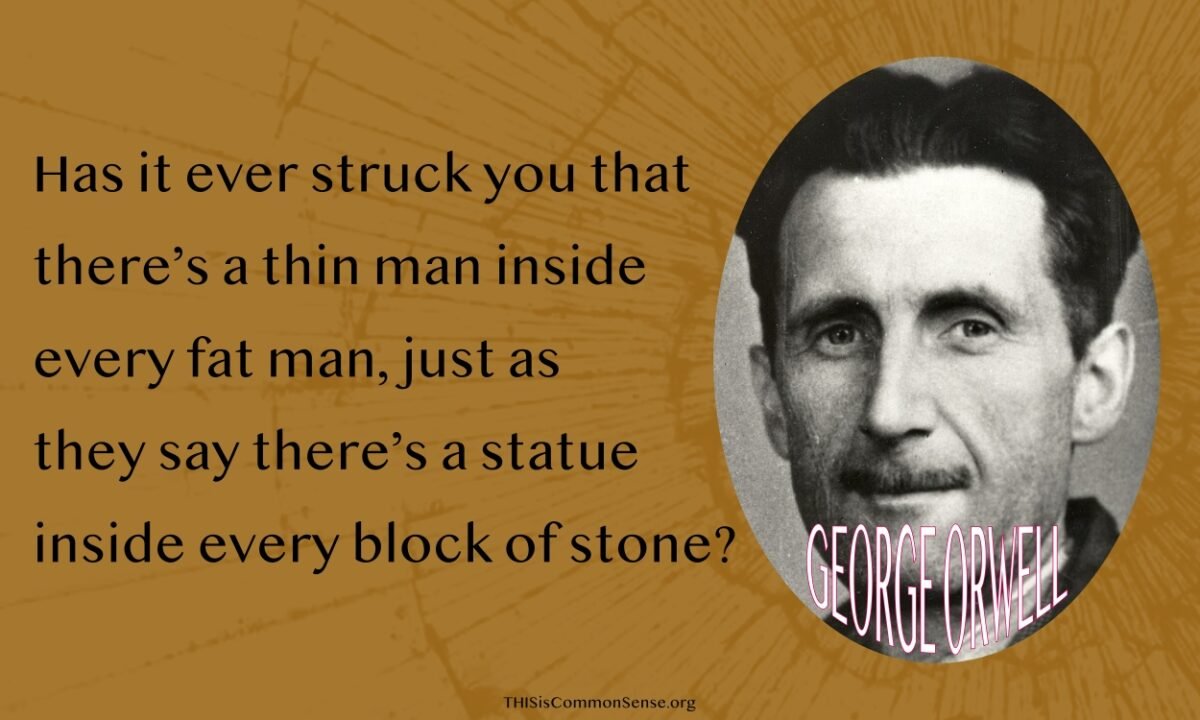
Has it ever struck you that there’s a thin man inside every fat man, just as they say there’s a statue inside every block of stone?
George Orwell, Coming Up for Air (1939), Part 1, Ch. 3.
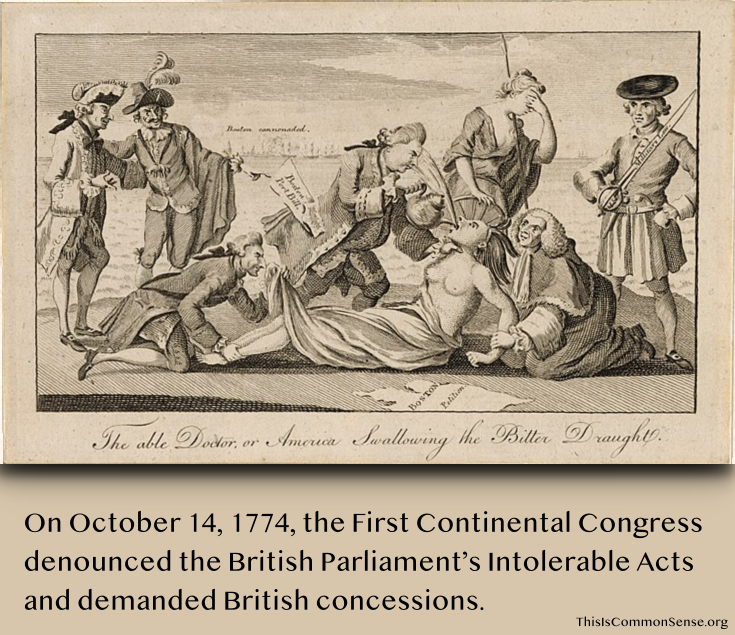
On October 14, 1774, the First Continental Congress denounced the British Parliament’s Intolerable Acts and demanded British concessions.
Called the “Coercive Acts” in Great Britain, the Intolerable Acts were a series of five punitive programs directed against the American colonies after the Boston Tea Party. Opposition to them led to armed conflict in April 1775 and to a Declaration of Independence in July 1776.

A month later, I called the Flock camera/a.i. system a big move towards a “total roadway surveillance state,” and noted the hypocrisy of employees of Flock Safety (the company that sells the scheme to local governments) objecting to being surveilled by citizen activists: “While we say that ‘it’s only a conspiracy if they do it in secret,’ what is it when the people who seek to destroy the last vestiges of our privacy demand their own privacy even as they plot against us?”
On Sunday, the story received a major update: A court in Oklahoma ruled against the use of Flock cameras by the police on the grounds of the Fourth Amendment.
Meanwhile, the monkey-wrenching by disgruntled citizens of the spy cameras is real, geographically dispersed, and increasingly resulting in arrests and felony charges — while simultaneously being celebrated in some online communities.
One hates to see law-breaking and property damage, but governments that choose to defy the American tradition against unreasonable searches should expect some Tea
And then there is the aptly named Will Freeman, a Colorado-based software engineer and privacy advocate. He founded DeFlock in October 2024. Freeman had noticed cameras on his drive from Washington to Huntsville, Alabama, and started mapping them himself. Leveraging open-source mapping technology, his effort expanded nationally and then globally. It’s become huge. And has expanded beyond Freeman’s own control.
You can get a good idea of the state of the resistance by going to deflock.org and deflocktheusa.com.
I am not telling you to do anything illegal. I merely note that finding out where the cameras are in your driving range gives
Like knowing to which government you should direct
And avoiding being spied upon.
This is Common Sense. I’m Paul Jacob.
Illustration created with Nano Banana
See all recent commentary
(simplified and organized)
See recent popular posts
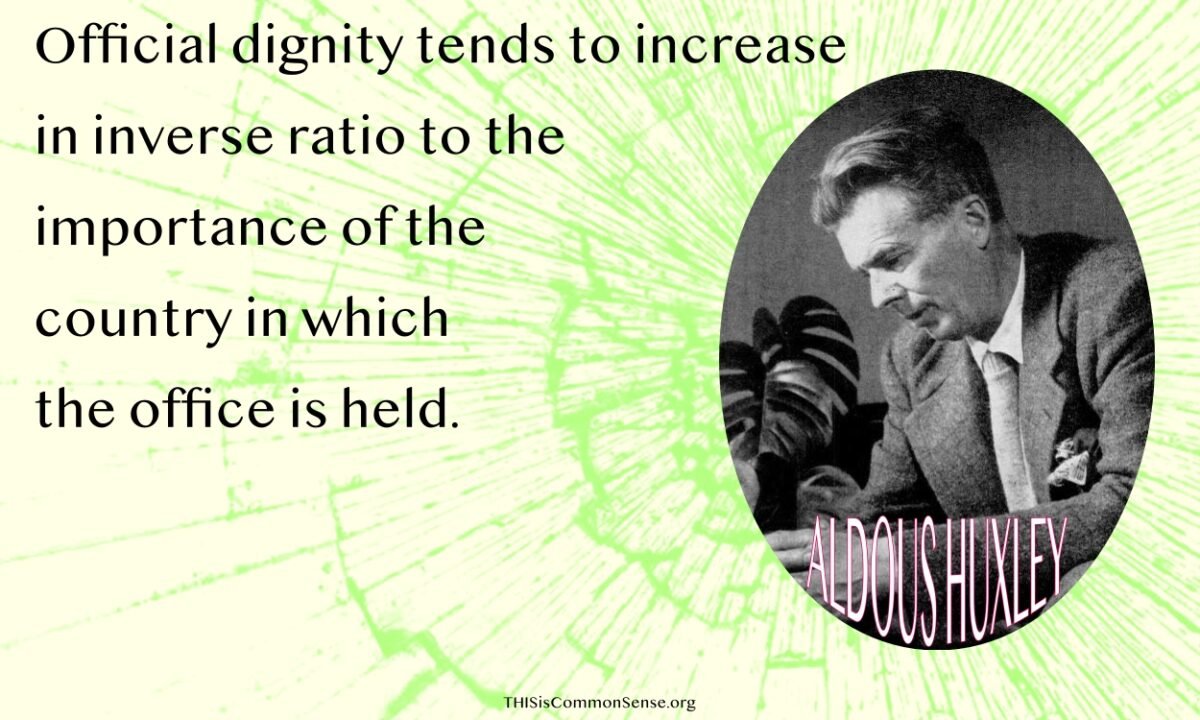
Official dignity tends to increase in inverse ratio to the importance of the country in which the office is held.
Aldous Huxley, Beyond the Mexique Bay (1934).

At dawn on Friday the 13th, in October of 1307 — a date that lent weight to triskaidekaphobia, the fear of the number 13 — King Philip IV ordered de Molay and scores of other French Templars to be simultaneously arrested. The arrest warrant started with the words: “Dieu n’est pas content, nous avons des ennemis de la foi dans le Royaume” — “God is not pleased. We have enemies of the faith in the kingdom.”
These “Poor Fellow-Soldiers of Christ and of the Temple of Solomon,” most commonly known as the Knights Templar, figure heavily in the literature of Grand Conspiracies, and in the lore of heresy and the occult.

“Here, in Athens, we found the first full realization of all the essential traits that would come to define the West: fierce individuality and relentless ambition; daring exploration and invention; a yearning for discovery, for adventure, risk and glory,” Rubio told his audience.
“The ideal of many ideologies in our time has, frankly, become a world of perfect safety, devoid of risk or failure, with neither the glory of victory nor the shame of defeat,” he said, adding that “we preoccupy ourselves more with the comfort of the worst than the potential of the best. We hold the most exceptional things among us hostage to the average, the ordinary, the mediocre.”
The Secretary refreshingly sounds a bit like Ayn Rand.
“Over time, we in the West came to feel ashamed of the very things that made us exceptional. We felt embarrassed that our achievements set us apart from the rest of the world. Our prosperity somehow became a source of guilt. . . . we condemned our own history. And in too many places, we taught our children to be ashamed of the countries they would inherit.”
Of course, one of our central tenets is the right, even duty, to criticize our government. But only a woeful lack of historical perspective or a perverse ideological malice (or both) allows some to pretend that ripping apart our society is a thoughtful critique.
Europe, Rubio urged, must “awaken from its long slumber and rekindle the fire that was lit here millennia ago.”
So, too, should America.
We must stand up for our core values. Or watch them expire.
This is Common Sense. I’m Paul Jacob.
Illustration created with Nano Banana
See all recent commentary
(simplified and organized)
See recent popular posts
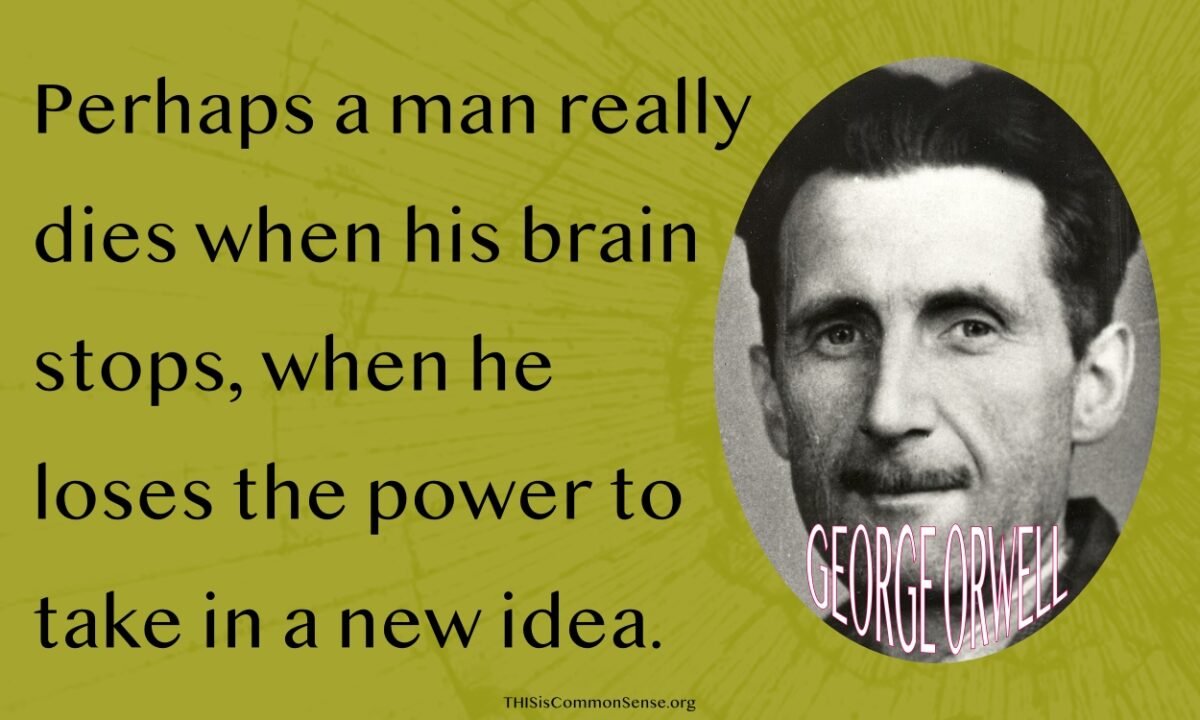
Perhaps a man really dies when his brain stops, when he loses the power to take in a new idea.
George Orwell, Coming Up for Air (1939), Part 3, Ch. 1.
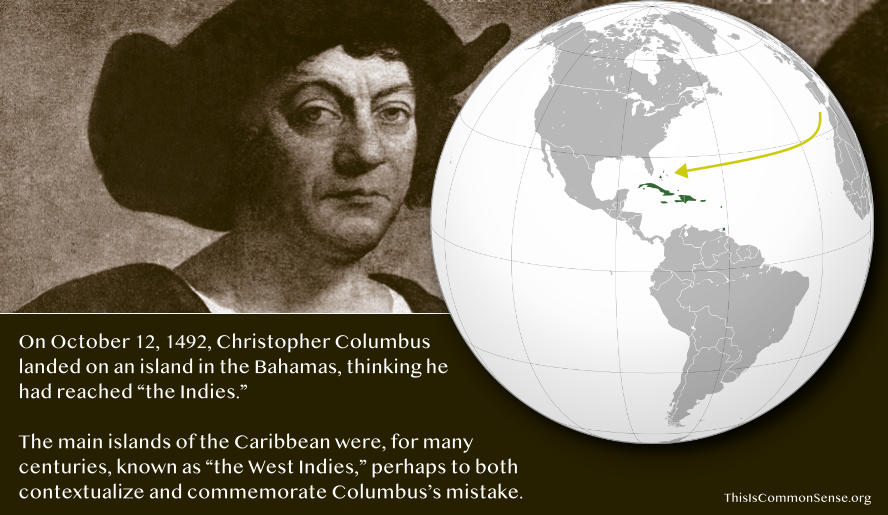
On October 12, 1492, Christopher Columbus landed on an island in the Bahamas, thinking he had reached “the Indies.”
The main islands of the Caribbean (south of the Bahamas) were, for many centuries, known as “the West Indies,” perhaps to both contextualize and commemorate Columbus’s mistake.

The case of U.S. v. Kyle, heard in the Northern District Court of Oklahoma, is a complicated one. But it has been decided. And the result is especially interesting: “ALPR technology comes with remarkable benefits that the Court cannot ignore. But the Fourth Amendment requires courts to draw a line when the cost is too great.”
Paul Jacob has written about the underlying issue before — most recently in August. “ALPR” tech stands for “Automatic License Plate Recognition” instrumentation, which translates, in the common tongue, to “Flock cameras” . . . and their linked a.i. systems. And U.S. v. Kyle has been decided for Ms. Kyle and against Flock:
[Officer] Alaniz’s search in just the ALPR system provided him with more than 50 individual records of [defendant Melisa Susan] Kyle’s whereabouts across the country for an entire month. The Court finds that because the ALPR systems Alaniz used to search Kyle’s historical location information intruded on her reasonable expectation of privacy in the whole of her physical movements, it was a search under the Fourth Amendment.
The upshot? “IT IS THEREFORE ORDERED that the Defendant’s Opposed Motion to Suppress [ECF No. 47] is GRANTED. . . .”
The Flock surveillance advance has received major pushback at last.

I can sympathize with people’s pains, but not with their pleasures. There is something curiously boring about somebody else’s happiness.
Aldous Huxley, “Cynthia,” Limbo (1920).