Categories
tax policy

Connecticutting The Dots

Connecticut used to be one of the go-to places for escaping state income taxes.

But in 1991, Governor Lowell Weicker hatched the novel idea of burdening Connecticut residents with the same direct tax on income with which Americans have been saddled in so many other states. Despite the deep unpopularity of his proposal, Weicker rammed it through. That meant sacrificing any chance at re-election. But he was hailed as a hero by all fans everywhere of government bloat and flattened economies.

The Constitution State has indeed suffered a flatter economy in the years since. The Yankee Institute points out that since 1992, Connecticut businesses have hired no new workers on net. Even as the country added more than 20 million jobs. Over the last decade, Connecticut suffered a net loss of some 113,000 residents. If your tax policies tell productive people to get lost . . . they do.

Connecting the dots between higher taxes and stalled growth may be easy for most graduates of Economics 101. Even most politicians probably grasp the connection. But many just don’t care.

In 1991, residents were told that the income tax burden would never exceed 4.5 percent. But in 2001, it jumped to 5 percent. Now the current governor, Jodi Rell, wants to hike the top rate to 6.5 percent.

What the . . . Rell? Folks aren’t leaving the state fast enough for you?

This is Common Sense. I’m Paul Jacob.

Categories
local leaders term limits

“A” For Effort

They don’t make it easy for citizen initiatives in Alaska.

According to state law, legislatures there are prohibited from repealing a successful initiative for two years. Two whole years. Whoo hoo! And that’s it. After this two-year moratorium, lawmakers can haul out the shredder.

In 2007, voters in Alaska’s Kenai Peninsula Borough passed a term limits measure that caps the tenure of the borough’s assembly members to two consecutive terms. The Alliance for Concerned Taxpayers gathered signatures to put the measure on the ballot.

For some strange reason, the Alliance doesn’t trust incumbent lawmakers in the borough to leave the term limits on themselves alone. They’re not the trusting type, I guess. But these term limits activists are not just wringing their hands and wailing, “Oh, I sure hope those incumbent lawmakers leave the term limits alone!”

Instead, two years after 2007, Alliance members have been out gathering signatures to put the same term limits measure back on the ballot.

Mike McBride, a spokesman for the group, says it’s easy as pie to get the signatures. “The public wants term limits, that’s the bottom line. . . . It’s a real popular idea.”

McBride says if the group has to go out and gather signatures every two years to keep term limits in place, they will. Good for them.

This is Common Sense. I’m Paul Jacob.
Categories
free trade & free markets national politics & policies too much government

The Wrong Job

I’ve criticized the cash-for-clunkers program; I’ve argued against the notion that government should spend our tax dollars to create jobs.

Now the two come together. The National Highway Traffic Safety Administration is hiring 1,100 people to process the paperwork associated with the clunkers program.

Will these be long-term jobs? Well, sure, just as long as there is a powerful need in our country for processors of ten-page government forms to facilitate the forking over of $4,500-a-pop subsidy payments.

Maybe these United States can lead the world in such work.

Thank goodness the feds so botched up the program it didn’t cost us as much as it could have. Dealers across the country quit the program early, scared Uncle Sam wouldn’t pay back what they had fronted to customers.

Or, at least, not fast enough. Turns out auto dealerships have certain cash-flow concerns that our solons fail to fully appreciate.

Also not appreciated by Congress is the fact that taxpayers will have to hand over their hard-earned money to pay for all these deals. More billions. Money that taxpayers could have put to more productive use.

Our federal government shouldn’t be in the car business. It shouldn’t be in the car finance business, either, much less subsidizing car purchases.

The only productive jobs our current office-holders should create is by stepping down and giving someone else a chance.

This is Common Sense. I’m Paul Jacob.

Categories
individual achievement media and media people

A Prince, Indeed

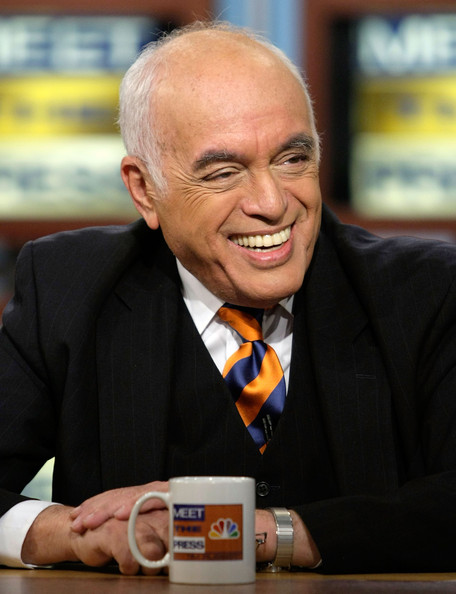
Richard Nixon once called him “the enemy”; he was my favorite columnist and TV talking head.

Robert D. Novak passed away in August. I’ll miss him. Not only was he a tremendous advocate for term limits, he was a great guy.

While Novak was certainly a conservative, he wasn’t in the tank for anyone. A columnist from 1963 to 1993 with writing partner Rowland Evans, and then until last year writing alone — as well as in 25 years on CNN — Novak broke a lot of stories, and made more than a few politicians angry.

No wonder. Never a fan of  politicians, Novak wrote in his autobiography that his initial negative “impression of the political class did not change appreciably in a half-century of sustained contact.”

Early in his career, Novak was tagged as the “Prince of Darkness” for his bearish attitude on politics. The name stuck.

But Novak was really a prince of open-mindedness, or that’s how it seems to me. Born Jewish, he spent most of his adult life as a Protestant, and then converted to Catholicism in his late sixties. Few of us remain open to profound change so late in life.

And in other ways he was simply a regular guy. Whenever I see a Corvette, the car he loved so much, I’ll think of Bob Novak.

And whenever I see a politicians pinned by a pundit, then too, I’ll remember Bob.

This is Common Sense. I’m Paul Jacob.

Categories
Accountability local leaders national politics & policies

Mysteriously Missing Politicians

I almost feel sorry for politicians so afraid of angry freedom-loving constituents that they couldn’t even hold a townhall meeting this summer to spout reassuring lies about the Democrats’ medical reform proposals.

I say, “almost feel sorry” . . . well, not quite “almost” — Okay, I don’t feel sorry for them at all.

Neither does blogger Leslie Eastman. Recently, Leslie and 300 other nefariously well-dressed California citizens visited the local offices of U.S. Senators Barbara Boxer and Dianne Feinstein. They merely wished for these office-holders — who until now have strenuously abstained from conducting public meetings to defend their plans for more government intervention in medical care — to emerge from their hidey-holes and defend their notions. Live and in person.

No luck.

In fact, an office supervisor admitted that Senator Boxer had not graced her San Diego office with her presence in over two years. Says Leslie, “I think there was a revolution [once] because of taxation without representation, but I digress.”

Maybe we can help Leslie find the missing politicians. Another blogger, Ed Morrisey over at hotair.com, is hot on the trail, being very helpful with a post entitled “Who Are Your Milk Carton Politicians?” During the August recess, many politicians across the nation headed for the hills, unwilling to squarely face constituents and defend their pro-government takeover of American medicine.

Is your congressman on the list?

This is Common Sense. I’m Paul Jacob.

Categories
insider corruption national politics & policies

After Kennedy

This is a difficult time for the Kennedy clan, with Ted Kennedy’s death coming so soon after that of his sister Eunice. I’m no fan of Kennedy’s politics, but may he rest in peace.

At such a time, I am inclined to abstain from criticism of Kennedy’s ideals and means. But I can’t help noticing that Kennedy himself did not regard even the occasion of his own passing as exempt from one more try at political game-playing.

Shortly before his death, Kennedy urged the Massachusetts legislature to change the rules governing how he’d be replaced. Currently, when a U.S. senate seat in Massachusetts is prematurely vacated, there’s a special election. Kennedy urged that the rules be changed so that the governor would instead appoint the replacement. The incumbent governor is a Democrat, who would likely pick a Democrat.

Yet back in 2004, when Senator John Kerry might have become president, it was also Kennedy who urged switching from gubernatorial appointments — the rule at the time — to conducting special elections. The legislature complied. Back then, you see, the incumbent governor was Republican, unlikely to pick a Democrat had replacing Kerry become necessary.

Let’s have one policy or the other — not a switch every time there’s a vacancy, in just such a way as to serve the most partisan of goals. Such rigging of the system has become all too common.

This is Common Sense. I’m Paul Jacob.

Categories
general freedom national politics & policies too much government

Government Isn’t Love

Dear Reader: This “BEST of Common Sense” comment originally aired on January 7, 2002. There are tough problems in the real world. Many of them cannot be solved by “public policy” or faceless bureaucracies, but only by people who care about and for each other. Realizing the limits of government doesn’t solve every problem, but it does prevent some problems from getting even worse. —PJ

Recently I joined the growing chorus calling the war on drugs a failure. My comments were provoked by a DEA raid against the Los Angeles Cannabis Resource Center, a place where cancer patients in pain can obtain marijuana that is legal under state law, but illegal under federal law.

Well, I got a flurry of responses. Some said we need to get tougher. A woman wrote: “Paul, the way to stop drugs is to instantly execute people who push it — no trial.”

On the other hand, a gentleman wrote: “Until we start seeing addiction as a medical rather than criminal problem, we’re never going to get out of the bunker in this failing war.”

But one listener summed up what many folks were trying to say. He wrote: “Okay Paul, I agree with you. But what is your proposed solution?”

There are many solutions. The war on drugs hasn’t prevented the damage done by addiction or alleviated the pain felt by loved ones. We’d all love to pass some law that would miraculously solve the problem, but there is no magic wand.

The problem of addiction has to do with individual people and their individual circumstances. And that’s how it must be addressed: Individually, by people who care, not by distant bureaucracies who may do more harm than good.

Ultimately, love is the answer, because love does conquer all. But government isn’t love.

This is Common Sense. I’m Paul Jacob.

Categories
Common Sense education and schooling U.S. Constitution

What’s Love Got to Do With It?

Dear Reader: This “BEST of Common Sense” comment originally aired on October 3, 2005. When I read in the paper about a fifth grade class re-writing the Constitution, I immediately thought about our judiciary. Then I discovered the whole effort was part of a program mandated by Congress. We should all — freely — read the Constitution. Luckily, it is shorter than most of the bills in Congress. —PJ

James Madison, father of our U.S. Constitution, must be rolling over in his grave. You see, he forgot to put love in it. In the Constitution, that is.

By congressional edict, schools and universities across the nation were recently required to spend some time on or around September 17 teaching about the Constitution. That’s the date our nation’s founding document was ratified back in 1787.

One institution of higher learning, Irene’s Myomassology Institute in Michigan, was forced to comply because some students training to be tomorrow’s masseuses receive federal money. The Institute gave students a flier.

Marlboro College in Vermont held a parade featuring professors dressed up as constitutional articles and amendments.

Virginia’s James Madison University celebrated with a “We the People” cake and a trivia contest.

But you ask: What has love got to do with the Constitution?

Oh, yes, I almost forgot Sharon Alexander’s fifth-graders at Graham Road Elementary School in Falls Church, Virginia. In following the federal order, they did what too many federal judges do: they re-wrote the Constitution. Actually, just the Preamble. Their new kid-friendly version states that “kids, pets and adults” are entitled to “electricity, food, water, schools and love.”

Our Constitution doesn’t talk about love. Love isn’t government’s job. That’s ours. Government is power. And our Constitution is all about limiting that power. Read it — and read it to your kids, too, if you love ’em.

This is Common Sense. I’m Paul Jacob.

Categories
Common Sense term limits

Green Politicians and Ham

Dear Reader: This “BEST of Common Sense” comment originally aired on August 8, 2003. As a big fan of Theodor Seuss Geisel, aka Dr. Seuss — having read his books to my kids — this is one of my personal favorites. Amusing, too, that with all the hand-wringing by politicians over term limits, those actually living under the limits are showing relatively more favorable toward the limits. —PJ

“Do you like green eggs and ham? . . . Try them! Try them! And you may. Try them and you may, I say.”

Same goes for politicians and term limits. When state legislators ever-so-reluctantly try term limits, turns out that they actually like green eggs and ham, that is, term limits, better than state legislators who aren’t term-limited.

I read an endless stream of stories about how politicians, about to be term-limited, say the limits aren’t working. News flash: Politicians have always hated term limits. But now a survey commissioned by the National Conference of State Legislatures finds something surprising: there is more support for term limits among legislators in term-limited states than there is among politicians who have no actual experience with term limits.

Think about that. When asked whether term limits “promote healthy change” or “don’t work,” legislators serving under term limits in their state were 50 percent more likely to see term limits in positive terms than their unlimited colleagues.

“Say! I like green eggs and ham! I do! I like them, Sam-I-am!”

Well, I guess we shouldn’t get carried away. Even in term-limited states, legislators oppose the limits by a margin of nearly four to one. Term limits were designed to please voters, not legislators.

Still, good to know that for legislators under term limits, the idea is starting to grow on them.

Ever so slowly.

This is Common Sense. I’m Paul Jacob.

Categories
Common Sense nannyism responsibility Second Amendment rights

Unhappiness Is a Drawn Gun

Dear Reader: This “BEST of Common Sense” comment originally aired on September 20, 2007. The growing use of zero-tolerance policies — especially having anything to do with guns — is the opposite of common sense. Mass insanity may be more popular these days, but I still prefer common sense. —PJ

There’s the real world, and there are representations of it.

I draw a picture of, say, a gun. That picture is of a gun; it is not itself an actual gun. It’s just, well, a doodle.

This being the case — that doodles differ from real threats — then why was a 13-year-old boy near Mesa, Arizona, suspended from school?

He drew a gun . . . on a piece of paper. He didn’t point it at anybody. He made no hit list. He didn’t say “Bang.” No one even got a paper cut.

But school officials treated it as a threat, lectured his poor father on the shooting at Colorado’s Columbine High School, and suspended the lad.

The district spokesman insisted that the doodle was “absolutely considered a threat.” But somehow, knowing that this student was suspended, I’m not feeling any safer.

If our teachers and administrators can’t distinguish real threats from doodles — doodles most boys do, doodles I drew when I was a boy — then what are they teaching the kids? To overreact to everything? To not be able to distinguish small problems from big ones? To treat every symbol or representation as the real thing?

It’s elementary: The map is not the actual territory; the representation is not the thing represented.

You’d think, then, that teachers would be trying to impart (not erase) that notion from the minds of students.

This is Common Sense. I’m Paul Jacob.