Categories
government transparency media and media people

Christie Crushes Crazy Media Crotchet

Whether or not Governor Christie fully succeeds in slashing spending and taxes as they need to be slashed to revive the New Jersey economy, he’s pursuing his mission the right way: head-on, without a lot of obfuscatory politician-speak.

The latest evidence of forthrightness comes in response to a reporter’s question, the video of which has gone viral. The reporter is puzzled and perturbed by the governor’s terrible tone in dealing with the legislature. He wants to know whether Christie thinks that “this sort of confrontational tone can increase your odds in getting [a trimmer budget] through the legislature?”

Christie says he was sent to the governor’s mansion to combat bigger government, higher taxes, more spending, not to soft-peddle his views. He’s going to push for lower taxes, lower spending. “Now, I could say it really nicely. I could say it in the way that you all might be more comfortable with. Maybe we could go back to the last administration where I could say it in a way you wouldn’t even understand it. . . . When you ask me questions, I’m going to answer them directly, straightly, bluntly, and nobody in New Jersey is going to have to wonder where I am on an issue. . . .”

Meanwhile, aides standing in the background look like they’re about to pump their fists in the air, as perhaps taxpayers are doing right now all around New Jersey.

All I can say is: Keep up the good work, Governor.

This is Common Sense. I’m Paul Jacob.
Categories
folly free trade & free markets

Hedging Our Bets

Do congressmen know anything about anything?

Perhaps that’s an unfair question. These guys demonstrate a whole heckuva lot of savvy when it comes to logrolling, porkbarrelling, taxing, spending. Oh, and sniping, grandstanding and griping, and of failing to read bills they pass. I apologize if I implied any deficiency of proficiency in such areas.

I just wonder whether they know anything about real life outside the ways and byways of Capitol Hill.

For example, on the question of whether altering investment strategy in response to changing economic news constitutes “fraud.” If risk management equals fraud, lots of firms should close down tomorrow to protect themselves from congressional subcommittees eager to pretend that government policies have played no major part in screwing up the economy.

Power Line blogger John Hinderaker, after wading through transcripts of the senatorial interrogation of officers from Goldman Sachs, concludes that the senators, “seemingly without exception, are embarrassingly ignorant of modern risk management techniques. . . . [of] how and why firms like Goldman Sachs hedge their exposure to various economic trends . . . [They seem] to think that there was something ‘evil’ about taking a short position — that all investors were somehow required to try to keep the housing bubble going.”

Hinderaker’s observations are more detailed than I can recapitulate here. But the bottom line — that those who would run our lives don’t understand the bottom lines of those who actually work and trade for a living — is nothing new.

This is Common Sense. I’m Paul Jacob.

Categories
national politics & policies too much government

Economics vs. Politician-Incurred Debt

For several years now I have worried — here on Common Sense and on Townhall — about the unsustainability of politician-incurred debt.

I’ve used the word “unsustainable” quite a few times. But too often I’ve simply called it “government debt.” I think I like “politician-incurred debt” better. For it’s politicians who have been unable to keep from over-spending.

And pretending that the consequent problem of debt is “impossible to solve in the current political climate.”

They’re wrong, of course. The “current political climate” is whatever people think and speak right now. Change the way we think and speak, and suddenly the impossible becomes possible.

But what do economists say?

Economists are notoriously able at the higher maths, such as simultaneous equations, symbolic logic and regression analysis. But the number of economists unfazed by the simple calculations to figure debt load and maintenance is almost as frightening as those figures.

Luckily, those ready to do the arithmetic of public debt are on the rise.

Take economist Veronique de Rugy.

Writing in Reason magazine, de Rugy succinctly offers up the numbers. America’s trillions in debt now surpasses half of Gross Domestic Product. Politician-incurred borrowing increasingly soaks up the limited capital available, undermining market recovery. She says politicians must “reform entitlement spending, put both military and domestic spending on the chopping block, and start selling off federal assets. Better to do it now than during a fire sale later.”

This is Common Sense. I’m Paul Jacob.

Categories
local leaders political challengers too much government

Tea Party Talking Points

Amy Kremer, director of the Tea Party Express, one of the many organizations that try to steer the Tea Party movement, appeared on The View, recently. She stayed on point, talking sense, on the whole:

  • The movement is all about fiscal issues, limited government, responsibility, and free markets. No social issues, she said.
  • “We have no leader, the leaders are all across the country.” Sarah Palin is not the Tea Party’s leader.
  • The Tea Party is non-partisan, crossing “all party lines,” with independents, Democrats, Republicans and libertarians participating.
  • Tea Party folk are most angry at the GOP because “there’s no denying that the spending started under Bush.”

Ms. Kremer ably steered the conversation away from the traps that The View folk might have liked to see her fall into. Co-host Joy Behar appeared quite pleased that Kremer acknowledged Bush-era Republicans as responsible for starting this current trend in over-spending.

So, good talking points. Other Tea Party folks should emulate her. I say this in part to reiterate points I made on Townhall not long ago. To seriously tackle our massive fiscal problems, the Tea Party will have to confront spending across the board, including a Sarah Palin/John McCain-style foreign policy.

How is it that people from across the political spectrum can work together in this movement?

It’s simple: No one but a fool would flirt with government insolvency and ruin.

This is Common Sense. I’m Paul Jacob.

Categories
First Amendment rights too much government U.S. Constitution

Allergic to the First Amendment

The drug manufacturer Allergan is taking the Food and Drug Administration to court.

The FDA has ordered Allergan to violate the FDA’s own rules against disseminating information about “off-label” uses of a drug, uses that may be medically common but which, unlike “on-label” uses, were not specifically certified as safe and effective during the FDA’s approval process.

Once a drug has been approved, doctors may legally prescribe the drug for safe off-label uses.

The FDA now wants Allergan to send detailed safety information to physicians about both off-label and on-label uses of Botox®. Yet the FDA bans promoting drugs for off-label uses. A company may convey truthful information about such uses in only very restricted ways.

Companies have paid through the nose for violating these restrictions. In 2009, Pfizer had to pay $2.3 billion for promoting off-label uses of its drugs. Another $1.4 billion was looted from Eli Lilly for the same “crime.”

Allergan is understandably reluctant to obey a government agency’s edict to disobey other edicts promulgated by that same agency — especially when the price of disobedience can be so high. Better to solicit some judicial clarity.

Better, certainly, than following orders and hoping for the best.

Will the court vindicate and enforce constitutional protections for freedom of speech in the realm of pharmaceuticals? Such a ruling would unshackle drug companies from ludicrous hindrance, freeing them to speak.

And it would help doctors and patients.

This is Common Sense. I’m Paul Jacob.

Categories
initiative, referendum, and recall political challengers term limits

Competition in Michigan

Michigan’s career politicians are pushing to more than double maximum tenure in the state house and almost double it in the state senate.

Michigan currently caps service at three two-year terms, or six years, in the house and two four-year terms, or eight years, in the senate. Thus the “combined limit” on both chambers is 14 years. The new law would allow lawmakers to serve up to 14 years in a single legislative seat. This of course would drastically weaken term limits and severely crimp electoral competition.

Now, term limits help make possible such refreshing political campaigns as that of Leon Drolet, director of the Michigan Taxpayers Alliance and a former state representative. He is vying for Michigan’s 11th state senate seat, now open because the incumbent is prevented by term limits from standing for re-election. Another former state representative as well as a current one are also running for the seat.

I bet that when one of these challengers gets elected — and certainly if it’s Drolet, with his strong anti-tax, anti-pork message — incumbents will keep moaning about the loss of “experience” wrought by term limits.

But Drolet has experience, too — fighting governmental assaults on the liberties of citizens. His co-authoring of a constitutional amendment to curb government’s power to grab private homes through eminent domain is relevant.

It’s just that ample experience in helping restrain government power isn’t the kind that certain politicians applaud.

This is Common Sense. I’m Paul Jacob.

Categories
political challengers

Pardon the Vote

Over the weekend, Utah Republicans defeated three-term incumbent U.S. Senator Robert Bennett at their state convention. Two more conservative candidates, both with support among Tea Party activists, now move on to a primary election to decide the eventual GOP nominee.

Senator Bennett’s defeat marks the first U.S. senator to be denied re-nomination in Utah in 70 years.

The strangest part of this, though, is the strange reaction of much of the media. The morning paper says Bennett was as conservative as any rational human being could possibly desire . . . citing Democratic National Committee Chairman Tim Kaine.

Kathleen Parker, the liberal Washington Post’s idea of a conservative, lectured before the vote that “Tea Partyers risk losing some of their strongest voices.” Tea Party supporters seem determined to decide for themselves which voices speak for them.

Parker also smeared Tea Party folks as an anti-intellectual rabble, characterizing Bennett’s long tenure in Washington to be “as disadvantageous as having an Ivy League degree. Those out-of-touch elites, you know.”

Touchy. Very out-of-touchy. Forgotten by the maven? Bennett’s old pledge to serve only two terms.

Bennett had been seeking his fourth term.

E.J. Dionne called the Utah result a “non-violent coup.” Yes, just exactly like a coup — except for that voting part.

For those counting coup right now, establishment folks are receiving a whacking. No wonder they bristle.

Expect more.

This is Common Sense. I’m Paul Jacob.

Categories
First Amendment rights general freedom national politics & policies

Riot Cops to a Tea

Here’s a federal budget cut: Air Force One and all other presidential travel services. The prez doesn’t need to travel. Keep the Executive Entourage in Washington, DC.

This struck home to me when I saw video of police in full riot gear, called up specifically to keep Tea Party people from gathering to greet the president at an event in Quincy, Illinois.

The cops marched around and repelled the Tea Party folk, moving them back, away from the president and his admirers.

President Obama’s Secret Service and crowd control experts are carrying on the tradition of George W. Bush. I haven’t heard Orwellian talk of “free speech zones,” but that doesn’t mean that free speech or the mere waving about of signs is encouraged by the president.

Presidential outings and speeches are tightly controlled. They are now mere political events, designed to shore up the president’s party.

So there’s no reason, in the age of mass media, for American taxpayers to continue to pay for them. The president can speak in front of the camera, on radio and the Internet, and he can speak on the White House steps. But spending one more cent on presidential roamings to rally partisan troops just isn’t very American. Not if all sides aren’t allowed to participate.

What was unacceptable under Bush remains unacceptable under Obama. But I doubt if we’ll hear many on the left protest this marginalization of dissent.

Wrong crowd, I guess.

This is Common Sense. I’m Paul Jacob.

Categories
Accountability national politics & policies too much government

Fearing Free Fall

The European Union is bailing out Greece. Fearing financial contagion, EU’s policy wizards decided to throw 100 billion euros at Greece, in tandem with demands for austerity.

New spending restrictions are tough enough to elicit the verdict of “savage” from Greece’s public employee unions. But are they “savage” enough?

The euros-to-the-rescue scheme occurred only after collapses of Portuguese and Spanish bonds. As mentioned last Friday, things aren’t good on Europe’s other southern peninsulas, either.

The “Domino Theory” remains a dominant metaphor. Once, we feared countries would fall like dominos to communism. Now, it’s like dominos into insolvency.

But propping up a tipped domino isn’t easy.

Drastic solutions, like expelling the duplicitous Greek nation-state from the EU? Not on the table. The apparent aim of the bailouts? Keep as many of the major players responsible for the fiasco in as good a shape as possible.

If, on the other hand, every politician were fired and every contract with unsustainable giveaways to public employee unions were dissolved as part of bankruptcy, might future policy makers be a little more cautious?

Meanwhile, the dominos keep falling. The day after announcing the bailout, the euro plummeted.

My question: What happens when “too big to fail” is applied not to a tiny country like Greece, but to the good ol’ US of A?

What if we’re too big to bail out?

This is Common Sense. I’m Paul Jacob.

Categories
Accountability

Is It Fraud Fraud?

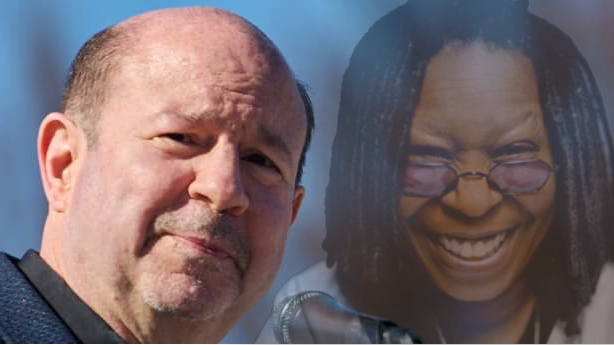
The subpoena of the week was filed by Virginia’s attorney general, Ken Cuccinelli, against the University of Virginia. Cuccinelli demands to see the work product — emails and other documentation — of one of the august institution’s former professors, Michael Mann, a well-known advocate of global warming catastrophism. He was one of those whose emails with British climatologists outed him as a savvy, perhaps fraudulent manipulator of data.

The attorney general filed the demand for information under the Virginia Fraud Against Taxpayers Act, which allows the state to prosecute and receive damages from employees and vendors who make false claims for payment, or submit false records in a contract with the state, or defraud the state.

Former Professor Michael Mann proudly confessed, in his most notorious email, to fiddling with the data to concoct the infamous “hockey stick” graph of global warming. Now he insists that everything he did was legit. His critics counter that his treatment of the data was deliberately propagandistic, not scientific at all.

But did it amount to fraud?

It’s some kind of fraud, surely. But is it less than the legal real deal or is it, as Whoopi Goldberg might put it, “fraud fraud”?

Well, I guess that’s why the attorney general is fishing: To find out.

Predictably, Mann and other academics have protested the investigation. It will have a chilling effect on research, they say.

Well, if it has a chilling effect on fraudulent research, all to the good, I say.

This is Common Sense. I’m Paul Jacob.