The federal government, embodied in the U.S. Department of Energy, has been collecting money from ratepayers for three decades, with one set purpose: to pay for the safe disposal of nuclear waste.
And what does it have to show for it?
Nothing. Zip. Nada.
The Energy Department hasn’t done a thing to safely dispose of the spent uranium and other materials from the fission process used in American plants. The Yucca Mountain storage facility, where all this stuff was going to be buried, was nixed a few years ago, by the present Nixer-in-Chief (call him a “Nixon,” why not?) Barack Obama.
All it’s done is collect $37 billion.
You could say it has “hoarded” the money, but, this being the U.S. government, that money’s long been spent. On other, non-nuclear-waste-related items. You know, wars and prescription drugs and Star Trek sets. Vital stuff, I’m sure.
Meanwhile, the nuclear power companies haven’t been sitting still. They’ve been sitting on their own stockpiles of waste — the security for and safety of which has been paid for by a variety of successful lawsuits against the federal government . . . for not picking up the garbage.
Now, there’s a new lawsuit, seeking to enjoin the feds from collecting any more of the funds that they obviously have no intention of spending according to plan.
Breach of contract? Fraud? Government as usual?
You decide.
Meanwhile, we who demand honest government wish the new lawsuit the best of luck.
This is Common Sense. I’m Paul Jacob.
 The approach must be democratic, which in this sense is merely a variant of the definitional norm for individualism. Each man counts for one, and that is that. Once this basic premise is fully acknowledged, an escape route from cynicism seems to be offered. A criterion for “betterness” is suggested. A situation is judged “good” to the extent that it allows individuals to get what they want to get, whatsoever this might be, limited only by the principle of mutual agreement. Individual freedom becomes the overriding objective for social policy, not as an instrumental element in attaining economic or cultural bliss, and not as some metaphysically superior value, but much more simply as a necessary consequence of an individualist-democratic methodology. In some personal and private baring of my soul, I may not “like” the observed results of a regime that allows other men to be free, and, further, I may not even place a high subjective value on my own freedom from the coercion of others. Such possible subjective rankings may exist, but the point to be emphasized is that the dominant role of individual liberty is imposed by an acceptance of the methodology of individualism and not by the subjective valuations of this or that social philosopher.
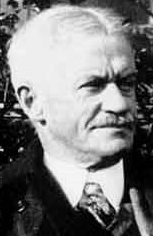 Why is it, I wonder, that when one speaks of the mass-man, one is always taken to mean the poor man or the workingman? I am glad to see that Ortega y Gasset goes out of his way to puncture this error. If one wished to cite a perfect specimen of the mass-man, one would cite Henry Ford, Hoover, John D. Rockefeller.