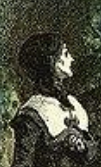
 If any come to my house to be instructed in the ways of God what rule have I to put them away? Do you think it not lawful for me to teach women and why do you call me to teach the court?
Categories
If any come to my house to be instructed in the ways of God what rule have I to put them away? Do you think it not lawful for me to teach women and why do you call me to teach the court?
 There are three principal means of acquiring knowledge… observation of nature, reflection, and experimentation. Observation collects facts; reflection combines them; experimentation verifies the result of that combination.
The Obama Administration won’t say how many Americans have successfully navigated the online sign-up during last week’s grand opening of the Affordable Care Act healthcare exchanges . . . if anyone.
To quell the media manhunt, the White House tweeted that Chad Henderson, a mild-mannered 21-year-old Georgia college student with a part-time day-care job, had, through sheer determination of will, managed to sign up for Obamacare at a cost of only 30 percent of his salary.
“I really just wanted to do my part to help out with the entire process,” Henderson said. But Chad was soon found to be hanging out there, suspiciously, finally admitting he hadn’t truthfully grabbed the new entitlement’s brass ring after all.
Chuck Todd announced on MSNBC’s Daily Rundown that it had been a “rough first week” for Obamacare. He wondered how the folks who “brought us the most technologically advanced campaign in history . . . blew it this badly on this — their biggest, most important government outreach?”
“[T]hey really had to get this right,” added National Journal’s Ron Fournier, “not just for the healthcare reform, but for the whole idea — that a lot of us believe in — that a strong, effective government can help people through this huge economic and social transition we’re going through.” Fournier admitted that the failure undermined the “central argument that we’re having in this country.”
Even “objective” media folks, who believe government should play a much larger role in running our lives, aren’t so sure it’s up to the job.
This is Common Sense. I’m Paul Jacob.
 No man has received from nature the right to give orders to others. Freedom is a gift from heaven, and every individual of the same species has the right to enjoy it as soon as he is in enjoyment of his reason.
The New York Times has a timeline of the progress of Obamacare.
It’s okay as far as it goes. Which is not too far, since only the most recent dates seem readily accessible. And since the Times editors blindly favor the Obama-assault.
But sure, labor leaders have both criticized and praised Obamacare (9/12/13), some states have fought it (or “moved to undercut” it) (9/18/13); Pennsylvania State University has decided not to fine employees $100 a month for being too reticent about personal details on “wellness” questionnaires (9/19/13). Etc.
A headshake-worthy aspect of the chronology, however, is its showcasing of opinion published in the Times itself — as if each Times-punditarian rebuke of opposition to medical serfdom were another epochal event in the steady march of the wonderful Obamacare. So Gail Collins “chastises Republicans” for jeopardizing global stability to oppose Obamacare (9/19/13). Paul Krugman avers that the GOP, “hysterical” over Obamacare, is changing from stupid party to crazy party (9/20/13).
Fine, fine. But toss in some pro-free-market, anti-socialist and anti-Krugman events also, okay? Like the first publication of Ludwig von Mises’s comprehensive, devastating critique of Socialism (1922). The publication of Ayn Rand’s Atlas Shrugged, sweeping saga of social collapse as feverish proto-Krugmaniacs stamp freedom out of existence (1957). The day Mike Tanner elaborated “Why Freedom Is the Key to Health Care Reform” (9/5/09). And let’s not forget John Goodman’s seminal post, “When It Comes to Healthcare Issues, Paul Krugman Is Wrong 100% of the Time” (5/30/13).
All that being said, a timeline is one thing, “progress” quite another. The word implies a good goal. Though hey, doctors do sometimes speak of the “progress” of a cancer or a fatal disease.
In the end, a timeline of Obamacare must include its own demise.
This is Common Sense. I’m Paul Jacob.
As the federal government does its darnedest to prove that class warfare isn’t rich vs. poor, or white vs. black, but, instead, government vs. the people, let’s try to keep our sanity.
Of course, one element of keeping our sanity is to recognize how big a problem it is when those in government are, indeed, “out to get us.” We’re not paranoid; they are craven. For evidence, see this weekend’s Townhall column. And come back here for a full list of references.
First, the ones provided as links in the column in question:
Then there are the links not provided in the column:

Men living together according to reason, without a common superior on earth, with authority to judge between them, is properly the state of nature. But force, or a declared design of force, upon the person of another, where there is no common superior on earth to appeal to for relief, is the state of war: and it is the want of such an appeal gives a man the right of war even against an aggressor, tho’ he be in society and a fellow subject. Thus a thief, whom I cannot harm, but by appeal to the law, for having stolen all that I am worth, I may kill, when he sets on me to rob me but of my horse or coat; because the law, which was made for my preservation, where it cannot interpose to secure my life from present force, which, if lost, is capable of no reparation, permits me my own defence, and the right of war, a liberty to kill the aggressor, because the aggressor allows not time to appeal to our common judge, nor the decision of the law, for remedy in a case where the mischief may be irreparable. Want of a common judge with authority, puts all men in a state of nature: force without right, upon a man’s person, makes a state of war, both where there is, and is not, a common judge.
John Locke, from the Second Treatise on Civil Government (Thomas Hollis Edition. [London: A. Millar et. al.] 1764), Chapter Three: “Of the State of War.”
John Stossel interviews Julian Sanchez of Cato, on what the NSA can really do. Fascinating. Intriguing. Frightening.
 Individuals, separately and in groups, make decisions concerning the use of economic resources. They do so in at least two capacities: first, as purchasers (sellers) of goods and services in organized markets, and, secondly, as “purchasers” (“sellers”) of goods and services through organized political processes. Economic theory has been developed largely to explain the workings of organized markets, and the trained economist understands how decentralized decisions are mutually co-ordinated so as to produce allocative results that are internally consistent. Economists, especially English and American, have devoted little time and effort to an explanation of individual behavior in the second decision process.
I began the week talking about opera. If I end the week discussing football, you can be sure that I’m closer to my home turf.
Which doesn’t make this any easier, for, though many operas stay afloat with taxpayer funds, far more taxpayer money goes to football.
The National Football League, owned by billionaires whose product rakes in big bucks through ticket sales and eye-popping broadcast fees, could certainly support itself. And yet these rich folk don’t merely pass the hat, they wave guns under the table, extorting money out of taxpayers across the country.
Writing in The Atlantic, Gregg Easterbrook surveys the damage. He might as well channel Carl Sagan, for the answer to “how much do taxpayers waste on football?” is “billions and billions.”
Santa Clara’s new “home” for the 49ers is a $1.3 billion stadium, which, writes Easterbrook, although largely “underwritten by the public,” will drive revenue that will mostly “be pocketed by Denise DeBartolo York, whose net worth is estimated at $1.1 billion, and members of her family.”
So much of subsidy ends up helping mainly the rich. Opera? Mainly an upper class thing. Football? It may reach the lowbrow, but boy, do the rich make out like bandits, off the taxpayers.
Indeed, argues Easterbrook, this is worse than the bailouts. “Public handouts for modern professional football never end and are never repaid.”
If you don’t oppose subsidies to football, which are obviously unnecessary transfer payments from the poor to the super rich, what subsidy would you oppose?
This is Common Sense. I’m Paul Jacob.