Where there is official censorship it is a sign that speech is serious. Where there is none, it is pretty certain that the official spokesmen have all the loud-speakers.
Paul Goodman, Growing Up Absurd (1956), p. 40.
Paul Goodman
Where there is official censorship it is a sign that speech is serious. Where there is none, it is pretty certain that the official spokesmen have all the loud-speakers.
Paul Goodman, Growing Up Absurd (1956), p. 40.
The Truce of Ulm was signed in Ulm, Baden-Württemberg, on March 14, 1647, between France, Sweden, and Bavaria. This treaty was developed after France and Sweden invaded Bavaria during the Thirty Years’ War.
“By law, we have one job,” Rep. Tim Burchett (R‑Tenn.) asserted the last time he opposed the “continuing resolution” (CR) on the federal budget.
What is that “one job”? It is “to pass twelve appropriations bills and a budget. We aren’t doing that, which is why we are $33 trillion in debt.”
You noticed the typo. But it wasn’t. Sure, $33 trillion isn’t right. Yesterday, the official public debt of the federal government was $36.6 trillion, with just a smidge of rounding up. Those first two paragraphs are from 2023; one can almost cut and paste old copy about Washington’s CR fiascos and place them in new pieces and get away with it, clean.
On Tuesday, the House passed a continuing resolution to keep the federal government chugging along, with its usual substitute authorization for spending rather than a real budget.
In another old Common Sense column from right before Christmas, I celebrated the possible “torpedoing” of a CR, and its replacement with a more modest one — but what about the CR that now heads for a Friday vote in the Senate?
The resolution cuts $20 billion from IRS enforcement, $7 billion from fiscal year 2024 levels, $13 billion in non-defense discretionary spending but added $6 billion to defense. Last year’s earmarks were nipped, but what’s happening with USAid is less clear. Secretary of State Marco Rubio says that “83% of programs” have been closed in the agency; Elon Musk declares that “the important parts of USAID should always have been with Dept of State” — but that plan is not implemented in this CR.
Meanwhile, Rep. Thomas Massie was the sole Republican No vote, continuing his dissent: “Congress just locked in a large portion of the Biden agenda for the first nine months of Trump’s presidency.” And then Trump threatened to primary him!
Massie is up against Republicans who think the resolution’s cuts are big enough. And Democrats who think they are way too big.
This is Common Sense. I’m Paul Jacob.
Illustration created with Krea and Firefly
See all recent commentary
(simplified and organized)
See recent popular posts
Science is made up of so many things that appear obvious after they are explained.
The character “Pardot Kynes” in Frank Herbert‘s Dune (1965).
1781 — William Herschel discovered Uranus.
1809 — Sweden’s King Gustav IV Adolf was deposed in the Coup of 1809, a political result of the disastrous Finnish War with the Russian Empire.
1814 — The Congress of Vienna declared Napoleon an outlaw following his escape from Elba.
1930 — News of the discovery of Pluto was announced by the Lowell Observatory. Then called the Ninth Planet, it was the result of a long search for “Planet X,” a theorized planet influencing the orbit of Neptune, the ice giant planet beyond Uranus. Clyde W. Tombaugh had discovered it the month before, on February 18. In 2006, in a grand gesture of logomachy, the International Astronomical Union demoted Pluto to “dwarf planet.” Pluto and its moons — Charon; Styx; Nix; Kerberos; and Hydra — are also now officially considered “trans-Neptunian objects.”
1969 — Apollo 9 returned safely to Earth after testing NASA’s $2.29 billion Lunar Excursion Module, overseen by Grumman.
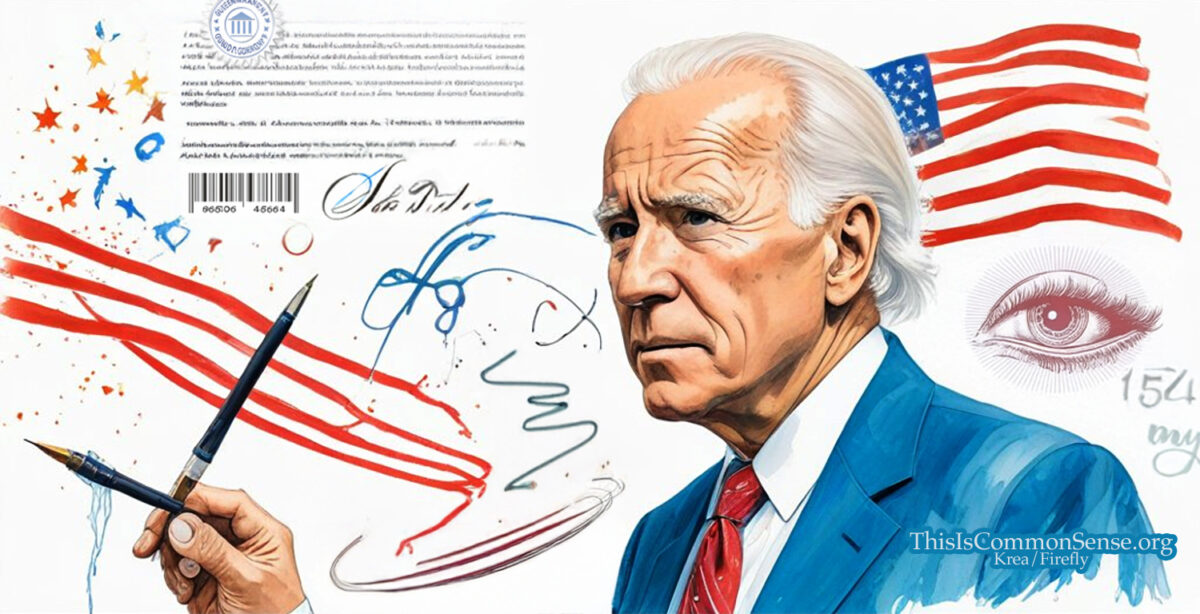
There has been a lot of talk, recently, about the danger posed by Donald J. Trump’s executive orders. Understandable, but no matter how dangerous an imperial president may be, the one thing you cannot say about the “use of the pen to sign executive orders” is that it is unprecedented.
But there’s one kind of pen that is somewhat . . . problematic: the autopen.
It’s a signing machine.
The first was called the “polygraph,” invented by John Isaac Hawkins in 1803; President Thomas Jefferson was an enthusiastic user.
Today’s autopen is much advanced. Regular people probably use something like it to file their taxes, or use it regularly on legal documents in PDF form, but the presidential autopen is more secure. Or is supposed to be.
In 2005, the Bush legal team decided it was hunky dory to use an autopen to “sign” documents when the president is out of the country. What matters, the lawyers reasoned, was presidential intent.
Since then, all three presidents have used an autopen.
But Joseph Robinette Biden, Jr., used it to sign nearly everything.
Or so alleges The Heritage Foundation’s Oversight Project. “The organization’s assertion points to a pattern whereby all documents featuring Biden’s signature, except for the one announcing his withdrawal from the presidential race last year, utilized the autopen,” reports Christina Davie. “These claims raise questions about presidential authenticity and executive authority.”
As that Bush era report makes clear, it’s presidential intent that matters. And in the case of the 46th president, we know that he did not remember ever signing at least a few of his executive orders.
As the Oversight Project makes clear in its report title, “Whoever Controlled the Autopen Controlled the Presidency.” I wonder, was it Jill Biden? Or one of the named triumvirate of Biden cronies?
This is Common Sense. I’m Paul Jacob.
Illustration created with Krea and Firefly
See all recent commentary
(simplified and organized)
See recent popular posts
Alas, if man is blind, shall his misfortune be also his crime? I may have mistaken the voice of reason; but never, knowingly, have I rejected its authority.
Constantin François de Chassebœuf, comte de Volney, The Ruins, or, Meditation on the Revolutions of Empires (1793; second English-language translation, the Philadelphia edition, 1802).
Mahatma Gandhi began the Salt March, a 200-mile march to the sea, to protest the British monopoly on salt in India, on March 12, 1930.
That would indeed be significant.
But until then, the “Department of Government Efficiency,” popularly called DOGE, continues to find insane wasteful spending in the “mere” millions.
Consider the Small Business Administration, which “administers” loans to . . . well . . . “DOGE said it identified that the Small Business Administration (SBA) granted nearly 5,600 loans for $312 million to borrowers whose only listed owner was 11 years old or younger at the time of the loan,” reports Fox.
Loans made in the pit of despair that was the COVID pandemic.
Children have no business taking out SBA loans — the obvious quip would be about “lemonade stands” — but Musk suggests there could be reasons for the practice, just not in the 5,593 cases DOGE specifies, because the wrong Social Security numbers were used in those applications.
But let no one say the federal government is not balanced, for “in 2020 and 2021 the SBA issued 3,095 loans for $333 million to borrowers over 115 years old.”
And speaking of the ancient, Bernie Sanders wrote to Newsweek to give the socialist view of the subject: “The person who is running the government right now is Elon Musk. Mr. Musk has taken it upon himself, with the support of President Trump, to virtually dismantle the United States government.”
Don’t get our hopes up, Senator.
Unlike Harry Enten at CNN, I’m not at all shocked to learn that DOGE has majority support in America at present. “I was truly surprised by this,” said Enten last Thursday, “but the numbers are the numbers.”
After all, it’s only common sense to seek to root out waste, fraud, and abuse.
Isn’t it?
This is Common Sense. I’m Paul Jacob.
Illustration created with Krea and Firefly
See all recent commentary
(simplified and organized)
See recent popular posts
Mary Wollstonecraft, A Vindicaton of the Rights of Woman (1792), chapter 4.
Men . . . submit every where to oppression, when they have only to lift up their heads to throw off the yoke; yet, instead of asserting their birthright, they quietly lick the dust and say, let us eat and drink, for to-morrow we die. Women, I argue from analogy, are degraded by the same propensity to enjoy the present moment; and, at last, despise the freedom which they have not sufficient virtue to struggle to attain.