Categories
Update

Vietnam Goes No Tariffs?

News editors sometimes choose odd titles: “First country to cut tariffs down for US and awaits deal — Trump.” That is for a brief Oleh Velhan article from RBC Ukraine. OK: maybe something got lost in translation. But the article follows a theme from this week’s Common Sense commentary and yesterday’s update: Trump’s goofy schedules of tariffs and what to do about them.

Vietnam is ready to completely scrap tariffs for the United States. This may become possible after an agreement between the two countries, according to US leader Donald Trump and his statement via Truth Social.

Trump reported that he had held talks with the General Secretary of the Communist Party of Vietnam, To Lam. According to him, Lam stated that Vietnam is ready to reduce its tariffs to zero.

“Vietnam wants to cut their tariffs down to zero if they are able to make an agreement with the US. I thanked him on behalf of our country, and said that I look forward to a meeting in the near future,” said the US president.

Oleh Velhan, Saturday April 5, 2025.

Meanwhile, the United Kingdom and other countries are going the proverbial other direction, responding with a “list of 8,000 US products that could be subject to tariffs. This list includes various items, ‘from binoculars to bourbon whiskey.’”

Is that Trump wants? Retaliatory tariffs? That happened under Smoot-Hawley.

That is what economists fear: Like the McKinley Tariff of 1890 (which President Trump has praised), the Smoot-Hawley tax hike on goods coming into the country (which is what a tariff is, an international trade tax) to a whopping amount — higher than the nearly 50 percent tariff duty level of the 1890 effort. The Smoot-Hawley hikes have long been known to have factored in the Great Depression, with economist Thomas Rustici (see Lessons of the Great Depression, 2005) arguing that the influence was far more significant than previously thought.
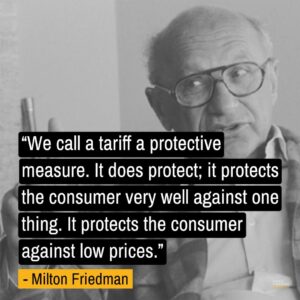
An international war of tariffs, with each nation responding to others’ tariffs with tariffs of their own, is just not good for business. But as wars go, it is an extremely foolish one. A tariff chiefly harms consumers (economists like Milton Friedman tell us) in the national economy of the state that erects them: a tariff war is where each nation shoots itself in the foot, and retaliates for others’ self-harm by further harming themselves.

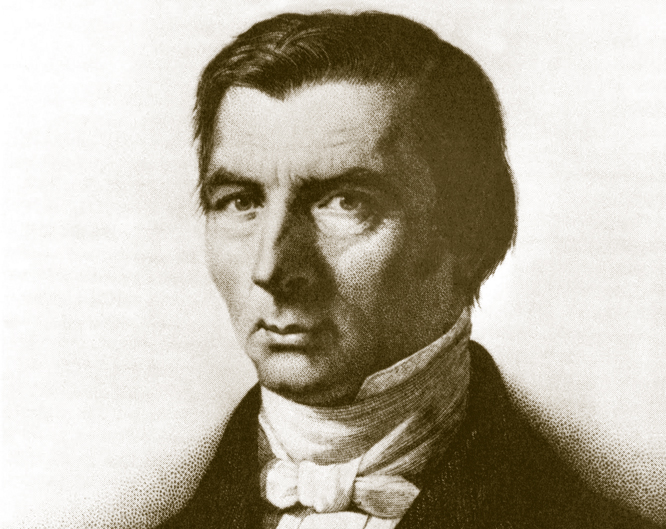
This was made clear by Frederic Bastiat, whom no one in power appears to have read.

But there is still the inscrutable Trump. If he likes tariffs so much, why does he want them for America but for no one else? That is the implication — right until he praises To Lam and Javier Milei for responding to his tariffs not as Britain is retaliating, or as the EU prepares to. If Trump is really after free trade, apparently he demands a special form of it: not unilateral but multilateral.

So why not just honestly aim for that?

Because it is not popular?

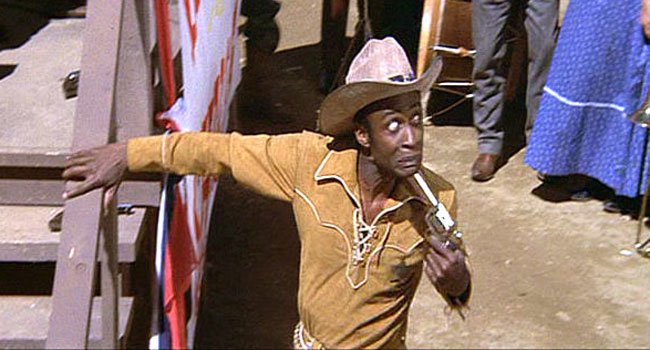
Still, his current strategy seems a bit like Cleavon Little’s strategy when a town turns guns on him: he points his own gun at his own head. But with Trump’s tariff hike policy, there’s less provocation.
Categories
Thought

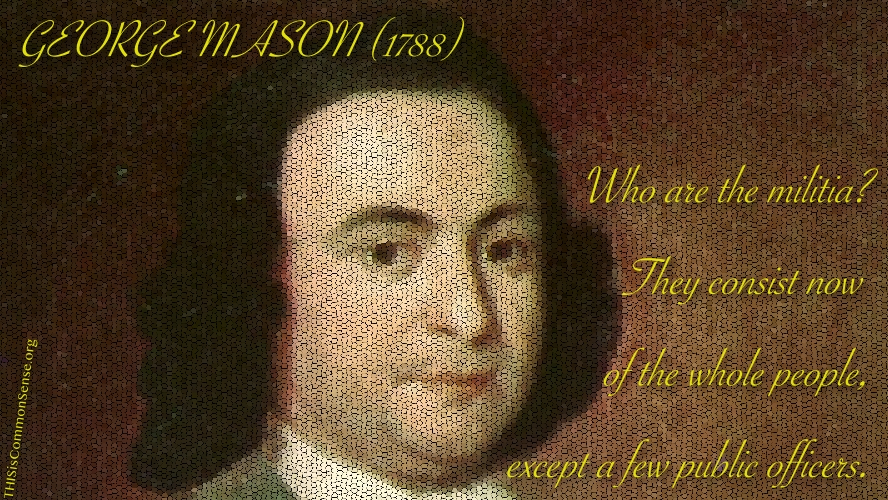
George Mason

Mr. Chairman — A worthy member has asked, who are the militia, if they be not the people, of this country, and if we are not to be protected from the fate of the Germans, Prussians, &c. by our representation? I ask who are the militia? They consist now of the whole people, except a few public officers.

George Mason, June 16, 1788, speech to the Virginia convention held to ratify the Constitution of the United States.
Categories
Today

Salt Rebel

On April 6, 1930, Mohandas K. Gandhi raised a lump of mud and salt, declaring, “With this, I am shaking the foundations of the British Empire.”

Thus began the Salt Satyagraha.

Categories
Update

Milei’s Gold

Trump’s momentous tariff schedule, legal only by reason of Congress’s dereliction of duty, came up with a multitude of negative reactions this week — with one exception: Argentina President Javier Milei’s.

Milei’s ratline disclosure was the subject of yesterday’s commentary by Paul Jacob, and Trump’s peculiar ambiguities regarding tariffs was tackled Tuesday. But the big story, now, is Argentine . . . free trade:

Speaking at an event at Trump’s Mar-a-Lago residence and resort in Florida, Milei delivered a brief speech as he received an award for his defence of free markets and conservative values.

Declaring he is ready to work side-by-side with the United States and Trump, Milei praised the US president and ruled out retaliatory measures.

“Argentina is going to move forward to readjust the regulations so that we meet the requirements of the reciprocal tariffs proposal developed” by Trump, Milei said, according to remarks briefed by his office.

“We have already met nine of the 16 necessary requirements , and I have instructed my country’s Foreign Ministry and Commerce Secretariat to move forward with the remaining requirements,” he said, speaking a day after Trump slapped 10-percent tariffs on Argentine goods entering the United States.

Milei says he will change Argentina’s laws to mitigate Trump’s tariffs,” Buenos Aires Times (April 4, 2025).

Milei’s reaction to Trump’s outrageous “Liberation” tariffs is so far unique. Argentina’s “libertarian” president appears to bend over backwards to get along with the U.S.

In March, Trump said he was open to discussing the possibility of a free-trade deal with Argentina.

Milei, whom Trump calls a “great leader,” has said he is willing to pull Argentina out of Mercosur regional trade bloc if necessary.

Ibid.

The American president, in defiance of the consensus of political economy, has made much of concern with balance of trade — and Argentina, under Milei’s leadership, sported, this year, a positive balance of trade with the United States for the first time in many moons. So how does one square this circle?

If Milei succeeds, think of it as political alchemy, turning Trump’s leaden protectionism into golden free trade. We still wonder, has this been Trump’s goal all along? Based on his rhetoric, it seems a No; but if Milei’s reaction spreads, maybe then Yes.

Categories
Thought

Sam Adams

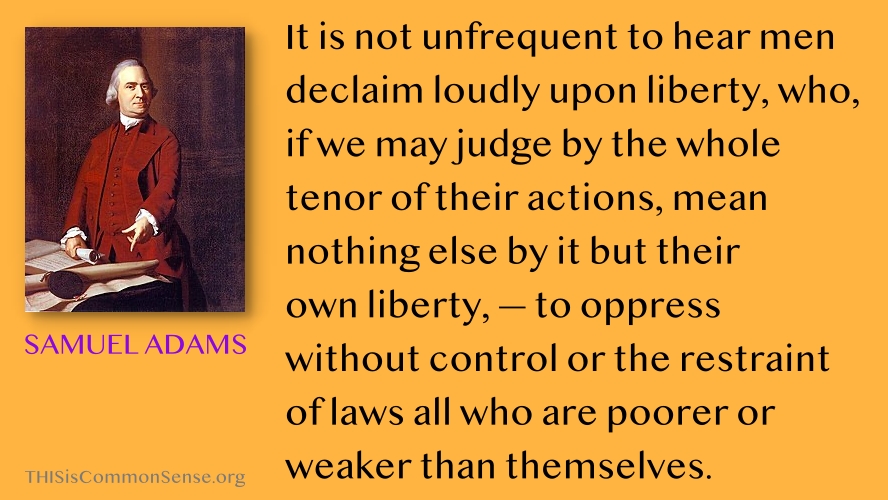
It is not unfrequent to hear men declaim loudly upon liberty, who, if we may judge by the whole tenor of their actions, mean nothing else by it but their own liberty, — to oppress without control or the restraint of laws all who are poorer or weaker than themselves.

Samuel Adams, in Essay published in The Advertiser (1748) and later reprinted in The Life and Public Service of Samuel Adams (1865)
Categories
Today

One of Two Washington Vetos

On April 5, 1792, George Washington exercised the first presidential veto of a congressional bill, a new plan for dividing seats in the House of Representatives, which would have increased the number of seats for northern states.

Washington vetoed only one other bill during his two terms in office, an act that would have reduced the number of cavalry units in the army.

Categories
Accountability government transparency international affairs

The Argentine Ratline

In less than one month, the 80th anniversary of Adolf Hitler’s death may be celebrated — unless President Javier Milei’s formal disclosure of the Argentine “ratline” shows what a lot of people believe: that Hitler didn’t kill himself in that bunker.

Ratlines are what the human smuggling routes of Nazis out of falling Germany in 1945 were called.

And yes, Argentina was the chief receiver of Nazis. This is known. Confirmed. Not controversial.

But did the South American country accept Nazis higher up than Dr. Josef Mengele and Adolf Eichmann?

Well, the FBI was searching for Hitler in South America for decades, into the 1960s. And rumors of Hitler’s escape to Argentina have been bandied about for years and years.

But the official story, of Hitler’s suicide in the Berlin bunker on April 30, 1945, has been stuck to, its skeptics frequently “debunked,” and “experts” have been mocking “conspiracy theorists” on this matter for a very long time.

Now, however, Javier Milei — perhaps inspired by Donald Trump’s disclosure attempts regarding the JFK assassination and Jeffrey Epstein’s honeypot scheme — has set in motion the release of Argentina’s “ratline files.” 

The Argentine government has committed to declassifying and releasing all government-sequestered information related to Nazi war criminals who sought refuge in the country after World War II. Formally announced by Cabinet Chief Guillermo Francos on March 24, the documents are said to include financial details and relevant records held by Argentina’s Defense Ministry.

What will we learn?

If we learn that Hitler lived long after 1945, what would be the repercussions?

Maybe it depends: who exactly — and in which government — arranged the escape?

Whatever the revelations, whatever the ultimate result, the Age of Deference is over; the Age of Disclosure has begun.

This is Common Sense. I’m Paul Jacob.


PDF for printing

Illustration created with Krea and Firefly

See all recent commentary
(simplified and organized)
See recent popular posts

Categories
Thought

Aeschylus

ὅπου γὰρ ἰσχὺς συζυγοῦσι καὶ δίκη
ποία ξυνωρὶς τῆσδε καρτερωτέρα

For where might and justice are yoke-fellows —
What pair is stronger than this?

Aeschylus, Fragments of Uncertain Plays (#209), the Herbert Weir Smith translation (Loeb Library, Aeschylus II).
Categories
Today

Tippecanoe and Tyler Next

On April 4, 1841, William Henry Harrison died of pneumonia, becoming the first President of the United States to die in office and the one with the shortest term served (he died on his 32nd day as president). A renowned Indian killer (having risen to fame for his part in 1811’s Battle of Tippecanoe), a proponent of the expansion of slavery into Northwest Territories, and a Whig, Harrison won the presidency in part by turning the Democrats’ “log cabin and hard cider” aspersions on his character as the basic symbols of the campaign.

Though hardly a “limited government man,” some limited government history buffs proclaim him the Greatest President, on the ostensibly droll and possibly cynical grounds that he spent so little time in office.

The campaign slogan of 1840, “Tippecanoe and Tyler Too,” proved an actual campaign promise, as Vice President John Tyler took over the job of the presidency, establishing a precedent on presidential succession that would later be enshrined into constitutional law, in the form of the Twenty-fifth Amendment.

Categories
national politics & policies

The 2024 Switcheroo

The Summer of 2024 was a political maëlstrom. It included a near-miss assassination attempt and a withdrawal of a sitting president of the United States from his re-election campaign, almost at the last possible moment. 

We still do not know much about Trump’s would-be assassin on that roof in Butler, Pennsylvania. Nor does there seem much media interest in that still mysterious criminal episode. But we are learning more about Joe Biden’s stepping down from the campaign, and Kamala Harris’s taking the reins of the Democratic ticket.

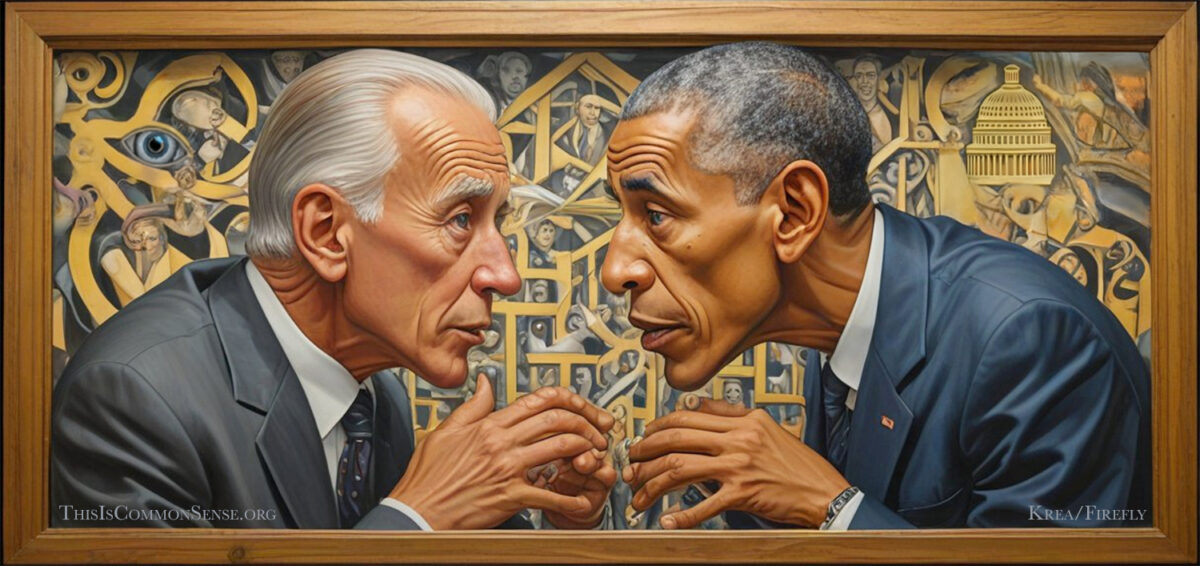
Most recently, from a insider-exposé just out by Jonathan Allen and Amie Parnes, Fight: Inside the Wildest Battle for the White House (Apri 1, 2025), we learn that Barack Obama, former president and key Democratic Party insider, not only pressured Biden to step down (along with Nancy Pelosi), but he also opposed Kamala Harris’s hasty top-of-the-ticket switcheroo. Strongly. For five days. Then he gave his endorsement.*

It’s widely reported that the Bidens dislike Kamala Harris. It’s also well known that Obama is not exactly Joe Biden’s biggest fan — the Obama/Biden pairing was political, making the match perhaps the most fraught since Kennedy/LBJ.

We learn from co-author Jonathan Allen that Obama refused to endorse Ms. Harris on that infamous first day, after Biden’s endorsement,* and that Obama was pitching for an open convention.

Obama’s political instincts are unmatched within the Democratic Party. That his advice was resisted says a lot about where the party was headed.

And where it’s at now.

This is Common Sense. I’m Paul Jacob. 


* If you, like me, are looking for why Biden, so soon after stepping down, publicly endorsed Kamala Harris, the sample on Amazon won’t tell you. But Ms. Harris entreated Biden immediately upon his resignation: “You need to endorse me,” she said, according to co-author Amie Parnes. Pressure was applied.

PDF for printing

Illustration created with Krea and Firefly

See all recent commentary
(simplified and organized)
See recent popular posts