Categories
Thought

Frédéric Bastiat

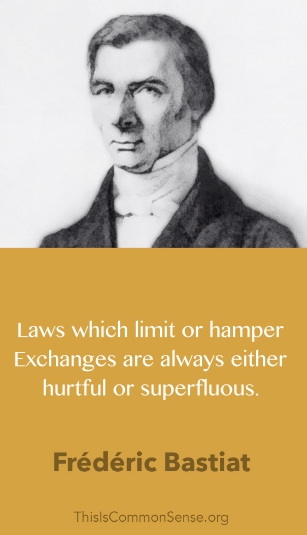
If Exchange saves efforts, it also exacts them. It extends, and spreads, and increases, up to the point at which the effort it exacts becomes equal to the effort which it saves, and it stops there until, by the improvement of the commercial apparatus, or by the circumstance exclusively of the condensation of population, and bringing men together in masses, it again returns to the conditions which are essential to its onward and ascending march. Whence it follows that laws which limit or hamper Exchanges are always either hurtful or superfluous.
Governments which persuade themselves that nothing good can be done but through their instrumentality, refuse to acknowledge this harmonic law.
Exchange develops itself NATURALLY until it becomes more onerous than useful, and at that point it NATURALLY stops.
In consequence, we find governments everywhere busying themselves in favouring or restraining trade.
In order to carry it beyond its natural limits, they set to conquering colonies and opening new markets. In order to confine it within its natural bounds, they invent all sorts of restrictions and fetters.

Frédéric Bastiat, Harmonies of Political Economy (from the Third French Edition, Patrick James Stirling, trans.).
Categories
Today

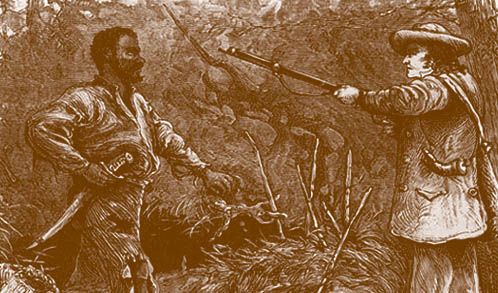
Nat Turner

On August 21, 1831, Nat Turner led slaves and freed black Americans in a rebellion that was quickly suppressed.

Categories
tax policy too much government

California Schemin’

Is California a failed state? It has an electric grid problem. And a vagrancy problem. Both of which stem from the bizarre ideological blind spots of a political class “benefiting” from the state’s high legislator/citizen ratio, which insulates politicians from feedback.

Driving them power mad.

And one form of madness flowers in political greed, hubris and overreach.

“A pack of Democratic lawmakers in California are proposing a wealth tax for the state’s richest citizens, forcing them to pay more essentially just for owning a lot of stuff,” writes Scott Shackford at Reason. “They also, amazingly, want the tax to follow Californians who flee the state in response, attempting to make them continue paying taxes on wealth that’s not even in the state.”

Rob Bonta, Oakland’s Democrat in the Assembly, says the Golden State needs more gold, and he has made a startling observation. Wait for it. “Rich people have money,” Shackford summarizes, and Bonta wants to take it. To expand services.

But surely service expansion is not only not the only option, it is often the worst option. 

Take the state’s rolling blackouts. Was that caused by not enough or really bad legislation? President Trump points his finger at the Democratic-controlled Assembly: “In California, Democrats have intentionally implemented rolling blackouts — forcing Americans in the dark. Democrats are unable to keep up with energy demand,” the president tweeted on Tuesday. But the New York Post identifies as a cause not “intentionally implemented” blackouts, but “inadequate transmission and an over-reliance on renewable energy and issues with natural gas plants during high heat.”

Bad policy. Not too few “services.”

And the proposal to tax the richest Californians — or former Californians — to pay for more disastrous programs? 

Hubris and greed.

Not Common Sense. I’m Paul Jacob.


PDF for printing

See all recent commentary
(simplified and organized)
See recent popular posts

Categories
Thought

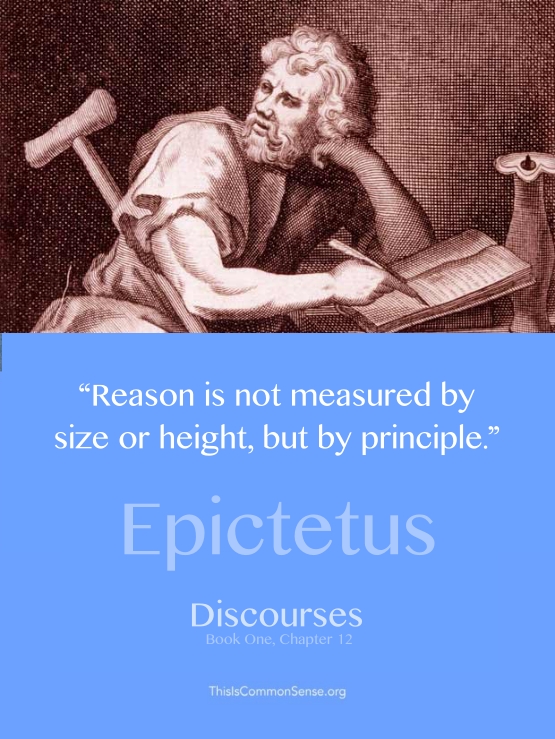
Epictetus

Reason is not measured by size or height, but by principle.

Epictetus, Discourses Book I, Chapter 12.
Categories
Today

Estonian Independence

On August 20, 1991, Estonia issued a decision to re-establish independence on the basis of historical continuity of the Baltic country’s pre-World War II statehood, sloughing off Soviet rule since 1940.

On August 20, 1935, Ron Paul was born. Paul is now famous for his heroic congressional record, his several presidential campaigns, and for books such as End the Fed and Liberty Defined.

Categories
general freedom international affairs

All Dogs Go to Heaven Early

In July, North Korean dictator Kim Jong Un declared possessing pet dogs to be a “decadent trend” from the West.

Along with eating well and living without fear of one’s government.

Oh, not that last bit.

But, apparently — and there are many news stories, if not much exactitude or certainty — he did order all dogs confiscated. 

Why?

Well, reports vary. A search of DuckDuckGo will yield much speculation and a few sparse facts. 

A South Korean newspaper relayed a leak saying that Un called dog ownership “a ‘tainted’ trend by bourgeois ideology.”

How could dogs have been with us for tens of thousands of years, and may have been key to our species’ success, yet somehow now be “decadent” and “tainted” and “bourgeois”?

And, for that matter, a “trend.”

How many tens of thousands of years does it take to make a trend? On Twitter, it takes just a few minutes!

There is a lot of talk of a COVID-19 famine (on top of the Kim Family Famine that has been trending for decades) and meat shortages. I’ve read reports that the dogs are to go to restaurants. And then there is the business about higher-ups in the Hidden Kingdom’s un-hidden but Un-ridden hierarchy who have been taking advantage of a cultural loophole to display their status with expensive pet dogs from the West. 

Un prefers his displays of status, apparently, to be public executions and harsh and abrupt edicts . . . such as putting all dogs into execution chambers.

This is Common Sense. I’m Paul Jacob.


PDF for printing

See all recent commentary
(simplified and organized)
See recent popular posts

Categories
Today

Patriotism & Protest & Ousting

On August 19, 1919, Afghanistan gained full independence from Great Britain. The British attempts to maintain an imperial presence in this region elicited an earlier, infamous essay in protest by English sociologist and anti-imperialist Herbert Spencer (pictured), “Patriotism” (Facts and Comments, 1902).

On this day in 1991, Soviet President Mikhail Gorbachev was placed under house arrest, a crucial event leading to the dissolution of the Soviet Union.

In 1999, a mass rally of Serbians demanded the resignation of Slobodon Milosevic.

Categories
government transparency national politics & policies

A Glossary for Our Times

Reminder: SARS-CoV-2 is the name of the virus that is said to cause COVID-19.

Scientists and doctors are still learning about the novel virus and the new disease. Much of the information is uncertain, in part because it has become politicized, making it hard to navigate both medical and political subjects.

Making sense of the data or the arguments is more difficult because people confuse the terminology. The virus is not the disease, the disease is not the virus, though by metonymy, we do swap terms. Don’t let a mere figure of speech fool you.

As awful as COVID-19 is, in America, more citizens are affected negatively by the virus popularly known as TDS. 

Perhaps we should call it TDS-2016, since the three letters stand for “Trump Derangement Syndrome.” Though the mind-virus (meme) was rampant from the moment Donald Trump announced his candidacy in 2015, the illness is not the meme itself. The illness, or behavioral syndrome, is how host brains process the meme. And it did not really set in as a disease until Trump got the Republican nomination. That’s when Democrats stopped laughing so hard and began to take Trump seriously.

And drive themselves crazy.

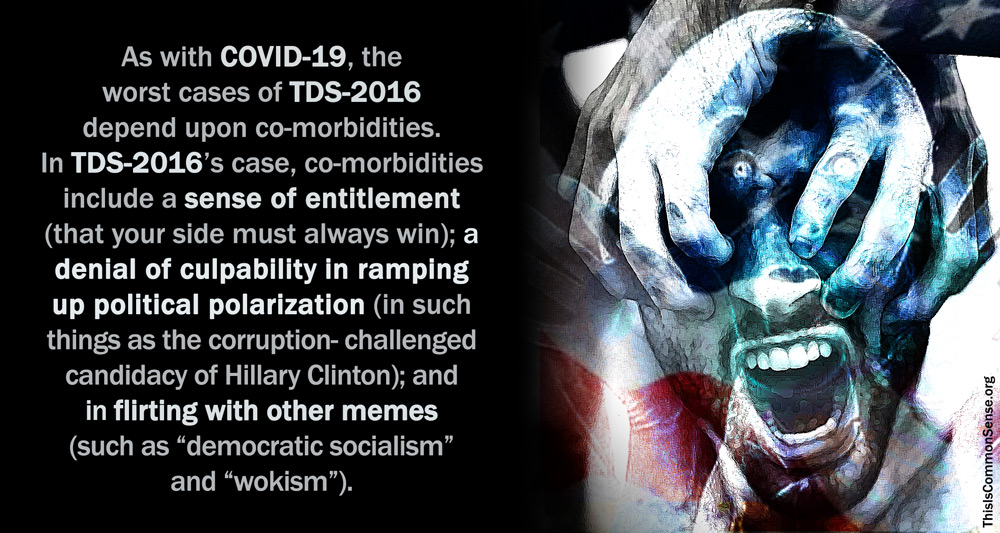
As with COVID-19, the worst cases depend upon co-morbidities. In TDS-2016’s case, co-morbidities include a sense of entitlement (that your side must always win); a denial of culpability in ramping up political polarization (in such things as the corruption-challenged candidacy of Hillary Clinton); and in flirting with other memes (such as “democratic socialism” and “wokism”).

As we approach Election Day 2020, TDS-2016 will only grow. The meme itself has proven resilient. We appear not to have reached herd immunity yet.

This is Common Sense. I’m Paul Jacob.

Definitions:

meme n. 1. an element of a culture or system of behavior that may be considered to be passed from one individual to another by nongenetic means, especially imitation. 2. a humorous image, video, piece of text, etc., that is copied (often with slight variations) and spread rapidly by Internet users.

metonymy n. a figure of speech featuring the substitution of the name of an attribute or adjunct for that of the thing meant, for example suit for business executive, or the track for horse racing.

herd immunity n. a key concept in epidemiology where the resistance to the spread of a contagious disease within a population that results when a sufficiently high proportion of individuals become immune to the disease, through exposure by infection or vaccination: the level of vaccination needed to achieve herd immunity varies by disease but ranges from 83 to 94 percent. [Discussions of SARS-CoV-2 and COVID-19 that do not mention herd immunity can only have limited value.]


PDF for printing

See all recent commentary
(simplified and organized)
See recent popular posts
Categories
Thought

Master Kong

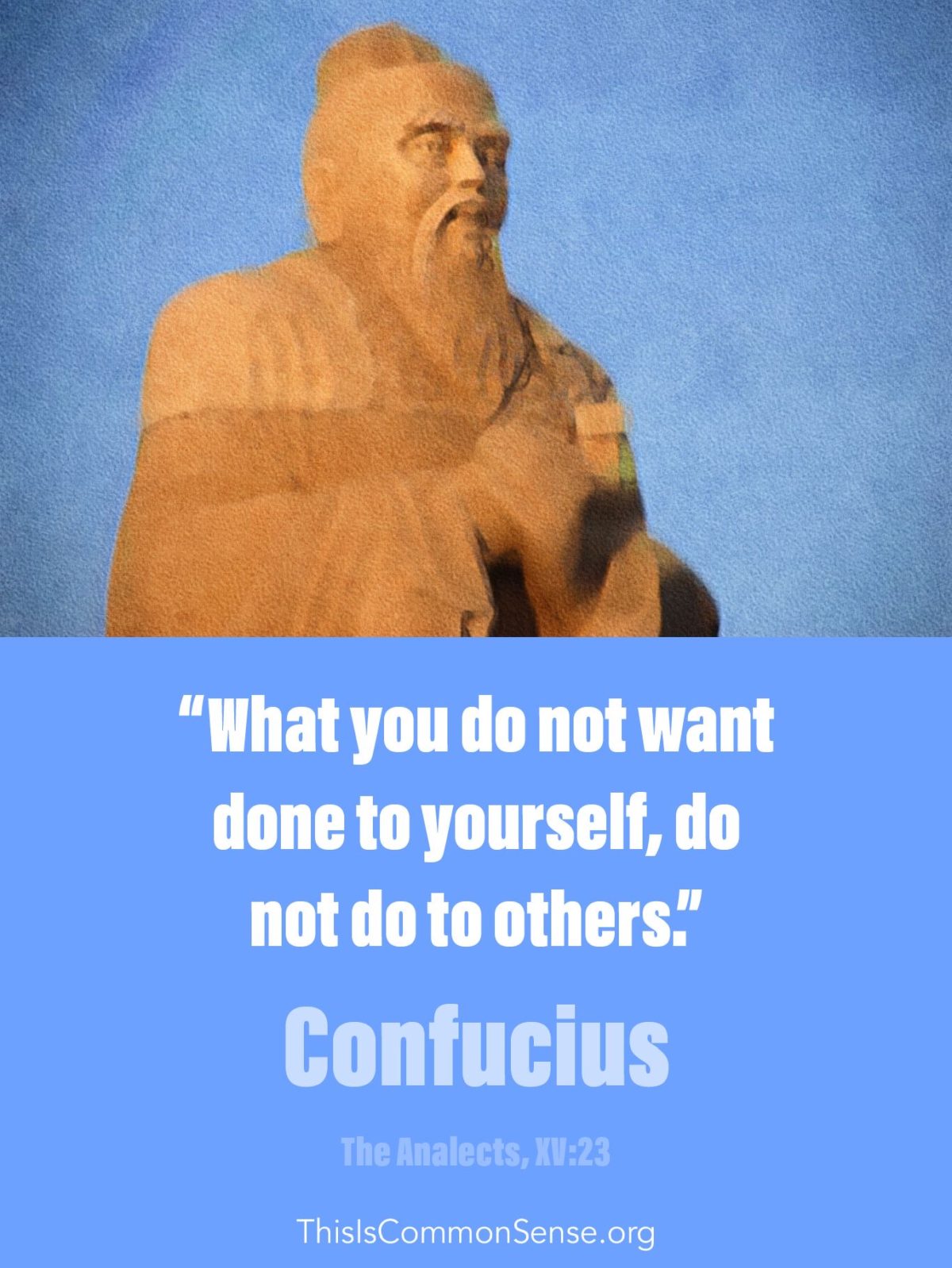
What you do not want done to yourself, do not do to others.

Confucius (the latinization of the Chinese 孔夫子, Kong Fu Zi or K’ung-fu-tzu, literally “Master Kong,” but usually referred to in China with a simpler version of this honorific as 孔子, Kongzi), The Analects XV:23.
Categories
Today

Free to Choose

On August 18, 1920, the Nineteenth Amendment to the United States Constitution was ratified, guaranteeing women’s suffrage.

Eighty-eight years later, Pakistan’s President, Pervez Musharaf resigned under threat of impeachment.

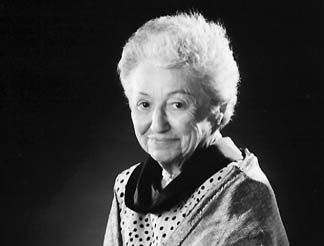
The next year, Rose Director Friedman, economist, wife of economist Milton Friedman, sister of economist Aaron Director and mother of economist David D. Friedman, died. With her husband she had written one of the most popular pro-liberty books of our time, Free to Choose. She had been born in late December, 1910, in Staryi Chortoryisk, in Ukraine, to the Director family, prominent Jewish residents.

With her husband she co-authored their memoirs, Milton and Rose D. Friedman, Two Lucky People, which appeared in 1998. Together they founded the Milton and Rose D. Friedman Foundation, with the aim of promoting the use of school vouchers and freedom of choice in education. She also helped produce the PBS television series, Free to Choose, and assisted her husband in writing his 1962 political philosophy book Capitalism and Freedom.