There ought to be no laws to guarantee property against the folly of its possessors.
William Graham Sumner, What Social Classes Owe to Each Other (1883).
Categories
William Graham Sumner
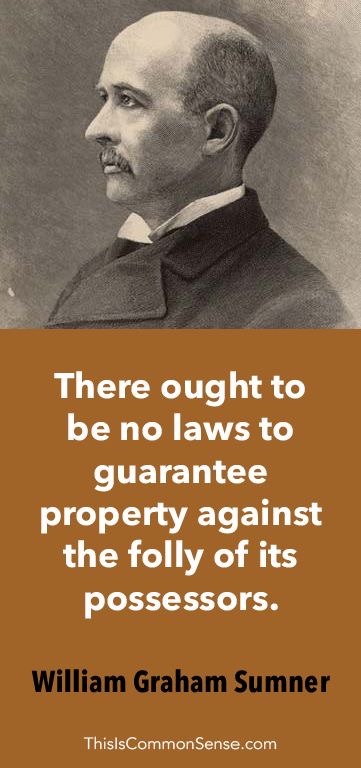
There ought to be no laws to guarantee property against the folly of its possessors.
William Graham Sumner, What Social Classes Owe to Each Other (1883).
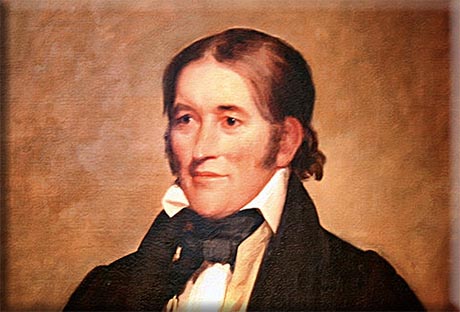
On August 17, 1786, American backwoods hero and politician, David Crockett, was born. Famous as a politician, he brought personal principle and honor and a “common sense” approach in representing Tennessee in the U.S. House of Representatives. He later served in the Texas Revolution, dying at the Battle of the Alamo.
Crockett grew up in East Tennessee, where he gained a reputation for hunting and storytelling, which helped make him a legend in his own time. After being made a colonel in the militia of Lawrence County, Tennessee, he was elected to the Tennessee state legislature in 1821.
In 1825, Crockett was elected to the U.S. Congress, where he vehemently opposed many of the policies of President Andrew Jackson, most notably the Indian Removal Act.
Crockett wrote a number of books, including a biography of Martin Van Buren.
The video of the weekend podcast:
Debuted August 14, 2020.
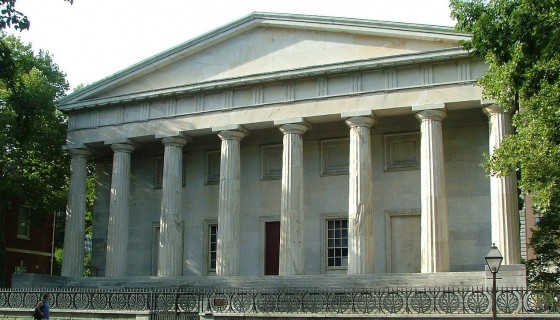
On August 16, 1841, U.S. President John Tyler vetoed a bill to re-establish the Second Bank of the United States (pictured). Enraged Whig Party members — feeling betrayed by the WINO* Tyler — rioted outside the White House in history’s most violent demonstration on White House grounds.
* “Whig In Name Only,” anachronistic joke term. A play on the contemporary initialisms “Republican in Name Only” (RINO) and “Democrat in Name Only” (DINO).
The weekend’s podcast:
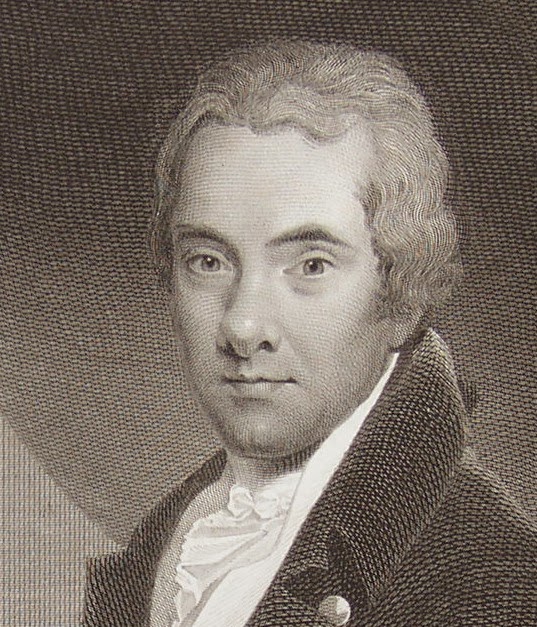
When we think of eternity, and of the future consequences of all human conduct, what is there in this life that should make any man contradict the dictates of his conscience, the principles of justice, the laws of religion, and of God?
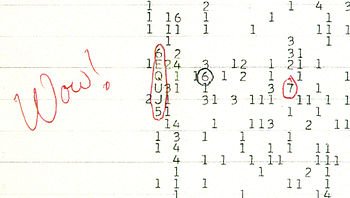
On August 15, 2012, a complex, high-powered radio transmission was sent from the Arecibo Observatory in Puerto Rico towards the constellation Sagittarius. The signal consisted of a digital stream of approximately 10,000 Twitter messages solicited for the purpose by the National Geographic Channel, bearing the hashtag “#ChasingUFOs” (a promotion for one of the channel’s TV series). The sponsor also included a series of video vignettes featuring verbal messages from various celebrities.
The transmission was sent on the 35th anniversary of the reception of a mysterious signal that was interpreted as an alphanumeric sequence, “6EQUJ5,” dubbed the “Wow!” signal, from the general direction of the star Tau Sagittarius. This signal was received by Ohio State University’s Big Ear radio telescope in the United States, and was noticed a few days after August 15, 1978, by astronomer Jerry R. Ehman.
On a sad August 15 in 1971, President Richard Nixon removed the last vestiges of the once-great bulwark of capitalism, America’s adherence to the international gold standard, ending convertibility of the United States dollar into gold by foreign investors. The dollar has remained fiat money ever since, but did not succeed in retaining its previous value.
But then, the dollar under the previous quasi-gold, Bretton-Woods Agreement wasn’t stable either, which is why Nixon felt compelled to close the gold window.
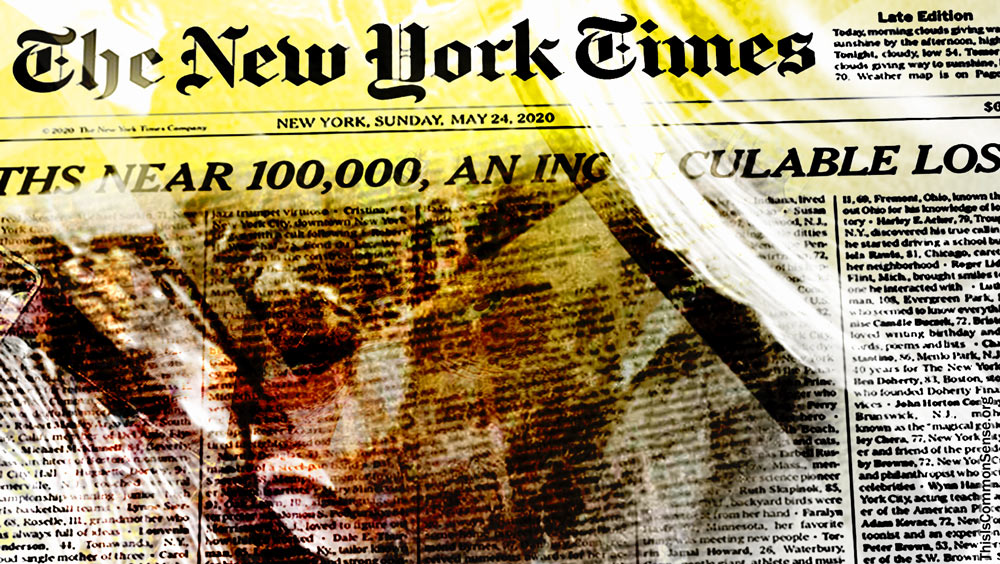
“My boss got fired for running an op-ed by a sitting U.S. senator,” says Bari Weiss, former opinion editor for The New York Times, in a recent TV interview.
Cotton argued for sending troops to quell rioters who “have plunged many American cities into anarchy.” Unnerved by furious criticism not only of the op-ed but of the paper’s temerity in publishing it, The Times now prefaces Cotton’s piece with an abject and silly apology.
In her public letter of resignation, Weiss reports being hired in 2016 “with the goal of bringing in voices that would not otherwise appear in your pages: first-time writers, centrists, conservatives. . . .”
By the time she quit, “intellectual curiosity — let alone risk-taking” had become “a liability at The Times. . . . If a piece is perceived as likely to inspire backlash internally or on social media, the editor or writer avoids pitching it. . . . Rule One: Speak your mind at your own peril.”
Weiss says the country is becoming “retribalized,” with politics amounting to undebatable religious dogma, revelation rather than ratiocination. The sort of government that becomes possible when politics is a religion is total government. Totalitarianism.
Old-timers like me can recall a Times editorial page that featured plenty of horrific opinions (not very diligently vetted, one suspects) but that also had room for the William Safires of the day.
Does the current dread of reasoned debate at The New York Times represents a mere temporary spasm of appeasement?
The signs (of the Times) aren’t good.
This is Common Sense. I’m Paul Jacob.
See all recent commentary
(simplified and organized)
See recent popular posts
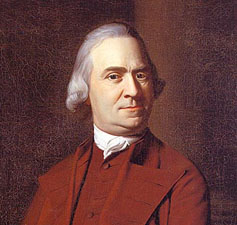
On August 14, 1765, Sam Adams led the first rebel mob against enforcers of the Stamp Act in Britain’s American colonies.
On this day in 1980, Lech Wałęsa led strikes at the Gdańsk, Poland, shipyards.
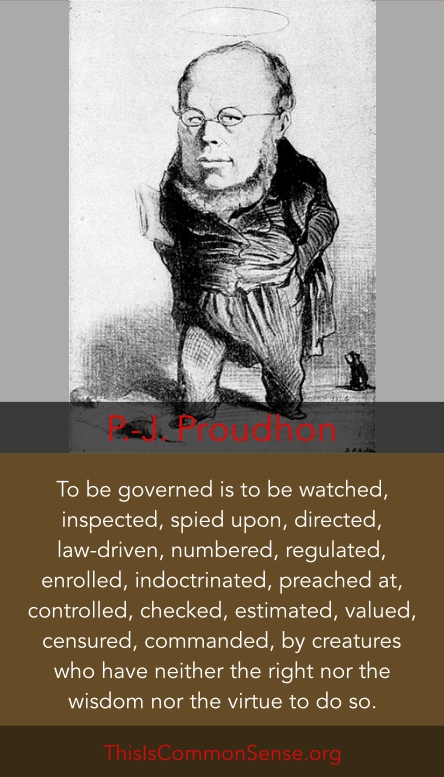
To be governed is to be watched, inspected, spied upon, directed, law-driven, numbered, regulated, enrolled, indoctrinated, preached at, controlled, checked, estimated, valued, censured, commanded, by creatures who have neither the right nor the wisdom nor the virtue to do so.
Pierre-Joseph Proudhon, Idée Générale de la Révolution au XIXe Siècle [The General Idea of the Revolution] (1851).