On March 26, 1991, local self-government in South Korea was restored after three decades of centralized control.
Categories
South Korea
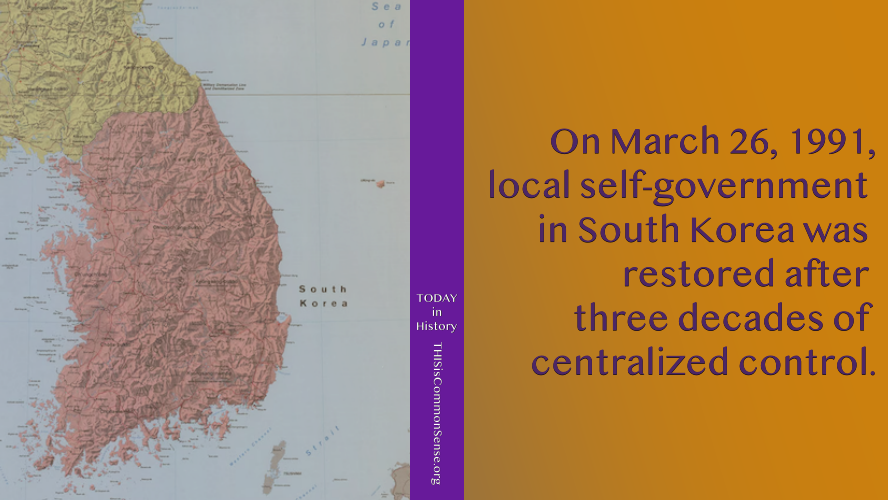
On March 26, 1991, local self-government in South Korea was restored after three decades of centralized control.

What makes the Director of the National Institutes of Health a “loser”?
Well, the doctor (who also serves as current Acting Director of the Centers for Disease Control) has not always served in the federal government. In his days between Trump administrations he’d run afoul of censors on social media. Now he’s jubilant that a major case against censorship has come to a freedom-of-speech conclusion.
Aptly, he started that post on X with “Huzzah!”
The actual news? “The New Civil Liberties Alliance, on behalf of its clients Jill Hines and Dr. Aaron Kheriaty,” reads the official press release of the lawyers, “has reached a settlement agreement and Consent Decree concluding the landmark Missouri v. Biden lawsuit against government-induced social media censorship.”
This follows an executive order by President Trump on the first day of his new administration. The president had declared that the federal government, under President Joe Biden, had “infringed on the constitutionally protected speech rights of American citizens across the United States in a manner that advanced the government’s preferred narrative about significant matters of public debate.”
This not a judicial ruling. It’s an agreement, the key point being, “The Parties agree that modern technology does not alter the Government’s obligation to abide by the strictures of the First Amendment.”
Specifically, the agreement (in the lawyers’ words) “prohibits the U.S. Surgeon General, Centers for Disease Control and Prevention (CDC), and Cybersecurity and Infrastructure Security Agency (CISA) from threatening social media companies into removing or suppressing constitutionally protected speech on Facebook, Instagram, X (formerly Twitter), LinkedIn and YouTube.” And more.
Director Bhattacharya calls it a “huge win for all Americans.”
You bet Huzzah!
This is Common Sense. I’m Paul Jacob.
Illustration created with Nano Banana
See all recent commentary
(simplified and organized)
See recent popular posts
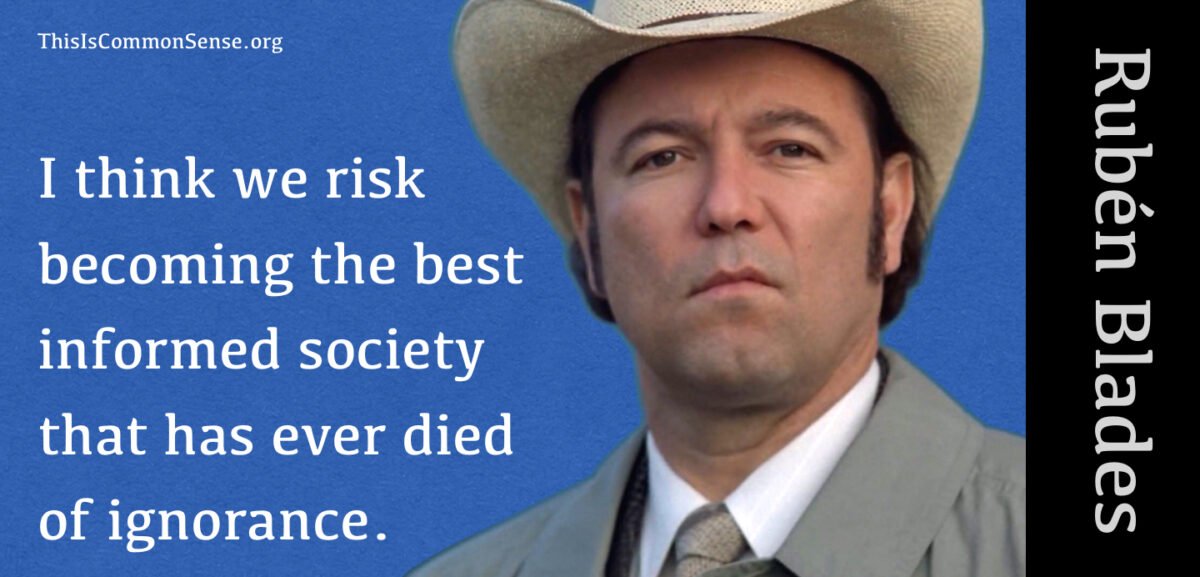
I think we risk becoming the best informed society that has ever died of ignorance.
Rubén Blades, in a conference at Harvard University reported by Anne Stewart, “Not everyone enthusiastic about the future of TV,” Bangor Daily News (February 18, 1993).
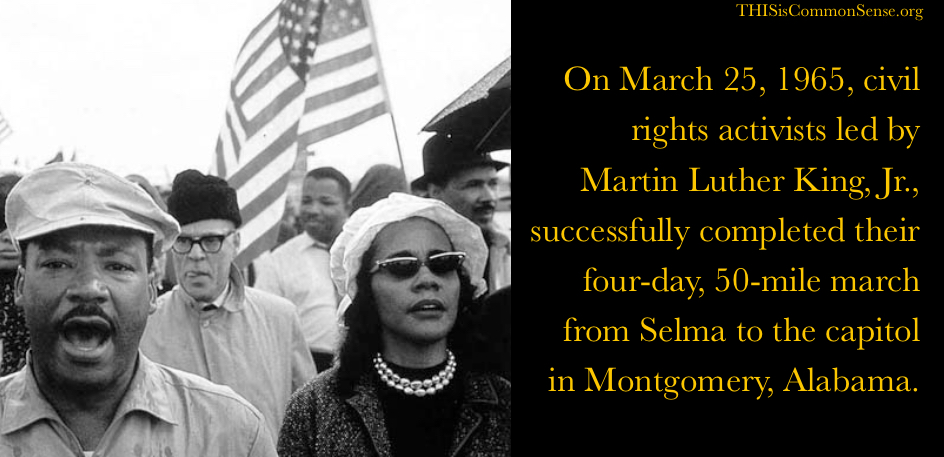
On March 25, 1965, civil rights activists led by Martin Luther King, Jr., successfully completed their four-day, 50-mile march from Selma to the capitol in Montgomery, Alabama.
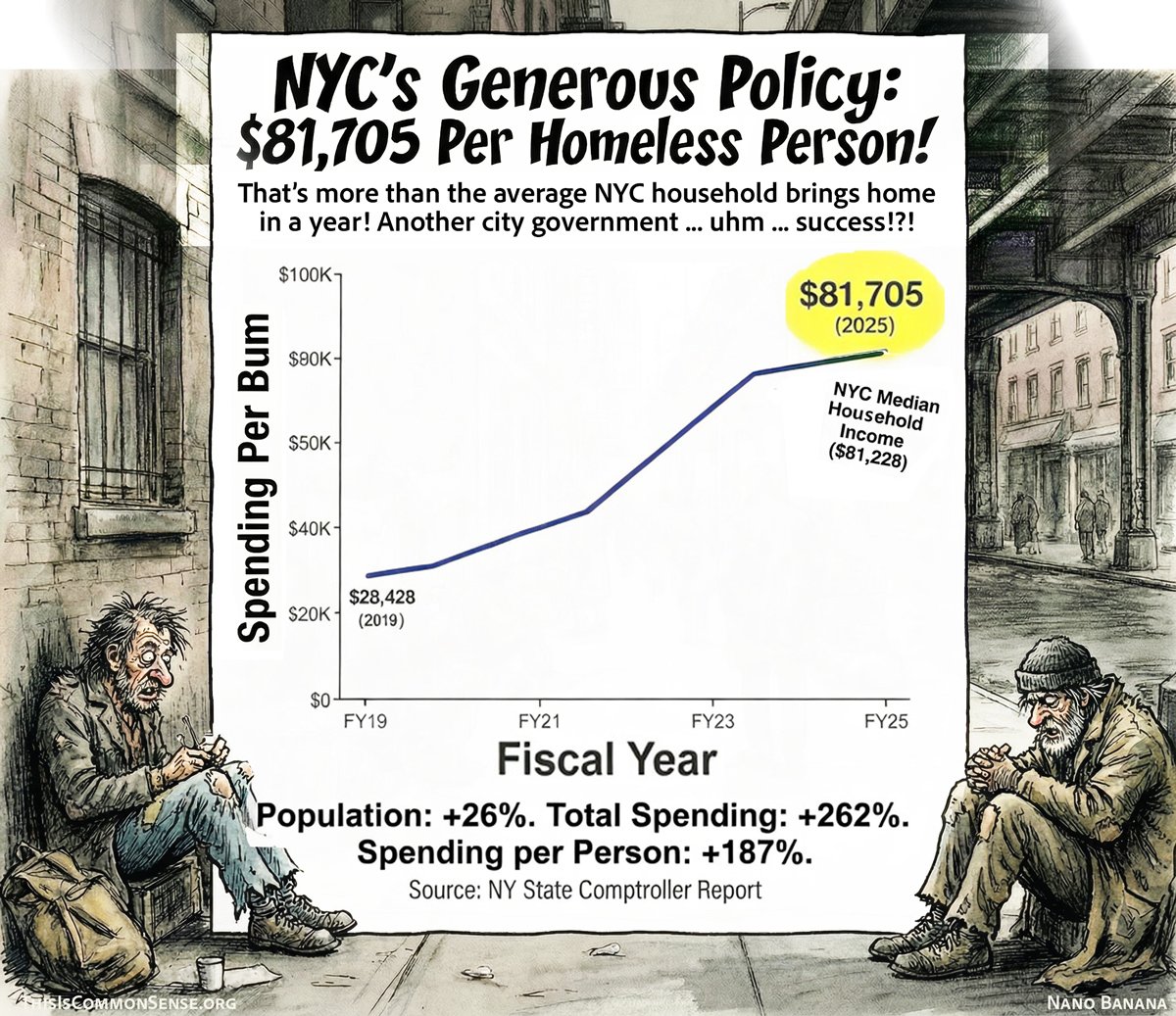
Charlie Smirkley (@charliesmirkley) provided the graph, deriving the numbers from official state reports, just out.
New York City, writes Mr. Smirkley, “spends more per homeless person than the median NYC household earns.” And that “$81,705 per person in FY2025,” he explains, “is a floor.” Excluded? Supportive housing (about a half a billion per year), mental health response teams; the costs of police department dealings with homeless encampments.
Shocking? Yes and no. We expect increasing costs in government “charity,” in part because governments centralize and standardize methods, discouraging innovation and adaptation. It’s not a market. Government bureaucrats and operatives try to coordinate increasing staffs (along with market costs in housing, etc.) while necessarily dealing with clients as objects of pity and bother rather than, as in markets (where people exchange valuable goods), subjects whose responses immediately affect the “business” at hand.
This year, the city projects to spend about $97,000 per person.
Some of the articles on the subject are better than others, naturally enough, and at least one had great graphs, too. But this sentence in Meagan O’Rourke’s Reason contribution caught my eye: “The most alarming part of the comptroller’s report is that the state cannot assess whether tax dollars are being spent effectively.”
It’s a typical problem governments have — which points to a problem not with the homeless but with government.
And of course this is not just a Big Apple thing: while spending per homeless individual since 2019 is up 187 percent in New York, spending’s up 190 percent in San Francisco, 430 percent up in Portland, and 480 percent up in L.A.
Homelessness is expensive.
This is Common Sense. I’m Paul Jacob.
Illustration created with Nano Banana
See all recent commentary
(simplified and organized)
See recent popular posts
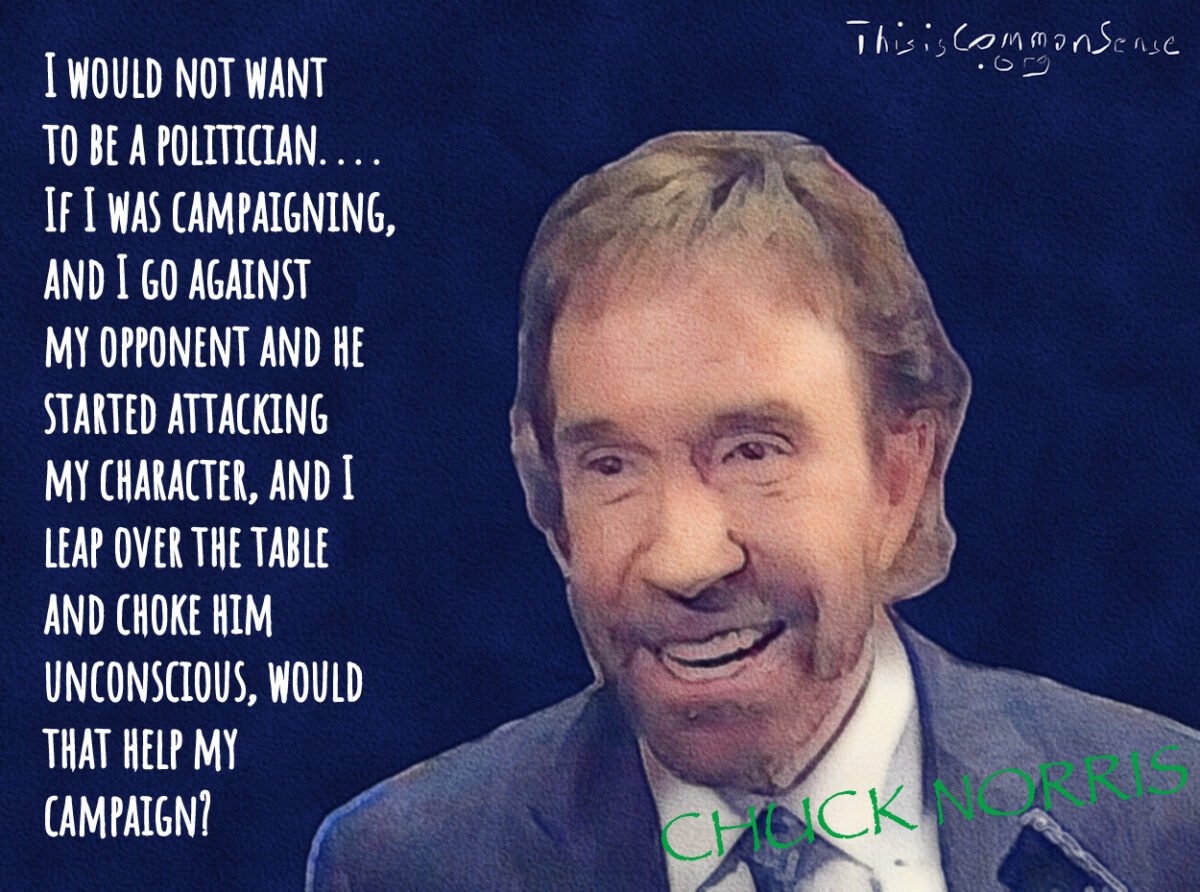
I would not want to be a politician. . . . If I was campaigning, and I go against my opponent and he started attacking my character, and I leap over the table and choke him unconscious, would that help my campaign?
Chuck Norris’s reply when asked if Walker the Texas Ranger could be president, in an interview by BarelyPolitical.com (December 5, 2007). Mr. Norris passed away on March 19.

On March 24, 1765, the Kingdom of Great Britain passed the Quartering Act, which required the Thirteen Colonies to house British troops.
On the same date in 1855, slavery was abolished in Venezuela.
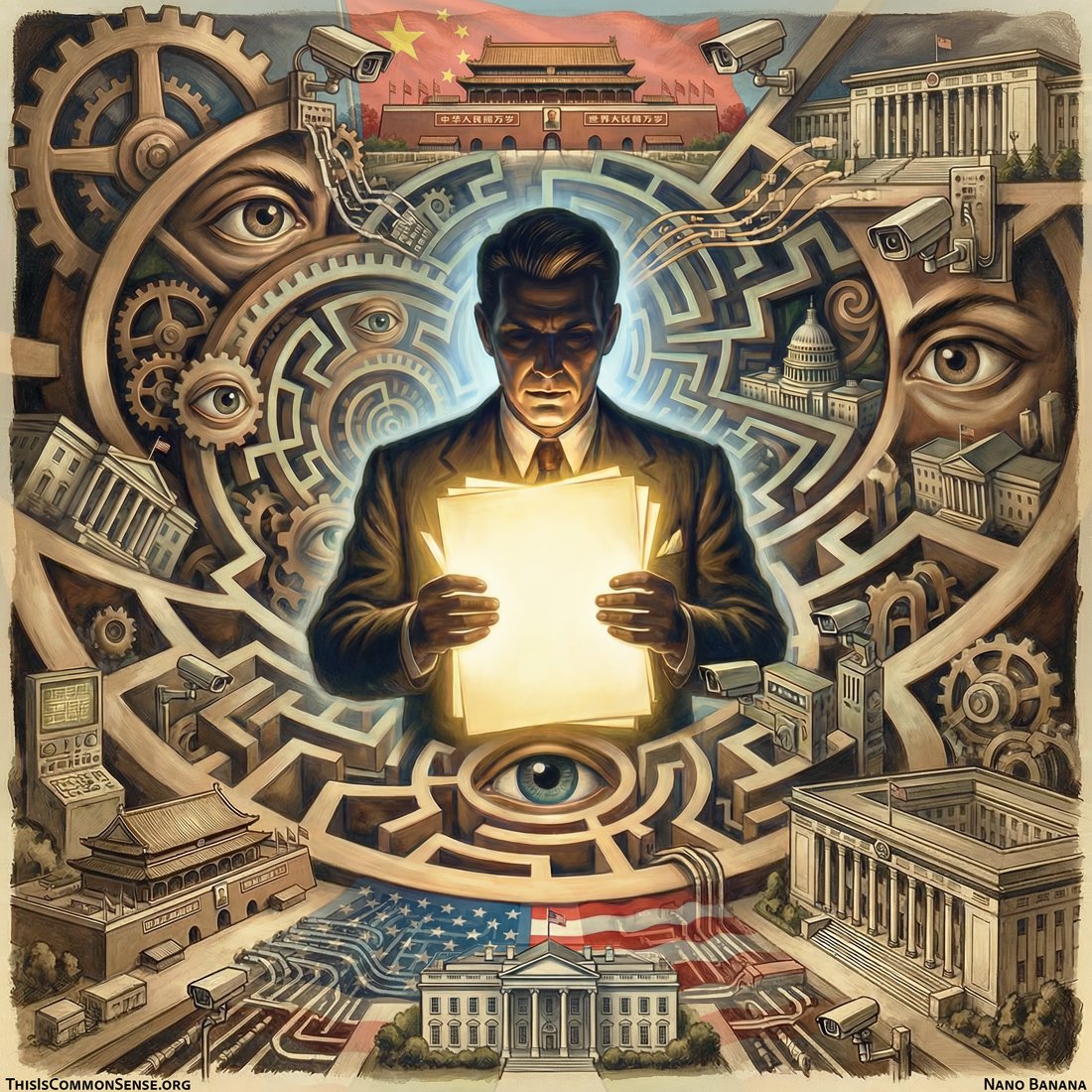
This report goes on to say that the “collection and aggregation of vast quantities of personal data” by commercial enterprises, and the willingness to share this data with third parties, “increases both the likelihood and the impact of data breaches.”
The report, which is highly redacted though declassified in late 2022, fingers Iranian hackers as well as foreign governments for having obtained private data on U.S. citizens. In 2013, Russia’s Federal Security Service “sponsored a theft of 3 billion accounts” off an American web service, and in 2017 Chinese agents “stole 147 million from a US credit-reporting agency.” And more.
Reading on, a sense of déjà vu develops. The report calls this technological capacity “digital authoritarian capabilities” — yet our own government has the same.
It accuses China of marshaling “mass surveillance and AI-driven algorithmic tracking of its citizens’ behavior at home to inform the use of soft or coercive incentives and disincentives to control them,” but that, I’m afraid, is what our government does, too.
Now we learn that all this and more was known by American intelligence agencies during the first Trump administration.
But was kept from him.
That is, “intelligence analysts downplayed China’s actions because they had disdain for the ‘vulgarian’ Trump,” explains Just the News, and at least one agent kept evidence of possible Chinese interference in the 2020 election from the president because that might have led to “policies against China” that the agent didn’t like.
That, right there, we call a datum.
This is Common Sense. I’m Paul Jacob.
Illustration created with Nano Banana
See all recent commentary
(simplified and organized)
See recent popular posts

Fas est et ab hoste doceri.
It is right to be taught by the enemy.
Ovid, Metamorphoses, Book IV, 428.
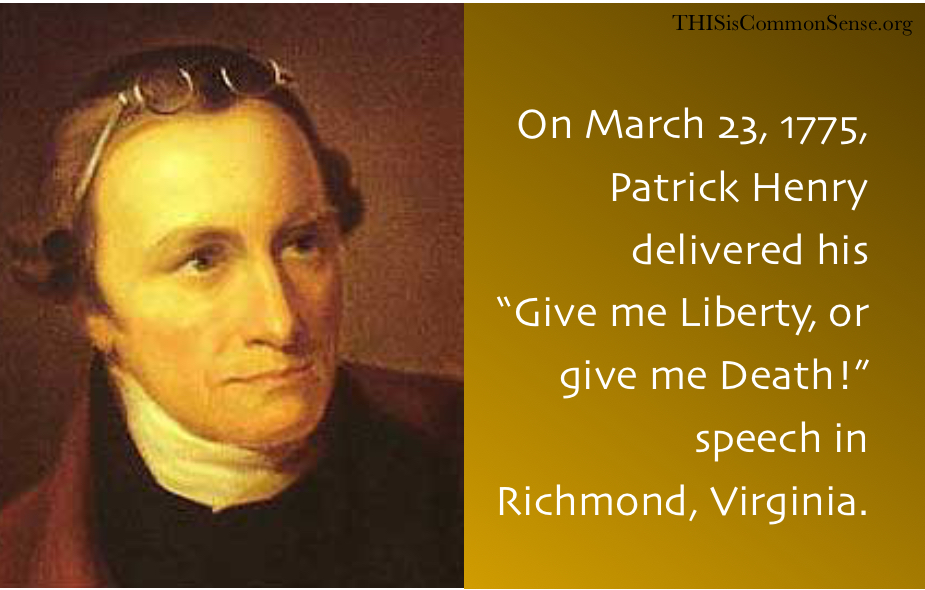
On March 23, 1775, Patrick Henry delivered his “Give me Liberty, or give me Death!” speech at St. John’s Church in Richmond, Virginia.