Categories
Accountability folly general freedom moral hazard national politics & policies responsibility too much government

Giving Up on the Future?

Both Germany and Japan now transfer money, on net, from the young to the old. Austria, Slovenia, and Hungary, The Economist reports, do the same.

The instrument of this transfer? Well, the elephant in the room: those nation’s entitlement programs — their versions of our “Social Security.”

John O. McGinnis, George C. Dix Professor in Constitutional Law at Northwestern University, explains how unnatural the direction of the transfer is. Normally, societies “give more to the young than the young can ever repay.” Remember the truism, “the children are our future”? Families, McGinnis explains, “exemplify this principle. Socially too, the intergenerational flow of resources is what creates civilization as each generation receives benefits from the previous one.”

Taking from the young to give to the old, on the other hand, is not just counter-intuitive. It stifles innovation, entrepreneurship, progress itself.

What drives the trend? It is complicated. But the politics behind redistributionist programs is the main culprit:

The elderly vote more than the young, who have more distractions, and politicians are thus all too eager to give them goodies. And while individually the elderly would like to direct more resources to their young relatives, when they act in politics they face a kind of tragedy of the commons. They cannot prevent others from living off the state, so they might as well do themselves.

As my generation, the infamous Baby Boom, retires, the demographics turn Social Security against society’s main purpose: building a future. The culture refocuses on retirement . . . preparing for death.

Another way — on top of growing debt and increasing regulatory burden — we’re leaving our kids with less than we had.

This is Common Sense. I’m Paul Jacob.


Printable PDF

Social Security, wealth transfer, young, old, elderly, Germany, Japan, baby boom


Categories
Accountability ballot access folly ideological culture nannyism national politics & policies

The Anti-Democratic Party Establishment

Democrats aren’t very good at democracy.

Consider the party’s presidential contest, as I did yesterday at Townhall.

As an appetizer, I noted the Democratic National Committee policy of hiding their debates from viewers by placing them on weekend evenings pitted against major sporting events.

For meat and potatoes, ponder my warning of the very ugly scenario of Sen. Bernie Sanders capturing as much as 58 percent of the primary and caucus vote and resulting delegates, but still losing to Hillary Clinton.

How could that possibly happen?

Because of folks designated as “superdelegates” — those awarded voting delegate status for holding a party office or being an elected or former elected official.

Democrats brag that they’ve reduced these insiders’ impact. Democratically-unaccountable superdelegates once accounted for 30 percent of Democratic Party convention delegates; now it’s only 15 percent of the total. Still, Clinton leads Sanders 380 to eleven among superdelegates.

At that rate, she could lose the actual state elections and still win the party’s presidential nomination.

The Democrats’ dereliction of democratic duty doesn’t end there, either.

The process by which various powerful party “interests” endorsed either Sanders or Clinton is quite telling. Journalist Zaid Jilani reports in The Intercept that, “Every major union or progressive organization that let its members have a vote endorsed Bernie Sanders.”

“Meanwhile,” Jilani found, “all of Hillary Clinton’s major group endorsements come from organizations where the leaders decide. And several of those endorsements were accompanied by criticisms from members about the lack of a democratic process.”

Seems the insiders have decided Mrs. Clinton will be on the Democratic Party presidential menu, whether Democrats like it or not.

This is Common Sense. I’m Paul Jacob.


Printable PDF

superdelegates, democracy, democrats, Sanders, Clinton, voting,


Categories
Accountability ideological culture national politics & policies responsibility

Pollsters Are Political Players, Too

Is Trump electable? Can Carson nab the GOP presidential nomination? Does Rand Paul have a chance? Is Chris Christie finished — before a voter has voted?

It’s still pre-primary season, and it is worth remembering that — even as we judge candidates on  various capacities, including their ability to “handle the media” — one arm of the media possesses potentially the most influence along with too little scrutiny: the pollsters.

They are allegedly the most scientific and objective folks in the industry, with closest ties to actual intellectual disciplines, statistics and political science.

But they are also, willy nilly, political players, not just observers.

Though tasked to provide data on public opinion about matters of importance, they also influence public opinion in several crucial ways:

  1. By how they phrase poll questions. This is an art, and can be extremely propagandistic. Pollsters can often “get” the information they want — if they want something in particular, perhaps for partisan reasons — by wording those questions carefully.
  2. By ordering questions in particular ways. The first question sets up a context. The second is then interpreted by those polled in that context. Pollsters can nudge people to reverse their usual opinions by providing an alien context.
  3. By presenting the results, skewed or not. People are influenced by others. Voting for candidates, especially, partly depends on second-guessing other voters. Few people wish to vote for someone who “cannot win.” Therefore, a published poll result that shows popularity can increase popularity, in a sort of multiplier effect.

Polls and poll results can provide useful information. Hey, I’ve used professional pollsters. But we all have to be cautious . . . remembering that voting one’s conscience is a high-percentage play.

This is Common Sense. I’m Paul Jacob.


Printable PDF

polling, polls, pollster, democracy, influence, elections, Common Sense, Bias, illustration


Categories
general freedom

Nix the Union Jack?

“Get a wriggle on,” New Zealand’s Electoral Commission is telling citizens
who want to cast a vote before today’s deadline to mail in ballots.

New Zealand is choosing a new flag.

Maybe.

In the referendum ending today, the first of two, voters will choose one of five proposed new flags. The second referendum comes next year when the chosen new design goes mano a mano against the current flag.

For years, Prime Minister John Key has itched to “scratch” the Union Jack, the United Kingdom’s flag, off the New Zealand national flag.

To assert some independence, I suppose. Hey, I can relate.

HBO’s John Oliver calls New Zealand “Australia’s Australia.” Glance at the two nation’s flags, they’re virtually identical. Populating a remote two-island nation, New Zealanders may share a desire not to live in any other nation’s shadow.

Granted, there were no demonstrations for the flag re-design, in the streets of Auckland, Wellington or Christchurch — or anywhere else, as far as I can tell. This was a referred measure, from politicians to the people — not an initiative.

And the referendums will cost $26 million, something not lost on the citizenry.

Furthermore, a flag is far less important than issues of war and peace, taxes, jobs, you name it.

But I really like that politicians didn’t give a designer a no-bid contract and do the choosing without the people. In fact, after whittling down to offer voters four designs in this referendum, a fifth entry was added after a petition for it on social media caught fire.

Could the flag chosen be as pleasing as the democratic process being used to get it?

This is Common Sense. I’m Paul Jacob.


Printable PDF

New Zealand, flags, flag, democracy, voting, Common Sense


Categories
meme term limits

We already have term limits, you moron…

Uhmmm,Yeah. So…how’s that Been working out for you?

(Public Approval Rating for congress: 15% | Re-election rate for congress: 90%)


Click below to get a high resolution version of this image (suitable for printing and sharing)

Term Limits, meme, illustration, congressional approval rating, re-election rate


Photo credits (endorsement of this message is not implied): cc Randy Stern on flickr / cc Raelene Gutlerrez on flikr


Categories
crime and punishment folly general freedom ideological culture

South Dakota Déjà Vu

In the words of Yogi Berra, the recently deceased baseball great: “It’s déjà vu all over again.”

We’ve followed the incredible case of Dr. Annette Bosworth extensively this year. She was convicted of twelve felony counts of petition fraud for circulating petitions that were signed at her medical office by patients (and her sister), while the doctor was in the Philippines on a medical mercy mission.

I don’t defend Dr. Bosworth signing that affidavit, stating that she witnessed those signatures, but I also don’t see criminal intent. Her attorney advised her it was lawful and all the signers were legitimate voters who truly wanted her to run for the U.S. Senate. Talking about felony fraud in such a case seriously misses the forest for the trees.

Bosworth wasn’t sentenced to prison time, thankfully.

But she lost her medical license.

Let’s hold people accountable, but not with an over-the-top vengeance likely to scare the average citizen away from political participation altogether. That’s been my message to South Dakota Attorney General Marty Jackley.

What about déjà vu?

Today, in a Pierre courtroom, Annette’s husband, Chad Haber, will be arraigned on felony charges for signing as the circulator on a petition with two signatures affixed when he was with his wife on that medical trip.

AG Jackley loudly proclaims that this is not his indictment; it was filed by a county prosecutor. But anyone who didn’t fall off the turnip truck yesterday knows how these things tend to work.

Haber challenged Jackley last election and the feud is well known and long-running. Being a prosecutor requires judgment, something Jackley lacks . . . as he will no doubt prove in court.

This is Common Sense. I’m Paul Jacob.


Printable PDF

Chad Haber, Annette Bosworth, Marty Jackley, South Dakota, illustration, Paul Jacob, Common Sense


Categories
folly general freedom ideological culture term limits

Congo Prez Prizes Service

Congo-Brazzaville’s president, Denis Sassou Nguesso, is quite the statesman.

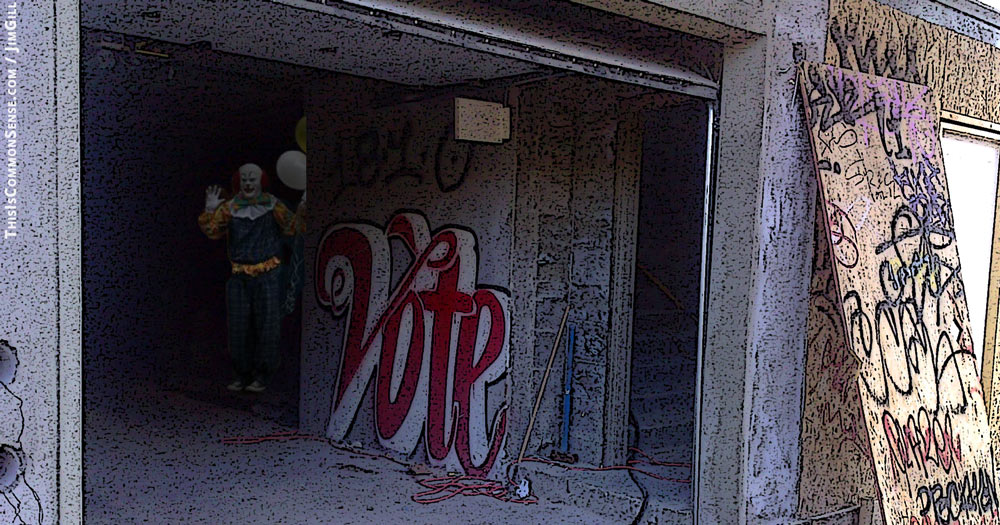
He’s actually done what many an illustrious American pol with an obsession about “campaign finance” would merely like to do, but cannot (that darn First Amendment!): prohibited all talk about politics prior to the next election.

Indeed, the government has shut down the Internet and cellular SMS services, simply to prevent undue influence prior to the upcoming votes. Democracy requires a veil of ignorance, we’re told, and Nguesso’s taken that august philosophical scheme to its logical conclusion: no information running through the information superhighway of the modern age . . . at gunpoint.

And like many a long-term American insider, he’s balking at term limits, too. He has served his legally limited two terms. So he and his fellow statesmen put a referendum onto the upcoming ballot to overthrow them.

Just so he can serve longer.

Think of the sacrifice! He really must be looking out for his earnest and ardent supporters.

But he didn’t stop there. To fulfill his mandate, and continue in office, he has to entreat the people to overturn Congo’s mandated retirement age. At 71, he’s now too old to legally run, even if he were a first-termer.

Trifecta! — a pol so insistent at continuing his life of never-ending public service that he fights against ageism, term limits, and the corrupting influence of free speech!

I’m sure he has many, many secret sympathizers in our Congress, and in the legislatures of our several states.

This is Common Sense. I’m Paul Jacob.


Printable PDF

Congo-Brazzaville’s president, Denis Sassou Nguesso, Nguesso, Africa, democracy, voting, elections, collage, photomontage, illustration, JimGill, Paul Jacob, Common Sense


Categories
folly term limits

Getting to Know You

The Fourth Estate is coming undone.

Obviously.

But little did I know the problem was term limits.

Respected journalist Tim Skubick complained last November how incredible is the strain created by “44 mostly unknown faces” coming into the Michigan Legislature, adding, “I have to get to know them.”

Courage, Mr. Skubick, courage.

Then yesterday, the Detroit Free Press announced “a growing number of criticisms, from across the political spectrum . . . on just how catastrophic it has been to leave legislative decision-making, in particular, to people with little time on the job.”

“Catastrophic” to the people of Michigan, who now support term limits in greater numbers than when limits passed 23 years ago?

No, that word might better describe the Free Press’s decades of editorializing for the corrupt status quo.

By “across the political spectrum,” the editorial board really means “insiders from across the spectrum.”

The newspaper “offers five different takes on the trouble with term limits”:

  • The op-ed editor posits that legislators need greater experience . . . and only legislative service, not experience elsewhere, is valuable.
  • Another writer argues that being a representative is no different, really, than being a barber or a florist.
  • Legislators sometimes make sacrifices to serve and then are sad they cannot stay in office longer. (Boo-hoo.)
  • Two academics, who have long despised term limits, suggest weakening the limits.
  • A former congressman’s spouse claims elections in this world of social media are term limits. (No evidence offered, there being none.)

All five op-eds oppose term limits; none supported them. This is a liberal broadsheet’s fair and diverse discussion.

This is Common Sense. I’m Paul Jacob.


Printable PDF

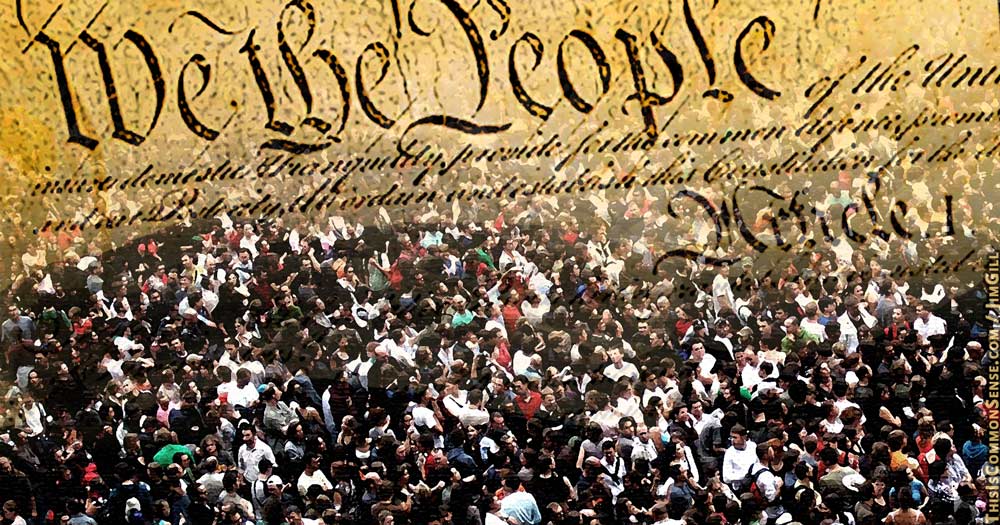
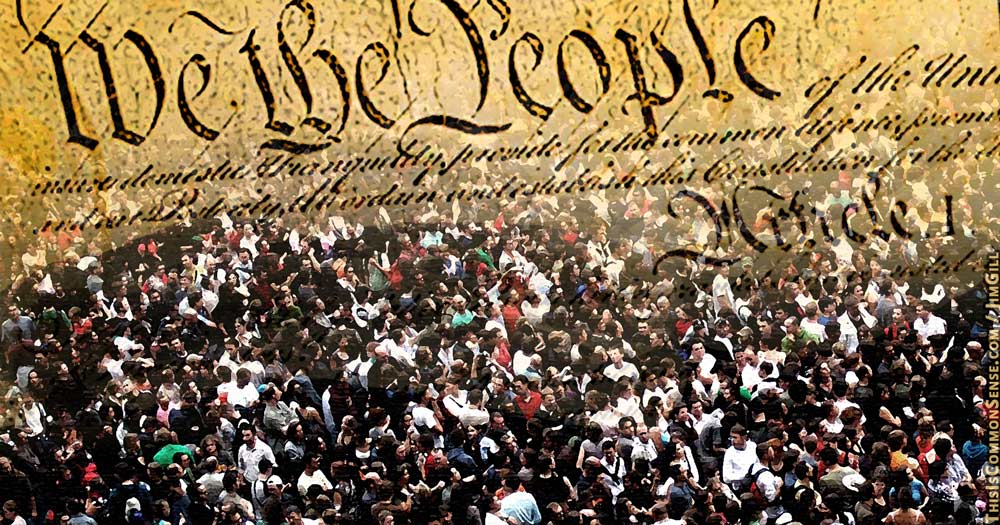
term limits, democracy, voting, collage, photomontage, JGill, Paul Jacob, Common Sense


Categories
Accountability Common Sense general freedom government transparency too much government

(Un)Intended System Failure

The system worked. The problem? The system doesn’t work.

Last year’s successful term limits ballot initiative in Grand Rapids pitted two pro-limits ladies with scant political experience against a united big business/big labor opposition campaign, sporting Dr. Glenn Barkan, professor emeritus of political science at Aquinas College, as treasurer.

Just before Election Day, Professor Barkan’s group stuffed mailboxes with advertisements warning residents: “Don’t let your vote be shredded.” The mailings seemed odd in two more respects: (1) there was no mention of “term limits,” and (2) according to campaign finance reports, the professor’s committee didn’t have enough money for mass mailings.

Then, after the election, the committee filed reports acknowledging big money raised and spent prior to the election.

“It just seemed odd that they could do all the mass mailings with little money,” said term limits advocate Bonnie Burke. “We ran a totally above-board campaign and they have these seasoned people and they weren’t sticking to the rules.”

Michigan’s Bureau of Elections concluded the professor’s committee “deprived voters from knowing the source and amount of more than half of the contributions it received. . . .” The group was fined $7,500.

The system worked! Reporting led to a violation, which led to a complaint, which led to an investigation, which led to the imposition of a fine.

But to what point?

As my colleague at Liberty Initiative Fund, Scott Tillman, who filed the complaint, explains, “Campaign finance laws do not stop connected insiders from gaming the system and hiding donations. Big money can ignore the laws and pay the fines if they get caught.”

Even worse, Tillman warned, “Campaign finance laws intimidate and discourage outsiders and grassroots activists from becoming active in politics.”

Is either result unintended?

This is Common Sense. I’m Paul Jacob.


Printable PDF

Campaign Finance Follies


Categories
Common Sense incumbents meme term limits

Scandal-Less

In the 15 states voters have enacted term limits for their state representatives and senators, those politicians and the lobbyists and heads of powerful interest groups constantly complain that the limits are a problem.

I know. That’s why I like term limits.

Am I a broken record on the subject? Perhaps. But let me tell you about a different type of record . . . criminal.

“Are term limits good ideas for Pa. elected officials?” asked a Newsworks.org headline, after Steve Reed, the former 28-year mayor of Harrisburg, Pennsylvania, “was arrested on nearly 500 criminal charges that included corruption, theft, bribery and dealing in proceeds of unlawful activity.”

“Top N.Y. lawmaker arrested on corruption charges,” read a January USA Today headline. Sheldon Silver, after more than 20 years as Assembly Speaker was “arrested on federal corruption charges alleging he was involved in a multimillion-dollar kickback scheme for more than a decade.”

In 2009, after Massachusetts saw its third House Speaker in a row indicted, I ranked New Jersey, Illinois and Massachusetts as the three most corrupt states. The top contenders all have one thing in common: a lack of term limits.

A couple years ago, I joined Greg Upchurch, a St. Louis patent attorney and entrepreneur at a conference on term limits in Missouri. Greg (the driving force behind the state’s 1992 initiative) told the audience, mostly opposed to term limits, that the limits are here to stay.

Before term limits, Upchurch pointed out, legislative leaders were going to prison for corruption. With term limits, there simply haven’t been such scandals.

This is Common Sense. I’m Paul Jacob.


Printable PDF

Term Limit Protection