Categories
crime and punishment international affairs U.S. Constitution

The Dictator’s Arrest

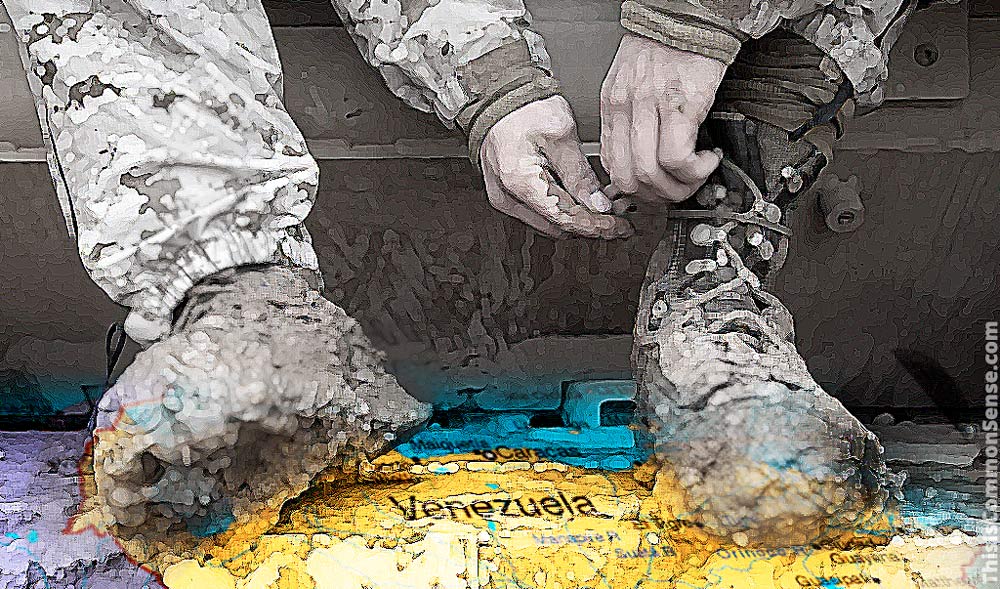
The U.S. military captured Venezuela’s dictator, Nicolás Maduro, and his wife, Cilia Flores, on Saturday; a lot of people who hate Donald Trump are complaining about the president’s decision to “arrest” the foreign head of state. 

Sure, it’s an act of war. 

Authorized by Congress? Not really, but that’s hardly unusual. 

There is that 2020 indictment, unsealed by the U.S. Department of Justice during Trump’s first term, accusing Maduro and senior Venezuelan officials of conspiring with Colombian guerrilla groups (like the FARC) to traffic massive quantities of cocaine into the United States. This was updated in a superseding indictment unsealed over the weekend, which added Maduro’s wife, son, and others as defendants.

Specifically, the charges are:

  • Narco-​terrorism conspiracy.
  • Conspiracy to import cocaine. 
  • Possession of machine guns and destructive devices.
  • Conspiracy to possess machine guns and destructive devices.

Considering that Venezuela is a sovereign state and can have whatever drug policies or gun laws it wants, all this might seem a tad … ridiculous.

Most people, however, will likely be moved by two very different lines of thinking:

  • Maduro was an evil tyrant, and it’s good that his murderous regime has been (sorta) toppled; and
  • The operation was skillfully done, demonstrating U.S. military strength.

Is the effort coherent and compatible with other international military stances of the United States? Debatable.

How does it affect, say, the U.S. position on Taiwan? Will this encourage or discourage the People’s [sic] Republic [sic] of China?

One could argue both ways. As a successful demonstration of military might, it will likely dissuade the Chinazis. But if it turns world opinion against the U.S., the opposite will likely prove true.

Still, isn’t it hard to side with a dictator? I mean Maduro.

This is Common Sense. I’m Paul Jacob.


PDF for printing

Illustration created with Nano Banana

See all recent commentary
(simplified and organized)
See recent popular posts

Categories
crime and punishment defense & war U.S. Constitution

Gunboat Anti-​Diplomacy

A boat in international waters off the coast of Venezuela was blown up by the U.S. military, on President Donald Trump’s proud authorization. 

It was not universally praised.

“The controversy erupted on Saturday when Vance wrote on the social platform X,” Sabina Eaton reports, quoting the vice president: “’Killing cartel members who poison our fellow citizens is the highest and best use of our military,’ referencing the September 2 military strike.”

The idea that the “best use” of our armed forces is to destroy — without arrest or declaration of war or even a serious legal case set before world opinion or, for that matter, U.S. opinion — sounds all too modern but not very American.

Does it matter that they were, or merely might have been, “narco-​terrorists,” as the president called the eleven people wiped out on the fast-​moving boat? Or that Mr. Trump asserted their service to Venezuela’s strongman Maduro — against whom the U.S. has not declared war?

“Sen. Rand Paul all but accused the vice president of celebrating war crimes,” Eli Stokols and Dasha Burns wrote yesterday at Politico. “The Kentucky Republican ripped Vance over the weekend in a social media fight that could offer a preview of future skirmishes between President Donald Trump’s heir apparent and another Republican with 2028 ambitions.”

The Kentucky senator asked, rhetorically, if the vice president had “ever read To Kill a Mockingbird?

“Did he ever wonder what might happen if the accused were immediately executed without trial or representation??

“What a despicable and thoughtless sentiment it is to glorify killing someone without a trial.”

Rand is right. The use of unlawful or unaccountable power can never advance American interests. Because one of our interests is holding power to account, to the rule of law. 

Thank you for your attention to this matter.

This is Common Sense. I’m Paul Jacob.


PDF for printing

Illustration created with Krea and Firefly

See all recent commentary
(simplified and organized)
See recent popular posts
Categories
general freedom ideological culture media and media people

Showcialism, Schmocialism

Americans have never gotten into “socialism” like the rest of the world. This places pushers of socialistic ideas in a tricky situation. So they often defend socialism in less than honest ways. 

William Neuman, formerly of the New York Times, is a current example of this. St. Martin’s has just published his Things Are Never So Bad That They Can’t Get Worse: Inside the Collapse of Venezuela, and boy, do we get a story.

Hugo Chávez called himself a socialist, repeatedly, but Neuman won’t accept it. Why? Venezuela was basically ruined by Chávez and his henchmen and successors. So the former New York Times reporter provides excuses. 

Which is not to say I have read his book, or will. I am entirely trusting a review by Jim Epstein, at Reason, and agreeing per a plethora of other examples with Epstien’s critique of Neuman’s denialism.

While Neuman insists that Chávez was, in effect, a SINO (Socialist In Name Only), using the s‑word just as cover — “showcialismo” — Epstein takes us back to reality. “One classic definition of socialism is government control of the means of production. Chávez nationalized banks, oil companies, telecommunications, millions of acres of farmland, supermarkets, stores, the cement industry” and on and on. Now wonder, then, that “nationalization led to deterioration, abandonment, and collapse.”

Neuman cannot blame socialism, oh no. So he lamely argues it was just “bad management.”

But that is what socialism is, and must be. Even when managed by the very best experts, those experts must fail, in the end, because they lack the expertise that counts — the know-​how that is spread out among all participants in society. 

Markets leverage that knowledge best.

This is Common Sense. I’m Paul Jacob.


PDF for printing

See all recent commentary
(simplified and organized)
See recent popular posts
Categories
free trade & free markets general freedom international affairs too much government

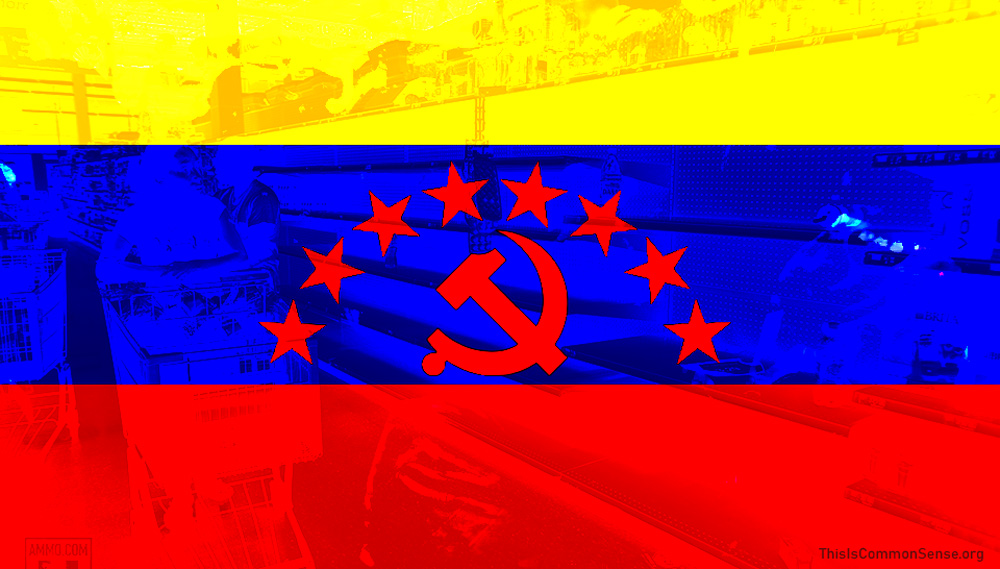
From Socialism to Fascism

Democratic socialism might seem all fun and games … right up until one is forced to choose between democracy and socialism. Those countries that choose the latter, like Venezuela, lose both prosperity and democracy, and then things get really bad.

But what happens when such a society’s dictator wises up?

“Bankrupted by Socialism, Venezuela Cedes Control of Companies,” Fabiola Zerba reports for Bloomberg. “Saddled with hundreds of failed state companies in an economy barreling over a cliff, the Venezuelan government is abandoning socialist doctrine by offloading key enterprises to private investors, offering profit in exchange for a share of revenue or products.” 

If that last sounds like less than full privatization, and unnecessarily cumbersome, it is. “Dozens of chemical plants, coffee processors, grain silos and hotels confiscated over the past two decades have been transferred — but not sold — to private operators in so-​called strategic alliances.…”

“Strategic alliances” sounds ominously … fascistic.

This is not gratuitous, for, as Peter Drucker explained, “Fascism is the stage reached after communism has proved an illusion.” And it is definitely not directly towards “free markets” that Venezuela now moves. Dictators and ruling juntas don’t like free markets. It makes them less integral to the wealth extraction process. 

And wealth, in their view, needs to be extracted!

It gives meaning to their lives.

Jon Miltimore, in an article at FEE, also uses the f‑word, and quotes my friend Sheldon Richman’s definition: fascism, noun : “socialism with a capitalist veneer.”

Really moving beyond 20th century mistakes would entail reviving actual free markets. Not “so-​called strategic alliances.”

This is Common Sense. I’m Paul Jacob.


PDF for printing

See all recent commentary
(simplified and organized)
See recent popular posts
Categories
general freedom ideological culture Second Amendment rights too much government

Whither Away?

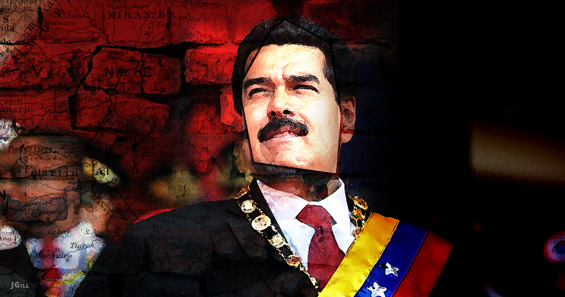
“All around the world, earnest fans of socialism insist it has never failed, as critics claim, since ‘true socialism has never really been tried,’” the New York Post editorial board wrote on Tuesday. But socialism has been tried. It just doesn’t turn into the utopia socialists promise. 

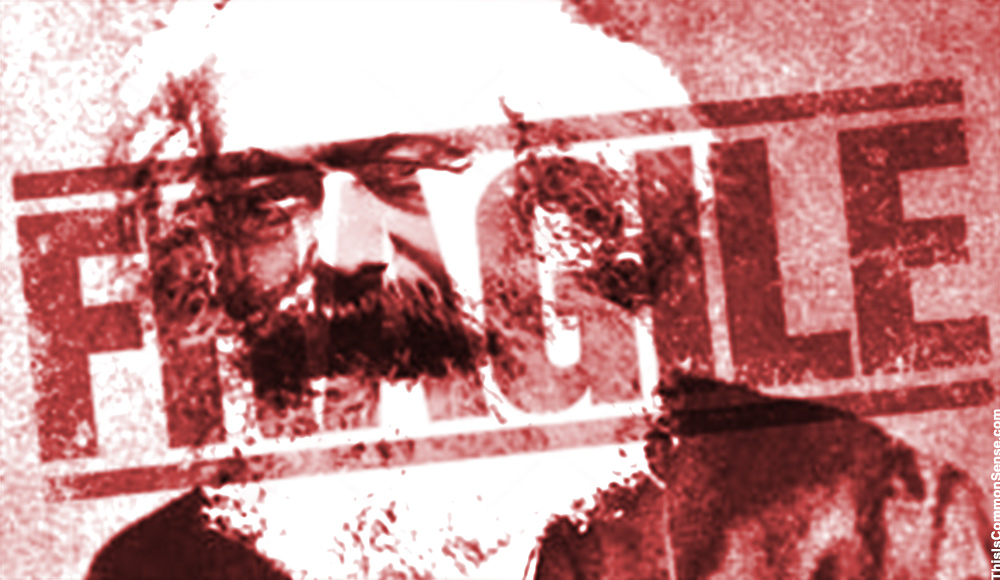
And the State certainly does not do under socialism what Karl Marx said it would: wither away.

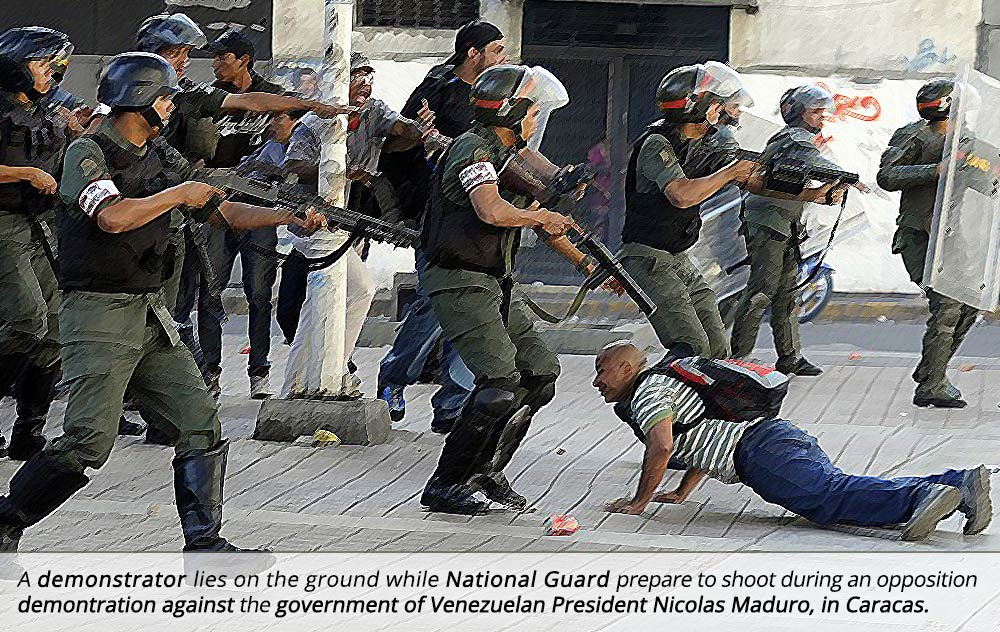
In Venezuela, “Bolivarian” dictator Nicolás Maduro sure isn’t withering away. In defiance of terms as well as term limits, he is not stepping down even as his country spirals downward into starvation and squalor. 

His method and madness are not mysteries: he keeps power the old-​fashioned way, sheer force.

The Post’s editors note his latest stay-​in-​office procedure: “He’s going to expand his massive private army to 4 million gunmen by the end of 2020.”

He might be able to do it, since his ruthless regime is supported not only by a well-​stocked military, but also boasts an alleged 3.3 million gang-​members in the “Bolivarian militia,” exempt from the gun confiscation of 2012.

It turns out (to neither your shock nor mine) that key to making socialism work is the threat of confiscation, control, murder. “Maduro is showing that the sure way to make it ‘succeed,’” says the Post, “is for the self-​proclaimed socialists to have all the guns.”

By definition, socialism is the “public” ownership and control of the means of production. By necessity, socialism requires the governing class’s ownership and control of the means of destruction.

And we see that now being used to destroy any opposition.

This is Common Sense. I’m Paul Jacob.


Maduro, Venezuela, socialism, collapse, illustration

See all recent commentary
(simplified and organized)
See recent popular posts

Categories
folly international affairs moral hazard Popular

For Freedom in Venezuela

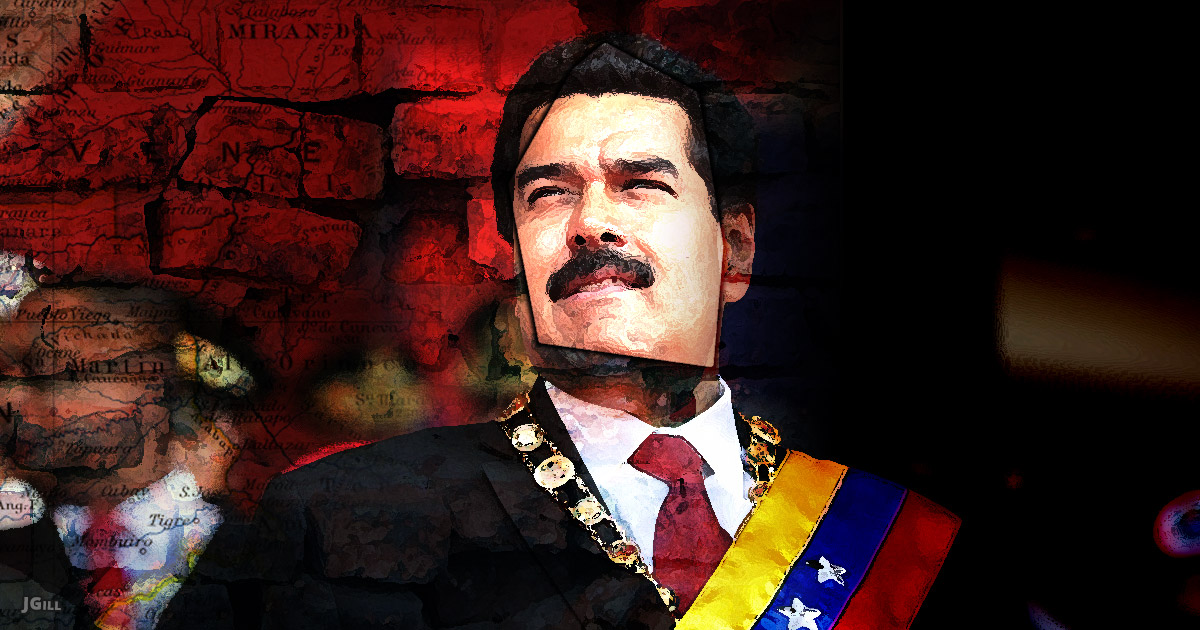
Last week’s coup in Venezuela flopped, it’s reported. But “coup” isn’t quite right: a popular rebellion failed to spark defections from key military commanders, who have become the end-​all and be-​all of Nicolás Maduro’s reign-​at-​rifle-​point and rule by decree

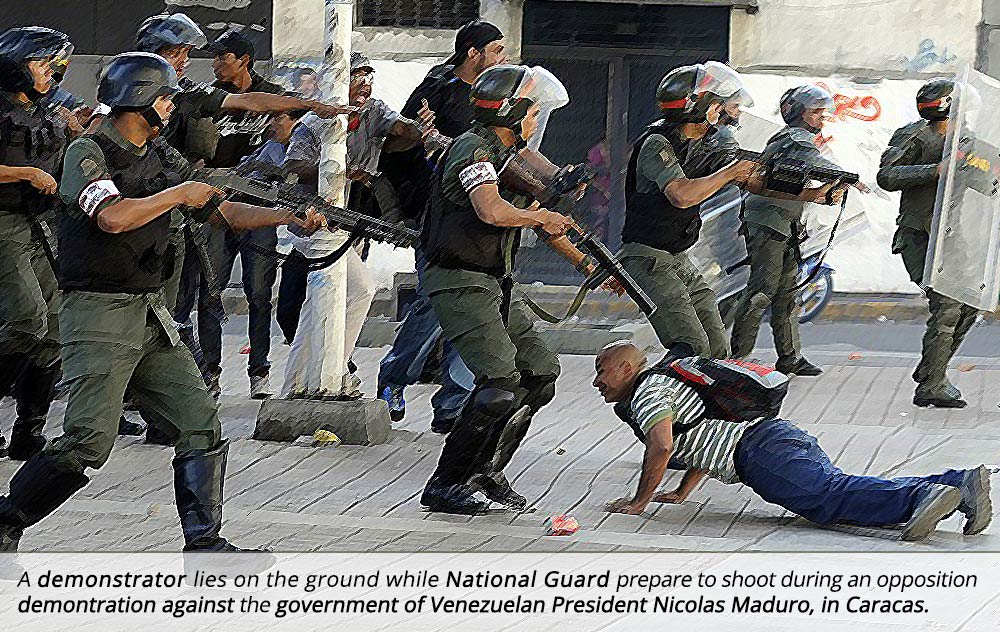
Anyone with open eyes can see the illegitimacy of the Maduro regime. When governments shoot their own people and run over them with tanks or armored personnel carriers, there ceases to be any use in debating the fine points of political philosophies.

Facing the current impasse, opposition leader Juan Guaidó toldCBS News reporter he is “open” to U.S. military intervention, adding: “I want a free election now, no dictatorship, for kids in Venezuela not to starve to death.”

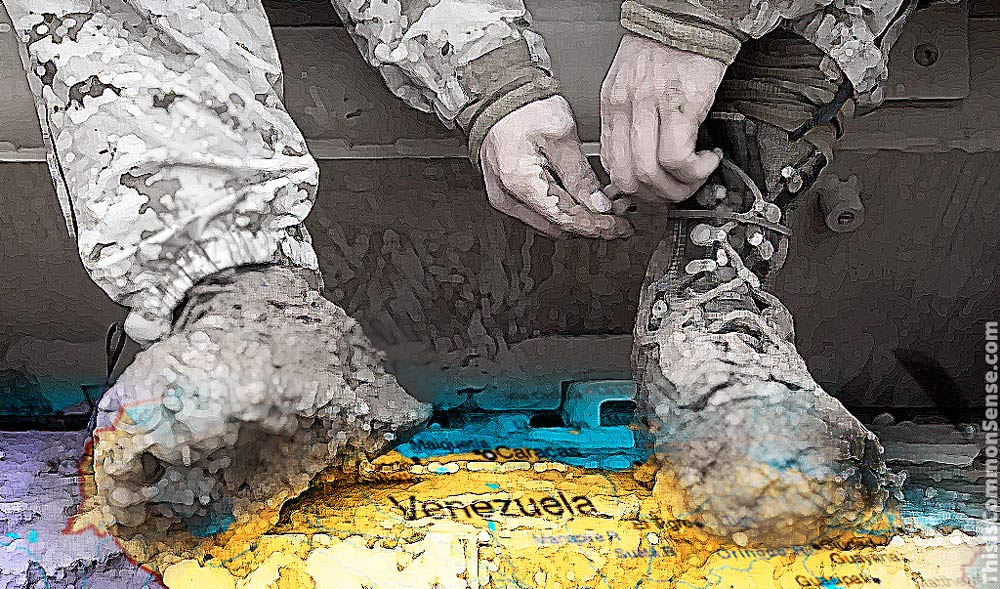
That doesn’t mean the U.S. should intervene, which I think would be a mistake for both us and, ultimately, the people of Venezuela — possibly turning a widely supported uprising into a protracted civil war.

“Before the bombers take off, let’s just answer a few quick questions,” Fox News host Tucker Carlson suggests. “When was the last time we successfully meddled in the political life of another country? Has it ever worked? How are those democracies we set up in Iraq and Libya and Syria and Afghanistan?”

I don’t doubt a sweeping military victory should the U.S. invade Venezuela, but it is getting out that always proves so difficult.

This is Common Sense. I’m Paul Jacob.


Note: Last week, a number of Venezuelan soldiers did indeed switch their allegiance from the despot to demonstrators — reminding me of the inspiring pacification of the initial Chinese troops sent to restore “order” in Tiananmen Square some 30 years ago. The head of Maduro’s Bolivarian Intelligence Service (SEBIN) also defected.

PDF for printing

Venezuela, quagmire, mud, Maduro, socialism,

See all recent commentary
(simplified and organized)
See recent popular posts

Categories
media and media people Popular Second Amendment rights

MSNBC Goes Caracas?

Expressing the surprise in some quarters that Venezuelan despot “Maduro is hanging on,” MSNBC’s Andrea Mitchell went to reporter Kerry Sanders to make sense of the tense situation in Caracas, that nation’s capital.

“Not only hanging on, but he appears to still control the military,” Sanders replied, explaining: “You have to understand, in Venezuela gun ownership is not something that’s open to everybody. So, if the military have the guns, they have the power, and as long as Nicolás Maduro controls the military, he controls the country.”

Oh, I certainly understand. In fact, I’ve never heard a more clear, concise and irrefutable argument for the importance of our Second Amendment right to bear arms. 

And this was on MSNBC … in broad daylight!

What wasn’t reported on the progressive network, but rather by the Free Beacon, is that Venezuela “banned private gun ownership in 2012 under Maduro’s authoritarian predecessor, Hugo Chavez.” 

“Under the new law,” the BBC noted at the time, “only the army, police and certain groups like security companies will be able to buy arms from the state-​owned weapons manufacturer and importer.”

That gun ban was described by the BBC as “the latest attempt by the government to improve security.” Indeed, by disarming the public, the security of the socialist dictatorship has obviously been greatly enhanced.

Later in the day, the Spanish-​language La Noche NTN24 tweeted a video of a government armored vehicle running over protesters — or, as MSNBC might remind us: unarmed protesters.

This is Common Sense. I’m Paul Jacob.


PDF for printing

Venezuela, guns, 2nd Amendment, self defense. socialism, rights,

Photo credit: Diariocritico de Venezuela

See all recent commentary
(simplified and organized)
See recent popular posts

Categories
term limits too much government

Beautiful Canary

New hope for Venezuela: A direct constitutional challenge against the horrific reign of socialist strongman Nicolás Maduro enjoys massive popular support and has quickly gained international recognition.

If 35-​year-​old National Assembly President Juan Guaidó, who launched the campaign, succeeds in restoring a democratic government, he should also restore term limits on the president, the National Assembly and other offices. 

Those limits were repealed through a 2009 constitutional referendum that paved the way for then-​President Hugo Chavez to continue in power. With government domination of the media and a slanted ballot question, it was less than a fair election. Still, 54 percent voted to end the limits.

Today, I’m certain the majority would vote differently.

Venezuela makes me think of Nicaragua, likewise being looted and brutalized by a socialist thug. Hundreds have been killed in protests demanding that Nicaraguan President Daniel Ortega step down. I have friends with relatives in harm’s way.

Nicaragua is similar to Venezuela in another respect: The care and maintenance of dangerous concentrations of power ran smack into an established constitutional restraint known as term limits. 

In a widely condemned 2011 decision, the country’s supreme court “declared the constitution unconstitutional,” as the leader of the Nicaraguan Center for Defense of Human Rights put it. This permitted Ortega to run again. Three years later, the National Assembly jettisoned the limits from the constitution — without any vote of the people.

Term limits are needed everywhere, every city, state and nation across the globe. Even when a powerful despot breaks the limit, the violation at least serves as the coal miners’ dead canary, demonstrating that the political air has become too dirty for liberty to breathe.

This is Common Sense. I’m Paul Jacob.


PDF for printing

term limits, Venezuela, socialism, canary

See all recent commentary
(simplified and organized)
See recent popular posts

Categories
folly free trade & free markets general freedom ideological culture property rights too much government

Big Government Apologetics

Journalists play different roles.

Too few report. Too many engage in elaborate apologetics for favored causes.

Like big government.

Take this headline: “Venezuela’s Crisis Is Rooted In Oil Prices — and Authoritarianism.”

Guess: reporting, or bending over backwards to save socialism?

The article’s summary of the decline and fall of Venezuela is accurate insofar as it indicates assaults on liberty, including nationalizations and monetary inflation. But neither “oil prices” nor dependence on oil spawned Venezuela’s crisis.

Every industry, city and nation will experience unfavorable markets, now and then. But what’s fundamental is their “antifragility.” And, news to journalists: socialist societies are fragile in ways that freer societies are not.

Suppose Venezuela had had a free market when oil prices dropped so precipitously. People would then have shifted, however grumpily, into enterprises now more profitable than drilling for and distributing oil.

It is no blunder to specialize, to exploit comparative advantages in knowledge, skills or resources, and to engage in local, regional or international trade. It’s fine even if an economy’s production and exports ends up being dominated by just one good. What matters is whether people are free or burdened by government controls. If the latter, how hard does government make it to cope with changing circumstances?

Unhampered market prices supply the information and incentives needed to adapt to all kinds of changes. But if an economy is chronically distorted and calcified by government controls, it becomes much harder to adapt … and much harder to survive.

Today’s journalists routinely adapt facts to story, rather than adjust stories to reality. Guys, give up the ideological apologetics. Go back to reporting.

This is Common Sense. I’m Paul Jacob.


PDF for printing


Categories
Accountability general freedom ideological culture national politics & policies Popular too much government

Pulling It Off

Give democratic socialism a chance? 

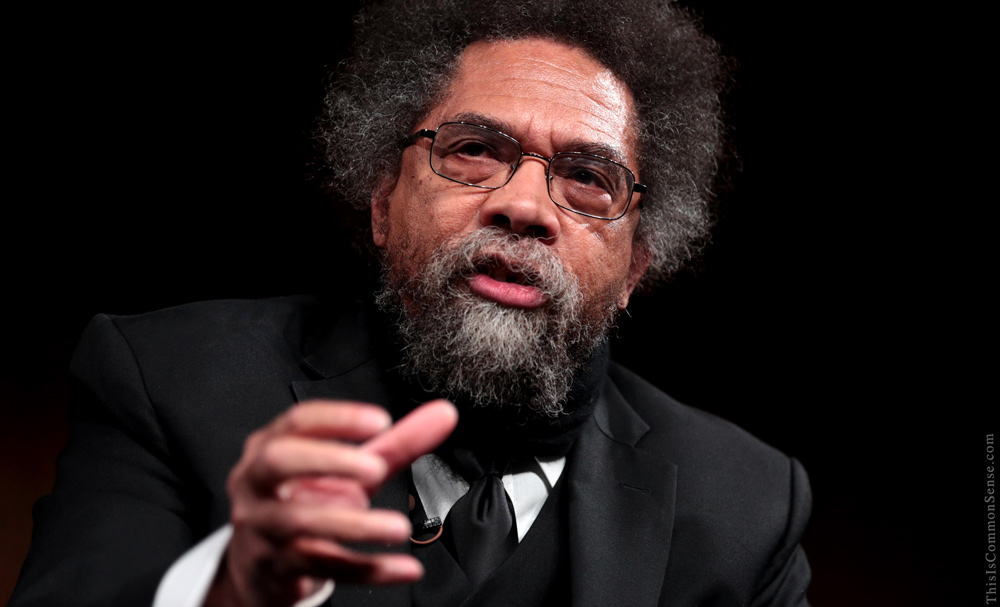
So says Dr. Cornel West, the “provocative democratic intellectual” who serves as one of eight honorary co-​chairs of the Democratic Socialists of America. 

This accomplished Professor of the Practice of Public Philosophy at Harvard University, and Professor Emeritus at Princeton, explained to Fox News host Tucker Carlson that socialism’s “fundamental commitment is to the dignity of ordinary people and to make sure they can lead lives of decency.”

“What happened in Venezuela?” Carlson asked West. “They called that democratic socialism. But they don’t have toilet paper and it’s less equal than ever.”

“But part of the problem is though, brother,” the professor responded, “that any time there [have] been attempts by ordinary people to engage in self-​determination, they can get crushed by external nations. Look at U.S. policies toward Venezuela [which have] been very, very ugly — Nicaragua in the same way.”

West offered nary a specific to his charge, but was handy stating his conclusion. “So, we have never had a chance to really pull it off,” the “it” being socialism. 

“So it’s only been a movement so far.”*

How convenient.

West implicitly acknowledges that those ruling Venezuela and Nicaragua are practicing socialism. But he won’t hold them or the ‑ism responsible for the economic collapse, the hunger, the exodus of millions of very desperate “ordinary” citizens, the arbitrary arrests, use of torture and murder of innocent citizens. 

Dr. West, a follow-​up question: Just what specific U.S. policy triggered these socialists to murder and torture their own people?

This is Common Sense. I’m Paul Jacob.


* Dr. West also announced that socialism “is not an ‘ism,’ brother.” I think the professor needs to take a course in ism-ology.

PDF for printing


Photo by Gage Skidmore