Categories
Accountability ideological culture subsidy

Red-​Flagged Welfare Fraud

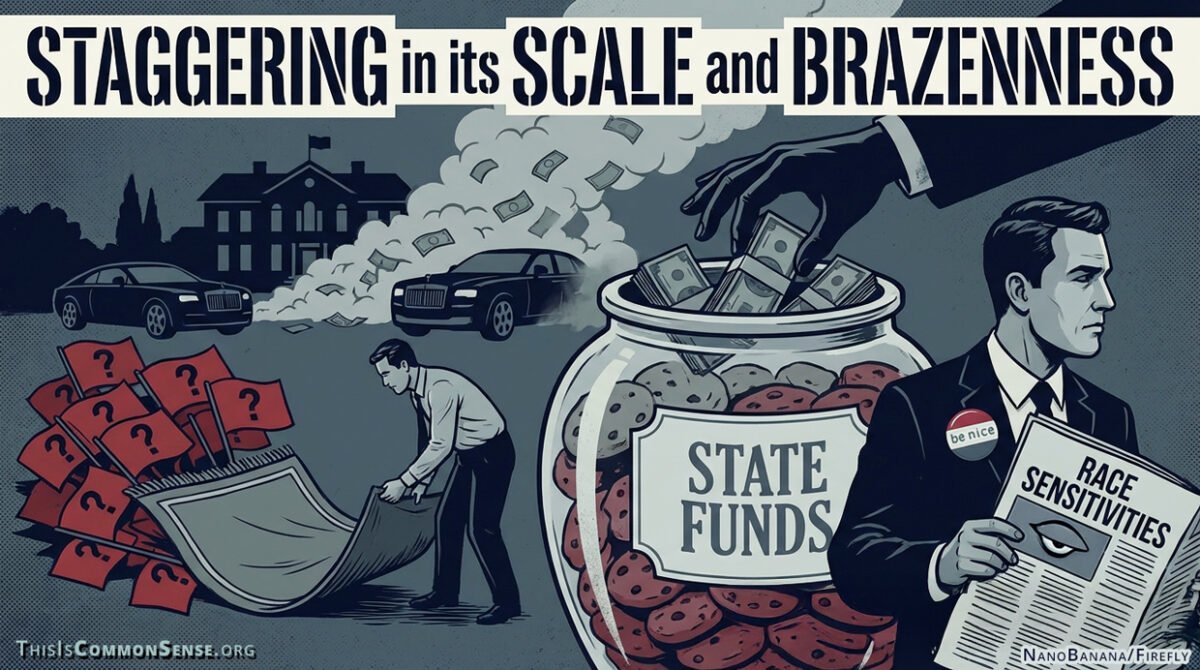
“Staggering in its scale and brazenness.” 

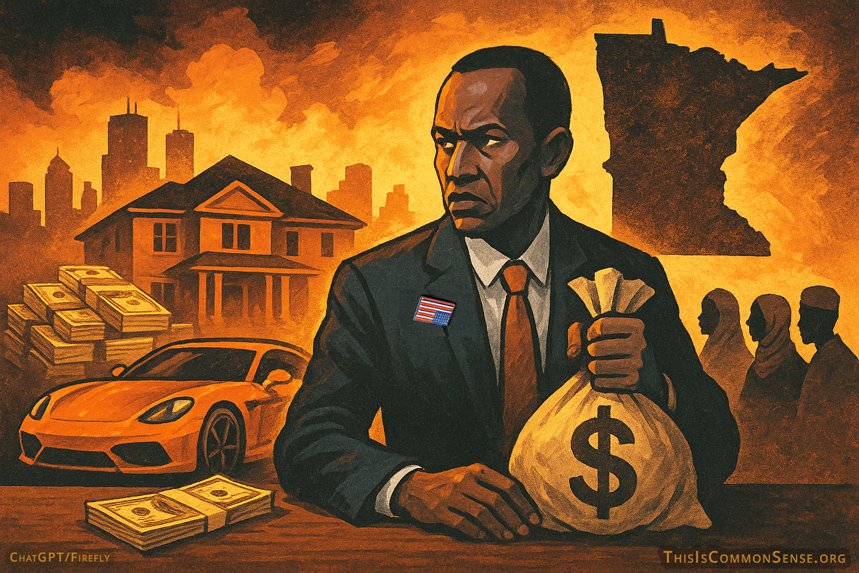
That’s how The New York Times describes the more than $1 billion in fraud that “took root in pockets of Minnesota’s Somali diaspora as scores of individuals made small fortunes by setting up companies that billed state agencies for millions of dollars’ worth of social services that were never provided.”

Quite a lucrative business model: Stealing from programs to prevent homelessness and keep children fed during the pandemic, the crooks instead “spent the funds on luxury cars, houses and even real estate projects abroad.” 

So far, prosecutors have convicted 59 people, with “all but eight of the 86 people charged” of “Somali ancestry.”

According to Ryan Pacyga, an attorney representing several defendants, The Times reports that “some involved became convinced that state agencies were tolerating, if not tacitly allowing, the fraud.”

What?

“No one was doing anything about the red flags,” argues Pacyga. “It was like someone was stealing money from the cookie jar and they kept refilling it.”

Why was nothing done?
Well … the federal prosecutor contends that what The Times calls “race sensitivities” (read: fear of being called racist) were “a huge part of the problem.” 

One former fraud investigator, a Somali American named Kayseh Magan, blames “the state’s Democratic-​led administration” which was “reluctant to take more assertive action in response to allegations in the Somali community.”

“There is a perception that forcefully tackling this issue might cause political backlash among the Somali community,” Magan explains, “which is a core voting bloc.” 

For Democrats.

Very expensive votes.

This is Common Sense. I’m Paul Jacob.


PDF for printing

Illustrations created with ChatGPT, NanoBanana and Firefly

See all recent commentary
(simplified and organized)

See recent popular posts
Categories
litigation property rights U.S. Constitution

The Stealing Goes On

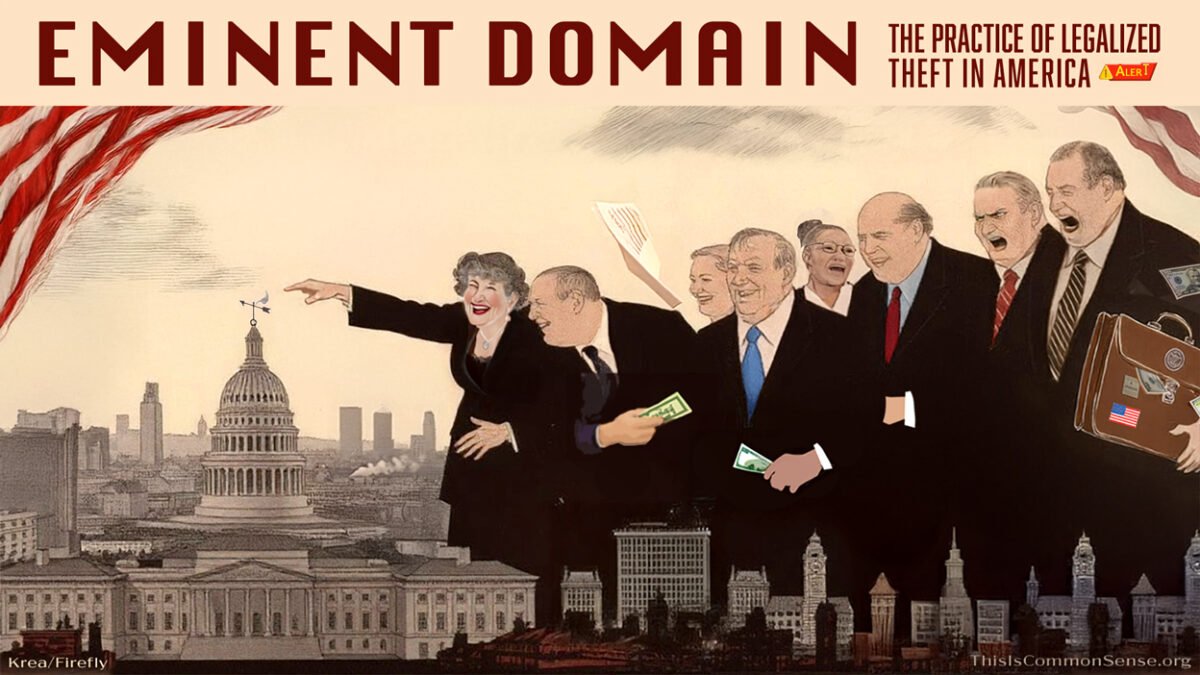
“On March 24, 2025, the Supreme Court of the United States declined to take up the case of Bowers Development, LLC. v. Oneida County Industrial Development Agency Et. Al.,” writes Conner Drigotas, “a decision that allows the practice of legalized theft through eminent domain to continue throughout America.”

This is not good news, as Mr. Drigotas explains. “In that case, Bryan Bowers had asked the Justices to review a ruling from the Supreme Court of New York that allowed Utica city officials to take land on which he had a contract to build and give it to a different private corporation for a separate construction project.” Mr. Bowers had “hoped to stop government officials from using force to pick winners and losers in the construction industry.” But it was a no go.

Politicians and bureaucrats love to grab other people’s property, under cover of “the public interest.” But their “public interest” is nothing more than a thin disguise for helping some individuals (often contributors to politicians’ campaigns) at the expense of others.

“With their denial of Bowers, Justices continued to show support for one of the most hated and notorious decisions to come out of their lofty chambers: that of Susette Kelo v. New London, Connecticut,” explains Drigotas. The Kelo case, often mentioned here, remains the ruling precedent, the government’s license to steal. Its loose construction of what can be regarded as in “the public interest” is a big part of the problem. 

Sadly, the courts have so far refused to rein in government eminent domain abuse. And voters have little sway upon the judiciary. And our representatives, our first line of defense, have also declined to stand up for basic justice and decency.

What to do? Remember that your representatives will soon be on the ballot.

This is Common Sense. I’m Paul Jacob.


PDF for printing

Illustration created with Krea and Firefly

See all recent commentary
(simplified and organized)

See recent popular posts

Categories
crime and punishment property rights

The Tide of Theft

There’s a black market for Tide laundry detergent. Who knew?

Giant Food, a Washington, D.C., area grocer, can’t seem to keep national brands such as Tide or Colgate or Advil on store shelves. Not because customers are buying these products, but because they’re stealing them.

Last week, we discussed the revelation by Dick’s Sporting Goods that thievery was a key cause of falling profits. The National Retail Federation believes that $95 billion is lost each year to public pilfering — something other retailers, including Target, Dollar Tree, and Ulta, are acknowledging is a very serious problem.

“Growing losses have spurred giants such as Walmart to shutter locations,” The Washington Post informs.

If we cannot police our own neighborhoods, and police can’t seem to do it, then we rely on … big corporations. With 165 supermarkets, Giant has yet to close any stores. Instead, the chain is “hiring more security guards, closing down secondary entrances, limiting the number of items permitted through self-​checkout areas, removing high-​theft items from shelves and locking up more products.” 

Most vulnerable is “the unprofitable store on Alabama Avenue SE — the only major grocer east of the Anacostia River in Ward 8,” a poor, largely black area of the city.

“We want to continue to be able to serve the community,” explains Giant’s president, “but we can’t do so at the level of significant loss or risk to our associates …

“During the first five months of this year,” Target’s chief executive recently leveled with investors, “our stores saw a 120 percent increase in theft incidents involving violence or threats of violence.”

Apparently, folks who pocket other people’s stuff are more likely to also be violent. 

Who saw that coming?

This is Common Sense. I’m Paul Jacob. 


PDF for printing

Illustration created with PicFinder​.ai

See all recent commentary
(simplified and organized)

See recent popular posts

Categories
crime and punishment ideological culture property rights

Shrink Shrank Shrunk

“Shrinkage.” A big problem.

I’m not talking about the delicate issue identified in the classic Seinfeld episode, “The Hamptons.” I refer, instead, to the business lingo for theft.

It’s rampant and taking a sad toll. 

Dick’s Sporting Goods is the first major retailer to blame declining profits on the “shrink” of its inventory because of mass theft. “The sporting goods and athletic clothing seller reported second-​quarter results Tuesday morning that included a 23% drop in profit, despite sales that rose 3.6% in the period,” CNN explains

But it’s not just a Dick’s problem. “Retailers large and small say they are struggling to contain an escalation in store crimes — from petty shoplifting to organized sprees of large-​scale theft that clear entire shelves of products. Target warned earlier this year that it was bracing to lose half a billion dollars because of rising theft.”

The cause?

No mystery.

Leftists have long been uncomfortable with private property. Their socialism seeks to replace private property with public property and private control over the means of production with governmental control. No wonder they often excuse private thievery as something like a revolutionary act.

When Pierre-​Joseph Proudhon put the idea boldly onto paper in 1840, that private property is itself theft, he really meant landed property, not personal property. Today’s leftists, unburdened by subtlety, keep coming back to opposing what is the core institution of civilization: respect for other people’s things.

Which allows for everything from privacy to progress.

Encouraging petty theft, as the left has knowingly, and organized theft, as the left has unwittingly (I hope) is not without consequences.

Our wealth, our liberties, our peace — they shrink.

This is Common Sense. I’m Paul Jacob.


PDF for printing

Illustration created with Midjourney

See all recent commentary
(simplified and organized)

See recent popular posts
Categories
crime and punishment

Frisco Findings

Bravely risking damage and scorn, San Francisco engaged in a grand sociological experiment: testing whether or not we might all be better off “essentially ‘legalizing shoplifting.’”

Before announcing the conclusion of this daring research, let’s review.

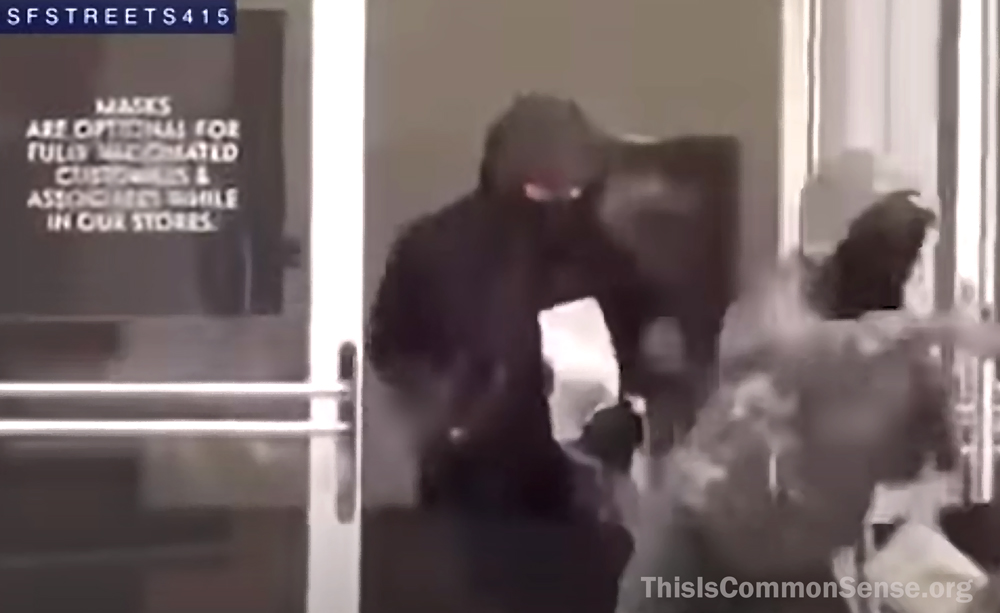
“Shoplifting cases are all too common in San Francisco,” explained the UK’s Daily Mail, “where charges of property theft less than $950 in value was downgraded from a felony to a misdemeanor in 2014 — meaning that store staff and security do not pursue or stop thieves who have taken anything worth less than $1,000.”

After a Neiman Marcus department store was looted back in July, NBC News described it as “only the latest to give an impression of lawlessness running rampant. . . .”

The ever-​so-​sensitive re-​calibration of the justice system has not been helped by the abundance of examples of mass theft putting stores out of business — all going back at least a year or two.

“As the number of burglaries soar,” informed KPIX, the city’s CBS affiliate, “San Francisco residents say they feel unsafe.”

Finally, following last Friday’s episode of robbing and vandalizing stores in Union Square, city authorities decided to end the research. 

Mayor London Breed told her fellow ‘City by the Bay’ guinea pigs the study’s shocking conclusion: Brazen theft is “detrimental to our city.”

“What happens when people vandalize and commit those level of crimes in San Francisco,” her honor elaborated. “We not only lose those businesses, we lose those jobs.”

And then, she applied her hypersonic kicker: “We lose that tax revenue that helps to support our economy that helps to support many of the social service programs that we have in the city in the first place.”

So, there you have it. Theft is bad. Cuz taxes.

This is Common Sense. I’m Paul Jacob.


* Of course, Mayor Breed’s most talked-​about approach to getting crime under control has been more deliberately screwing up the city’s already snarled traffic to make it more difficult for looters to flee. Courage.

PDF for printing

See all recent commentary
(simplified and organized)

See recent popular posts

Categories
crime and punishment ideological culture

Needed Theft

Some Seattle city council members want to legalize theft when the thief is thereby meeting an “immediate basic need.”

A KOMO News reporter elaborates: “If someone … steals power tools with the intent of reselling them online in order to pay for a basic need like food or rent, the city of Seattle may be OK with that.”

This “principle” discards the principle that individuals have rights, including property rights, which it is wrong to violate by, for example, stealing. With the principle discarded, no line can be drawn to limit the amount of stealing one may do or the means of doing so. The needs of the person being robbed are somehow deemed irrelevant.

The Seattle plan might have spared Hugo’s Jean Valjean decades of being pursued by Javert. But the injustice there wasn’t that Valjean was punished for stealing a loaf of bread but that his punishment — 19 years as a galley slave — was so disproportionate.

Food is a continuing cost. Rent is. The immediacy keeps recurring. What if you have a $2,500 monthly rent?

Well, just gotta steal lots of power tools, and do so regularly. According to the babblers on the Seattle city council, “need” trumps the rights and lives of the innocent. So it’s okay to terrify somebody in a dark alley and grab their stuff even if the victim has an immediate basic need to be left alone.

Seattle has an immediate basic need for a new government that respects lives and property. Until then, let’s hope the “city limit” signs are well marked.

This is Common Sense. I’m Paul Jacob.


PDF for printing

See all recent commentary
(simplified and organized)

See recent popular posts

Categories
crime and punishment property rights U.S. Constitution

Injustice Blocked

Civil asset forfeiture is one of those government practices that good people, when informed of it, often express, at first, incredulity. How can something like that exist in these United States?!?

Good question.

One reason seems to be that very incredulity. Normal Americans trust their government not to be evil. When shown that it regularly engages in actual highway robbery, then denial — ‘this cannot be happening.’

But it is.

Another reason it exists? It is so profitable

For those in government, anyway. They get to fill their department coffers without having to ask for tax hikes. They — and by ‘they’ I mean ‘the police’ and government attorneys at state and local levels — just take the wealth. 

Indeed, police routinely “keep whatever they can grab off anybody they arrest, claiming it’s all proceeds or property connected to criminal activities,” writes Scott Shackford at Reason, “and using it to line their own pockets. This incentivizes police to look for people who have assets that can be seized.” 

In South Carolina, Shackford reports, police agencies “across the state had seized more than $17 million in assets across three years. In one-​fifth of the cases, nobody was charged or even arrested for a crime.”

Fortunately, there is good news. “Circuit Judge Steven H. John has ruled that the South Carolina’s civil asset forfeiture regulations violate the Fifth, Eighth, and Fourteenth Amendment rights of the citizens.” 

Unfortunately, the fight against this evil practice is far from over. 

But maybe the judge’s ruling will inspire citizens to petition their government and place politicians’ greed into check.

And might not this judge inspire other judges around the country?

This is Common Sense. I’m Paul Jacob.


PDF for printing

asset forfeiture, theft, police, corruption,

See all recent commentary
(simplified and organized)

See recent popular posts


Categories
partisanship political challengers

Such Is Today’s Politics

“You do have a problem with a President demanding the federal government go ahead and seize private land and then promising to pardon those who seized the land,” challenged Joe Walsh, the former Illinois congressman running in the Republican Party primaries against Donald Trump. 

“Don’t you?”

Matt Welch, writing in the LA Times, quoted this Walsh tweet (three days after the Walsh2020 campaign announcement) to express alarm about where the GOP is heading. “We are accustomed to some ideological shape-​shifting when the White House changes teams,” writes Welch. “But what’s so striking about this week’s slate of immigration-​related controversies — including the one that supplanted the land-​grab pardon: the administration’s new rules governing potential citizenship for the children of U.S. service people abroad — is that none of it should come as a surprise.”

Because Trump is doing (sorta) what he promised to do. Which includes taking land by eminent domain. 

Before his election, Trump had proclaimed his support for the Kelo decision that signed off on governments nabbing land to give to private developers. At issue now is condemning land to build The Wall — at least an arguably public use. 

While “private property rights used to be foundational to the conservative movement,” Welch bemoans that Trump “didn’t care. And that Republicans cared a hell of a lot less than they claimed to.”

Again, unsurprising. Republican pols did little to nothing for property rights or limited government pre-​Trump. So these anti-​leftist voters went for someone — anyone? — who could deliver something.

I doubt that candidate Walsh will convince many that he can deliver much of anything.

This is Common Sense. I’m Paul Jacob.


PDF for printing

land grab, eminent domain, theft, property, border,

See all recent commentary
(simplified and organized)

See recent popular posts

Categories
crime and punishment Popular property rights

Of Loot and Leverage

Without a special kicker, why should police bother to do their jobs? 

The subject is civil asset forfeiture. This legal procedure makes it easy to take property from criminals. For the War on Drugs, civil forfeiture was so loosened as to allow police to take property from anyone … without due process.

No wonder citizens in a number of states have demanded limits upon the practice. 

But since police departments get to keep the loot they “interdict” — spending it on better cars, weapons, office furniture, plush employee lounges, drug-​sniffing dogs — law enforcement personnel aren’t exactly always on board with citizens’ concerns.

Jarrod Bruder, South Carolina Sheriff’s Association executive director, defends the sorry practice, as quoted by Greenville News. He asks what, sans civil forfeiture’s profit motive, could be a cop’s “incentive to go out and make a special effort?” 

Dollars to donuts, this will not play well with those who distrust the police already. 

And note the biggest incentive police face: to take property away from innocent people. Easier pickin’s. No surprise, then, that in “19 percent of cases, there is no criminal arrest.”*

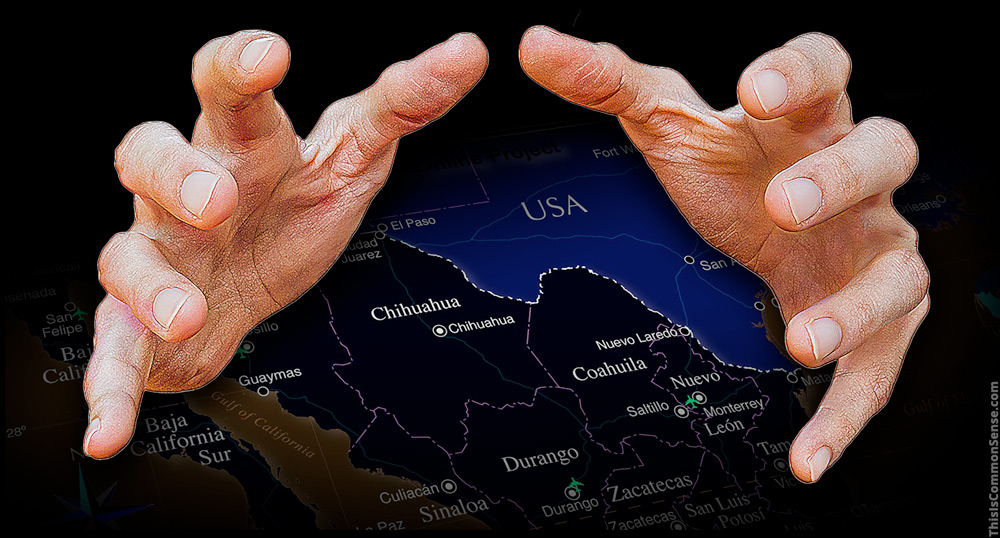
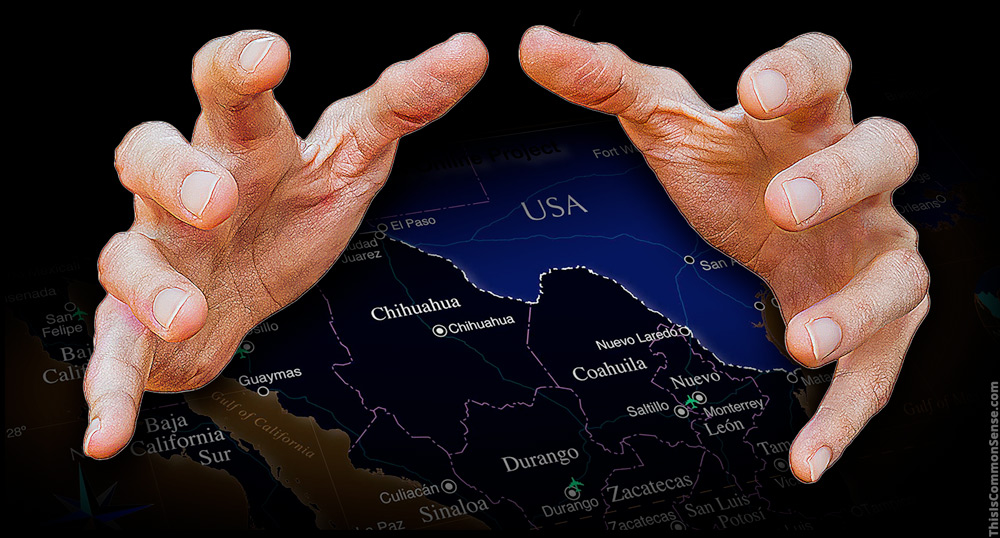
Meanwhile, Senator Ted Cruz (R‑Tex.) has suggested that President Trump take the confiscated billions from the accounts of drug kingpin El Chapo to “build the Wall.”

Genius? 

Regardless, this mere suggestion could add incentives for pro-​Wall Republicans to go soft on civil asset forfeiture.

There is no point in being secure within our borders if we are not secure within our homes and wallets and cars and … any other place jeopardized by this police-​state practice.

This is Common Sense. I’m Paul Jacob.


*Blacks represent 71 percent of cases, while only 28 percent of the state population.

PDF for printing

civil asset forfeiture, police, corruption, theft

Photo Credit: Chase Carter on Flickr

See all recent commentary
(simplified and organized)

See recent popular posts
Categories
general freedom property rights

And So It Begins

“Your time is up, white people,” South African politician Hlengiwe Mkhaliphi offered.

This woman, who belongs to the Economic Freedom Fighters, a “far left” political party, is defending something Frédéric Bastiat would have dubbed the very worst kind of “legal plunder”: in this case, a land grab from white farmers to give to (some) blacks, without compensation.

“White South Africans could be forced to give up their own homes from next year as the nation’s government steamrolls through plans for land expropriation,” Zoie O’Brien reports for Britain’s Daily Mail. Why? Well, “over claims ‘Africa’s original sin’ must be reversed.”

There will be no reversal, of course. Not of “Africa’s original sin,” which, I dare suggest, mischaracterizes the problems of South Africa.

And yes, I know, it is complicated, since “many in the nation see the move as retribution.” For past white supremacist racial policies.

But justice simply cannot be two wrongs. For what is happening in South Africa is the gearing up for a mass crime. 

They call it “land reform,” of course. Lots of tragedies begin that way. Ask the people of the country formerly called Rhodesia

I’ve referred to South Africa’s gross dysfunction before. There appears to be an instinctive media downplaying of this matter, largely because of past racism and the “white people bad” mentality now too common.

Your time is up, white people. Racism. Sure. (No point in just calling it “reverse racism.”) A crime against the owners of property. The wrong way to address problems, surely.

And ominous, for rarely does an enormity like this stop just there.

This is Common Sense. I’m Paul Jacob.


PDF for printing

Hlengiwe Mkhaliphi

See all recent commentary
(simplified and organized)

See recent popular posts