Categories
crime and punishment too much government

DeKalb Gas Stations DeKneecapped

The gas stations of DeKalb County, Georgia, never did nothing to nobody . . . except provide petrol.

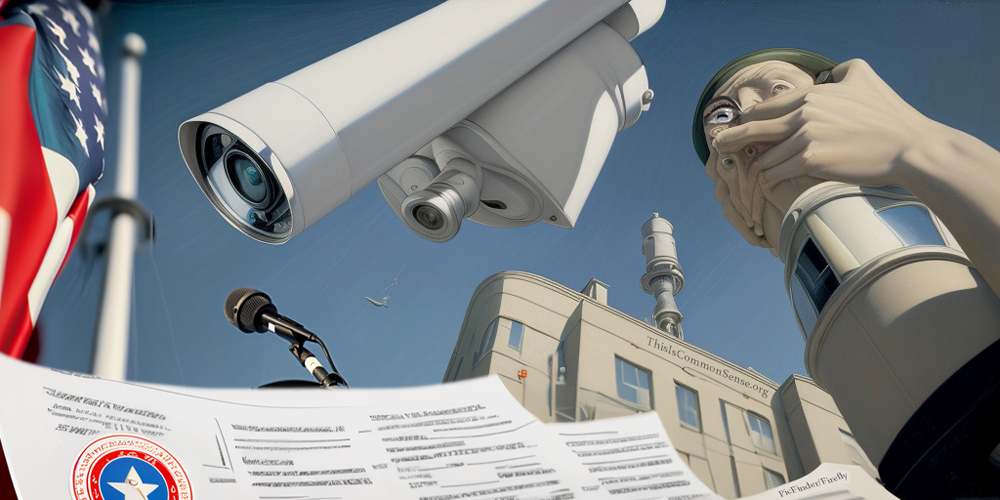
Yet, thanks to a draconian county ordinance, the stations can be shut down if they fail to splurge on expensive new video surveillance systems. Even if they already have security cameras. Which most do.

The law requires the systems to operate continuously; to include cameras at registers, gas pumps, parking areas, as well as entry and exit points; to record at least 24 frames per second; to store recordings for at least 60 days.

Wait, these are private gas stations. 

By what right does the county mandate precisely what detailed security measures business owners must take in order to keep their licenses? This is government turning the tables, rather than keeping these stations safe, the county lords the license over them, demanding the stations spend lavishly on security.

Arguably, the county is acting as yet another disruption plaguing the stations — which already face more than enough criminal invasion of their premises.

The law requires recordings to “be made available to any peace officer for viewing no later than 72 hours after being requested.” Nothing about obtaining a warrant if and when an owner is less than eager to cooperate. (Assuming, generously, that the video would be used to prosecute the robber even if the police and prosecutors had it.)

Lawyers for the Institute for Justice have been talking to the gas station owners, and have sent a letter citing the Fourth Amendment as grounds for DeKalb’s commissioners to drop this “beyond creepy and dystopian” practice.

Let’s hope the outcome is not more suffering businesses but a more limited government.

This is Common Sense. I’m Paul Jacob.


PDF for printing

Illustration created with Firefly and PicFinder

See all recent commentary
(simplified and organized)
See recent popular posts

Categories
free trade & free markets too much government

Why the Banks Are Failing Us

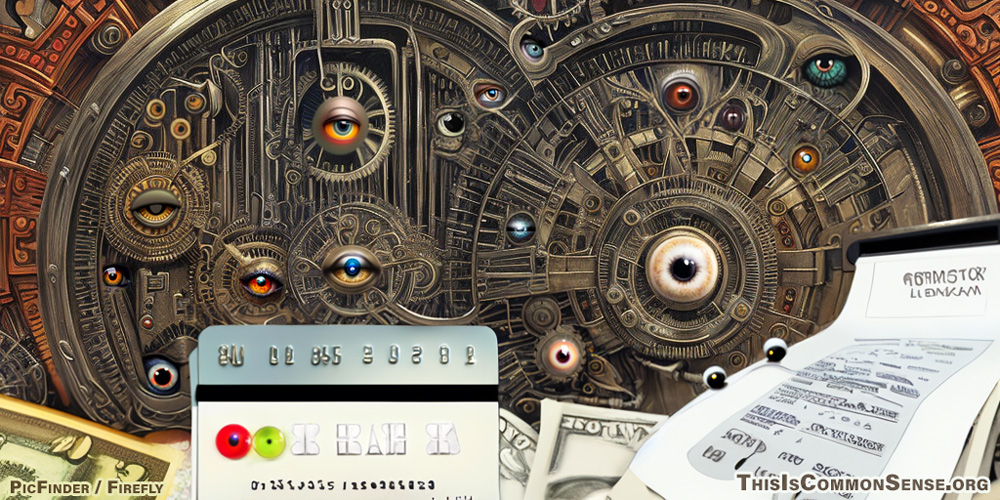
We depend on big businesses, especially upon banks. We pay for our food, clothing, medicines, and much else with little plastic cards from our banks. So when those cards stop working, all of a sudden — without warning — our hearts are going to do a bit more than beat just a little faster.

Why would there be big hiccups at all? 

As Brian Doherty remarks at Reason, it’s not just “frustrating when those businesses make seemingly arbitrary decisions that cripple your ability to function in a modern economy,” it’s hard to understand. After all, “the incentives of businesses are to, well, do business with customers.”

Why would banks, then, increasingly treat customers badly?

I’m not talking about the allegedly transient snag in the direct deposit system last week — apparently due to human error — but something more persistent, if scattershot.

Doherty found an answer in The New York Times, in an article “giving infuriating details of innocent Americans being cut off by their banks.” 

It should not shock the reader, Mr. Doherty explains, revealing: “the real cause of the banks’ seemingly arbitrary behavior is government rules designed to make sure it knows everything it can about citizens’ banking business, to discourage big cash transactions, and to ensure businesses the government disapproves of have as difficult a time as possible without being explicitly banned.”

Nearly ten years ago I wrote about it in a discussion of Operation Choke Point. Since then, in the words of the New York Times, “a vast security apparatus has kicked into gear, starting with regulators in Washington and trickling down to bank security managers and branch staff eyeballing customers.”

Who’ll be next?

This is Common Sense. I’m Paul Jacob.


PDF for printing

Illustration created with PicFinder and Firefly

See all recent commentary
(simplified and organized)
See recent popular posts
Categories
First Amendment rights international affairs too much government

The $145,000 Virtual Fine

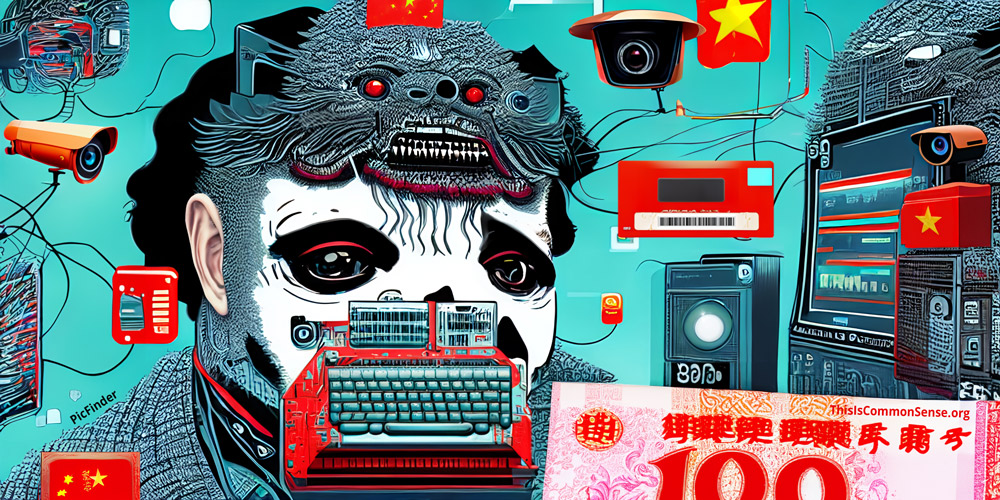
A Chinese programmer who worked remotely for a foreign company between 2019 and 2022 has been fined his entire earnings from that work, 1.058 million yuan or almost 145,000 USD.

We know only the surname, Ma, of the robbed developer. Ma’s crime was using a virtual private network to evade China’s great firewall, a censorship net used to keep people from seeing anything too politically thought-provoking.

Many others in China also use VPNs to circumvent the great firewall, and many China-based companies couldn’t function without using VPNs.

Authorities first noticed Ma because of a Twitter account that was not even his, and which authorities agreed was not his. But now they were looking at him.

He says that he explained that while his remote work could be done without bypassing the wall and that the company’s support site could be reached without doing so, he needed to use a VPN only to access Zoom for meetings. 

These details fell on deaf ears.

Whatever Ma’s exact alleged violation, something in what passes for law in China could be found to rationalize punishing him for it. He seems to be a victim of bad luck. A mix-up about a Twitter account. He ticked a few boxes. He had money. Money the local officials wanted.

The message to other Chinese: “You may think you’re getting away with X [“X” being one of the many peaceful activities that the Chinese government arbitrarily outlaws]. But we can get you any time.”

This is Common Sense. I’m Paul Jacob.


PDF for printing

Illustration created with Firefly

See all recent commentary
(simplified and organized)
See recent popular posts
Categories
crime and punishment election law privacy

Donors Don’t Donate Their Privacy

Alabama recently passed a law to prohibit public agencies from disclosing information “that identifies a person as a member, supporter, or donor of a 501(c) nonprofit organization . . . except as required by law.”

SB59 is comprehensive, stating that “notwithstanding any provision of law to the contrary,” no public agency may compel disclosure of such information or itself publicly release such information. 

The initial delimitation “except as required by law” seems ambiguous. But SB59 goes on to specify that exceptions would pertain to things like the requirements of a “lawful warrant” or a “lawful request for discovery of personal information in litigation.”

Passage is a big deal because, until now, agencies in the state had been permitted to collect and disclose such information.

Many nonprofits are political or ideological in character, promoting causes that are controversial. When this is so, who especially appreciates unfettered access to donors’ names and addresses? Obviously, opponents of the cause who would like to target donors with propaganda or even actively harass them.

On the national level, recognition of the problem is represented by the U.S. Supreme Court’s 2021 ruling in Americans for Prosperity Foundation v. Bonta. The court threw out a California requirement that nonprofits in the state had to divulge the names and addresses of their biggest donors to the attorney general. The Foundation plausibly argued that the requirement would deter people from contributing.

Several other states have also enacted SB59-style legislation. The number we need is 50.

This is Common Sense. I’m Paul Jacob.


PDF for printing

Illustration created with Midjourney

See all recent commentary
(simplified and organized)
See recent popular posts

Categories
general freedom international affairs

Big Biz-Big China Alliance

Cisco is in trouble, again, for a reason that many American technology firms should be: for aiding and abetting the tyranny of the Chinese government.

Cisco may have thought it was out of the woods after a lawsuit against it, originally filed in 2011, was wrongly dismissed in 2014. The litigation has just been revived by an appellate court.

The suit pertains to the company’s sale of software called Golden Shield to the Chinese Communist Party (CCP). Golden Shield is used to track down members of the popular and peaceful Falun Gong spiritual movement so that the CCP can persecute them as subversives (as proved by being part of Falun Gong). For the Chinese regime, all dissent and all activity it disapproves of are threats to national security.

Arrestees are tortured, imprisoned, even murdered, and the lawsuit contends that Cisco knew the ultimate goals that the software would serve. (The culpability of Cisco, Thermo Fisher, Microsoft, and other firms that abet CCP oppression is discussed with sarcastic brio by the YouTube channel China Uncensored.)

Ninth Circuit Judge Marsha Berzon states that the allegations are “sufficient to state a plausible claim that Cisco provided essential technical assistance to the [persecution] of Falun Gong with awareness that the international law violations of torture, arbitrary detention, disappearance, and extrajudicial killing were substantially likely to take place.”

The revival of this lawsuit and its ultimate resolution will deter, I hope, all U.S. firms from helping the Chinazis to systematically destroy innocent people.

This is Common Sense. I’m Paul Jacob.


PDF for printing

Illustration created with PicFinder.ai and DALL-E2

See all recent commentary
(simplified and organized)
See recent popular posts
Categories
international affairs media and media people

China’s Many Rushdies

Since when do police place bounties on the heads of former residents who have committed no crime?

Since just now. 

But it depends on how you define “crime.”

For me, to be guilty of a crime you must have committed an objectively definable, willful violation of the rights of others — fraud, robbery, kidnapping, torture, rape, murder. Speech criticizing the crimes of a crime-committing government cannot count as “crime.” To pretend otherwise would be an abuse and usurpation of proper standards of thought.

But the dictatorial Chinese regime is unbound by such considerations.

On July 3, the Hong Kong police, mere lackeys of the mainland government, placed bounties of one million Hong Kong dollars (about $128,000 USD) on the heads of eight pro-democracy dissidents no longer living in Hong Kong.

“We’re absolutely not staging any show or spreading terror,” says top HK police official Steve Li. “We’re enforcing the law.” Oh.

CNN notes that “many of the activists have continued to speak out against what they say is Beijing’s crackdown on their home city’s freedoms and autonomy.”

“What they say” is Beijing’s crackdown? 

Just a smidgen of investigative journalism would enable CNN’s reporters to report, as fact, that there has indeed been a crackdown, that it’s not just “critics” who say that the 2020 National Security Law has been used to destroy the pro-democracy, pro-human rights movement in Hong Kong and “cripple its once vibrant society.”

But I guess folks at CNN dare not risk bounties on their heads, also.

This is Common Sense. I’m Paul Jacob.


PDF for printing

Illustration created with PicFinder.ai

See all recent commentary
(simplified and organized)
See recent popular posts
Categories
international affairs privacy

The Cuban Missive Crisis

Very soon, maybe, the Chinese government will be able to peruse secret military and other electronic missives being transmitted “throughout the southeastern U.S., where many military bases are located, and monitor U.S. ship traffic,” according to a Wall Street Journal story.

Under an until-now secret agreement between China and Cuba, Cuba will charge China a mere several billion dollars for Cuba’s permission to build the eavesdropping station on Cuban territory.

If cited intelligence is accurate, the planned station would enable China to spy on emails, phone calls, satellite transmissions, and other communications. The data thus scooped up would probably facilitate China-sponsored cyberwarfare and other sabotage, as well as its pursuit of overseas Chinese nationals that the Chinese government wants to keep trapped in China.

Craig Singleton, an analyst for the think tank Foundation for Defense of Democracies, says that moving to establish the spy facility “signals a new, escalatory phase in China’s broader defense strategy. The selection of Cuba is also intentionally provocative.”

Perhaps the publicity about the spy station will help to stop it from happening.

John Kirby, a National Security Council spokesman, told the Journal that its story is “inaccurate” without spelling out the inaccuracies. He also said that the U.S. is taking steps to counter Chinese development of such spy infrastructure. “We remain confident that we are able to meet all our security commitments at home and in the region.”

I guess we’ll see. Before it’s too late, I hope.

This is Common Sense. I’m Paul Jacob.


PDF for printing

Illustration created with PicFinder.ai and DALL-E2

See all recent commentary
(simplified and organized)
See recent popular posts
Categories
First Amendment rights general freedom ideological culture

No Laughing Matter

Without freedom of speech, the jester’s art can be perilous.

Chinese comedian Li Haoshi, who performs under the name House, recently did stand-up comedy at a Beijing club, after which, reports Reuters, “an audience member posted online a description of a joke he had made . . . describing it as demeaning to China’s People’s Liberation Army (PLA).”

That went viral on Chinese social media.

“In the joke,” Reuters explains, “Li recounted seeing two stray dogs he had adopted chase a squirrel and said it had reminded him of the phrase ‘have a good work style, be able to fight and win battles,’ a slogan Chinese President Xi Jinping used in 2013 to praise the PLA’s work ethic.”

Not exactly a ripsnorter, it is hardly biting satire, either — after all, Li steered clear of any mention of Winnie the Pooh.

But no matter. Next thing the funny man’s employer knew, “China’s Ministry of Culture and Tourism Bureau said it would fine Shanghai Xiaoguo Culture Media Co 13.35 million yuan and confiscate 1.35 million yuan in ‘illegal gains’ from the firm.”

That’s a cool $2 million U.S. for the ever-so specific crime of “harming society.”

“In response to the fine, Xiaoguo Culture . . . said it had terminated Li’s contract,” and, for good measure if you are a totalitarian, Reuters adds that “Weibo appears to have banned him from posting to his account there.”

“We will never allow any company or individual [to] use the Chinese capital as a stage to wantonly slander the glorious image of the PLA,” declared China’s cultural ministry.

Suffice it to say, China isn’t currently known for its comedy. 

And won’t be until more people perform their own stand-up act.

This is Common Sense. I’m Paul Jacob.


PDF for printing

Illustration created with PicFinder.ai and DALL-E2

See all recent commentary
(simplified and organized)
See recent popular posts

Categories
international affairs national politics & policies

Identified Floating Object?

It’s always something. 

Last week, it was a Chinese spy balloon floating over Alaska, Canada and then across the continental United States from Montana all the way to South Carolina — repeatedly loitering over strategic military installations — before being downed by a Sidewinder missile fired by a U.S. military jet over the Atlantic.

China claims it was a civilian balloon gathering meteorological data that had accidentally blown off course; the U.S. says its flight path was deliberate and “We know it is a surveillance balloon.”*

With growing controversy about why the Biden Administration allowed a spy balloon to traverse the country, the Pentagon shockingly stated that the Chinese had done this before — once earlier in Biden’s term and three times during the Trump Administration. 

So just normal stuff, eh? 

Well, no. As Byron York sorts out at The Washington Examiner, those Chinese spy balloons were “near” U.S. territory, just possibly crossing into our airspace — nothing like last week’s cross-country cruise.

So, just what are the Chinazis up to?

“[The Chinese] want it to be seen,” argues Professor Michael Clarke, a defense analyst for Australia’s Sky News. “They want it to be noticed. My view is that it is all about the Philippines.” 

Clarke points to the South China Sea where China has been illegally building militarized artificial islands in areas that rightfully belong to the Philippines. Last week, the Philippines agreed on opening four more bases to the U.S. military, sending a strong message that Chinese aggression will be met with force. This was the Chinese government bringing the conflict to people in North America. Us!

While we still lack important information, analysis of the wreckage may allow us to learn more.

On the other hand, don’t we already know everything we need to know about the CCP? 

This is Common Sense. I’m Paul Jacob. 


* I have nearly zero trust in ‘fog of war’ U.S. government pronouncements, but less than zero in the great gaslighting Chinazis.

PDF for printing

Illustration created with PicFinder.ai

See all recent commentary
(simplified and organized)
See recent popular posts
Categories
First Amendment rights Internet controversy public opinion social media

The Mockingbird Shuttle

“After weeks of ‘Twitter Files’ reports detailing close coordination between the FBI and Twitter in moderating social media content, the Bureau issued a statement Wednesday,” journalist Matt Taibbi tweeted on Christmas Eve. “It didn’t refute allegations. Instead, it decried ‘conspiracy theorists’ publishing ‘misinformation,’ whose ‘sole aim’ is to ‘discredit the agency.’”

Taibbi offered a droll retort: “They must think us unambitious, if our ‘sole aim’ is to discredit the FBI. After all, a whole range of government agencies discredit themselves in the #TwitterFiles. Why stop with one?”

Indeed. The federal government is full of rogue, anti-constitutional cabals.

Elon Musk’s Twitter Files release of behind-the-scenes Twitter deliberations over which political news stories and Twitter accounts to trounce upon, and what medical information to declare as “misinformation” and which to allow, yielded more than just the influence of J. Edgar Hoover’s legacy outfit.

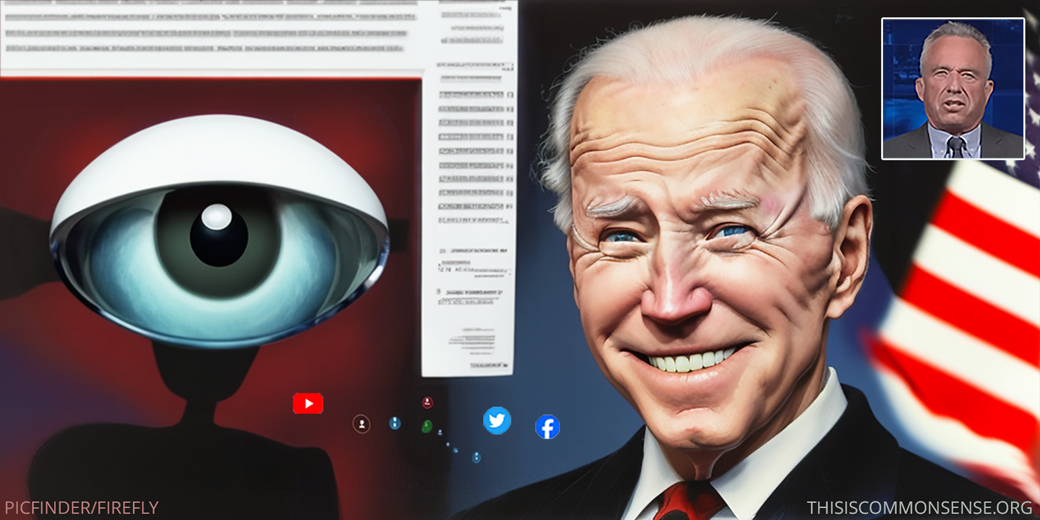
“The files show the FBI acting as doorman to a vast program of social media surveillance and censorship, encompassing agencies across the federal government – from the State Department to the Pentagon to the CIA.”

Twitter employees referred to these other outfits as “OGA” — for “Other Government Agenies.”

There were so many that Twitter “executives lost track.”

The vastness of the operation boggles the mind. “The government was in constant contact not just with Twitter but with virtually every major tech firm.”

It is worth remembering that the lore of the Deep State includes the controversial but rarely-mentioned “Operation Mockingbird,” whereby the CIA fostered paid mouthpieces (disinformation agents) throughout the media, back in the Sixties.

Now we have uncovered an operation that dwarfs this by several orders of magnitude.

Certainly, the behavior of the FBI and these OGAs has had an effect: they directed public opinion during the pandemic and in the lead-up to the 2020 election. 

This is Common Sense. I’m Paul Jacob.


PDF for printing

Illustration created with DALL-E2

See all recent commentary
(simplified and organized)
See recent popular posts