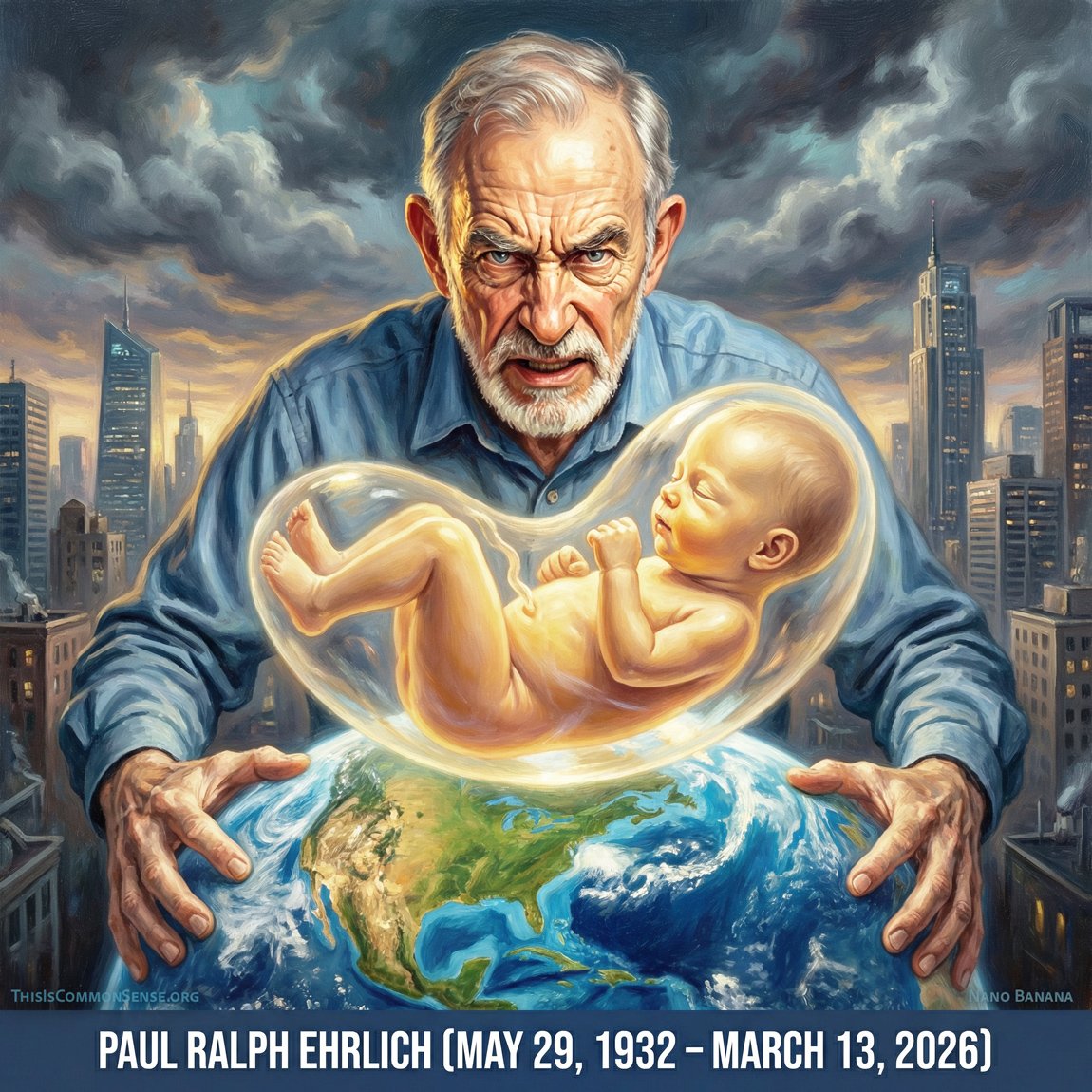
Paul Ehrlich was a biologist whose 1968 The Population Bomb went off when I was just a lad. He died last week at the ripe old age of 93. Professor Ehrlich warned of the dangers of overpopulation, proclaiming that in “the 1970s hundreds of millions of people will starve to death in spite of any crash programs embarked upon now.”
Instead, for the first time in history, the percentage of the human population living in misery and dire poverty declined steadily.
But that did not mean his work was shelved as a bad theory, falsified by evidence.
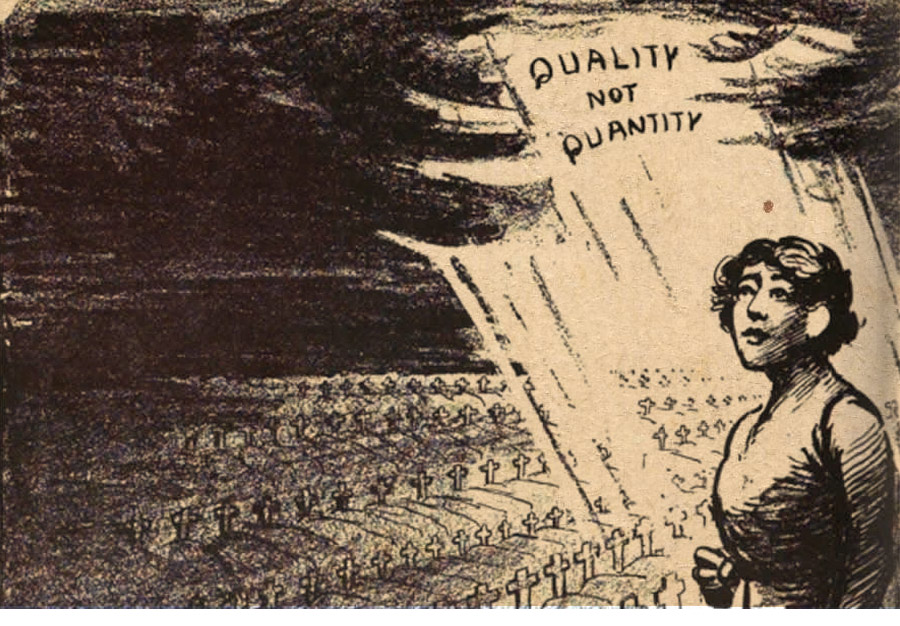
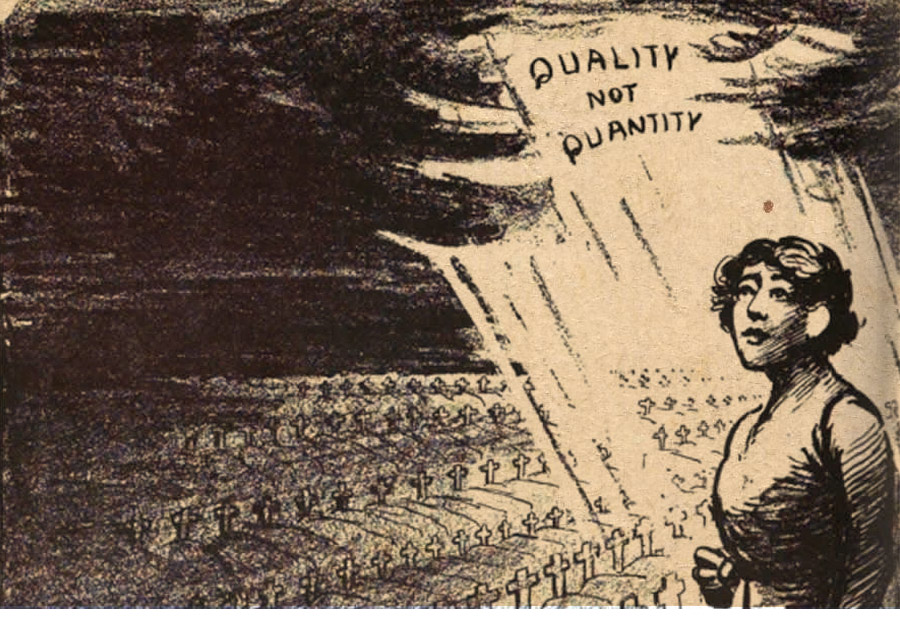
Everywhere, when I was growing up, I witnessed a rising tide of anti-natalism, the doctrine that young adults shouldn’t have babies, or — if they did — should have only a few. Mankind was a cancer on the planet, we were told, and too many believed it.
Which affected breeding patterns.
And policy.
The current population reality is the opposite of what the Ehrlichs said it would be. All over the world, except for places in Africa, legacy populations are declining. In the United States, our population would be declining were it not for immigration. Elsewhere, the replication rate is plummeting — and it’s not just the West, but in China and Taiwan; both Koreas, as different as they are; and in Japan.
Without growing populations, our modern (if jury-rigged) social safety net pension systems are jeopardized, as is the possibility of finding caregivers to aging-and-dying populations.
We cannot blame it all on Ehrlich of course. There are many factors at work. But is it possible to be more wrong than he was?
What should the young do now, to mark Ehrlich’s passing?
You could do worse than make some more babies.
This is Common Sense. I’m Paul Jacob.
Illustration created with Nano Banana
See all recent commentary
(simplified and organized)
See recent popular posts