
Categories
international affairs social media

Good-bye, Google

Is Google working for the Chinese government?

The group Atajurt Kazakh Human Rights believes that pro-Chinazi partisans have been targeting its YouTube videos, triggering sanctions against Atajurt’s channel. Many of its thousands of videos provide testimony about how family members have been hauled off to internment camps in China’s Xinjiang region.

Alphabet/Google’s YouTube has penalized the Atajurt YouTube channel for alleged “harassment” because some of the videos provide proof of identity. Channel owner Serikzhan Bilash, an Atajurt cofounder, says this is important to establishing the credibility of the testimony.

On June 15, after a dozen of the channel’s videos were flagged for harassment, YouTube terminated the channel. After Reuters asked why, the channel was restored.

On June 22, YouTube locked another dozen videos and accused the channel of praising “criminal groups or terrorist organizations.” YouTube blames automated messages for such accusations. But it hasn’t stopped threatening the channel.

“There is another excuse every day. I never trusted YouTube,” Bilash says. “But we’re not afraid anymore, because we are backing ourselves up with LBRY. The most important thing is our material’s safety.”

LBRY is a blockchain protocol used by YouTube competitor Odysee, to which Atajurt has so far ported almost a thousand of its videos.

The large audiences of Google’s YouTube and other Big Tech social-media forums make them appealing as a means of getting out a message. But as Atajurt Kazakh Human Rights and many others are discovering lately, you better have backup.

This is Common Sense. I’m Paul Jacob.


PDF for printing

See all recent commentary
(simplified and organized)
See recent popular posts

Categories
national politics & policies property rights

Zoning by “Outsiders”

“In recent years, there’s been a push to move zoning decisions further from the local level,” writes Matt Ray for Mises Wire — engaging in no small understatement. 

“In 2019, Oregon passed House Bill 2001, making it the first statewide law to abolish single-family zoning in many areas. By expanding the state government’s jurisdiction to include zoning decisions previously handled by local agencies, the law entails an alarming centralization of state power.”

This trend is old, going back at least to the Progressive Era. 

But the trend continues — “progresses” — and Oregon’s centralizing law has been “quickly followed by the introduction of similar bills in Virginia, Washington, Minnesota, and North Carolina,” Matt Ray explains. “Now President Biden is attempting to increase federal influence over local zoning.”

The problem should be obvious. Government land-use regulation by “zoning” is an awesome expression of rights-abridging power, usually becoming nothing more than what most regulations are: special-interest protection schemes, helping the in-crowd at the expense of “outsiders” (you and me, actually).

Most savvy people understand this in specific instances, but not generally, so when they see zoning they don’t like, they might leap to the notion that bad local regulations should be replaced by good state or federal regulators.

Trouble is, we have less ability to ensure that regulators in distant political centers aren’t captured by special interests or malign ideologues. 

The only way out is a general rule-of-law approach, limiting all zoning powers. Barring that? Well, no matter how bad your city’s zoning, I wouldn’t trade it for zoning decisions from Washington.

This is Common Sense. I’m Paul Jacob.


PDF for printing

See all recent commentary
(simplified and organized)
See recent popular posts

Categories
general freedom international affairs

June 4: Tiananmen 32

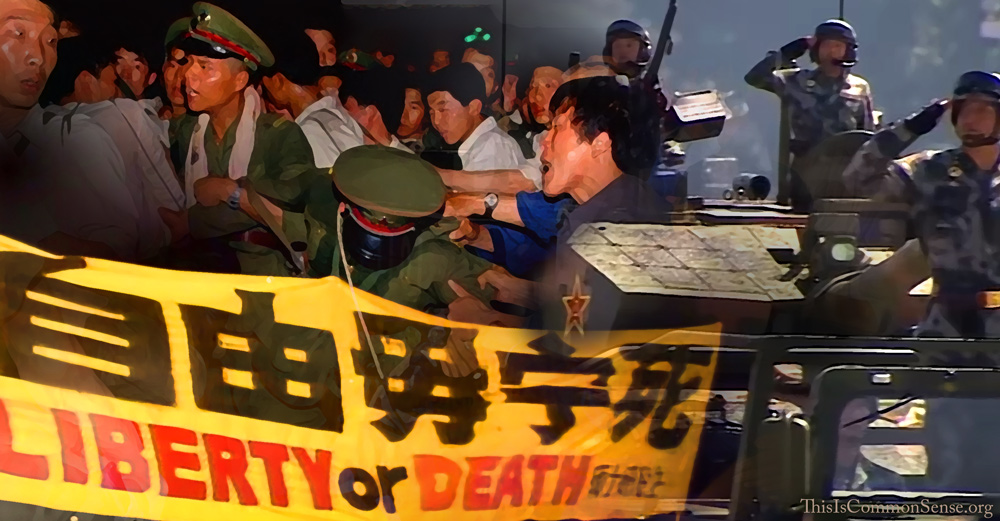
Will truth ever be bought-off or beaten-down enough to satisfy Chinese President Xi Jinping and the Butchers of Beijing?

The ‘Butchers’ nickname came 32 years ago today — from the clearing of Tiananmen Square by soldiers and tanks in the early morning hours of June 4th, and in opening fire on and murdering thousands of Chinese citizens outside the square. 

Someone may object that Xi, the General Secretary of the Chinese Communist Party (CCP) since 2012, can’t be blamed. He wasn’t in charge back in 1989.

Xi didn’t give the order for troops to kill the unarmed students and workers who filled Tiananmen Square for weeks with as many as a million people protesting for freedom and democracy. Nor did he have thousands more arrested and imprisoned after the massacre. In fact, Xi’s father “condemned the use of force against protesters during the 1989 Tiananmen Square protests,” informs U.S. News

But Xi cannot escape the taint of Tiananmen. Not only does Human Rights Watch charge that government repression under his unlimited rule is “at its worst level since the Tiananmen Square massacre,” Xi and today’s CCP are on a mission to memory-hole Tiananmen. 

How? 

By massacring any public memorial of the massacre.

While the truth about Tiananmen has always been verboten in China, freer folks in Hong Kong held massive memorials each year. “Last year’s vigil was banned for the first time because of the coronavirus,” Yahoo News explains, “but thousands defied police and rallied anyway.”

This year, however, the new national security law threatens five years in prison for attending an unauthorized rally. Chanting “Democracy for China!” could land a Hongkonger in prison for life.*

Thankfully, in America today we have the freedom to condemn the Chinazis

And remember June 4. 

This is Common Sense. I’m Paul Jacob.


* And it has already begun: “Hong Kong cracks down on Tiananmen commemorations, arrests vigil organiser.”

PDF for printing

See all recent commentary
(simplified and organized)
See recent popular posts

Categories
education and schooling ideological culture

De-colonize Our Music?

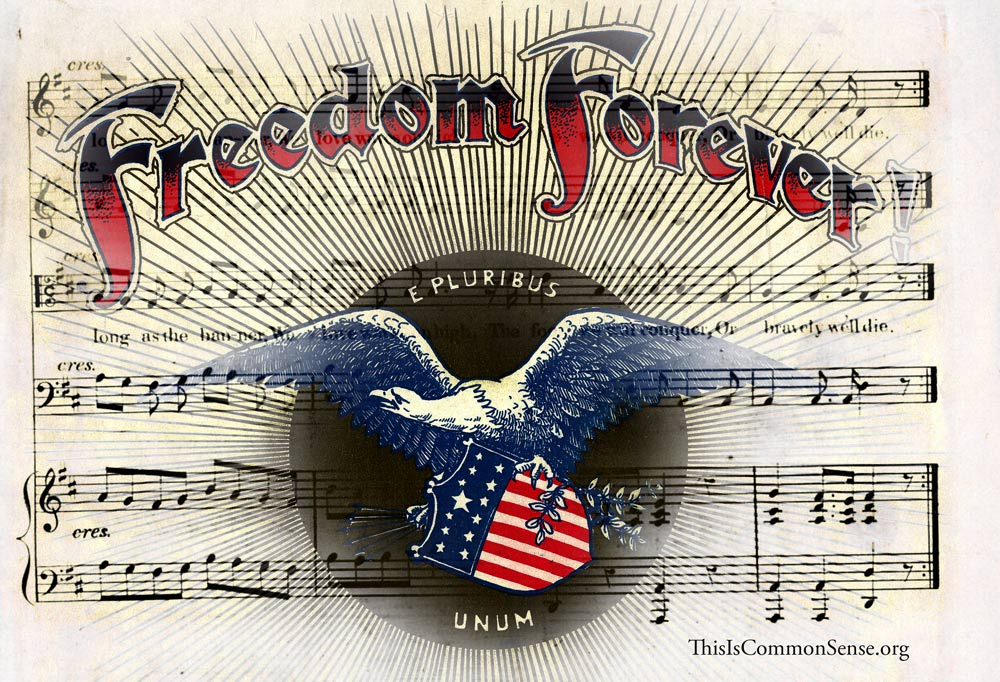
Music is, arguably, the crowning artistic achievement of our civilization. 

It grew out of many folk and ecclesiastical practices, but one of the great innovations that allowed both Bach and The Beatles, Beethoven and Broadway, Bartok and “beats,” is the theory of music. 

Which rests on that great innovation, musical notation.

Not my area of expertise, alas, but I tip my hat to the educators who know the physics and the art in precise and powerful ways.

Unfortunately, stupidly racist anti-racism has infected even music education. The latest example? The University of Oxford is considering a plan to get rid of teaching music through teaching notation.

“Sheet music is now considered ‘too colonial,’” explains The Telegraph, “while Beethoven and Mozart, and music curriculums in general, are believed to have ‘complicity in white supremacy.’”

While mainly an attack on classical music, our popular music rests upon a lot of basic western technique, too. The idea that musical notation is racist is itself bizarrely racist. Do these people think because whites invented musical notation, non-whites are oppressed by it? Yes, the opponents of western musical notation, who include “activist students” as well as “activist professors,” are apparently ashamed of a tradition focused on “white European music from the slave period.”

But until fairly recently, all civilization was “the slave period.” And Europe, which developed the tradition, wasn’t the world’s most slave-ridden society during the period of western music’s development: Africa and Asia were. 

Slavery is bad. Very bad. Freedom is good. Very good. But you don’t reject good things because they once upon a time touched bad things. We can have both freedom and music. 

And musical notation.

This is Common Sense. I’m Paul Jacob.


PDF for printing

Image from William Creswell

See all recent commentary
(simplified and organized)
See recent popular posts

Categories
responsibility too much government

Vaccines Without Passports

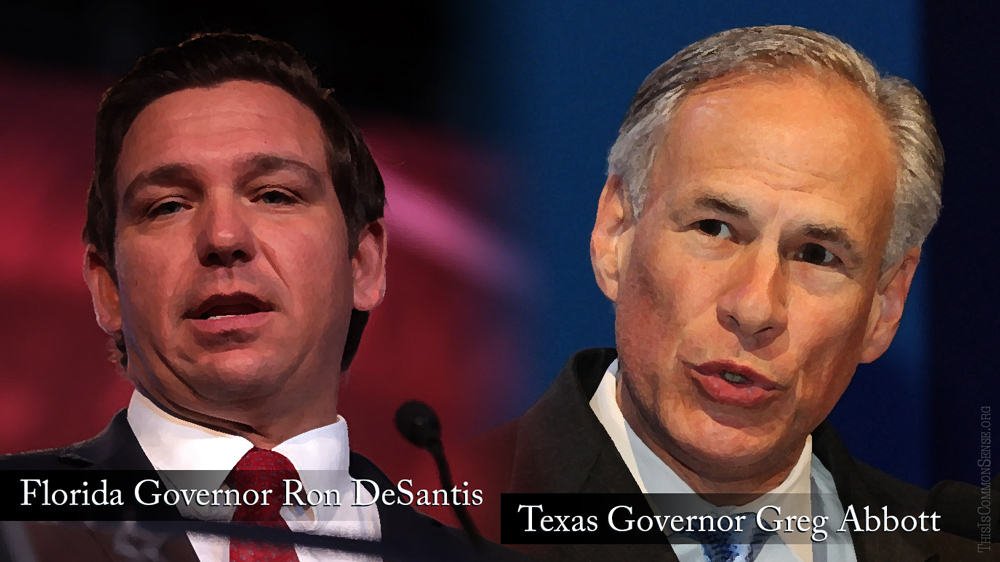
The coronavirus vaccination passport idea, in place in New York, attempted elsewhere, in development in Britain, and all the rage among policy pushers like Bill Gates, has been nipped in the bud in Florida and Texas. 

On Monday, Texas Governor Greg Abbott signed an executive order prohibiting “government-issued vaccine ‘passports’ statewide.” The order prevents state agencies from establishing any requirement for vaccination on the populace. “The ban also extends to any organizations that receive public funds,” according to The Daily Signal, “forbidding those organizations from requiring Texans to prove they received the vaccine.”

After giving a pro-vaccine statement, Abbott went on to reiterate his basic position, that “these vaccines are always [to be] voluntary and never forced. Government should not require any Texan to show proof of vaccination and reveal private health information just to go about their daily lives.”

He also stated that the state will continue to supply vaccines to citizens that want the shot(s).

Abbott followed a similar decree by Florida Governor Ron DeSantis by just a few days. At the beginning of the month, Abbott had lifted statewide mask mandates. Florida, as you have no doubt heard, has been a free state (as opposed to a quarantine state) for several months, to a major media pile-on (and a lot of inaccurate reporting, including from 60 Minutes).

The World Health Organization does not support vaccination passports. Now. But WHO is a feather in the wind, like the Vichy-blown government in the movie Casablanca, so strong opposition to the practice by public officers in the United States is most welcome.

This is Common Sense. I’m Paul Jacob.


PDF for printing

See all recent commentary
(simplified and organized)
See recent popular posts

Categories
ideological culture social media

Left-Winged Wikipedia

Wikipedia — the free online, once freely editable encyclopedia — started out upholding a principle about “neutrality.”

According to Wikipedia, this means that Wikipedia content “must be written from a neutral point of view (NPOV) . . . representing fairly, proportionately, and, as far as possible, without editorial bias, all the significant views that have been published by reliable sources on a topic.”

NPOV isn’t the same as objectivity, which is about getting at the truth by honest observation and logic, not primarily by balancing viewpoints about what’s true. But if good objective work by “reliable sources” has been done about a subject, Wikipedia’s neutrality standard requires that both the sludge and the good work be included. 

Somebody new to the subject has a fighting chance to be steered in the right direction.

NPOV still guides many Wikipedia articles where it is not really necessary, articles about elms and carburetors. The standard is now often ignored, however, in articles about controversial subjects. Like politics. Or socialism.

As I write, Wikipedia’s article on socialism mentions the kill list of “suspected high-ranking Communists” drawn up by Indonesia’s Suharto but not the many millions slaughtered under the commie-socialist regimes of the Soviet Union, China, Cuba, et al. Critiques of socialism are barely touched on. No NPOV here.

Such agitprop is guarded by non-neutral left-wing Wikipedia editors. Britannica is one alternative. Conservapedia was launched in 2006 as “a conservative, family-friendly Wiki encyclopedia,” and appears to be going strong. Wikipedia co-founder Larry Sanger, harshly critical of Wikipedia’s centralized propagandistic turn, is developing an alternative called Encylosphere.

It’s even mentioned in Wikipedia.

This is Common Sense. I’m Paul Jacob.


PDF for printing

See all recent commentary
(simplified and organized)
See recent popular posts
Categories
international affairs

First-Class Freedom Fighting

Just seven years ago today — March 18, 2014 — Taiwanese students began a 23-day occupation of the country’s legislature, in what became known as the Sunflower Student Movement. They were protesting the rushed and opaque passage of a Cross-Strait Service Trade Agreement with China.

Trade deals usually aren’t so explosive, but China is a neighbor 58 times larger than Taiwan’s 24-million population and one that regularly threatens military invasion. Furthermore, the agreement was negotiated in secret and initially passed by the Legislative Yuan in 30 seconds. 

Obviously without debate.

Opponents of the deal argued it would allow China to effectively “purchase” Taiwan, and to economically leverage and then strangle Taiwan’s vibrant democracy, which like Hong Kong’s aspirations constitutes a terrible affront to the anti-democratic Chinese Communist Party (CCP) ruling over more than a billion silenced, disenfranchised Chinese. 

The students’ concerns for transparency and safeguards connected with the Taiwanese public, which put enormous pressure on the government. 

Ultimately, the spring Sunflower Movement in Taiwan helped influence the autumn Umbrella Movement protests in Hong Kong as well as energizing the 2016 win for Taiwan’s Democratic Progressive Party and far less Beijing-friendly President Tsai Ing-wen (who won a second term last year).

In these last seven years, the world has come a long way in recognizing the threat posed by totalitarian China. For that I give those students in Taipei a lot of credit. Their standing up kept Taiwan free — and helped us all begin to stand up to the Chinazis (as Hong Kongers call the CCP). 

The other aftermath? Le Monde’s report on students finally leaving the Yuan, noted it was “not without having thoroughly cleaned the building.”

This is Common Sense. I’m Paul Jacob.


PDF for printing

See all recent commentary
(simplified and organized)
See recent popular posts
Categories
ballot access national politics & policies

The Incumbency Fraud

“There’s nothing that shortening the period by which people can vote early does to combat any perceived fraud,” Democratic Party attorney Marc Elias said Sunday on NBC’s Meet the Press. “It’s really just a cover for what they’re really trying to do, which is to make it harder to vote.”

At issue is a new law courtesy of Iowa Republicans, along with numerous bills pending in other states, addressing what Republicans call “election integrity” and Democrats call “voter suppression.”

Host Chuck Todd informed viewers that a poll found two-thirds of Floridians wanted more early voting days. Not fewer.

Hardly surprising, since that’s easiest for voters. And while voting should be easy, ease is not the only consideration.

The Iowa “law shortens the early voting period to 20 days from the current 29,” the Associated Press reported, “just three years after Republicans reduced the period from 40 days.”

Here’s why I support that change, though it would be better even shorter*:

  • We should vote together. Not weeks apart. With three, four, six weeks of early voting, election day ballots can be cast with a different set of facts than those cast so many weeks earlier. 
  • The longer the time during which ballots are cast, the greater the expense in running for office. Candidates must be in touch when voters make their decisions. Since incumbents hold an average four-to-one spending advantage over challengers, more expensive campaigns give incumbents an even greater advantage.  

So, while early voting doesn’t cause fraud, by making elections more expensive it fosters what we might call “the incumbency fraud.”

This is Common Sense. I’m Paul Jacob.


* One provision in H.R. 1, which passed the U.S. House on a party-line vote, requires that states allow at least 15 days of early voting. The overall bill is terrible; plus, we are better off with the states as laboratories of democracy, rather than marionettes of Washington. But my preference would be not more than 15 days.

PDF for printing

See all recent commentary
(simplified and organized)
See recent popular posts
Categories
insider corruption national politics & policies

Dystopia de la Brazile

“When will the check arrive?”

That’s what “voters want to know,” former Democratic National Committee Chair Donna Brazile told Fox News Sunday host Chris Wallace yesterday.

Not whether President Joe Biden is dodging the media’s questions, as Wallace had inquired of his panel of Washington experts, after explaining that Biden now holds the modern record for longest time as president without facing reporters in a news conference.

“Well, it’s no surprise,” offered Jonathan Swan, national political correspondent for Axios. “It’s an extension of what he basically did throughout the campaign, which was very minimal — he basically didn’t subject himself to extended, tough questioning.” 

GOP strategist Karl Rove went further, arguing, “he’s just not up to it . . . at the age of 78 he’s lost a few steps and he’s not going to look good in a news conference.”

But Brazile was having none of it. Citizens are laser-focused, she contends, on being shown the money . . . and really aren’t too concerned as to whether their commander-in-chief, the sleepy fellow in possession of the nuclear codes, might be suffering something approaching early dementia.

People do like money. But to what degree is she really correct? With palms greased will the public look the other way? How many votes have Democrats bought?*

Don’t think Brazile is alone, either; as I pointed out recently (“Big Bucks Buy Votes”), too much of Washington actually thinks purchasing apathy, support, votes is how Washington should work.

They marvel as modern political statecraft transcends the hubbub of bread and circuses with electronic direct deposits of spendable cash into bank accounts. But with the same hoped-for result.

This is Common Sense. I’m Paul Jacob.


* And ask the same question of Republicans who voted for sending similar checks to everyone when they controlled the Senate and the White House last year. 

PDF for printing

See all recent commentary
(simplified and organized)
See recent popular posts

Categories
general freedom ideological culture

Jeep & Freedom

“Bruce Springsteen issued a call for common ground, unity and political centrism,” CNN reported, “in a 2-minute long ad for Jeep [that ran] during the Super Bowl on Sunday.”

The Detroit Free Press called the commercial a “healing message.”

Not so much over at The Federalist, a conservative outlet, where Mollie Hemingway listed three main problems:

1. The Messenger Is Known For Hating Republicans

2. The Images Were All Off

3. The Argument For Unity Was Not Made Well

I don’t disagree with her. Springsteen, after all, said he would leave the U.S. if President Trump were re-elected; he has long supported Democrats and bashed Republicans.

But, nevertheless . . . I heard something that rang true. 

“Now fear has never been the best of who we are,” spoke Mr. Springsteen. That’s a truism.

But the Boss added, “And as for freedom, it’s not the property of just the fortunate few; it belongs to us all. Whoever you are, wherever you’re from, it’s what connects us. And we need that connection.”

Yes. We. Do. 

Freedom unites us . . . because we can do our own thing.

Whether Born in the USA or recent arrivals to these shores, let us celebrate not what government can legislate, mandate, or make us do, but what those in power cannot make us do, that we are free to speak truth as we see it and to dream, build and achieve a better tomorrow of our own making. 

It all sure fits with Jeep’s “Go Anywhere. Do Anything” slogan. And I have no doubt they mean “anything” as long as you don’t impinge on anyone else’s rights.

Just note that the slogan applies to us, not our politicians.

This is Common Sense. I’m Paul Jacob. 


PDF for printing

See all recent commentary
(simplified and organized)
See recent popular posts