Categories
crime and punishment education and schooling First Amendment rights

Trans-Violent

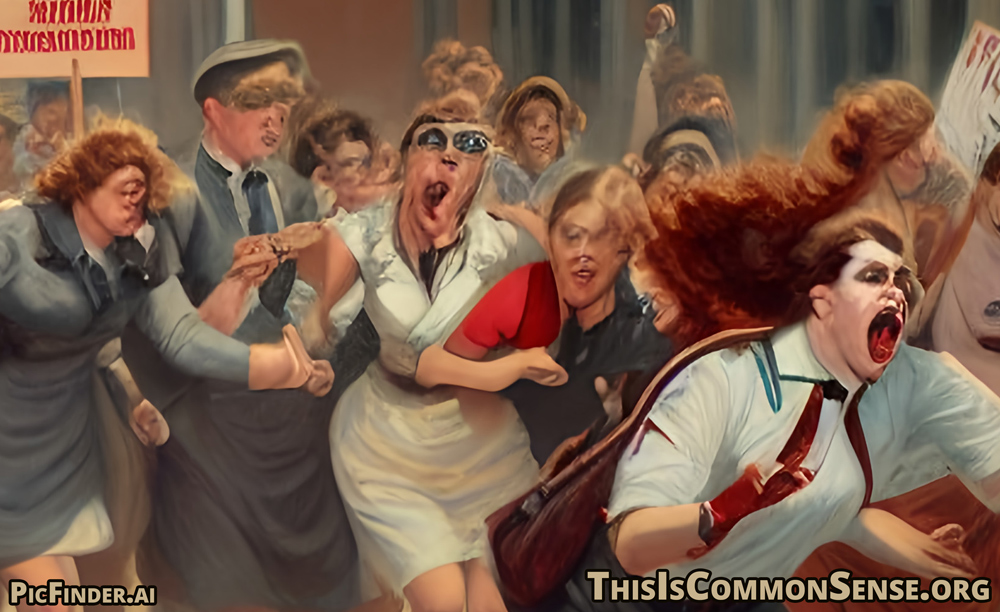
“I applaud the students, staff and faculty who rallied quickly to host alternative inclusive events, protest peacefully and provide one another with support at a difficult moment,” declared San Francisco State University President Lynn Mahoney on Monday.

The “difficult moment” she refers to? A talk on campus by All-American swimmer Riley Gaines, sponsored by Turning Point USA. Gaines was speaking out against “transgender women” (biological men) competing in women’s sports.

President Mahoney did finally acknowledge that the event was followed by “a disturbance,” which “unfortunately” “delayed the speaker’s departure.”

In fact, Gaines wasn’t able to leave for hours, until nearly midnight . . . when, as CNN reported, “the San Francisco Police Department sent officers to disperse the crowd.” Gaines says she was “physically assaulted,” “struck twice,” with video confirming a very threatening situation.

“We are reviewing the incident,” Mahoney assured, “and, as always, will learn from the experience.”

No arrests have been made. They should be. That’s the teachable moment we need.  

SFSU’s president did acknowledge that what occurred last week was “deeply traumatic.” But she meant the event itself, which she claimed “advocated for the exclusion of trans people in athletics.” 

That isn’t true. Gaines and many (if not most) folks involved in the controversy simply want collegiate sports separated by biological sex and not by gender identity.

Let’s realize that these Antifa-esque “trans activists,” the ones who threaten to beat up women, do not speak for all transgendered people — certainly not those I know and love. Their goal is clearly not harmony but the very opposite. 

The solution is simple: Love for trans folks, common sense public policies, and jail for the thug attackers of free speech.

I’m Paul Jacob.


PDF for printing

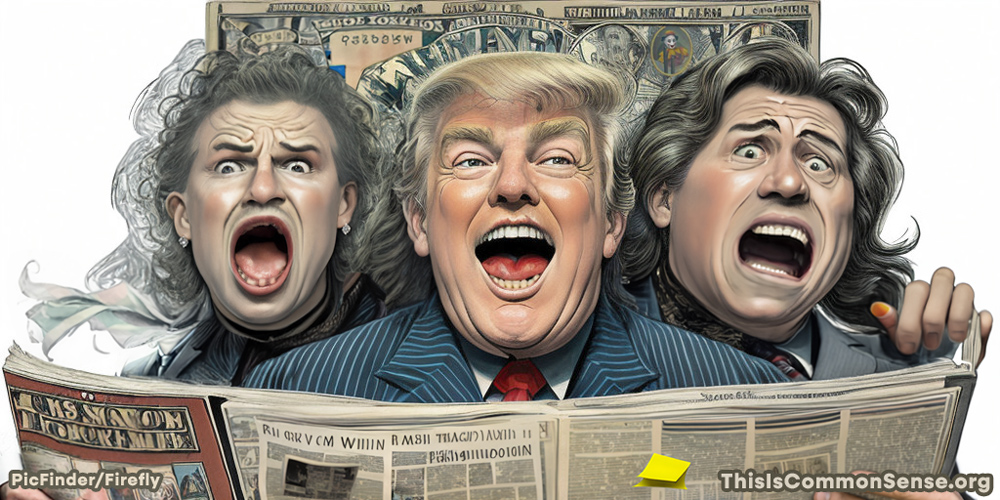
Illustration created with PicFinder.ai

See all recent commentary
(simplified and organized)
See recent popular posts
Categories
crime and punishment First Amendment rights Internet controversy

Court Invokes First Amendment

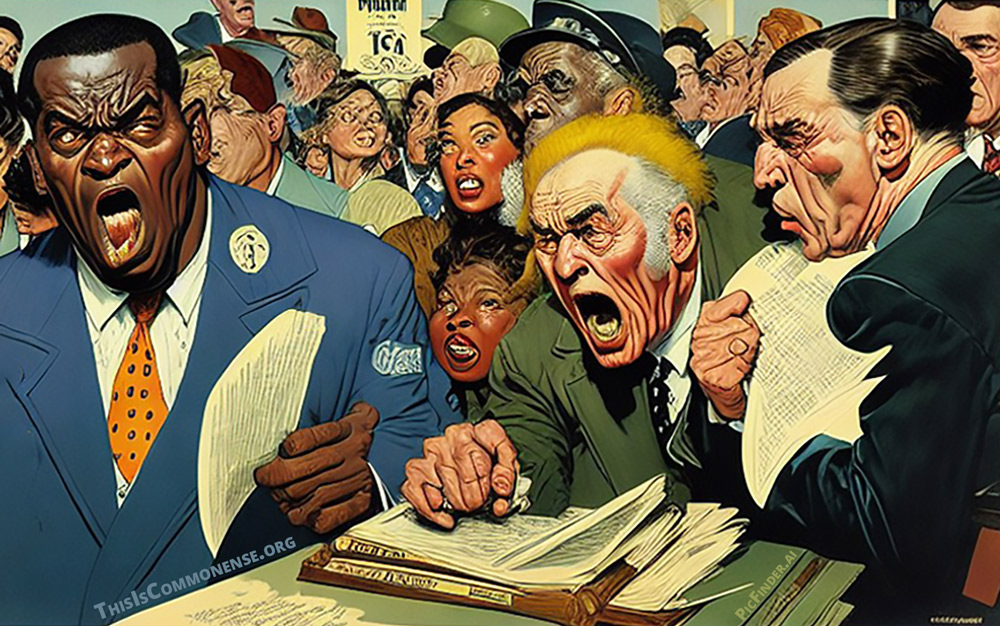
This is where we’re at. We must be in suspense about whether a judge will object when governments act to repress speech in the name of combatting “misinformation,” “disinformation,” or “hate speech.”

Fortunately, Judge Andrew Carter sees the obvious and has blocked a new New York State law to regulate “hateful” online speech. The law was challenged by anti-censorship video platform Rumble and the Foundation for Individual Rights and Expression.

Carter says: “The First Amendment protects from state regulation speech that may be deemed ‘hateful,’ and generally disfavors regulation of speech based on its content unless it is narrowly tailored to serve a compelling governmental interest.”

The alleged “compelling governmental interest” exception is vague and not really consistent with the First Amendment. But the judge otherwise makes sense.

Laws like New York’s constitute a cart blanche for government to repress speech — any speech.

Any controversial words can be labeled hateful, misinformative, disinformative. People have been censored for asseverating that there are only two sexes, that the COVID-19 injections aren’t really vaccines, that the U.S. shouldn’t send more than $100 bazillion to Ukraine, etc.

It’s hatefully misinformative disinformation to proclaim that debates about such questions are impermissible. But people in any case have a right to be wrong; others, the right to refute them.

When the truth is on your side, you have an advantage. But you can’t beam your understanding into the minds of others.

You must be free to speak.

This is Common Sense. I’m Paul Jacob.


PDF for printing

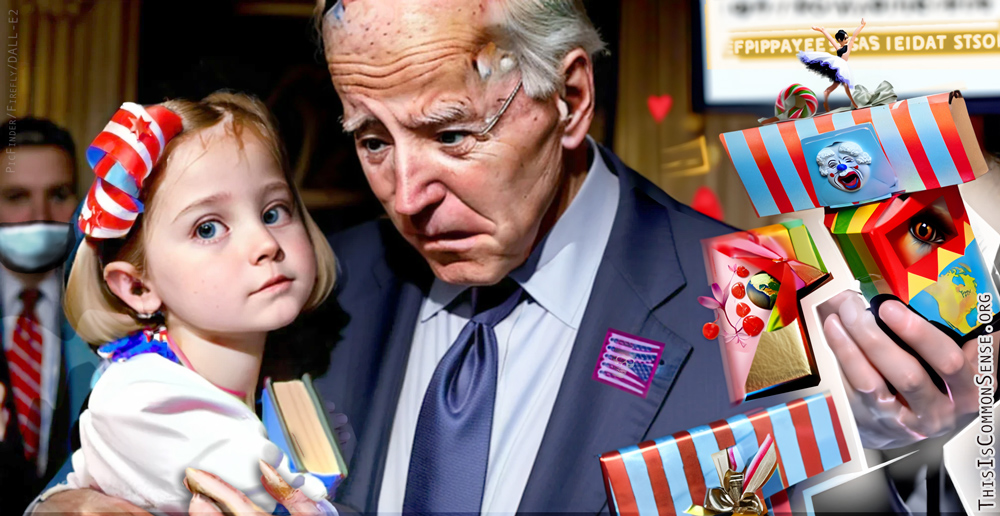
Illustration created with PicFinder.ai

See all recent commentary
(simplified and organized)
See recent popular posts

Categories
crime and punishment First Amendment rights ideological culture

The California Non-Consensus

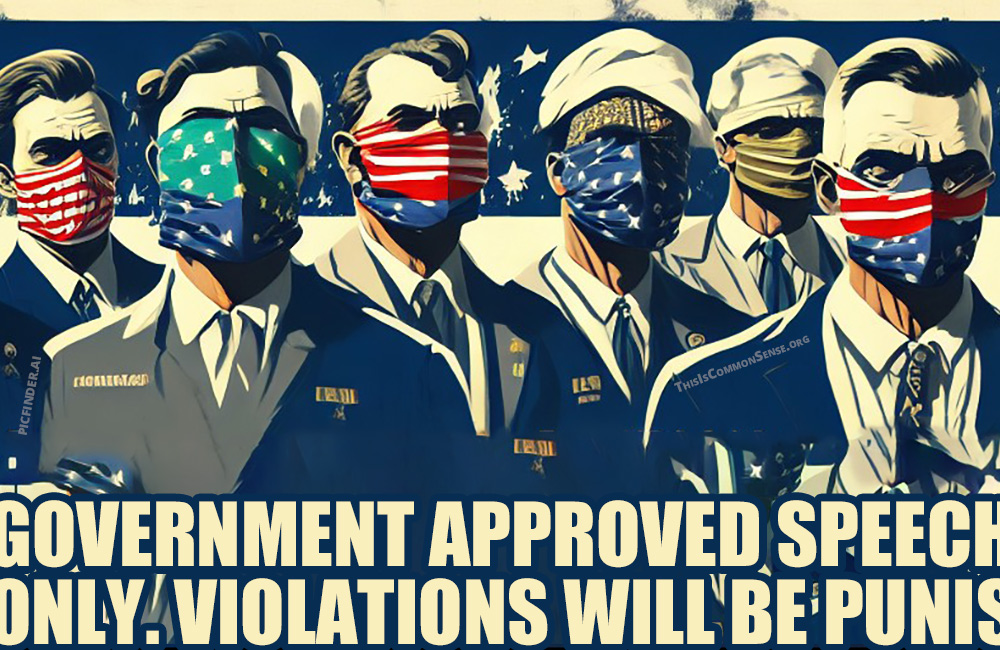
A judge has given California doctors a reprieve from an anti-medical-speech law produced by lawmakers and Governor Newsom. The judge has blocked the law until a lawsuit challenging it on First Amendment grounds can be resolved.

AB 2098 says that it “shall constitute unprofessional conduct” for doctors to spread “false or misleading information” about the COVID-19 virus, how to prevent and treat it, and the efficacy of alleged vaccines. (By using the word “alleged,” I’ve lost my medical license right there.)

What constitutes “misinformation”? 

Government-empowered medical boards would make these judgments in light of “contemporary scientific consensus.”

Why is “scientific consensus” so sacred? Does it never err? Aren’t facts and logic, which discourse helps to establish and convey, the proper arbiters, not a designated “consensus”? How does one actually arrive at a “scientific consensus” of any legitimate value? By divine revelation?

And if there are doctors, scientists and other researchers who dissent, especially in great number, doesn’t that make “consensus” entirely mythical, non-existent? The word misapplied? 

Of course, despite the issuance of government-approved dogmas and revised dogmas about these matters, every aspect of the pandemic has been the subject of intensive investigation and controversy for over three years.

As Judge William Shubb notes, “COVID-19 is a quickly evolving area of science that in many aspects eludes consensus.”

It’s a shame Shubb couldn’t simply have shut down the law permanently. Do we really need a lengthy legal process while California doctors wait to learn whether they may still fully participate in professional discussions?

But it seems that the agents of repression must have their day in court too.

This is Common Sense. I’m Paul Jacob.


PDF for printing

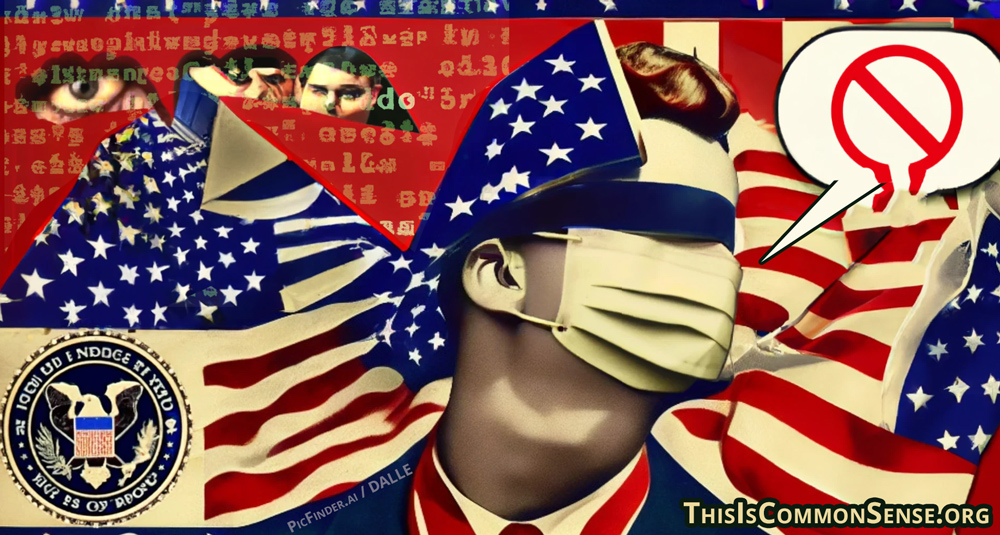
Illustration created with picfinder.ai

See all recent commentary
(simplified and organized)
See recent popular posts

Categories
First Amendment rights general freedom ideological culture

It’s His Party

If you’re a fan of freedom of speech, you’re probably also a fan of the First Amendment of the United States’ Constitution.

Unfortunately, governments keep trying to evade it.

When their censorship can’t itself be evaded, often the only thing to do is go to court. 

Merely showing a copy of the Constitution to the offending officials rarely suffices.

That’s why Kells Hetherington teamed up with the Institute for Free Speech to overturn a Florida statute requiring that “a candidate running for nonpartisan office may not state the candidate’s political party affiliation.” In a 2018 campaign for Escambia County School Board, Kells had been fined for calling himself a “lifelong Republican” as part of his candidate statement on the county’s website. In a later campaign, he kept silent to avoid another fine.

The Institute points out that in violating the First Amendment rights of candidates, Florida’s don’t-say-party law has especially hurt challengers. It has deprived them of a valuable shorthand way of indicating the tenor of their political views, a shorthand that incumbents have many more ways of communicating to voters outside the context of campaign statements.

Kells and IFS have won. Late last year, a district judge in Florida ruled that the First Amendment does indeed protect his right, as a candidate, to mention his political party.

Kells says that “hopefully, this will never happen again to any other candidates.” 

In any case, it’s clear that the Institute for Free Speech will never be out of a job. That First Amendment won’t enforce itself.

This is Common Sense. I’m Paul Jacob.


PDF for printing

Illustration created with Midjourney

See all recent commentary
(simplified and organized)
See recent popular posts
Categories
crime and punishment First Amendment rights general freedom

Commission by Omission?

Debra Paul, publisher of the weekly Londonderry Times, should not be facing jail time for publishing political ads.

In a land where a First Amendment explicitly if imperfectly protects freedom of speech, does anyone believe she should be?

Well, the New Hampshire attorney general, for one. 

For two, whoever called his attention to the trivial oversight that led to Ms. Paul’s arrest last August

Her venial sin, if it’s even that, was to publish political ads that failed to include the legend “Political Advertisement” as required by New Hampshire law. 

The violation is punishable by up to a year of incarceration and a fine up to $2,000.

As Paul noted in August, “This is clearly a case of a small business needing to defend itself against overreaching government. To threaten a small business owner with jail time over something this insignificant is very heavy-handed.”

Insignificant, why? 

Not labeling a political message “Political Advertisement” is only controversial in the slightest when the message imitates normal editorial or news content. The arrest warrant reports that the ads in question were on the order of “VOTE YES ARTICLE 2.” 

Obvious political advertising.

Months later, Paul still awaits her fate. An arraignment is scheduled for later this month. On the advice of her lawyer, she had little to say when we asked her for an update about the case. But she hinted that a political adversary may have filed the complaint against her.

The net of multitudinous picayune laws that snagged Paul can snag anybody who does anything more culturally and socially ambitious than sitting at home staring at the wall all day. Such regulations can be exploited by anyone eager to harass someone for reasons quite apart from an alleged infraction.

This is Common Sense. I’m Paul Jacob.


PDF for printing

Illustration created with Midjourney

See all recent commentary
(simplified and organized)
See recent popular posts
Categories
First Amendment rights general freedom social media

Rumble Resists

In a world of almost universal assaults on freedom of speech, it is heartening when an avowed defender of it refuses to relent under pressure.

Rumble’s reason for being is to help people “control the value of their own creations.” The company creates “technologies that are immune to cancel culture.” Their mission is “to protect a free and open internet.”

A mission statement is one thing. Abiding by it in the face of major opposition is another. But Rumble has just told the French government to get lost for demanding that it deplatform certain sources of Russian news.

Stressing its policy that users with unpopular views “are free to access our platform on the same terms as our millions of other users,” Rumble has disabled access for users in France rather than acquiesce to the government’s censorship demands. Rumble will go back online there if it wins a lawsuit challenging the legality of the demands.

Like Elon Musk, who said that he wouldn’t block Russian news sources at the behest of governments “unless at gunpoint,” Rumble CEO Chris Pavlovski says “I won’t move our goal posts for any foreign government.”

Rumble started out in 2013. By late 2021, Rumble.com was being visited by an average of 36 million active users per month.

If Rumble loses France, it loses less than 1 percent of its current users — but also an opportunity for substantial growth. 

On the other hand, it holds on to what it is.

And what its customers value. 

This is Common Sense. I’m Paul Jacob.


Note: This Week in Common Sense, the weekend wrap-up of this program, is published on Rumble as a video nearly every week. Last weekend’s episode is “It’s a Funny World.”

PDF for printing

See all recent commentary
(simplified and organized)
See recent popular posts
Categories
crime and punishment First Amendment rights general freedom

The FBI Is Misinformed

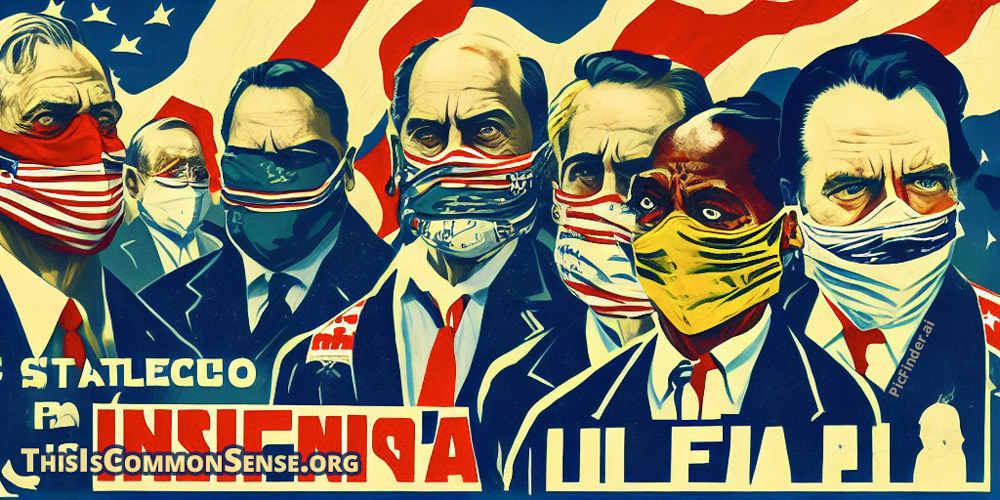
The FBI is misinformed if it thinks that prosecuting persons who misinform solely for misinforming is consistent with freedom of speech.

The utterance of false statements, whether unknowingly or willfully, is nothing new in human history. And such utterances are impossible to avoid in any kind of discourse — for example, political debates — in which people disagree with each other about facts as well as values.

Indeed, one often hears both true things and false things. We must evaluate claims as best we can, using observation, logic, common sense and so forth.

But, somehow, the FBI has decided that “misinformation” and “disinformation,” chronic in campaign ads, political pronouncements, and domestic quarrels, are a crime when communicated in the context of an election.

An FBI document leaked to Project Veritas wants to explain “What Are Election Crimes.” This document lumps misleading speech with such actual crimes as electoral fraud and intimidation of voters.

Robert Spencer has questions about this assumption for the FBI’s, ahem, Election Crimes Coordinator, Lindsay Capodilupo. For example, how does the FBI determine what is and is not misinformation? Will there be an appeals process given the fact that certain notorious so-called “misinformation” — like the once-upon-a-time contested claim that Hunter Biden’s laptop is indeed Hunter Biden’s laptop — has turned out to be true information?

And — most important — how can wrongspeak as such be classified as any kind of crime in light of the First Amendment?

Stay tuned for the FBI’s answers. But not with bated breath, okay?

This is Common Sense. I’m Paul Jacob.


PDF for printing

Illustration created with DALL-E

See all recent commentary
(simplified and organized)
See recent popular posts
Categories
Fifth Amendment rights First Amendment rights general freedom nannyism national politics & policies

Just a Board Whose Intentions Were Good?

They say it was all a terrible misunderstanding.

The Department of Homeland Security has caved and is now closing its new Disinformation Governance Board. Critics had been disinformatively saying that the board would probably be used for censorious purposes.

Au contraire, says DHS — even though the board was originally headed by an exponent of countering wrongthink about such matters as the “alleged” Hunter Biden laptop. No. Per DHS, this board really, truly, deep down, supposedly had only benign intentions.

When announcing the shutdown, DHS also announced that it has a bridge to sell you.

(Gotcha! DHS didn’t announce anything about a bridge. That’s just a bit of disinformation that I perpetrated with the help of my woefully abused First Amendment–protected freedom of speech!)

In May, DHS Secretary Mayorkas insisted that the board was no threat to free speech. The point was to address threats “without infringing on free speech.” Rather, the board would be doing things like disputing the strangely persuasive misinformation that the U.S. now has an open southern border.

Even early on, though, the board had been planning to coordinate its anti-disinformative efforts with Big Tech social media firms, which have been censoring on behalf of government. And various government officials will still be working to delegate the nuts and bolts of violating the First Amendment to Twitter, Facebook, YouTube, et al. No letup on that front in sight.

DHS may be ending its ill-named board. But beware: its spirit and agenda live on.

This is Common Sense. I’m Paul Jacob.


NOTE: This board was previously discussed in these pages on May 2, in “Homeland Censorship Board.”

PDF for printing

Illustration assist from DALL-E

See all recent commentary
(simplified and organized)
See recent popular posts
Categories
First Amendment rights ideological culture Internet controversy

The Random Malefactor

I’m pretty sure I’d never heard the term “stochastic terrorism” until last week; now it’s everywhere.

What does it mean?

It sounds redundant, as if the first word didn’t modify the second so much as define it, but I could be wrong, so I . . . freespoke . . . it.

Freespoke is the new search engine I’m trying out, now that all the old ones seem compromised in weird ways.

Matt Walsh, of his Daily Wire podcast and his documentary film What Is a Woman?, appears to be one of the term’s current honorees. He is said to commit “stochastic terrorism” by calling attention (in one case) to the child abuse going on in hospitals in the form of “gender affirmation” treatments and surgeries. Merely by identifying something that is actually happening and judging it as bad qualifies because it has some unmeasurable likelihood of eliciting violence against those who are thus fingered — not ineluctably or directly or certainly or anything like that. 

Just randomly. 

Stochastic means random.

Of course, the charge against Walsh (or say, Trump, or anyone else) is that by identifying specific people in specific institutions he’s inviting random followers to engage in violence. But what Walsh is doing specifically is inviting his followers to protest and take political action against the malefactors he identifies.  

In familiar terminology, Walsh’s naming of names is similar to doxxing, and can be judged on that basis.

Yet, that hardly justifies calling non-violent speech “violence.”

Furthermore, back to my opening concern, isn’t all terrorism random? Terroristic acts differ from insurrection and assassination in their randomness, the better to elicit a culture of fear in the populace. The randomness in “stochastic terrorism” is not in the targets but the terrorists.

In a heavily polarized political climate, all specific charges by one side against specific people on the other side could be seen as “stochastic terrorism.”

Better to tread carefully. And drop the term.

This is Common Sense. I’m Paul Jacob.


PDF for printing

See all recent commentary
(simplified and organized)
See recent popular posts
Categories
education and schooling First Amendment rights

A Lesson for the Board

Shawn McBreairty has the right to speak at public school board meetings in Maine.

That may not sound like the most controversial of contentions, but many school boards and even the Justice Department have been treating parents as criminals for publicly objecting when schools 

  1. teach kids to feel racially guilty, 
  2. unlearn the biologically obvious about sex, and in general 
  3. engage in radical indoctrination at the expense of education.

The parents’ sin in such cases is that of nettling board members and others who want a free hand to inflict such policies.

Mr. McBreairty has gotten in hot water with more than one school board in Maine. The recent court ruling that he has the right to speak at board meetings was occasioned by the actions of the RSU 22 school district, which barred McBreairty from its own board meetings.

When he tried to attend one in June, the board used local police to stop him.

The judge in the case, Nancy Torreson, has no sympathy for the board’s antics, characterizing its rationale for trying to muzzle McBreairty as “evolving, ad hoc, and unsupported.”

Judge Torreson concludes that McBreairty’s expression of “school-related concerns at the podium during the public comment period of School Board meetings constitutes speech that is protected under the First Amendment.” Her ruling grants the motion for an order temporarily restraining the school board from stopping McBreairty from attending and speaking at its meetings.

Even if board members disagree with him.

McBreairty and the school board are in America, after all.

This is Common Sense. I’m Paul Jacob.


PDF for printing

Photo credit

See all recent commentary
(simplified and organized)
See recent popular posts