Categories
insider corruption

A Safe Bet

“We certainly cannot comment,” said a spokesman for the Chief Financial Officer of the nation’s capital city, “on documents that are not supposed to be public.”

Welcome to Washington, D.C., where governing is done opaquely.

In a typically shady political maneuver, a $215 million contract was awarded to Intralot, a Greek company, to manage the region’s newly legalized sports gambling. 

Citizens were not supposed to learn that Intralot subcontracted with city political insiders.

“Confidential city records obtained by The Washington Post,” the paper reported Saturday, “show that those who would benefit from the no-bid contract include a former D.C. State Board of Education official, the head of a marketing company that worked on the political campaigns of Mayor Muriel E. Bowser (D) and her protege, council member Brandon T. Todd (D-Ward 4), and an executive whose company lost a contract at a city homeless shelter because of allegedly falsified documents.”

“Every time, there will be politically connected CBEs attached to a contract of this size,” Council Chairman Phil Mendelson generously explained. “It’s how business is done everywhere.”

“This is why we have a competitive process to begin with,” Councilmember David Grosso countered, “to make sure that this kind of stuff doesn’t happen and you don’t give a contract to your friends.”

The sports betting bill was introduced by Councilmember Jack Evans, who just resigned from the troubled Metro transit system after an investigation found he “knowingly” broke ethics rules. He is also “the subject of a federal probe into whether he improperly used his public office to benefit paying clients of a consulting business he owns.” 

All in a day’s work.

This is Common Sense. I’m Paul Jacob. 


PDF for printing

Washington DC, corruption, sports gambling,

See all recent commentary
(simplified and organized)
See recent popular posts

Categories
insider corruption term limits

House-Cleaning & Law-Following

Larry Hogan, Maryland’s popular Republican governor, has vowed to “clean house” in the wake of the scandals rocking the “private” non-profit University of Maryland Medical System (UMMS), set up by the State of Maryland. 

It isn’t just former Baltimore Mayor Catherine Pugh, who resigned from the UMMS board after it was disclosed the board had purchased $500,000 worth of her self-published children’s book, “Healthy Holly.” Yep, it’s always for the children. (Pugh also resigned as mayor after the FBI raided her home and office.)

In fact, nine of the 23 UMMS board members had money-making contracts with the system they “manage.” Not to mention that a recent Post exposé detailed how former state legislator and long-time board member, Francis Kelly, whose legislation established the system, had multi-million-dollar insurance contracts with UMMS.

Yet, as The Washington Post reports, “state law long has called for housecleaning . . . specifying that board members can’t serve more than two consecutive five-year terms.”

Gov. Hogan and his predecessors — both Republican and Democrat — simply ignored the law, reappointing board members beyond the limits.

“If members were allowed to essentially stay on the board in perpetuity,” former state senator, now U.S. Rep. Jamie Raskin (D-Md.) argued, “it’s a direct threat to the independence and accountability of the board.” 

Abandoning term limits, State Senator Jill Carter (D-Baltimore City) told the Post, was “part of the problem,” resulting in self-dealing.

Hmmm, think they’ll ever apply this knowledge to establishing term limits on their own powerful legislative bodies?

So much corruption, too few limits. 

This is Common Sense. I’m Paul Jacob.


PDF for printing

Catherine Pugh, corruption, Baltimore,

See all recent commentary
(simplified and organized)
See recent popular posts


Categories
crime and punishment Popular property rights

Of Loot and Leverage

Without a special kicker, why should police bother to do their jobs?  

The subject is civil asset forfeiture. This legal procedure makes it easy to take property from criminals. For the War on Drugs, civil forfeiture was so loosened as to allow police to take property from anyone . . . without due process.

No wonder citizens in a number of states have demanded limits upon the practice. 

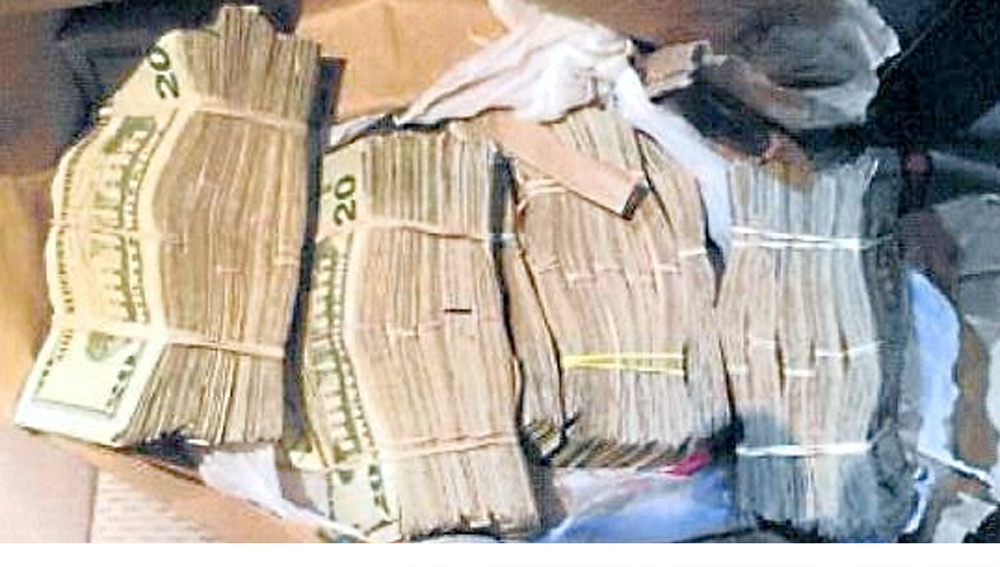
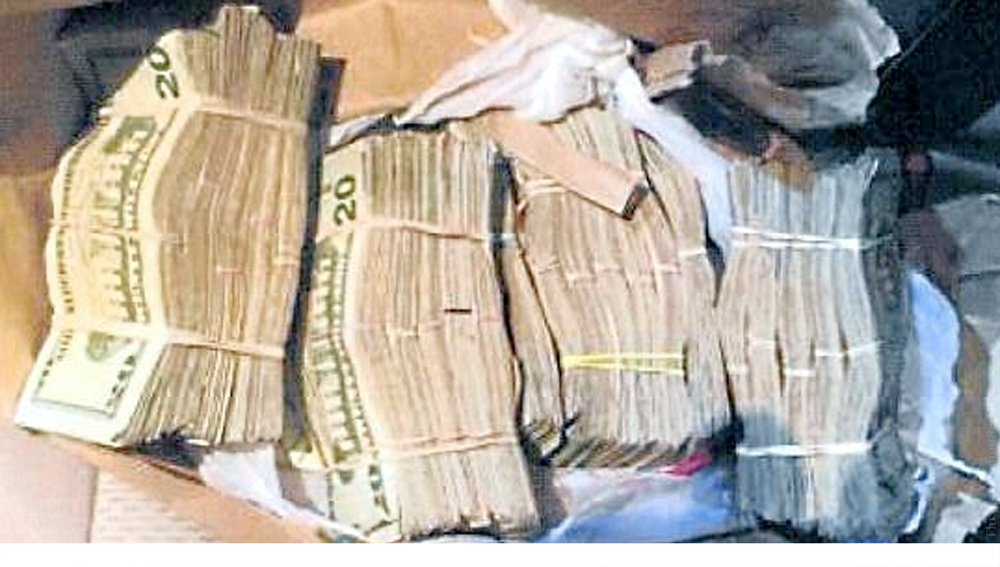
But since police departments get to keep the loot they “interdict” — spending it on better cars, weapons, office furniture, plush employee lounges, drug-sniffing dogs — law enforcement personnel aren’t exactly always on board with citizens’ concerns.

Jarrod Bruder, South Carolina Sheriff’s Association executive director, defends the sorry practice, as quoted by Greenville News. He asks what, sans civil forfeiture’s profit motive, could be a cop’s “incentive to go out and make a special effort?” 

Dollars to donuts, this will not play well with those who distrust the police already. 

And note the biggest incentive police face: to take property away from innocent people. Easier pickin’s. No surprise, then, that in “19 percent of cases, there is no criminal arrest.”*

Meanwhile, Senator Ted Cruz (R-Tex.) has suggested that President Trump take the confiscated billions from the accounts of drug kingpin El Chapo to “build the Wall.”

Genius? 

Regardless, this mere suggestion could add incentives for pro-Wall Republicans to go soft on civil asset forfeiture.

There is no point in being secure within our borders if we are not secure within our homes and wallets and cars and . . . any other place jeopardized by this police-state practice.

This is Common Sense. I’m Paul Jacob.


*Blacks represent 71 percent of cases, while only 28 percent of the state population.

PDF for printing

civil asset forfeiture, police, corruption, theft

Photo Credit: Chase Carter on Flickr

See all recent commentary
(simplified and organized)
See recent popular posts

Categories
ballot access insider corruption local leaders

Clown Car of Felonies

“It’s overkill of epic proportions,” John Kass writes in the Chicago Tribune, “like using a sledgehammer to kill a gnat, or firing off a nuclear weapon to kill a sparrow.”

In three columns, Kass tells the story of David Krupa, a 19-year-old DePaul University student, who gathered over 1,700 voter signatures on petitions to gain a spot on the ballot for alderman of Chicago’s notorious 13th Ward.

Why notorious? It’s Boss Madigan’s home.

Yes, the “Land of Lincoln,” home to nearly 13 million people, is ruled by one man, Michael J. Madigan, Speaker of the Illinois House, “the longest-serving leader of any state or federal legislative body in the history of the United States.” 

And 13th Ward Alderman Marty Quinn, the incumbent, is Madigan’s guy.

Quickly, a lawsuit was filed challenging Krupa’s petitions and, as Kass explains, “A crew of mysterious political workers — perhaps they were Buddhist monks, or the gentle sun people known as the Eloi, or maybe Madigan precinct captains — filed 2,796 petitions of revocation of signature.”

While almost three thousand people executed affidavits stating that they wanted their signatures removed from Krupa’s petition, only 187 actually signed his petition.

Since the revocations require swearing to a legal document, under penalty of perjury, and perjury is a felony, more than 2,500 people — and their knowing helpers — appear to have committed what Krupa’s attorney calls a “clown car of felonies.”

Then — voilà! — the legal challenge evaporated. Young Krupa won’t be squashed; there will be a challenger on the 13th Ward ballot for the first time in decades. 

Is that enough? No. 

Election process corruption and the possible suborning of thousands of felonies must be investigated. 

No quarter for boss rule.

This is Common Sense. I’m Paul Jacob.


PDF for printing

Michael Madigan, Speaker, House, Illinois, corruption, machine

See all recent commentary
(simplified and organized)
See recent popular posts


Categories
insider corruption tax policy

There You Go Again, IRS

The old keywords were “Constitution,” “Patriot” and “Tea Party.”

The new ones? “Marijuana,” “oxycodone,” and “legalization.”

Paul Caron, the TaxProf blogger, calls attention to another IRS scandal — again about denying tax-exempt status to organizations because of their political views. He had barely finished blogging about the scandal that came to light in 2013 when a new one burst into view.

You almost certainly remember the older scandal, in which the Internal Revenue Service had been caught intrusively scrutinizing and delaying the applications of conservative non-profits picked on because of their conservatism.

To cover that mess, Professor Caron published a blog series called “The IRS Scandal, Day __.” He added a post daily.

Every day.

For years.

The last installment, Day 1921, published on August 14, 2018, reported a settlement: meager taxpayer-funded payouts to over a hundred victimized organizations. The IRS never admitted wrongdoing. No one was ever punished. According to the Washington Times, the agency said that it had “made changes so that political targeting can’t occur in the future.”

These changes don’t seem to include prohibiting political targeting by the IRS, however.

Now we have another case.

Caron points us to a Wall Street Journal op-ed by David Rivkin and Randal Meyer, lawyers, who have discovered a dirty little secret in Revenue Procedure 2018-5. One provision authorizes IRS to withhold tax-exempt status from applicants seeking to improve “business conditions . . . relating to an activity involving controlled substances,” including marijuana and oxycodone. Advocating legalization of marijuana would count as trying to improve such conditions.

Apparently, the IRS thinks its mandate entails enforcing the status quo by stifling dissent — instead of just doing its congressionally mandated (if all-in-all irksome) job.

This is Common Sense. I’m Paul Jacob.


PDF for printing


» See popular posts from Common Sense with Paul Jacob HERE.


Categories
crime and punishment general freedom insider corruption

The Ayatollah for Governor?

Former Oklahoma Attorney General Drew Edmondson is running for governor.

Again.

You may recall, as I certainly do, that Mr. Edmondson prosecuted — more like persecuted — me and two others involved in a 2005 petition drive. He charged us with “conspiracy to defraud the state,” a felony carrying a 10-year prison term.

At our arraignment and processing, the three of us were shackled together with handcuffs and leg-irons and paraded before TV cameras.

“Has North Korea Annexed Oklahoma?” was how a Forbes magazine editorial greeted the spectacle. The conservative Wall Street Journal connected the Sooner State to the kind of repression practiced in Pakistan, while liberal consumer advocate Ralph Nader also condemned the prosecution. New Jersey Star Ledger columnist Paul Mulshine noted that Russia’s Vladimir Putin “could learn a thing or two from the Oklahoma boys.”

We became the Oklahoma 3. The AG earned the label “Ayatollah Edmondson.”

Loudly expressing our innocence, we waited for our day in court.

It was a long wait.

Edmondson held the indictment over our heads for a year and a half, publicly attacking us and calling us criminals. But he never permitted us our day in court. He went to great lengths to avoid completing a preliminary hearing, which would have allowed a judge to determine if enough evidence existed to hold a trial.

Finally, in 2009, as he prepared to launch his previous unsuccessful run for governor, he dropped all the charges.

When someone abuses power so recklessly, that someone shouldn’t be given more power.

Today, career politician Drew Edmondson tells voters he will “Put Oklahomans First.” He can’t even come up with his own slogan.

Ayatollah Edmondson: Dangerous. And unoriginal.

This is Common Sense. I’m Paul Jacob.


PDF for printing


Additional Information

Capitol Beat: In critical analysis, Edmondson ranked among worst attorneys general
CEI: Drew Edmondson’s Prosecution of Paul Jacob Is Unconstitutional
Wall Street Journal: Still Oklahoma’s Most Wanted – Attorney General leads posse chasing critics of government
NewsOK: State’s Unjust Prosecution 
Capitol Beat: Edmondson should free “The Oklahoma Three”

My Writing on Edmondson’s Attack on Petition Rights

We, the Oklahoma 3 — Oct. 7, 2007
Guilt & Innocence in Oklahoma — Jan. 21, 2008
Constitutionally Unsuited for the Job — Feb. 13, 2008
Above the Law — March 14, 2008
Opposed to Answers — April 28, 2008
Edmondson vs. Term Limits — May 20, 2008
Another OK Court Decision — June 4, 2008
Petitioners May Petition — July 8, 2008
Scare Tactic in Oklahoma — July 23, 2008
Feeling Sorry for Oklahoma — Nov. 17, 2008
The Wheels of Injustice — Dec. 4, 2008
The Oklahoma Three, Free at Last — Jan. 26, 2009
The Year of Reform? — Feb. 18, 2009
The Untold Story of the Oklahoma 3 — May 1, 2009
Change Sweeping Down the Plains — May 19, 2009

Categories
initiative, referendum, and recall insider corruption term limits

Corruption, Arkansas-Style

On Friday, the Arkansas Supreme Court struck Issue 3, a citizen-initiated measure to restore legislative term limits, from Arkansas’ November ballot. The Court declared, 4-3, that there weren’t enough “valid” signatures.

This, despite opponents never disputing that more than enough Arkansas voters had signed the petition.

In recent years, legislators have enacted a slew of convoluted laws, purposely designed to wreck the initiative and referendum process.* The regulations give insiders and partisans a myriad of hyper-technical “gotchas” that can be used to disqualify whole sheets of bonafide voter signatures.

“The legislature,” explained former Governor Mike Huckabee recently, “sucker-punched the people of Arkansas and expanded their terms. They did it, I think, very dishonestly — by calling it an ethics bill . . . that had nothing to do with ethics. It was all about giving themselves longer terms.”

Since getting away with that 2014 ballot con job, giving themselves a whopping 16 years in office, seven Arkansas state legislators have been indicted or convicted of corruption. The author of that tricky ballot measure, former Sen. Jon Woods, just began serving an 18-year federal prison sentence for corruption.

Other corruption, that is.

“It’s one reason I think term limits are a very important part of our political system today,” said Huckabee. It is, he argued, “easier to get involved in things that are corrupt the longer you stay.”

Now, sadly, after 2014’s fraudulent ballot measure and two 4-3 state supreme court decisions neutering the entire ballot initiative process, political corruption can continue unabated in the Natural State. 

This is Common Sense. I’m Paul Jacob.


* The state supreme court has ignored the clear language in the state constitution regarding such petitions: “No legislation shall be enacted to restrict, hamper or impair the exercise of the rights herein reserved to the people.”

N.B. For relevant links, check yesterday’s splash page for this weekend’s Townhall column.

PDF for printing


Categories
Accountability crime and punishment moral hazard property rights U.S. Constitution

Forfeiting Common Sense

Is it okay to steal if you can get away with it?

A full answer would require a treatise. But most of us common-sensibly understand that evil does not magically become good when perpetrators are not stopped or punished. Thrasymachus was wrong to contend, in Plato’s Republic, that justice is merely the “interest of the stronger.”

When it comes to crimes like bank robberies, muggings and car jackings, we have no doubts about this. In such blatant cases, we suffer nothing like the legitimate confusion to which we may be prone regarding the exact border between adjacent parcels of land or the niceties of intellectual property law.

Well, somebody tell the New Hampshire state police.

Some of them apparently believe it’s okay to steal if you can evade laws against the stealing.

New Hampshire’s recent reform of civil forfeiture laws requires criminal conviction of a person before there can be any forfeiture of his property. But a loophole enabled officers to grab $46,000 of Edward Phipps’s money — from his car, stopped on the road — even though he was never accused of a crime. 

How?

It seems that if state cops collaborate with the feds, safeguards established to prevent such abuse can be evaded.

To retrieve even a little of his money ($7,000), Mr. Phipps was forced to relinquish all claim to the balance ($39,000). Even if lawmakers close the loophole, as they should, the robber-cops will probably get away with this particular larceny. 

They shouldn’t.

That’s injustice, not common sense.  I’m Paul Jacob.


PDF for printing


Photo Credit: N.H. State Police


Categories
Accountability general freedom government transparency incumbents insider corruption local leaders moral hazard national politics & policies term limits

“Dorky” Doesn’t Define It

“Term limits,” said Daniel McCarthy, editor of The Modern Age, in a recent podcast conversation with historian Tom Woods, “was one of the dorkiest ideas of the 1994 so-called Newt Gingrich revolution.”

He characterized it as not having really gone anywhere.

Huh?

Granted, Congress is still not term-limited. But Americans in 15 states — including California, Colorado, Florida, Michigan, and Ohio, and representing 37 percent of the nation’s population — do enjoy term-limited state legislatures.*

And it sure wasn’t Newt Gingrich’s idea. Gingrich opposed it.

McCarthy repeats the old chestnut that what term limitation “winds up doing is actually weakening Congress and congresspeople in particular — relative to their own staff, who stay in Congress and become sort of experts and learn how to manipulate their congressman, and also relative to the executive branch who have people rotate in from time to time.”

Nifty theory — one very popular with politicians, who know that voters fear unelected influences on legislation.

The reality, however, is that Congress, designed by the Constitution’s framers to be both most powerful and closest to the people‚ is, today, the weakest branch.

And legislators are not term limited.

Ditch the “manipulation theory”; adopt a “collaboration theory”: legislators with Methuselah-long careers learn, sans “rotation in office,” to feather their own nests and those of the interest groups that fund their re-elections (and insider trading schemes).

Term limits remain popular with normal Americans because voters intuitively grasp the reality of such everyday corruption, which is directly tied to Congress having sloughed off so much constitutional responsibility.

We need term limits to restore a Congress sold out by professional politicians.

This is Common Sense. I’m Paul Jacob.


* Nine of the ten largest cities in America likewise have termed-limited their elected officeholders. For more information, see the links to the column from which this episode of Common Sense is condensed.

PDF for printing


Categories
Accountability crime and punishment folly general freedom government transparency local leaders moral hazard nannyism porkbarrel politics privacy property rights responsibility tax policy too much government

Progress, DC-Style

Is the black, Democratic mayor of Washington, D.C., actually a “racist”? What about the city council, which is 46 percent African-American, 85 percent Democrat, and 100 percent liberal/progressive?

That’s what a lawsuit argues — the DC ‘powers that be’ are racist in their development and housing policies. Filed on behalf of several African-American DC residents, it alleges that Mayor Muriel Bowser and the council have been striving mightily, as the Washington Post reported, “to ‘lighten’ African American neighborhoods and break up long-established communities.”

“Every city planning agency,” states the complaint, “... conspired to make D.C. very welcoming for preferred residents and sought to displace residents inimical to the creative economy.”

Nothing that a billion dollars couldn’t make right, of course — for which the plaintiffs ask.

But is gentrification a crime?

As American University professor Derek Hyra told the Post, “Developers want to maximize their return. This is not a conspiracy. This is capitalism.”

But no, this certainly isn’t laissez faire “capitalism.” It could be described as dirigisme — or “state capitalism” or “crony capitalism” or just a bad old-fashioned mercantilism, revised to work at the city level, where governments partner up with particular groups to extract as much wealth for the insiders as they can. Professor Hyra acknowledges that Bowser and the council were “providing subsidies” to bring in richer citizens and push out poorer ones.

Most importantly, we discover yet again that the power politicians claim they need to help the poor, is used to help the rich.

Way to go, “progressives.”

This is Common Sense. I’m Paul Jacob.


Note: The mayor is a Democrat and the 13-member council is composed of eleven (11) Democrats and two (2) independents. There are no Republicans.

PDF for printing