Categories
Accountability crime and punishment general freedom nannyism national politics & policies

Beggar Thy Philanthropist

Making up petty rules and enforcing them is one thing governments do well.

On Monday I warned about the dangers of asking too much from government. I think, today, I’ll make the opposite warning: of not asking enough.

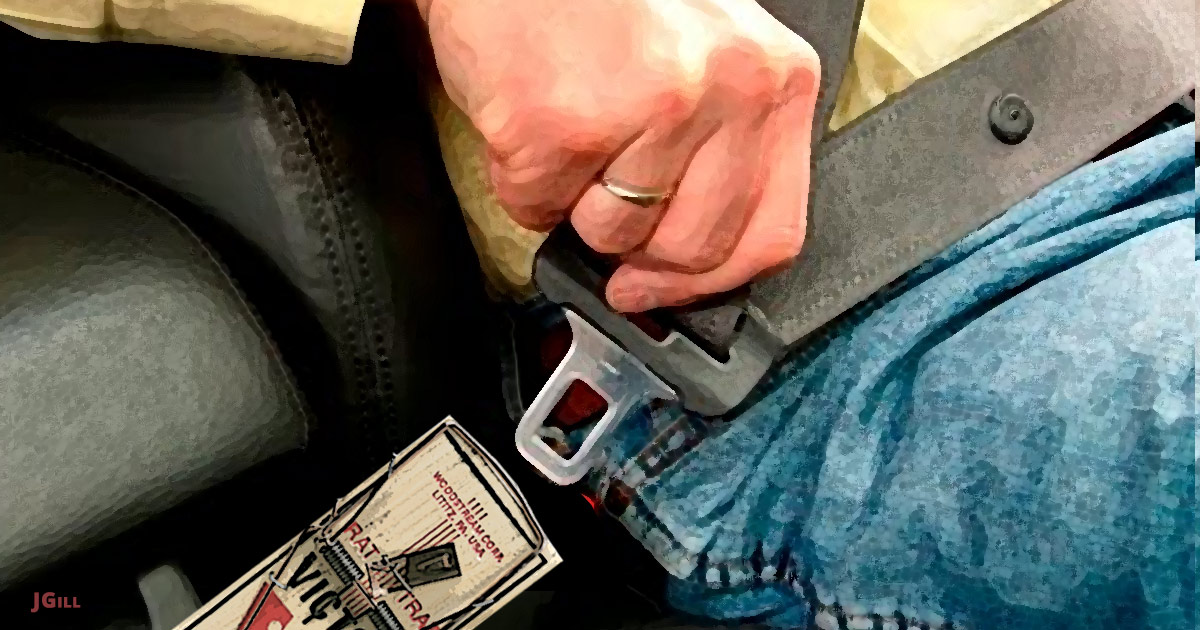
Mandatory seatbelt laws were enacted (sometimes by citizens initiative and referendum) to save people’s lives. But the reason many police and local jurisdictions like these laws is that it gives them a chance to engage in shakedowns, entrapping citizens into non-compliance, and then socking them with fines.

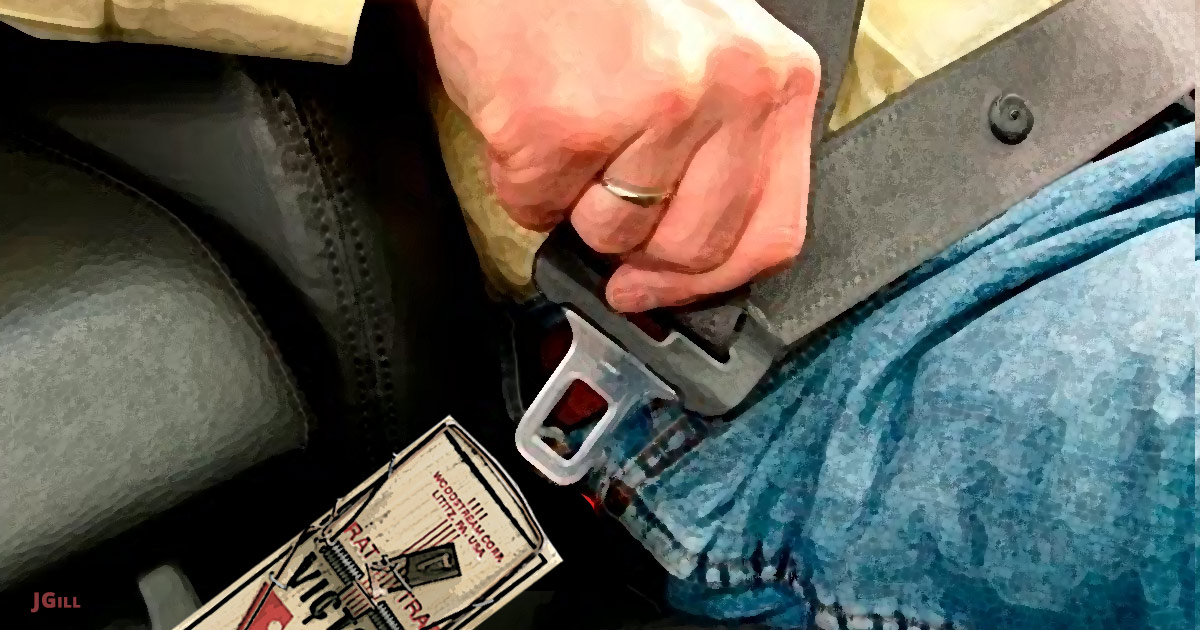
In Regina, Saskatchewan, a man pulled up to an intersection and saw a down-and-outer with a sign. He felt sorry for him, so, as he pulled up, he unbuckled his seat belt and pulled three bucks in change out of his pocket. And dropped the three dollars on the curb.

A few moments later, police stopped him, and handed him a ticket. The “homeless guy” with the sign turned out to have been an undercover cop, and the few moments without a seat belt was enough to charge our philanthropist $175 Canadian.

Though an obviously preposterous misuse of police time and attention, and an abuse of the citizenry, Regina’s police force remains adamantine, claiming that “this is nothing new. It’s part of a project that has police watching for traffic violations at intersections.”

Because this sort of thing only hits people almost at random, but the benefits are concentrated on police coffers, it’s hard to organize against such nonsense. Which is precisely why such nonsense goes on.

Still, we must prevent such abuse at the local level, if we’re ever to control the federal leviathan.

This is Common Sense. I’m Paul Jacob.

Printable PDF

seatbelt, trap, police, Regina, Saskatchewan, illustration


Categories
ideological culture nannyism too much government

A Handle on Global Warming?

Folks in government are prone to overstepping their bounds.

Take, for example, the North Vancouver, British Columbia, City Council, which has instituted a mandatory sticker program for gas pumps. Starting in 2016, public service announcements will appear on North Vancouver gas pump nozzle handles.

What for?

To warn us of the danger of global warming.

Though the city government hasn’t accepted any particular message, Autoblog reports that the policy is clear: “The idea behind the warnings isn’t to shame people for filling up an internal combustion engine but instead to suggest that there could be more eco-friendly alternatives.”

Autoblog calls this new move a “small step to help fight the planet’s rising temperatures,” and that North Vancouver “will likely be the first city in the world” to enact such a mandate.

I am sure city pols are proud of themselves.

The ordinance was pushed by a not-for-profit Canadian group called Our Horizon. The goal? Make a “positive impact on the environment” with this “relatively low cost but highly visible strategy.”

The official estimate on costs? Between C$3,000 and C$5,000. Costs to businesses? “Gas station owners must display [the stickers] as a condition of their business license.”

Meanwhile, the unsettled science of climate change teeters ahead, as The Rebel Media reports: increased carbon dioxide may not cause extra warming (chlorofluorocarbons do that), but does induce greening, helping plant life to flourish.

When the truth finally emerges, out of the fog blown over the issues by groupthink, the findings of legitimate science probably won’t fit on a sticker.

This is Common Sense. I’m Paul Jacob.


Printable PDF

Global Warming, Vancouver, gas, sticker, climate change, common sense


Categories
general freedom media and media people property rights too much government

Naked Truth Up North

In the U.S., broadcasters and savvy consumers worry about the behavior of the Federal Communications Commission, which regulates the electromagnetic spectrum not by defending property rights, but by licensing segments of the spectrum within locales. The FCC even regulates content to some extent, by threat of withdrawing licensure.

But it could be worse. We could be in Canada.

How so? Well, Canadian politicians have long picked at a cultural scab: their identity crisis, their fear of being overshadowed by the U.S. So, up north, regulation of broadcast content centers on the promotion of “Canadian” artistry and talent in place of programming generated elsewhere, chiefly America.

Yes, the Canadian Radio-television and Telecommunications Commission has quotas.

And like all quota systems, it has long ago embraced absurdity.

The latest nonsense?

The demand that two Canadian porn channels provide more home-grown pornography. In addition, the channels have been charged with not been providing enough closed captioning. (Just what adult movies need, careful transcription.)

AOV XXX Action Clips and AOV Maleflixxx are on notice, and their respective licenses are under review:

The X-rated specialty channels are supposed to air 35 per cent Canadian programming over the broadcast year and 90 per cent of its content should have captioning.

As part of proposed licence renewals, the commission plans to hear evidence on the apparent non-compliance.

It might be awfully funny to horn in on those hearings, listen to what people will say about upping Canadian porn production to meet standards that encourage, uh, national pride.

But the dirtiest truth is that most regulation of the airwaves is just as ridiculous, if not quite as nakedly so.

This is Common Sense. I’m Paul Jacob.

Categories
ideological culture national politics & policies

A New Leaf

There’s apparently more than one way to mess up money.

Canada’s new plastic banknotes don’t work in all vending machines, I hear . . . and there’s a less practical problem with the new C$20 note: It has the “wrong” maple leaf on it.

Some botanists are complaining that the stylized leaf logo is not Canada’s native species, but one hailing from Norway.

I’ve not seen one of these bills up close (donations would be appreciated, though), but from the photo, the thing I’d be worrying about is that the Queen, on the basis of her appearances on bank notes, looks more like Dwight D. Eisenhower every year.

Here in America, our Washington insiders mess up money both symbolically and substantively.

In the old days, before president-worship had become something of the country’s official religion, Liberty was represented by female representatives or Indians. (The fact that the U.S. government killed off and hounded remaining populations of native Americans in that time put the latter practice into some cognitive dissonance.) Now, both coins and notes feature dead presidents. Frankly, I think we should junk the presidents and go back to stylized, classical representations of Liberty.

The biggest symbolic problem is having Andrew Jackson, America’s most successful and vehement anti-central banking president, placed on our central bank’s $20 note.

That’s an insult, not an honor.

Another way to mess up money is to devaluate it by over-printing.

Or creating too much credit. Or good old-fashioned seignorage. With the Quantitative Easing and “trillion dollar coin,” we’ve got these last two covered. Alas.

This is Common Sense. I’m Paul Jacob.

Categories
national politics & policies tax policy

Tax Reductions Ahead?

As the president yammers on about making the rich “pay their fair share,” behind the scenes his administration has suggested reducing corporate tax rates by seven points. Meanwhile, Obama’s main challenger, Mitt Romney, promised a full ten point rate cut, if elected.

Why? By international standards, American corporate taxes are obviously way too high.

The U.S. effective tax rate on new corporate investment sits at 35.6 percent today, which, write Duanjie Chen and Jack Mintz for the Cato Institute, “is almost twice the average rate for the 90 countries” the duo studied, in “Corporate Tax Competitiveness Rankings for 2012.”

The U.S. has higher corporate tax rates than France.

And India, Colombia, Brazil, Japan, Venezuela, Korea, Russia, Costa Rica, you name it. This is not something we want to be No. 1 at.

Well, at least Argentina, Chad and Uzbekistan tax at even higher rates.

There’s no consolation in others’ folly, though.

The authors look northward, to Canada, which, since 2000, made some huge adjustments downward on tax rates affecting businesses: 15 percent cuts in federal statutory tax rates, eliminating most capital taxes, removing sales taxes on capital goods, and scaling back on special preferences that tend to make taxation such a mess there as well as here. And all the while revenues from these taxes have remained stable per GDP.

Could we get lower corporate taxes, here? Well, this is not an area where those on the left can enviously eye their beloved European social democracies to make their usual, tedious case for higher taxes. Norway’s rates are ten percent lower than ours, and Sweden’s, Denmark’s and Finland’s are lower yet.

This is Common Sense. I’m Paul Jacob.

Categories
Second Amendment rights too much government

Drawing Gunfire

Thank goodness the CIA didn’t investigate my preschool drawings. I went wild with pencil and pen, drawing such mayhem that surely my parents should have been hauled into a klieg-lit interrogation room.

But they weren’t. Such dystopian dynamics had to wait a few decades and befall 4-year-old Nevaeh Sansone and her father, Jessie Sansone, of Kitchener, Ontario.

At school, Nevaeh drew a picture of her father holding a pistol. What was her father doing with the gun? Reportedly, little Nevaeh informed adults, and I use that term loosely, her dad was “getting the bad guys and monsters.”

No wonder, then, that when Jesse Sansone came to pick up Nevaeh and his other kids at school, he was picked up, instead, by police.

The child’s concerned teacher had tattled to school officials, who then contacted Family and Children’s Services, who brought in the, uh, big guns — who arrested and strip-searched the child’s father.

Waterloo Regional Police Inspector Kevin Thaler informed reporters that Nevaeh and her siblings told police where in the house the gun was stored and that the children had accessed it.

“It is a four-year-old that we’re taking the information from,” Thaler explained, “but the fact is that this disclosure was very descriptive and very alarming to the officers investigating this.”

He elaborated: “The kids were scared.”

Yeah, I’ll bet they were.

After several hours of harassing the children, humiliating the father and scaring the pregnant mother, the cops figured out that the gun was a toy. According to the father, it was “completely transparent. It doesn’t even resemble a real gun, at all.”

Fake gun. Real panic. Foolish, fear-ridden officialdom.

This is Common Sense. I’m Paul Jacob.

Categories
ideological culture

Are Canada a Thug Nation?

Has Canada crossed the line? Was the post-hockey rioting in Vancouver the last straw? Should we toss Canada in a cell and throw away the key?

Al Capone once famously claimed he didn’t “even know what street Canada is on.” But I think we know that, kidding aside, Canada is a big and populous place, having somewhere around 34 or 35 million people, almost as many as Binghamton.

At any time, some of these millions are behaving well, others badly. With perhaps a few exceptions that we can debate in psychology class, every individual human being is responsible primarily for his own conduct, not that of anyone else.

So why does a New York Times story, “Hockey Hangover Turns Into Riot Embarrassment,” report that after Canadian thugs went on a rampage when their team lost a hockey game, “a nation that takes pride in its reputation for peaceful coexistence wrestled with questions about possible flaws in the national character”?

First of all, “the nation” didn’t fret about this. Certain people did.

Second, thugs who use sports and team rivalries — or trade agreements or any other grievance — to rationalize random destruction are nothing new in the world. Journalist Bill Buford published a visceral account of the British soccer-thug scene. Read Among the Thugs and you’ll know that the conduct of the rampaging rioters has nothing to do with the “national character” of either most fans or the little old lady down the street.

This is Common Sense. I’m Paul Jacob.

Categories
free trade & free markets national politics & policies too much government

Do As I Don’t

Many American politicians decry any attempt to liberalize the market for grade school education. They insist that the public school system must be protected from competition. They hate charter schools, vouchers, tax credits, anything like that.

Yet many of these same politicians send their own kids to private schools.

But simultaneously promoting government-run industry, while choosing private alternatives, isn’t just an education pathology. Consider medicine.

Canadian politicians eager for medical care that really works have made it a habit to travel to the United States to get it. The latest is Danny Williams, premier of the Canadian providence of Newfoundland and Labradour. Williams recently trekked stateside for heart surgery. His office wasn’t releasing many details, but indicated that the surgery isn’t routine.

That explains it. If there’s any chance a life-saving procedure will be tricky, quality is really important.

Williams’s deputy premier, Kathy Dunderdale, told reporters that surgery in the province was never an option. She said: “He is doing what’s best for him.” I’m sure that’s true.

Folks, we can’t, just cannot, further put the American medical industry under government bureaucratic control — that is, make our health care as bad as Canada’s. There’s got to be somewhere for our Canadian friends to go when they really need the good stuff.

This is Common Sense. I’m Paul Jacob.

Categories
Common Sense First Amendment rights too much government

Canada’s Kangaroo Court

Hurray for the new media.

Two years ago, Ezra Levant edited a magazine that reported on the bitter controversy over cartoons featuring the prophet Muhammed. The cartoons first appeared in a Danish newspaper. Levant reprinted them.

The reprint angered a Muslim living in Canada. So he complained to Alberta’s so-called “Human Rights Commission.” This dishonestly named commission can persecute people for saying anything that might offend somebody else.

Levant appeared before the commission. Closed-door proceedings. No reporters. No lawyer. No rule against bringing a video cam, either. So he did. Go to YouTube and see his defiance for yourself. Plug the words “Ezra Levant” into the search engine. Hundreds of thousands have seen the two-minute video.

Shirlene McGovern, the so-called “human rights office” who questioned him, quit because of the backlash. Levant says that McGovern had started to make small talk and shake his hand, but he “upset her by not being complicit” in what he calls his “own prosecution.”

On camera, Levant tells McGovern she’s a thug for assailing his freedom of speech. He says, “I don’t grant you the right to sit in judgment on whether or not I’m reasonable. . . .” in how he exercises his freedom of speech.

The complaint has now been withdrawn. But Levant is still challenging the abuse in court. A truly inspiring defense of First Amendment rights.

Of course, in Canada “freedom of speech” doesn’t fall under the heading of “First Amendment rights.” We’ll be happy to let them borrow it though.

This is Common Sense. I’m Paul Jacob.