A big problem with tomorrow’s money:
A big problem with tomorrow’s money:
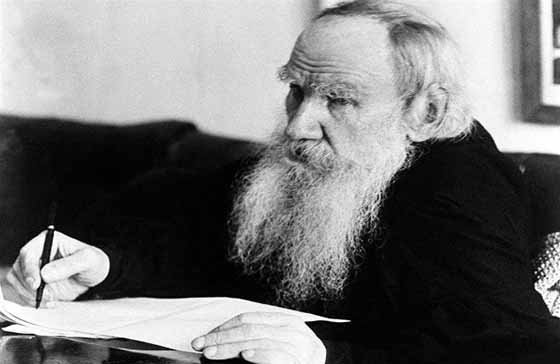
On September 9, 1828, Count Lev Nikolayevich Tolstoy was born. Known best as Leo Tolstoy, he became the celebrated author of the novels Anna Karenina and War and Peace, as well as the novellas and short stories entitled “Family Happiness,” “The Death of Ivan Ilyich,” and “The Kreutzer Sonata.”
His political and religious ideas heavily influenced Gandhi and Martin Luther King, Jr.
Tolstoy died in 1910.
“We should be very jealous of who speaks for science, particularly in our age of rapidly expanding technology. A misinformed or uninformed public can stop anything even when it is clearly in society’s benefit. How can the public be educated? I do not know the specifics, but of this I am certain: The public will remain uninformed and uneducated in science until the media professionals decide otherwise, until they stop quoting charlatans and quacks, and until respected scientists speak up.”
Dixy Lee Ray, Trashing the Planet, 1990
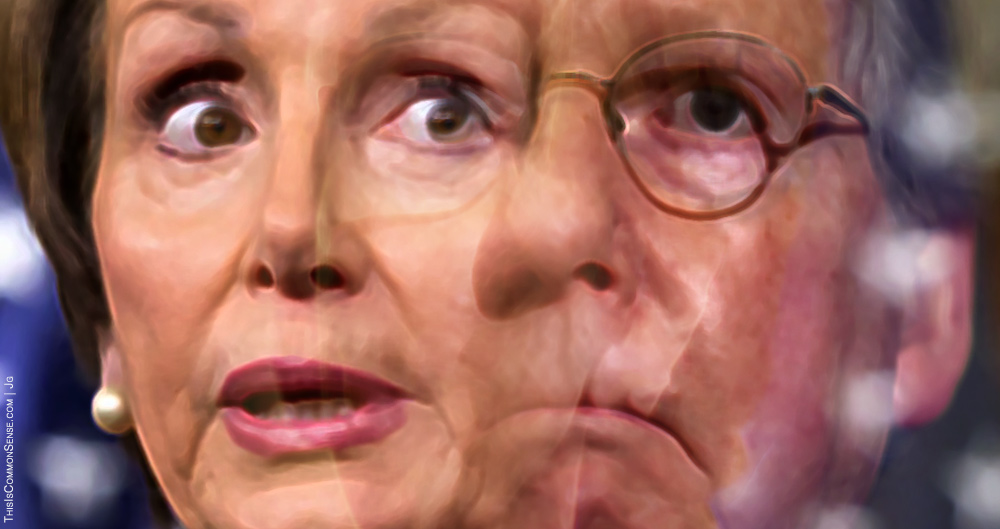
Senate Majority Leader Mitch McConnell sure is popular . . . in Washington.
Elsewhere? Well . . .
In Alabama, a Republican runoff on the 26th pits controversial Judge Roy Moore, who gained national attention fighting to keep a Ten Commandments monument on court grounds, against U.S. Senator Luther Strange, appointed to the office by Governor Robert Bentley.*
The third place finisher was U.S. Rep. Mo Brooks, who, while complimenting Judge Moore for running “a very honest campaign,” has declined to endorse either candidate. As for Strange, Brooks offered: “I want to congratulate the people who were behind him: Mitch McConnell, the Washington establishment, the K street lobbyists. They put together some very tough ads . . .”
McConnell has poured nearly $7 million from the Senate Leadership Fund into Strange’s campaign, giving the incumbent what the Birmingham News called “a staggering financial edge over Moore.”
And yet the paper’s report also noted that this “money advantage has not translated so far into votes.” A recent poll shows Judge Moore with a double-digit lead over Sen. Strange — 52 to 36 percent.
President Trump has also endorsed Strange, which with Trump’s popularity there is likely to help. Meanwhile, House Freedom Caucus Chairman Mark Meadows endorsed Moore, warning that McConnell, a fellow Republican, would flood the state with “millions of dollars in false advertising.”
GOP advertising in Georgia’s June special election bypassed the Democrat running to instead make Democrat House Minority Leader Nancy Pelosi the face of opposition Democrats. It seemed to work.
Similarly, Roy Moore’s campaign may very well ignore Strange to make Sen. Mitch McConnell the face of the opposition Washington establishment.
Possible slogan: “The Washington establishment’s choice is Strange.”
This is Common Sense. I’m Paul Jacob.
* The governor was, at the time of the appointment, under investigation by Strange, then Alabama’s Attorney General.
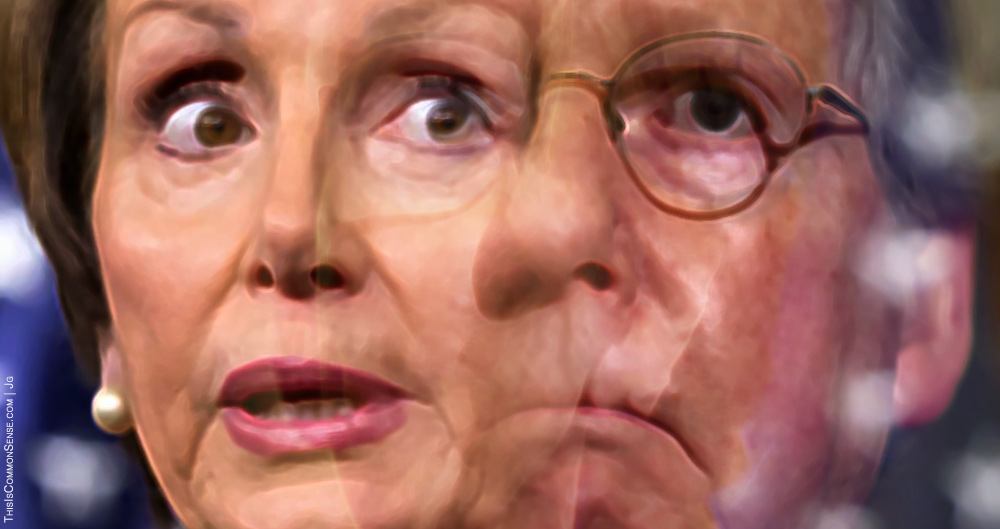
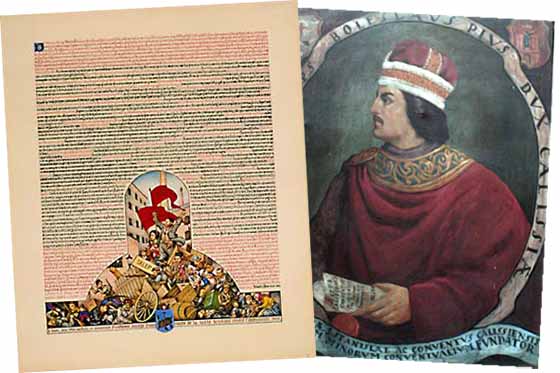
On September 8, 1264, Boleslaus the Pious, Duke of Greater Poland, promulgated the Statute of Kalisz, guaranteeing Jews safety and personal liberties and giving battei din jurisdiction over Jewish matters.
On the same date in 1883, former U.S. President Ulysses S. Grant drove in the final “golden spike” completing the Northern Pacific Railway in a ceremony at Gold Creek, Montana.
To accept words instead of things, to content oneself with words, to dispute about words: such is the history of all man’s intellectual aberrations. He is driven to this by two opposite tendencies: need of certainty, and indolence in inquiry.
The result of this is that he lumps together a whole order of phenomena, more or less connected, by a word more or less expressive and precise. He comprehends in this word, creatures of all kinds; and when he has once contracted the habit of repeating this word to himself or to others, he no longer observes the facts of the case: he only attaches his belief to the word.
As soon as the word is pronounced in his presence, some of his cerebral cells begin to act; and by reflex action he utters a series of incoherent but already-formed ideas upon the question which is before us.
Yves Guyot, Prostitution Under the Regulation System (Edgar Beckit Truman, M.D., F.C.S., trans., 1884), pp. 1–2.
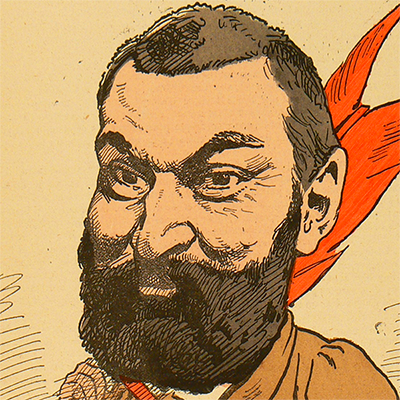
Illustration is a detail from a caricature by the French artist André Gill (1840-1885).

Republican politicians, who had been running since 2010 on killing ObamaCare, did not. Not when they had a chance. Despite dominating Congress, they failed, because
But that’s the olds; here’s the news: the Trump Administration has cut back ObamaCare’s advertising budget.
Progress?
I’m not sure. Maybe. Probably not.
The facts: ObamaCare outreach has been cut by 90 percent, and outsourcing grants to groups engaging in sign-up efforts have been cut by 40 percent:
The Trump administration downplayed the impact of boosted ad spending, noting that during 2017 open enrollment there was a decline of 5 percent in overall sign-ups. It also saw a 42 percent decline in first-time enrollment and enrollment of people who pay their premiums decline by 500,000 people.
So, it seems natural to respond to a perceived decline in “demand” with a reduction in “supply” — or any attempt to drum up more “customers” for subsidized policies.
Also natural is the partisan fall-out, with Democrats crying “foul” over the decided lack of support for their program. As Peter Suderman noted over at Reason, ObamaCare became partisan because it started out partisan.
But it was always — from conception in the Heritage Foundation braintrust* to its current choking gasps — an unworkable monstrosity.
And folks of all parties — and none — should be able to understand that.
This is Common Sense. I’m Paul Jacob.
* Note: the Heritage folks not unreasonably distance themselves from their past association with some of ObamaCare’s core notions, and others are skeptical of the distancing.

“Repeatedly over the past few years the American public has been subjected to a litany of catastrophes — to predictions of impending disaster that are claimed to be unique to modern civilization. The oceans are dying, the atmosphere is poisoned, the earth itself is losing its capacity to support life. . . . The anticipated catastrophes are our own fault, of course, blamed on the greedy and perfidious nature of modern man.
“Well, it’s all pretty heady stuff, but is it true? As with so many issues that involve technology, the answer is yes — and no — probably rather more ‘no’ than ‘yes.’”
Dixy Lee Ray, Trashing the Planet, 1990
On September 7, 2008, the US Government “took control” of the two largest mortgage financing companies in the United States, Fannie Mae and Freddie Mac. Both of these had been created by Congress as part of a concerted plan to make home ownership easier, and both had gotten completely out of hand during the many years of their existence, especially under new rules established by politicians in the 1990s. The after-market that they helped create — the packaged mortgage market — was what imploded in 2007–2008, leading to the economic slump that Nicholas Nassim Taleb recently referred to as setting the U.S. government on President Obama’s economic policy course of “eight years of Novocain.”
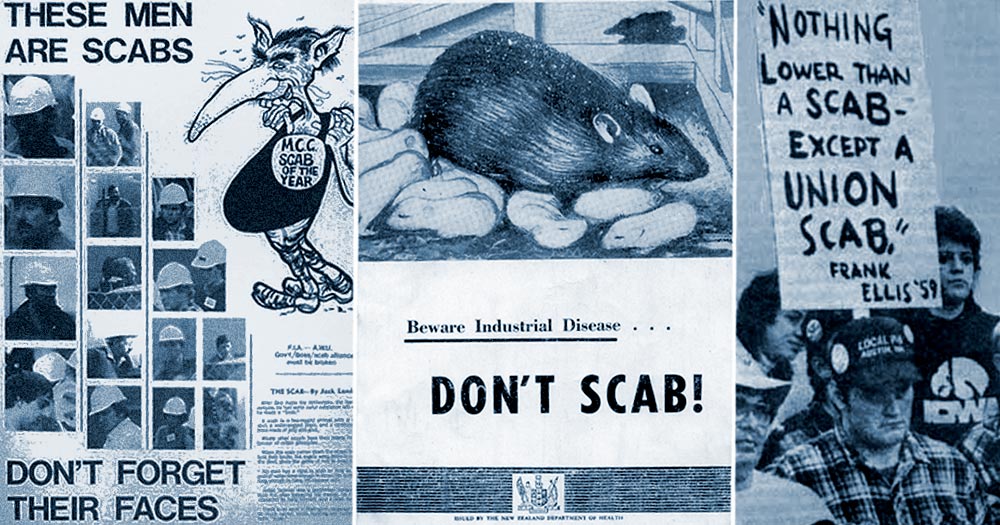
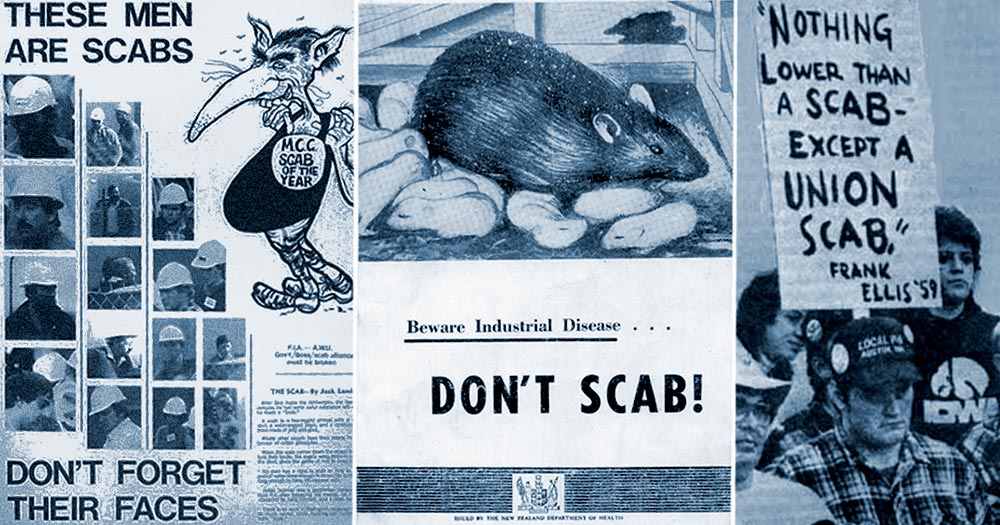
You may soon be able to shred your union card — if you are careful.
By “you” I mean You, the reluctant union member.
If you’re not one, though, perhaps you know somebody who is, someone who’d be happy to learn that the Supreme Court is on the verge of dealing a huge setback to coercive unionism.
John Hinderaker explains at Power Line. The Supreme Court is expected to soon decide a major case in a way that “bar[s] public employees from being forced into unions, or from being required to support unions via the fiction of ‘fair share contributions.’ ” (Much of that money goes straight to Democratic Party coffers.) With Neil Gorsuch now on the bench, a 4-4 holding pattern is expected to become a 5-4 decision in favor of plaintiffs suing for freedom from mandatory union membership.
Sounds good.
Problem is, though, that union officials are working to trick members into paying dues in perpetuity. For example, Education Minnesota is trying to con its 86,000 teachers into signing “Membership Renewal” forms assenting to automatic renewal of fees – unless the signatory makes a special effort to opt out.
The union hopes members will sign the cards and forget about them, continuing to fund the unions, and Democratic politics, indefinitely — even if the high court rescues everyone from mandatory membership.
So, if you happen to be trapped in a union at the moment — watch what you sign. And watch the news.
This is Common Sense. I’m Paul Jacob.