Categories
Today

Birthday Boys

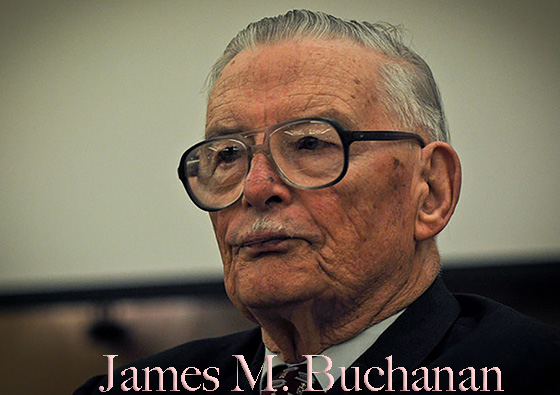
On October 3, 1919, James M. Buchanan was born. Buchanan would go on to an illustrious career in economics, developing the theory of “Public Choice,” and receiving the 1986 Nobel Memorial Prize in Economic Sciences for his work. His books include Cost and Choice, The Calculus of Consent (with Gordon Tullock), and The Limits of Liberty: Between Anarchy and Leviathan. Some of his most interesting research was into the realm of constitutional theory and practice.


–>
In 1925, on this date, Gore Vidal was born. Vidal would go on to become one of the leading post-WWII liberal essayists as well as a major novelist and screenwriter. His most famous novels include Burr, 1876, and Lincoln, installments in his American history series; his collection of essays, The United States, was one of his many bestsellers.

Categories
Thought

Frank Chodorov

Freedom is essentially a condition of inequality, not equality. It recognizes as a fact of nature the structural differences inherent in man — in temperament, character, and capacity — and it respects those differences. We are not alike and no law can make us so.

Categories
general freedom initiative, referendum, and recall political challengers Regulating Protest

Self-Determination, Anyone?

An election can be a clarifying event.

So can the suppression of an election.

Over the weekend, more than two million Catalans, greater than 40 percent of those eligible, voted in a referendum on independence from Spain. To which Spain’s Prime Minister Mariano Rajoy declared, “There was no independence referendum in Catalonia today.”

Rajoy certainly tried to stop it.

Spanish authorities shut down referendum websites and sent hordes of national police into the region to seize ballots and forcibly prevent people from voting. News reports are full of those police using rubber bullets on crowds, smashing their way into polling places and roughing up people.

Nearly a thousand citizens of Catalonia were injured in various clashes.

While the referendum result was a lopsided 90 percent opting for independence, previous polling shows Catalans split on the question. Perhaps the suppression worked best with those opposed to separation from Spain, who seem to have stayed home.

Let the people have a fair vote and follow the result. Anything less suggests support for the unthinkable: holding the Catalans in Spain against their will.  

Last week, Iraqi Kurds also held a referendum in which voters overwhelmingly favored separation — in this case from Iraq and for the formation of their own wholly independent nation. And, likewise, others, including the United States, tried to block the vote. Thankfully, not by force.

Yet. Turkey and Iran oppose an independent Kurdistan because they fear it will embolden demands by their own Kurdish populations for greater autonomy. Or independence.

In a world with respect for freedom, the principle is obvious: self-determination. Take it as far as you like.

Or even as far as Ludwig von Mises took it.*

This is Common Sense. I’m Paul Jacob. 


* “The right of self-determination,” Mises wrote in Liberalism (1927), “in regard to the question of membership in a state thus means: whenever the inhabitants of a particular territory, whether it be a single village, a whole district, or a series of adjacent districts, make it known, by a freely conducted plebiscite, that they no longer wish to remain united to the state to which they belong at the time, but wish either to form an independent state or to attach themselves to some other state, their wishes are to be respected and complied with. This is the only feasible and effective way of preventing revolutions and civil and international wars.”


PDF for printing

 

Categories
Thought

Leo Tolstoy

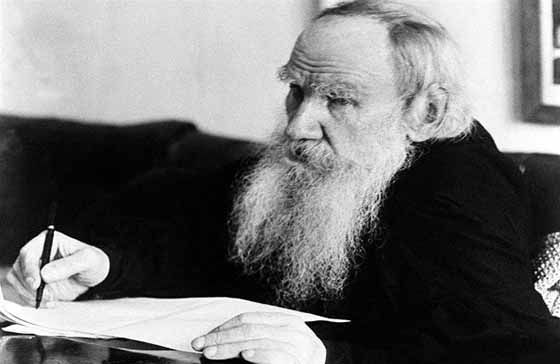
From the day when the first members of councils placed exterior authority higher than interior, that is to say, recognized the decisions of men united in councils as more important and more sacred than reason and conscience; on that day began lies that caused the loss of millions of human beings and which continue their unhappy work to the present day.


Leo Tolstoy, The Law of Love and the Law of Violence

Categories
Today

Stroke?

On October 2, 1789, George Washington sent the proposed Constitutional amendments (the United States’ Constitution’s Bill of Rights) to the States for ratification.

On the same date in 1919, U.S. President Woodrow Wilson suffered a massive stroke, leaving him partially paralyzed, preventing him from reacting to the economic downturn following the Great War in a Progressive fashion, making his response de facto laissez faire. One insider, and skeptic of Progressive hubris, cattily referred to Wilson’s incapacitation as “a stroke of luck.”

His successor in office, President Warren G. Harding, would go on to massively cut spending as well as taxes, and take on regulation as well. He also released Woodrow Wilson’s domestic war prisoners — ranging from journalists, ordinary folk to socialist presidential candidate Eugene V. Debs — who had dissented from Wilson’s involvement in the war.

The Depression of the early 1920s, though as deep as the early 1930s’, proved remarkably brief, thanks to Harding . . . and Wilson’s “stroke of luck.”

Categories
links

Townhall: In Case You Missed It

On what media covers. Don’t miss it — at Townhall.com.

Categories
Thought

Voltairine de Cleyre

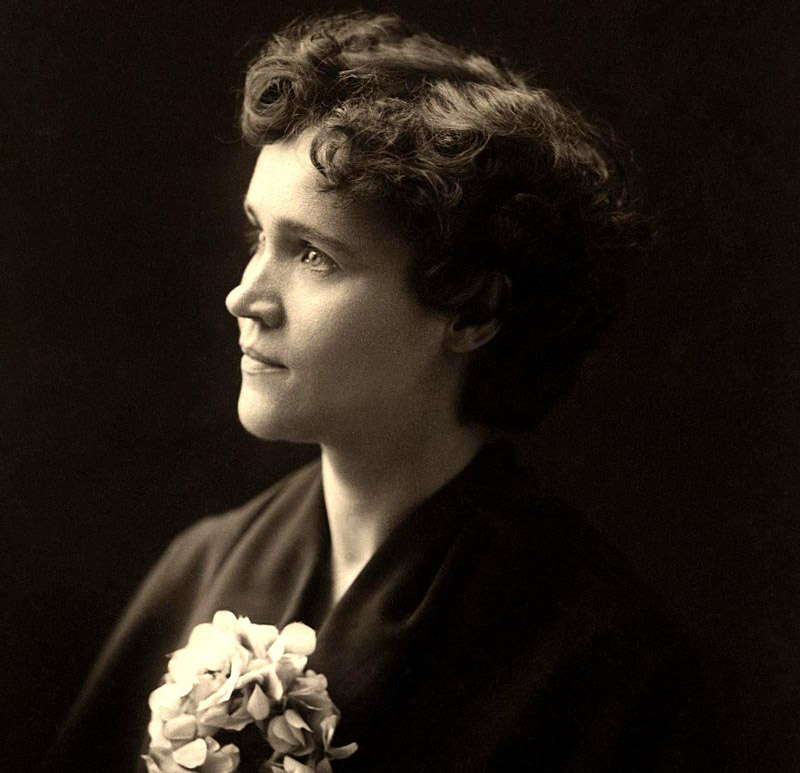
. . . so long as the people do not care to exercise their freedom, those who wish to tyrannize will do so; for tyrants are active and ardent, and will devote themselves in the name of any number of gods, religious and otherwise, to put shackles upon sleeping men.


Voltairine de Cleyre

Categories
Today

Model T

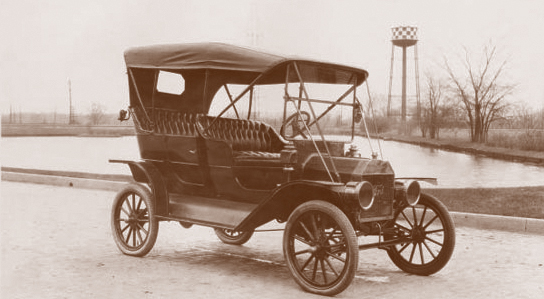
On October 1, 1908, Ford produced the first Model T at a plant in Detroit. The auto could travel 40 miles per hour and ran on gasoline or hemp-based fuel. (As oil prices fell, Ford phased out the hemp option.) The Model T was the first car designed for a mass market, rather than as a luxury item. By 1927, Ford had built 15 million Model T cars – the longest production run of any car model until the Volkswagen Beetle surpassed it in 1972.

On October 1, 1918, Lawrence of Arabia (T.E. Lawrence) helped lead a combined Arab and British force that captured Damascus from the Turks during World War I.

Categories
video

Two Stories of Changed Minds

Dave Rubin interviewed John Stossel and “Red Pill Black,” this week. What is interesting is to compare their similar changes of heart and mind regarding politics and towards more limited government perspectives.

Unless you are following new media, you may never have heard of Candace Owens (“Red Pill Black”), but Stossel is a well known consumer reporter who moved from ABC to Fox Business . . . and now to that aforementioned new media.

Categories
Thought

Yves Guyot

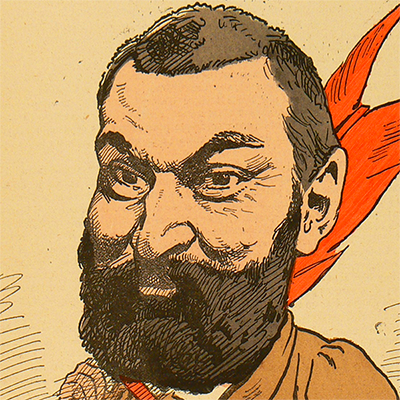
Progress is in inverse ratio to the coercive action of man on man, in direct ratio to his command over things. The Protectionist, by trying to prevent his countrymen from consuming what they choose, wishes to remove them from the effects of all external progress, and when he gains his ends he may indeed find the most extravagant conceptions of Swift pale before the irony of his creation.

Yves Guyot, The Comedy of Protection, 1906, viii.