Categories
Thought

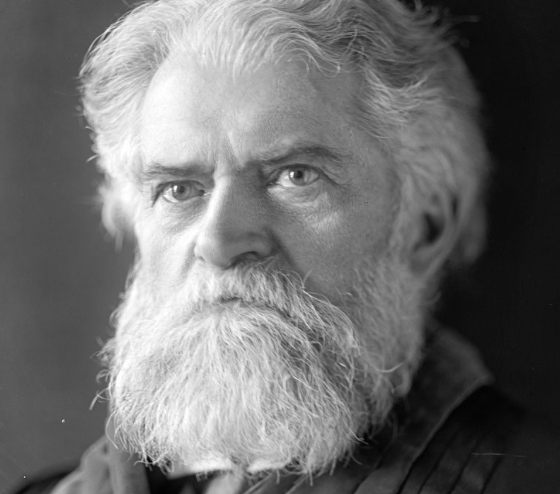
Herbert Spencer

Primitively the love of property is gratified only by possession of food and shelter, and, presently, of clothing; but afterwards it is gratified by possession of the weapons and tools which aid in obtaining these, then by possession of the raw materials that serve for making weapons and tools and for ether purposes, then by possession of the coin which purchases them as well as things at large, then by possession of promises to pay exchangeable for the coin, then by a lien on a banker, registered in a pass-book. That is, there comes to be pleasure in an ownership more and more abstract and more remote from material satisfactions.


Herbert Spencer, The Principles of Ethics; Part IV: Justice, Chapter IV: “The Sentiment of Justice” (Williams & Norgate, 1891)

Categories
general freedom initiative, referendum, and recall local leaders nannyism political challengers Regulating Protest

Delivering a Double Standard

Former State Representative Matt Lynch got right to the point in his Cleveland Plain Dealer op-ed: “The people’s right to amend the Ohio Constitution through the ballot initiative is under attack.”

Created by the Ohio Legislature to consider constitutional amendments, the Ohio Constitutional Modernization Commission (OCMC) has a hidden purpose: provide cover for that same legislative body. As Lynch aptly notes, the OCMC “is filled with politicians and lobbyists. Thus, commission recommendations must be scrutinized for fidelity to the public good versus the special interests of political insiders.”

This Thursday at the capitol in Columbus, OCMC will consider whether to recommend that state legislators propose an amendment to the state constitution to make future amendments more difficult. That’s an awfully bad idea in itself. But, bizarrely, the greater difficulty would depend entirely on who proposes the amendment.

The working OCMC recommendation makes no change to the legislature’s ability to propose and pass constitutional amendments. What it would do is make it tougher for citizen-initiated amendments. Most unhelpfully, the recommendation would require only citizen-proposed amendments to garner a supermajority of 55 percent of the vote.

Consequence? Suppose a measure proposed by citizens — term limits, ethics reform, government transparency — was massively outspent by powerful interests, and yet still won 54.9 percent of the vote. It would lose.

Yes, the 45.1 percent of voters would defeat the 54.9 percent of voters.

Call it “New Math.”

The very same issue proposed by legislators would win . . . and be added to the state constitution.

The double standards are breathtaking,” writes Lynch,* adding, “and no other state has such unfair rules.”

This is Common Sense. I’m Paul Jacob.


* Sunday at Townhall, I also discussed this double standard. And the word may be getting out. Townhall always adorns my column with a photograph — this time featuring Ohio Attorney General Mike DeWine, also a Republican candidate for governor in 2018. DeWine’s campaign objected to being pictured, arguing they have no involvement with the OCMC. DeWine’s picture has been removed.


Printable PDF


Categories
Thought

Tim Minchin

The day they discover yoga mats are carcinogenic will be the happiest day of my life.


Tim Minchin, from the monologue preface to his song “The Fence

Categories
Today

Philosophers

June 6 marks major life events of two eminent British philosophers, Jeremy Bentham’s death (1832) and Isaiah Berlin’s birth (1909).

Bentham was known as a “philosophical radical” and a major influence on the British utilitarian tradition. He authored numerous books, including Defence of Usury (1787) and An Introduction to the Principles of Morals and Legislation (1789).

Berlin was best known for several dozen brilliant essays, including the famous, much-quoted “Two Concepts of Liberty.”

Categories
general freedom moral hazard nannyism responsibility too much government

The $659,000 Non-Question

The so-called “Motor Voter” law of 1993 created a national mandate: when people obtain their drivers’ licenses at the Department of Motor Vehicles, ask them if they’d also like to register to vote.

The federal mandate is perhaps heavy-handed, but the underlying idea has merit.

Now a new idea is gaining ground, taking the notion (nudge, nudge) a step further. Let’s not bother asking people if they want to sign up to vote, the proposal runs. Government should simply register them. Without asking.

It is a form of paternalism.

“It flips the presumption, where right now they ask you if want to be registered,” argues D.C. Council member Charles Allen. “Instead of that, we’re just going to go ahead and get you registered, and that absolutely helps enfranchise voters.”

“Lawmakers in 32 states have introduced measures in the last year to automatically register drivers to vote,” reports the Washington Post.

Some folks contend there isn’t much difference between asking if someone wants to register and registering them without asking. Well, if there isn’t much difference, why spend the $659,000 that Washington, D.C. officials estimate it will cost over the next four years for their new “don’t-ask” program.

Of course, there is a difference in the two policies: sort of like between offering people something to eat and force-feeding them.

Some Americans have no desire to vote or be registered. It is surely no business of any state or local government to act as if their preferences don’t count.

And what good are a bunch of names on a voter list if they aren’t interested? Is someone going to vote for them?

This is Common Sense. I’m Paul Jacob.


Printable PDF


Categories
Thought

G. K. Chesterton

Moderate strength is shown in violence, supreme strength is shown in levity.

Categories
Today

Uncle Tom’s Cabin

On June 5, 1851, Harriet Beecher Stowe’s anti-slavery serial, Uncle Tom’s Cabin, or Life Among the Lowly, started its ten-month run in the National Era abolitionist newspaper.

Categories
links

Townhall: The Heart of a Double Standard

Click on over to Townhall for this weekend’s latest outrage against citizen-controlled government. By legislators and other insiders, of course.

Then come back here for some source material:

Categories
Thought

Samuel Adams

It is not unfrequent to hear men declaim loudly upon liberty, who, if we may judge by the whole tenor of their actions, mean nothing else by it but their own liberty, — to oppress without control or the restraint of laws all who are poorer or weaker than themselves.


Samuel Adams, from The Advertiser (1748)

Categories
Today

Tankman, Thanks

June 4 marks Finland’s Armed Forces Day, Tonga’s Emancipation [or Independence] Day (commemorating the abolition of serfdom in Tonga by King George Tupou in 1862, and the independence of Tonga from the British protectorate in 1970), Estonia’s Flag Day, and the international Tiananmen Square Protests of 1989 Memorial Day.