Categories
Thought

Georgia O’Keeffe

I do not like the idea of happyness — it is too momentary — I would say that I was always busy and interested in something — interest has more meaning to me than the idea of happyness.


Georgia O’Keeffe, a corrective note marked in Anita Pollitzer’s mss. biography of the artist.

Categories
Today

The Twenty-Fifth

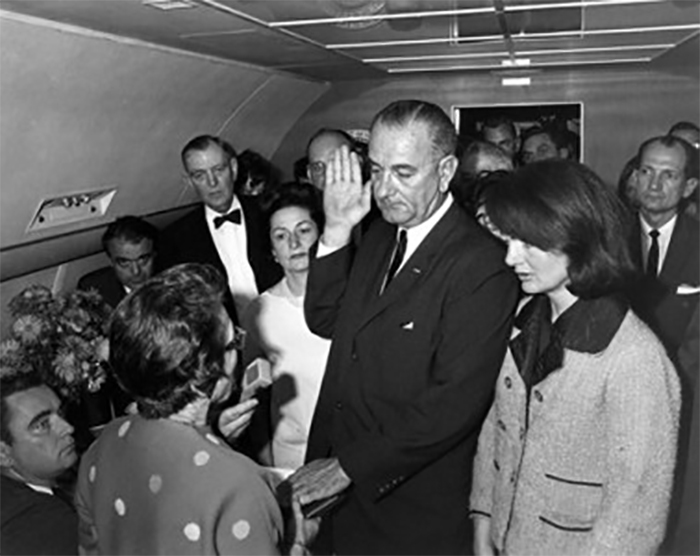
On Feb. 10, 1967, the 25th Amendment to the U.S. Constitution was ratified by Nevada, the necessary 38th state to do so. The amendment sets the process for presidential succession, and reads:

Section 1. In case of the removal of the President from office or of his death or resignation, the Vice President shall become President.

Section 2. Whenever there is a vacancy in the office of the Vice President, the President shall nominate a Vice President who shall take office upon confirmation by a majority vote of both Houses of Congress.

Section 3. Whenever the President transmits to the President pro tempore of the Senate and the Speaker of the House of Representatives his written declaration that he is unable to discharge the powers and duties of his office, and until he transmits to them a written declaration to the contrary, such powers and duties shall be discharged by the Vice President as Acting President.

Section 4. Whenever the Vice President and a majority of either the principal officers of the executive departments or of such other body as Congress may by law provide, transmit to the President pro tempore of the Senate and the Speaker of the House of Representatives their written declaration that the President is unable to discharge the powers and duties of his office, the Vice President shall immediately assume the powers and duties of the office as Acting President.

Thereafter, when the President transmits to the President pro tempore of the Senate and the Speaker of the House of Representatives his written declaration that no inability exists, he shall resume the powers and duties of his office unless the Vice President and a majority of either the principal officers of the executive department or of such other body as Congress may by law provide, transmit within four days to the President pro tempore of the Senate and the Speaker of the House of Representatives their written declaration that the President is unable to discharge the powers and duties of his office. Thereupon Congress shall decide the issue, assembling within forty-eight hours for that purpose if not in session. If the Congress, within twenty-one days after receipt of the latter written declaration, or, if Congress is not in session, within twenty-one days after Congress is required to assemble, determines by two-thirds vote of both Houses that the President is unable to discharge the powers and duties of his office, the Vice President shall continue to discharge the same as Acting President; otherwise, the President shall resume the powers and duties of his office.

Categories
crime and punishment folly general freedom local leaders moral hazard nannyism privacy responsibility too much government

The Winds of Regulation

Among the many goofy occupational licensing laws in these United States, Arizona’s licensing for professional blow-drying services is up there with the silliest. 

“Under current law, using a blow-dryer on someone else’s hair, for money, requires more than 1,000 hours of training and an expensive state-issued license,” we learn at Reason. “Blow-drying hair without a license could — incredibly — land you in jail for up to six months.”

This came into the news because of a campaign to deregulate the cosmetology industry — just a bit, anyway. Gov. Doug Ducey, in his recent State of the State address, “mocked the state agency that licenses stylists, barbers, nail technicians and affiliated professionals in Arizona, and endorsed legislation to remove training requirements for those who simply wash, brush and blow-dry customers’ hair.”

Licensed cosmetologists — well, at least some organized ones — have gone into a tizzy.

Hardly surprising, since occupational licensing, though usually argued for on consumer safety grounds, rarely finds consumers clamoring for it. 

It’s groups of established businesses, professionals.*

Brandy Wells, the sole non-cosmetologist on the state board overseeing the regulation of the industry, supports the liberalizing bill. So of course she has been called every name in the book. But even she was amused by one stylish denigration: “your logic on deregulation of cosmetology is much like your hair, dull and flat.”

The issue may seem trivial, with not all that much on the line — though jobs are . . . and freedom is. 

But it doesn’t lack for hot air.

This is Common Sense. I’m Paul Jacob.


* As Adam Smith argued, whenever businessmen (“dealers”) in the same industry group together, their proposals should be listened to “with great precaution.”


PDF for printing


Categories
Thought

Vera Smith

A central bank is not a natural product of banking development. It is imposed from outside or comes into being as the result of Government favours. This factor is responsible for marked effects on the whole currency and credit structure which brings it into sharp contrast with what would happen under a system of free banking from which Government protection was absent.


Vera C. Smith, The Rationale of Central Banking (1936)

Categories
Today

The Age of Tom Paine Begins

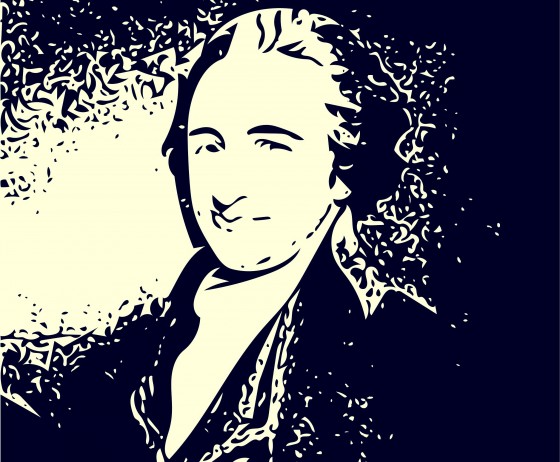
On Feb. 9, 1737, Thomas Paine was born in Thetford, England.

Paine would come to America in 1774 and by 1776 publish Common Sense, urging American independence. Later works included The Rights of Man (1792) and The Age of Reason (published in three parts in 1794, 1795, and 1807).

Paine died in 1809.

Categories
general freedom individual achievement media and media people national politics & policies responsibility

Red Roadster Rides Outer Space

On Tuesday, SpaceX launched one of the largest rockets ever, the Falcon Heavy. Because it is still experimental, it didn’t carry up an expensive satellite. Too early for that. Instead, it has sent up a Tesla Roadster.

And it’s not aiming for orbit . . . around Earth.

It’s aiming for, well, “a precessing Earth-Mars elliptical orbit around the sun.”

All the while playing the late David Bowie’s “Space Oddity.”

This is all very bizarre, of course. But SpaceX is headed by Elon Musk, who is one of those daring people who do daring things. The very fact that he kept finding funding (no small amount of it from taxpayers, sadly) for Tesla Motors (which he also founded), while failing to make a profit, is a tribute to . . . something.

Sending Musk’s personal car into space — to circuit Sol for a billion years — is, the visionary says, at least not boring. (Musk, perhaps not coincidentally for that word choice, also founded the Boring Company.) The Roadster, “piloted” by a dummy “Starman,” is an upgrade with flair.

But who is he playing to? The masses of auto buffs? Stargazers? Science fiction fans?*

Maybe the mad-scientist/eccentric-mogul is playing for bureaucrats, Capitol Hill staffers, and politicians. For, by one estimate, his companies have received $4.9 billion in government subsidies.

So, think of what’s going into orbit as just another part of the skyrocketing — spacerocketing — federal debt.

This is Common Sense. I’m Paul Jacob.


* The odd payload choice might make sense in sci-fi context, for, in the early days of science fiction, one idea often mentioned was to literally send a bomb to the Moon: an explosion, after all, could be seen, in early Space Age days, with old technology right here from Planet Earth surface. This was the case in the boys’ book The Rocket’s Shadow as imagined in 1947.


PDF for printing


Categories
Today

Delaware and Slavery

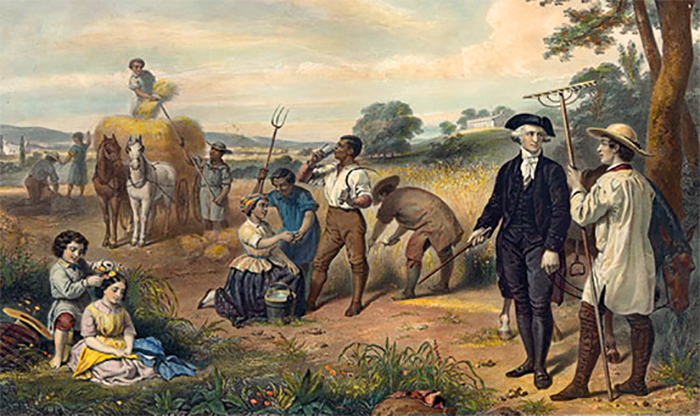
On February 8, 1865, Delaware voters rejected the Thirteenth Amendment to the U.S. Constitution, voting to continue the practice of slavery. Delaware belatedly and symbolically ratified the amendment on February 12, 1901.

Categories
Thought

Tom Paine

The constitution of a country is not the act of its government, but of the people constituting its government. It is the body of elements, to which you can refer, and quote article by article; and which contains the principles on which the government shall be established, the manner in which it shall be organised, the powers it shall have, the mode of elections, the duration of Parliaments, or by what other name such bodies may be called; the powers which the executive part of the government shall have; and in fine, everything that relates to the complete organisation of a civil government, and the principles on which it shall act, and by which it shall be bound. A constitution, therefore, is to a government what the laws made afterwards by that government are to a court of judicature. The court of judicature does not make the laws, neither can it alter them; it only acts in conformity to the laws made: and the government is in like manner governed by the constitution.


Tom Paine, Rights of Man (1791).

Categories
Accountability government transparency insider corruption moral hazard national politics & policies term limits too much government

Captured Congress

“Do you think party leaders exert too much control over members of Congress and over the agenda,” Full Measure host Sharyl Attkisson asked retiring Rep. Darrell Issa, “in a way that might be motivated by donations and corporate influence and special interests?”

Winner of five Emmys, as well as the 2012 Edward R. Murrow Award for Excellence in Video Investigative Reporting, Attkisson’s “exit interview” with Congressman Issa (R-Calif.) is illuminating.

“It happens every day,” he replied, “that a lobbyist calls the majority leader, the minority leader, the speaker, and some chairmen or ranking member gets a call saying, ‘hey go light on that.’”

Issa pointed out that the committee chairs “really don’t control the committees. More and more it’s controlled out of the speaker’s office and out of the minority leader’s office. You know, they pick who gets the committees and then they pick really what you get to do.”

And it’s getting worse, he said.

As chairman of the House Oversight Committee, Issa has led a number of very high-profile investigations. His investigation of Countrywide, Attkisson noted, “revealed that federal public officials and their staffers, both Democrats and Republicans, had quietly received lucrative VIP loans from Countrywide as the company sought to influence their decisions.”

“It was much more effective than political giving,” Issa offered.

He also accused Republican leaders of removing the Benghazi investigation from his committee to a select committee to “keep it from going too far.”

“I have seen the defense-related committees that take money from defense contractors go easy on defense oversight,” Attkisson explained, prompting the congressman to agree “that happens every day here.”

Between the party bosses and the special interests, our Congress has been captured.

This is Common Sense. I’m Paul Jacob.

N. B. Full Measure is broadcast every Sunday on 162 Sinclair Broadcast Group stations reaching 43 million households in 79 media markets.


PDF for printing

Categories
Thought

John Locke

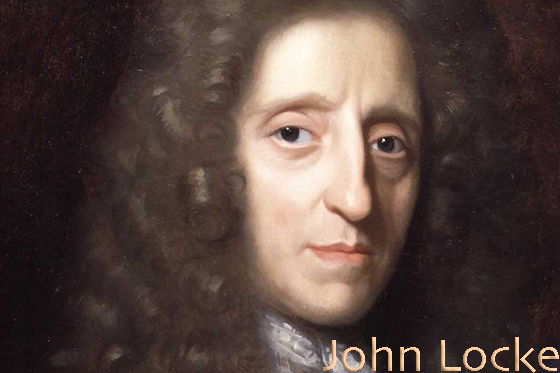
Slavery is so vile and miserable an estate of man, and so directly opposite to the generous temper and courage of our nation, that it is hardly to be conceived, that an Englishman, much less a gentleman, should plead for it.