Categories
Today

St. Valentine’s Day

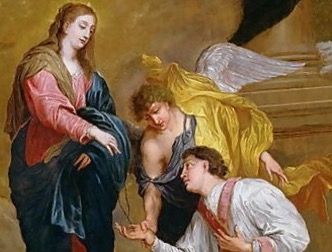
On Feb. 14, 278 A.D., Valentine, a priest in Rome during the reign of Emperor Claudius II, was executed. In order to facilitate the raising of an army for his unpopular military campaigns, the emperor outlawed all marriages and engagements. Valentine defied Claudius’s order and continued to perform marriages for young lovers in secret. Once discovered, Valentine was arrested and condemned by the Prefect of Rome to be beaten to death with clubs and to have his head cut off. The sentence was carried out on February 14. Valentine was named a saint by the Roman Catholic Church after his death.

Though February 14th is celebrated as “St. Valentine’s Day,” in today’s vernacular, the 14th of February, 278, was, ahem, “not his day.”

Categories
Accountability folly general freedom government transparency ideological culture media and media people moral hazard nannyism national politics & policies too much government

Threat Assessment

Don’t drink transmission fluid. Or perform a swan dive off the Empire State Building. Or munch on a Tide Pod.

Be cautious, in other words, of the advice offered in “Boycott the Republican Party,” the Atlantic opinion piece authored by Jonathan Rauch and Benjamin Wittes, both scholars at the Brookings Institution. Their erudite suggestion? Conservatives should “vote mindlessly and mechanically against Republicans at every opportunity, until the party either rights itself or implodes (very preferably the former).”

My Sunday column at Townhall.com, “Friendly Suicide Advice for the GOP,” reviewed their proposal and analysis. “[H]orrified” by President Trump, they see congressional Republicans as enablers of his “existential” threat “to American democracy.”

Big government has long frightened me, so I’m certainly not suggesting anyone relax just now. I do wonder, however, why these writers and others in the media have been so blasé to past presidential usurpations (noted in the column) with life-and-death implications.

Rauch and Wittes go so far as to reassuringly explain that “the Democratic Party is not a threat to our democratic order.”

Really?

In 2016, every single Democratic Party U.S. Senator voted to partially repeal the First Amendment of the Constitution. The Democrats’ proposal would have largely ended the prohibition that “Congress shall make no law . . . abridging the freedom of speech,” replacing it with “Congress and the States may regulate and set reasonable limits on the raising and spending of money by candidates and others to influence elections.”

In our present “democratic order,” the Constitution recognizes the primary importance of walling off political speech from regulation by these very politicians. The Democrats seek to repeal that order . . . that freedom . . . that criticism.

This is Common Sense. I’m Paul Jacob.


PDF for printing


Categories
Thought

Rose Wilder Lane

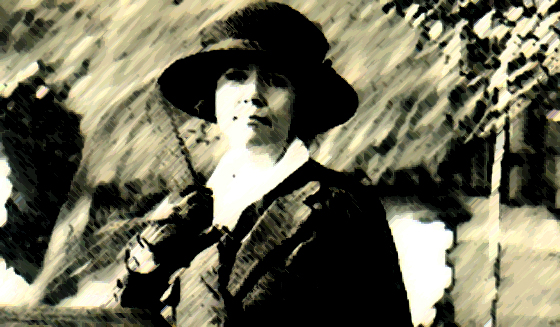
I am a contributing creator of American civilization; it does not create me. I control the stem of this civilization that is within my reach; it does not control me. It can not even make me read Spengler, if I’d rather read a pulp magazine.

Categories
Today

Galileo’s Heresy

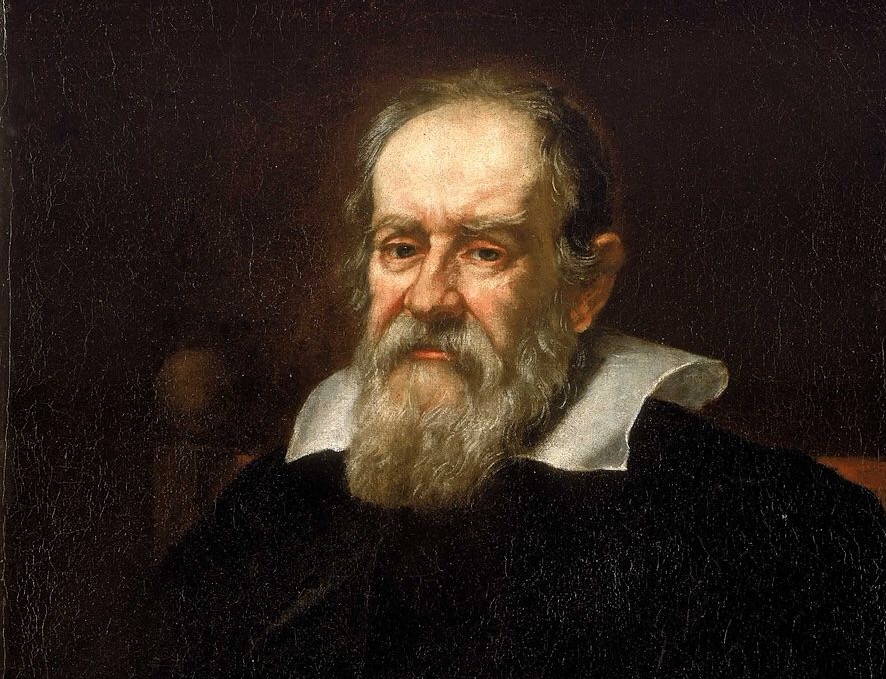
On Feb. 13, 1633, Italian philosopher, astronomer and mathematician Galileo Galilei arrived in Rome to face charges of heresy for advocating Polish astronomer Nicolaus Copernicus’s theory that the Earth revolves around the Sun. In April, Galileo pled guilty before the Roman Inquisition in exchange for a lighter sentence. Put under house arrest indefinitely by Pope Urban VIII, Galileo spent the rest of his life at his villa in Arcetri, near Florence, dying in 1642.

Categories
First Amendment rights free trade & free markets general freedom initiative, referendum, and recall nannyism national politics & policies privacy property rights Second Amendment rights Tenth Amendment federalism too much government U.S. Constitution

Winning Too Much?

“We’re Number 17!!!”

This lacks a certain triumphant note.

It is nothing like the “We’re Number 1!” the Swiss are now hollering as they pump their arms into the air, waving giant #1 foam fingers against the backdrop of snow-covered Alps.

Actually, knowing the Swiss, they are probably a bit more restrained. Still, you get the point.

Number 1 in what, you ask? Creamy, delicious chocolate, perhaps? Banking? Skiing?

Freedom.

The Human Freedom Index 2017, jointly published by the institutes Cato, Fraser, and Liberales, is hot off the presses. The report ranks the countries of the world on “personal, civil, and economic freedom.”

This year, Switzerland switched places with Hong Kong, which had come in first the year before. The U.S. moved up from 23rd place in 2016, but down from 2008, when we were challenging Top 10 status at Number 11.

“Weak areas [for the U.S.] include rule of law, size of government, the legal system and property rights,” according to a Cato video.

Let’s compare Switzerland to the United States. The 1848 Swiss Constitution creates 26 sovereign cantons (states), greatly influenced by our system of federalism. In the 20th century, Americans in 26 states and most localities borrowed from the Swiss, establishing a system of direct democratic checks on government — what we call ballot initiatives and referendums.

Both countries have constitutional limits on government, protecting individual rights — even from fully democratic tyranny. But in the freest nation in the world, Switzerland, citizens possess a powerful direct democratic check on their government at all levels . . . while we do not.

After all, we’re Number 17.

This is Common Sense. I’m Paul Jacob.


PDF for printing
 

Categories
Thought

William Leggett

Governments have no right to interfere with the pursuits of individuals, as guaranteed by those general laws, by offering encouragements and granting privileges to any particular class of industry, or any select bodies of men, inasmuch as all classes of industry and all men are equally important to the general welfare, and equally entitled to protection.

Categories
Today

Scharansky Freed

On Feb. 12, 1986, Soviet human rights activist Anatoly Scharansky was released after spending eight years in Soviet prisons and labor camps. The amnesty deal was arranged at a summit meeting between Soviet leader Mikhail Gorbachev and President Ronald Reagan. Scharansky had been imprisoned for his campaign to win emigration rights for Russian Jews — who had been forbidden to practice Judaism in the USSR.

On Feb. 12, 1909, the National Association for the Advancement of Colored People (NAACP) was founded.

On Feb. 12, 1593, approximately 3,000 Korean defenders led by General Kwon Yul successfully repelled more than 30,000 invading Japanese forces in the Siege of Haengju.

Categories
links

Townhall: Friendly Suicide Advice for the GOP

The Common Sense mission at Townhall.com this weekend is not to defend Mr. Trump’s actions or statements. I did not vote for him – nor did I vote for the Democrats’ even worse alternative. Like other presidents, I support Trump when he agrees with me and oppose him when he is wrong.

But two eminent, non-crank journalists write in The Atlantic (“Boycott the Republican Party”) that the GOP needs to repent and reform, quickly, or else commit harakiri. So, how far off track is the president and the Republican Party? Click on over. Read; then come back.

Categories
Today

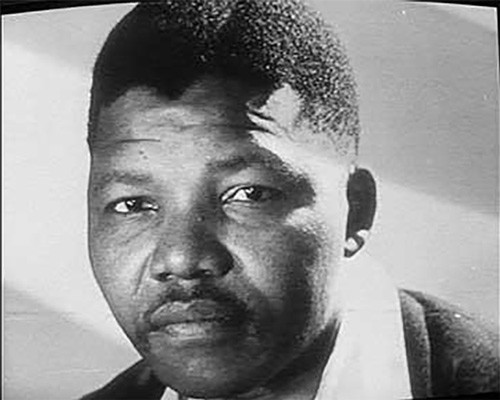
Mandela Released

On Feb. 11, 1990, after 27 years in prison, Nelson Mandela was released by South African authorities.

Mandela had joined the African National Congress (ANC) in 1944, becoming deputy national president of the group in 1952. Arrested for treason in 1961, he was acquitted — but then arrested again in 1962 for illegally leaving the country. Convicted and sentenced to five years at Robben Island Prison, he was put on trial again in 1964 on charges of sabotage. He was convicted and sentenced to life in prison along with several other ANC leaders.

In 1989, F.W. de Klerk became South African president and began dismantling apartheid. De Klerk lifted the ban on the ANC, suspended executions, and in February 1990 ordered the release of Nelson Mandela.

Mandela subsequently led the ANC in negotiating an end to apartheid and the establishment of a multiracial government. In 1993, Mandela and de Klerk were jointly awarded the Nobel Peace Prize. One year later, the ANC won the country’s first free elections, and Mandela was elected South Africa’s president.

Categories
video

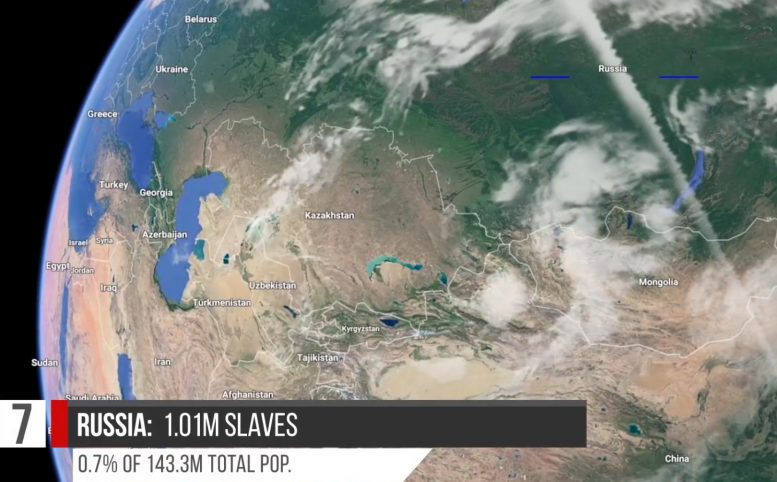
Freedom and Slavery Around the World

It is sad to see the U.S. fall so far in the world freedom rankings. But instructive to see who is on top.

And then, to contrast, see where the actual slavery is: