Categories
links

Townhall: The CIA, Obama, and Soros vs. Democracy

Sauce for the goose is sauce for the gander. That is, what works in one case works in similar cases. So, take a gander at American foreign policy. And don’t laugh.

Categories
Today

Grimke and Revels

February 25, 1805, saw the birth of Angelina Emily Grimké Weld, American abolitionist and feminist. She was the younger sister of the equally famed Sarah Moore Grimké.

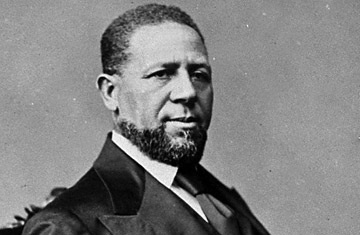
On February 25, 1870, the first African-American entered Congress to serve in the U. S. Senate. Hiram Rhodes Revels (Sep 27, 1827 – Jan 16, 1901) was a minister in the African Methodist Episcopal Church, a Republican politician, and college administrator. Born free in North Carolina, he later lived and worked in Ohio, where he voted before the Civil War. He was elected as the first African American to serve in the United States Senate, and was the first African American to serve in the U.S. Congress. He represented Mississippi in the Senate in 1870 and 1871 during the Reconstruction era.


In Law #46 of February 25, 1947, the Allied Control Council formally proclaimed the dissolution of Prussia.

Categories
Thought

Mike Stephenson

I bet you are one of those people who dreams of immortality but has no idea what to do on a Sunday.

Categories
video

Massive Government Failure in Parkland, Florida

As Ben Shapiro enumerates, government law enforcement agents failed in last week’s Parkland, Florida, shooting. The count? Forty-five separate instances of failure. Shapiro also explains how and how not to fight the hysterical left’s calumnies and demands.

Categories
Thought

Abigail Adams

I feel anxious for the fate of our monarchy, or democracy, or whatever is to take place. I soon get lost in a labyrinth of perplexities; but, whatever occurs, may justice and righteousness be the stability of our times, and order arise out of confusion. Great difficulties may be surmounted by patience and perseverance.

Categories
Today

A telegram, and a decision

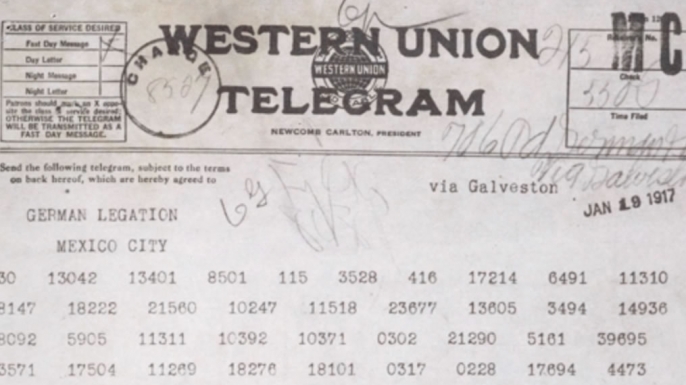
A century ago today, on February 24, 1917, United States ambassador to the United Kingdom, Walter Hines Page, was shown the intercepted Zimmermann Telegram, in which Germany offered to give the American Southwest back to Mexico if Mexico were to declare war on the United States.

On February 24, 1803, the Supreme Court, in Marbury v. Madison, established the principle of judicial review.

Categories
crime and punishment general freedom ideological culture media and media people moral hazard nannyism national politics & policies privacy responsibility Second Amendment rights too much government U.S. Constitution

He Applied Himself

“I need to make this count,” wrote a young man in Everett, Washington.

Unfortunately, it looks like he wasn’t attempting a big career-oriented project. He was planning a mass shooting.

“I need to get the biggest fatality number I possibly can,” is one of many damning journal passages the police have made public. Apparently he had settled on attacking the high school he attended. “I’ve been reviewing many mass shootings/bombings (and attempted bombings) I’m learning from past shooters/bombers mistakes.”

Ambition and rigor: missapplied.

Fortunately, his grandmother read his journal and discovered a rifle in his guitar case. She turned him into the police the Tuesday before the Florida shooting I wrote about last week. And maybe just in time.

Meanwhile, last week’s Parkland, Florida, shooting dominates the headlines. Fellow students and neighbors of the Florida shooting victims have ramped up their condemnations and demands — including at a horrorshow “town hall” on CNN.

Yet the nature of the difficulties in preventing such atrocities has become lost in the rhetoric and anger.*

In a free society, we cannot arrest people before they commit a crime. In the Everett case, officials were “lucky”: despite the young man’s lack of a criminal record, they were able to charge him with a burglary they allege he committed the day before arrest — and his extensive planning notes are being taken as evidence for intent. He’s also been charged with attempted murder.

We should be in inquiry mode, right now. It could be helpful to know the exact motivations for both the Florida shooter and the Everett wannabe — and similar cases.

This is Common Sense. I’m Paul Jacob.


* Law enforcement is tasked with uncovering spree shooting plots today — and to protect, too. But the armed, uniformed school resource officer at the Parkland high school failed to protect. He heard the gunshots but never entered the building, while the shooter killed 17 innocents.


PDF for printing


Categories
Today

Zola and Menger

On February 23, 1898, Émile Zola was imprisoned in France after writing J’accuse, a letter accusing the French government of anti-Semitism and wrongfully imprisoning Captain Alfred Dreyfus. Zola was a leading force in extending realism to the novel.

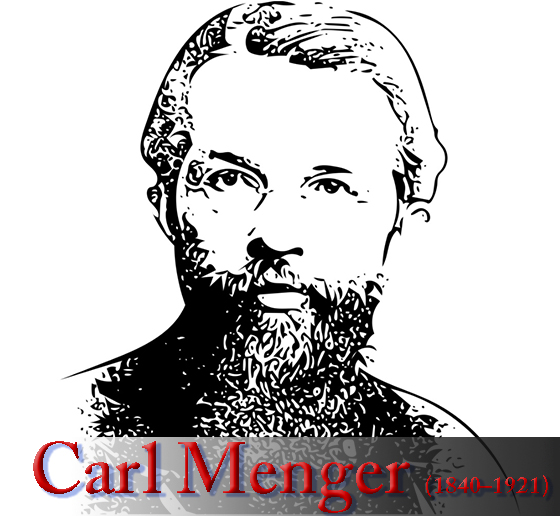
Fifty-eight years earlier, Austrian economist Carl Menger was born.

Menger would go on to contribute to the development of the theory of marginal utility, which supplanted cost-of-production theories of value in economics, in his first book, translated into English as Principles of Economics. Though expert in mathematics (he served as tutor in economics and statistics to Archduke Rudolf von Habsburg, the Crown Prince of Austria not long after the publication of the Principles), his approach to marginal theory was the least mathematical of his famous “co-discovers” of the principle, William Stanley Jevons and Leon Walras. Rooted in a subjective theory of value, it was the most realistic and least model-based of the marginalist revolutionaries, and he was most interested in price formation, not “price determination,” which focused almost exclusively on equilibrium conditions. He developed an evolutionary theory of money, as well. His second book expanded upon invisible hand processes in society.

Zola died in 1902; Menger died in 1921.

Categories
Thought

Eugen von Böhm-Bawerk

[T]here is one . . . thing that not even the most imposing dictate of power will accomplish: It can never effect anything in contradiction to the economic laws of value, price, and distribution; it must always be in conformity with these; it cannot invalidate them; it can merely confirm and fulfill them.


Eugen von Böhm-Bawerk, “Control or Economic Law,” Zeitschrift für Volkswirtshaft, Sozialpolitik und Verwaltung, Volume XXIII (1914): 205–71; John Richard Mez, Ph.D., translator.

Categories
general freedom government transparency initiative, referendum, and recall local leaders moral hazard political challengers responsibility term limits too much government

Graceless Memphis Politicians

“We could care less about instant runoff voting,” fibbed Allan Wade, the city attorney for Memphis, Tennessee.

Wade was rebutting the recent Commercial Appeal revelation that Memphis’s “City Council worked behind the scenes to find a sponsor for legislation this year that could ban instant-runoff elections statewide.”

After long relying on the mayor’s lobbyists, was it purely coincidental that the council suddenly spent $120,000 on its own Nashville lobbyists?

One of the bill’s sponsors, Rep. Mark White (R-Memphis), missed the memo. He acknowledged being “approached . . . on the council’s behalf to ask if he would again sponsor the bill.” A lobbyist also confirmed to the Memphis Flyer that the council engaged him to push the ban on what is also known as ranked choice voting.

So, the city council is directly lobbying the Tennessee Legislature to overrule their city’s residents — who voted 71 percent YES for instant runoff voting in 2008.

And there’s a twist. The council has placed two measures that would repeal instant runoff voting on this November’s ballot, hoping to somehow convince voters to scrap the reform. Wait . . . why lobby the legislature when the voters are already set to make the decision?

Oooooooooohhhhhhhh!!!!!!!!!!!!!!!!!!!

“Now they are using our money to take away that choice from us,” protests Aaron Fowles with Save Instant Runoff Memphis.

This city council — in addition to their sneaky, anti-democratic assault on instant runoff voting — has also placed a measure on the ballot to weaken their own term limits, passed by an 80 percent vote.

To paraphrase Memphis’s King, these rabid-dog politicians ain’t never caught a rabbit and they ain’t no friends of ours.

This is Common Sense. I’m Paul Jacob.


P.S. After media coverage, a hearing on the Senate version of the bill to ban instant runoff voting, SB 2271, was abruptly postponed for three weeks.


PDF for printing