We all are so optimistic that industrial hemp can become sometime in the future what tobacco was in Kentucky’s past.
Categories
Sen. Mitch McConnell

We all are so optimistic that industrial hemp can become sometime in the future what tobacco was in Kentucky’s past.

If you recently tried to post a personal ad on Craigslist, the popular classified-ad site, you were in for a shock. Craigslist has suddenly discontinued all personals. You can still sell your used rototiller, but forget about telling the world you’re lost in Louisville looking for love.
The company doesn’t want to be prosecuted for helping people find each other en route to becoming partners in outlawry.
Congress has just passed legislation subjecting site publishers to criminal and civil liability when their users “misuse online personals unlawfully.” The president’s signature is expected. Craigslist doesn’t want all that open-ended liability. “Any tool or service can be misused,” it observes.
Indeed. If the principle underlying this law were consistently applied, any good or service that facilitates communication (or other human activity!) would expose providers to liability for any illegal conduct abetted by their products. Would curtain manufacturers be exempt? We all know how bad guys plotting evil pull their curtains. Freedom of speech, freedom of casual encounters, freedom of curtain-trafficking, it’s all at risk.
What about Congress’s goal of discouraging prostitution?
Will all U.S. prostitutes now retire?
Not if the last several thousand years are any clue. Especially as other sites follow Craigslist’s lead, prostitutes who had escaped the streets thanks to online means of client-hunting will tend to return to those streets. If so, neighborhoods less seedy and less dangerous thanks to Craigslist etc. will now tend to reacquire such unlovely qualities.
Thanks to (unlovely) Congress.
This is Common Sense. I’m Paul Jacob.

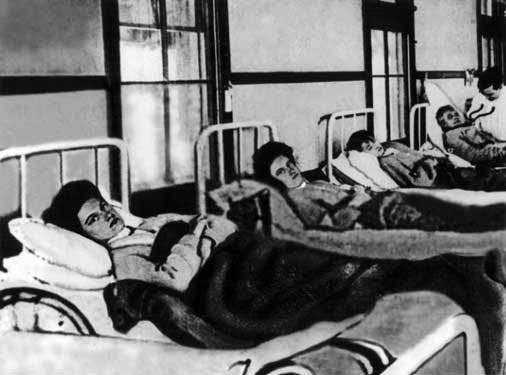
On March 27, 1915, Mary Mallon, popularly and scandalously known as “Typhoid Mary,” was put in quarantine, where she would remain for the rest of her life, over 23 years incarcerated.
Ms. Mallon was the first healthy carrier of disease ever identified in the United States. As an asymptomatic carrier of typhoid, she was a puzzle to science, and, once discovered, an apparent threat to those around her, with at least three deaths attributable to her presence. She did not co-operate with officials, and preferred to work as a cook, which paid higher wages than less dangerous-to-the-public occupations. She had been quarantined once before her final permanent quarantine in a hospital.
The civil liberties aspect to her incarceration loom large, and it is obvious that health officials of her time were not exactly any more respectful of her rights than she was with those of her clients and neighbors. The case was an obvious turning point in American legal practice, and can be categorized along with eugenics and “social hygiene” — along with prohibition regarding alcohol and recreational drugs — in the increasing illiberality of legal practice in America in the early part of the 20th century.
That being the case, Typhoid Mary was the very opposite of a heroine.

[T]he stationary condition of the human race is the rule, the progressive the exception. . . . The Roman jurisprudence has the longest known history of any set of human institutions. The character of all the changes which it underwent is tolerably well ascertained. From its commencement to its close, it was progressively modified for the better, or for what the authors of the modification conceived to be the better, and the course of improvement was continued through periods at which all the rest of human thought and action materially slackened its pace, and repeatedly threatened to settle down into stagnation.

Everybody has a limit, a point after which they reach for the nearest weapon and fire.
Or, in normal politics, withdraw support and go on the attack.
But it is not normal politics right now.
In mid-March, a Congressman from Long Island expressed his frustration with the Trump administration by saying, “This is where the Second Amendment comes in, quite frankly, because you know, what if the president was to ignore the courts?”
Days after this pol darkly implied insurrection, attacking gun rights became, on our Democratic Congressman’s end of the spectrum, a cause célèbre. Obviously, there remains a strong tension between politically opposing gun rights and the commonsense acknowledgment of the vital political function of the Second Amendment.* Lines are drawn all over the place.
But last week a very different line was crossed.
Donald Trump signed the latest Omnibus whopper. And a few of the gonzo president’s biggest Internet supporters — including the oddest, anarchist Stefan Molyneux — could take no more. Trump’s fatal flaw, Molyneux stated, “is his desire to shovel the money of the unborn into the Great White Shark maw of the military-industrial complex.” Molyneux identifies “the largest military budget in human history” as what Trump wanted in exchange for betraying his base.
So, you can see where Mr. Molyneux draws the line of support.
Meanwhile, others are wondering about Trump’s own line on trade policy. With much ballyhoo and bluster, he raised tariffs on steel — and then, quietly, exempted most of America’s steel trading partners.
Crazyman? Or genius?
The line between those two concepts is notoriously gray.
This is Common Sense. I’m Paul Jacob.
* In my weekend column I noted that “when the populace is armed sufficiently to realistically repel tyranny, the calculations of self-interested politicians per what they can get away with changes.” Guns can remain holstered, most of the time.


On March 26, 1991, local self-government in South Korea was restored after three decades of centralized control.

What country can preserve its liberties if their rulers are not warned from time to time that their people preserve the spirit of resistance. Let them take arms.

This weekend over at Townhall.com, the subject is guns, gun violence, and protest.
Oh, and “BS” — and the calling of same.
Click on over, then come back here for more hits of wisdom:
The column will be available on this site on March 27, 2018.
The movement of the progressive societies has hitherto been a movement from Status to Contract.
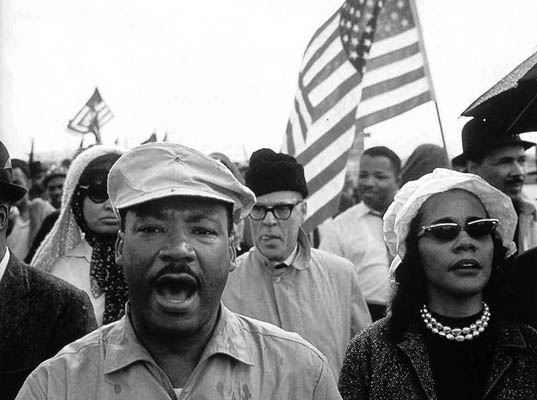
On March 25, 1965, civil rights activists led by Martin Luther King, Jr., successfully completed their four-day, 50-mile march from Selma to the capitol in Montgomery, Alabama.