An excerpt from Dave Rubin’s recent big interview with Thomas Sowell:
And here is the first part of that interview:

An excerpt from Dave Rubin’s recent big interview with Thomas Sowell:
And here is the first part of that interview:

Scientists tell us that the fastest animal on earth, with a top speed of 120 ft/sec, is a cow that has been dropped out of a helicopter.
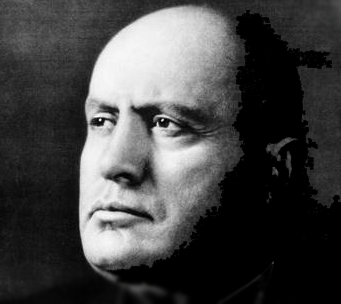
The Manifesto of Fascist Intellectuals was first published in Il Mondo, then by most Italian newspapers on April 21, 1925 — the national, anniversary-day celebration of the Founding of Rome (ca. April 21, 753 BC).
Nowadays, all sorts of people call their political opponents “fascist,” often on the shakiest of rationales. It might be a good idea to look up this original document, for a good idea what politics’ “f-word” originally meant. Here is an excerpt:
Fascism was . . . a political and moral movement at its origins. It understood and championed politics as a training ground for self-denial and self-sacrifice in the name of an idea, one which would provide the individual with his reason for being, his freedom, and all his rights. The idea in question is that of the fatherland. It is an ideal that is a continuous and inexhaustible process of historical actualization. It represents a distinct and singular embodiment of a civilization’s traditions which, far from withering as a dead memory of the past, assumes the form of a personality focussed on the end towards which it strives. The fatherland is, thus, a mission.
The manifesto was written by Giovanni Gentile, in support of the regime of Benito Mussolini (pictured above).

If I’ve heard it one million times, I’ve heard it ten: “We already have term limits; they’re called elections.” A statement usually offered as the beginning and end of wisdom regarding the problems term limits are designed to tackle.
Equally “profound” is the collateral claim that “the only term limits we need are an informed electorate.”
Such generalities “prove” too much. Any formal restraint of government could be thus airily dismissed.
If formal rules don’t matter, why write these things down or try to enforce them in light of principle and precedent? Just get your informed electorate and let the informed electorate handle it.
To preserve and strengthen our republic and our liberties, we do need an informed electorate. We also need many other things, including well-known, widely accepted, consultable, objective limits on government power.
One such limit limits terms.
Term limits on legislators, executives and even judges combat political corruption, empower informed voters, and give informed and capable electoral challengers more opportunities to effectively present their ideas.
The fact that a given political or cultural factor is crucial to the commonweal doesn’t mean that no other factors are also crucial.
Don’t tell drivers of cars that all they need are skills and gas. You also need lines on the road — limits to keep us out of the ditch, and from head-on collisions.
This is Common Sense. I’m Paul Jacob.

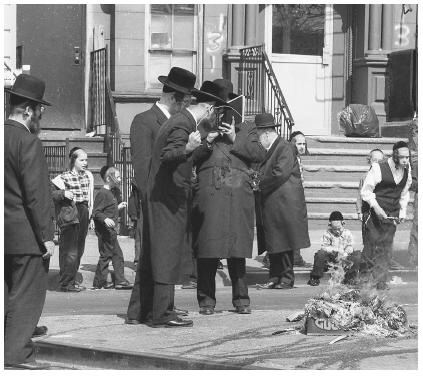
On April 20, 1657, freedom of religion was granted to the Jews of New Amsterdam (which was later renamed New York City).

Only use lizard sources.
Gavin McInnes, on The Gavin McInnes Show, characterizing modern p.c. University standards of essay writing, making fun of postmodern pedagogy. For full context, see:
The relevant section begins about 3:34 in the video. The full quotation makes complete sense.

Congress created The National Commission on Military, National, and Public Service “to consider and develop recommendations concerning the need for a military draft, and means by which to foster a greater attitude and ethos of service among American youth.”
Is it possible that Congress and the commissioners have never considered the inherent contradiction between forcing people into the military against their will and fostering an “ethos of service”?
Today, I will get perhaps two minutes to address this commission at a hearing in Denver, Colorado, answering* these questions it has posed:
Is a military draft or draft contingency still a necessary component of U.S. national security?
The military draft has never at any time in the history of this country been a necessary component in U.S. national security.
Are modifications to the selective service system needed?
No. The Selective Service System, the people who force very young men into the military against their will, needs to be ended. Not modified. Not expanded to women. End draft registration. Close the agency.
The United States should forswear any use of conscription. A free country need not force people into the military to defend it.
Is a mandatory service requirement for all Americans necessary, valuable, and feasible?
Necessary? Not on your life. Americans have always stepped forward — not only to defend their own country, but also in hopes of defending people across the globe.
Valuable? That’s a bad joke. People forced to kill and die in Vietnam and other conflicts and those imprisoned for refusing to take part in such a system fail to see any value. The draft has been disastrous.
What is valuable are the lives and rights of the young. They are free citizens, not Congress’s pawns.
Feasible? No. Because too many of us will fight you, refusing to go along. Even if it means our imprisonment.** Plus, a conscripted army is a poor substitute for the All Volunteer Force.
The draft is unnecessary, divisive and dangerous.
How does the United States increase the propensity for Americans, particularly young Americans, to serve?
Be worthy of the voluntary service of the American people.
If the government is responsible, then people will respond to protect it.
Commit to raising an army of soldiers and service providers by persuading citizens to freely serve their communities and their country. In short, this commission and this Congress should commit to freedom.
That would be truly inspiring.
This is Common Sense. I’m Paul Jacob.
* I will also be submitting a longer, more formal statement in testimony.
** As regular readers know, I was one of 20 young men prosecuted for refusing to register for the draft in the 1980s.

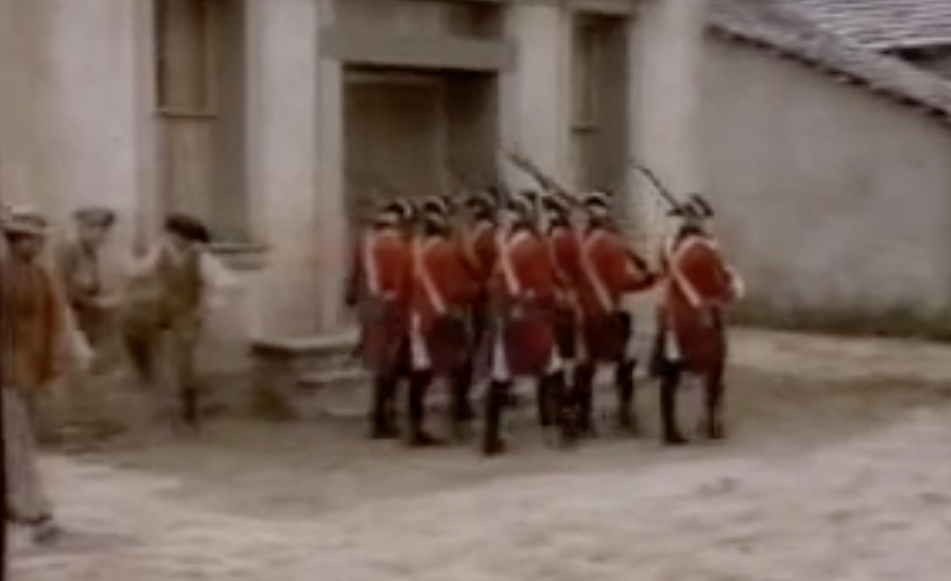
On April 19, 1775, the American Revolution began when the “shot heard around the world” was fired between the 700 British troops on a mission to capture Patriot leaders Sam Adams and John Hancock and to seize a Patriot arsenal and the 77 armed minutemen under Captain John Parker waiting for them on the Lexington town green. The Battle of Lexington ended with eight Americans killed and ten wounded, along with one wounded British soldier.
In Concord, a couple of hours later, British troops were encircled by hundreds of armed Patriots. The British commander ordered his men to return to Boston without directly engaging the Americans, but on the 16-mile journey they were constantly attacked by Patriot marksmen firing at them Indian-style from behind trees, rocks, and stone walls. By the time the British reached the safety of Boston, nearly 300 soldiers had been killed, wounded, or were missing in action. The Patriots suffered fewer than 100 casualties. (See Liberty’s Kids for a video on these events, or the video featured on this page.)
On April 19, 1782, John Adams secured the Dutch Republic’s recognition of the United States as an independent government.
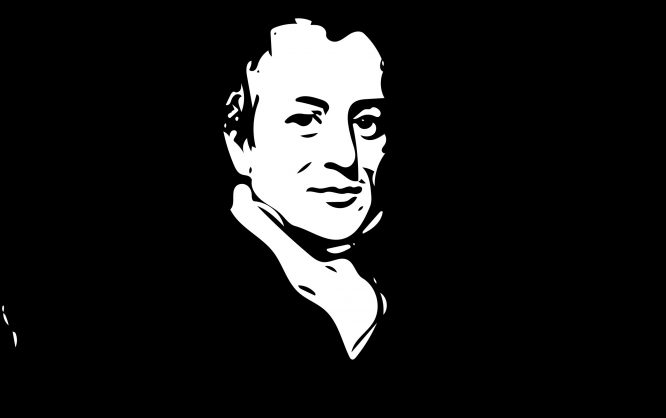
Neither machines, nor the commodities made by them, rise in real value, but all commodities made by machines fall, and fall in proportion to their durability.

Amidst all the talk of The Deep State, we are in danger of losing track of a parallel problem: the Shallow State — which, despite lack of depth, is very wide.
I am referring to government employees who increasingly abandon any pretense of impartiality. And the public institutions that protect them.
Consider the case of the University of Illinois at Urbana-Champaign and its 39-year-old lecturer Tariq Khan, who is a member of an Antifa-affiliated group called the Black Rose Anarchist Federation. Mr. Khan had been angrily shouting and chanting at a campus anti-Trump rally when he was mildly challenged by a non-nut student journalist. Khan went on a rampage, screamed at and pushed the young journalist, and deliberately broke the smartphone of a fellow journalist who had been recording the fracas.
Khan was charged with destruction of property. But the story doesn’t stop there.
“I was told that if I wanted the ‘situation to improve,’” wrote a third journalist, “that I should stop writing about Khan.”
The university placed a restraining order on the three, to squelch news and dissent.
So the trio sued on First Amendment grounds.
Here we have a teacher willing to abridge free speech the old-fashioned way, by playing the bully. And a public institution ready and willing to defend him, to take his petty criminality and raise it to a conspiratorial, Big Brother level.
Not only does this rob Americans of rights, taxpayers are being forced to fund what they might justifiably regard as the destruction of the republican form of governance.
Root out the infamous Deep State?
Sure.
But limit and make transparent the Shallow State, too.
This is Common Sense. I’m Paul Jacob.