April 25 is celebrated as Freedom Day in Portugal.
Categories
Freedom Day

April 25 is celebrated as Freedom Day in Portugal.

How easy is it to mix freedom with just the right amount of slavery?
New York Times reporter Azam Ahmed regards the attempt to mingle political opposites as noble or at least understandable. He doesn’t call Cuban Communism and its destructive effects “bad” — it’s a “unique tapestry.”
He wonders, instead, to what extent the Cuban government can fine-tune the contradiction.
According to the article, Cuba’s newest Dear Leader “will have to foster the growing private sector . . . while guarding against the income inequality it often brings. . . . Move too slowly and it risks economic collapse and widespread discontent. . . . Move too fast, and it risks unstitching the unique tapestry of Cuba’s social project.”
“Unique”? With or without cigars and salsa, the “social project” of repressing a hapless populace is as old as civilization. And as a “tapestry,” we’ve seen this warp and weft before.
Under freedom, inequalities are unavoidable.* On the other hand, nothing is wrong with inequality per se. Nature, human beings and economic outcomes are inherently unequal. Equality arrives only with the grave.
A government working to phase out slavery and phase in freedom may have legitimate problems in transition. But it is wrongheaded to seek just the right “balance” of both. How can any degree of freedom and markets fail to threaten a revolution, the purpose of which is a thoroughgoing assault on freedom and markets?
My advice to Cuban social engineers? Abandon Communism altogether and embrace prosperity and freedom instead.
This is Common Sense. I’m Paul Jacob.
* Speaking of inequality, Cuba’s head commies certainly have not lived like the masses they’ve kept down.

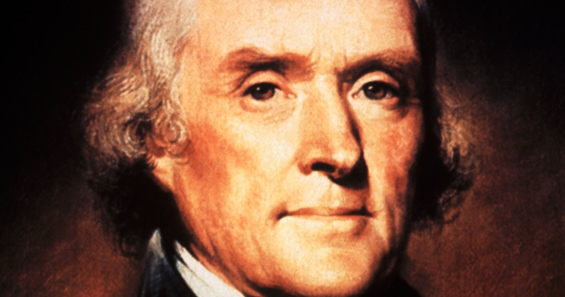
The taxes with which we are familiar class themselves readily according to the basis on which they rest. 1. Capital. 2. Income. 3. Consumption. These may be considered as commensurate; Consumption being generally equal to Income, and Income the annual profit of Capital. A government may select either of these bases for the establishment of its system of taxation, and so frame it as to reach the faculties of every member of the society, and to draw from him his equal proportion of the public contributions; and, if this be correctly obtained, it is the perfection of the function of taxation. But when once a government has assumed its basis, to select and tax special articles from either of the other classes, is double taxation. For example, if the system be established on the basis of Income, and his just proportion on that scale has been already drawn from every one, to step into the field of Consumption and tax special articles in that, as broadcloth or homespun, wine or whiskey, a coach or a wagon, is doubly taxing the same article. For that portion of Income with which these articles are purchased, having already paid its tax as Income, to pay another tax on the thing it purchased, is paying twice for the same thing; it is an aggrievance on the citizens who use these articles in exoneration of those who do not, contrary to the most sacred of the duties of a government, to do equal and impartial justice to all its citizens.
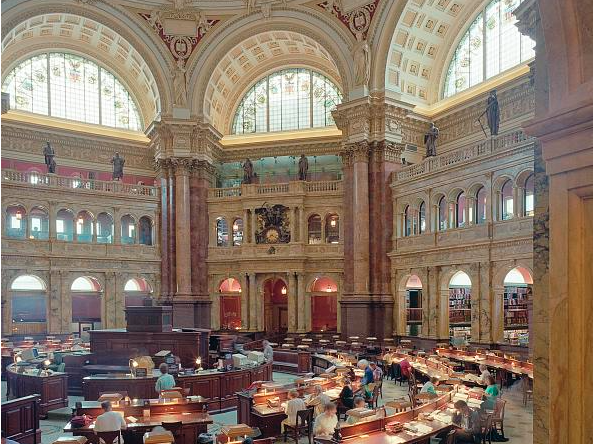
On April 24, 1792, the French national anthem, “La Marseillaise,” was composed by Capt. Claude Joseph Rouget de Lisle.
Eight years later to the day, the United States Congress approved a bill establishing the Library of Congress.

Last Friday, Tim Eyman — the Evergreen State’s best-known ballot initiative practitioner — won an important court case.
But he also scuttled an amazingly impressive compromise between state legislators, police, and the proponents of Initiative 940.
The measure was written and promoted by De-Escalate Washington, a group that includes several relatives of deceased victims of recent controversial police shootings. I-940 would implement violence de-escalation and mental health training for police, and require law enforcement personnel to provide first-aid to save lives. Most likely Washington voters tell pollsters they approve.
De-Escalate Washington got the required signatures, sending this “indirect initiative” to Olympia. The Legislature was faced with three choices:
The Legislature tried to “create a fourth option”: it passed the measure with amendments.
And that’s what Thurston County Superior Court Judge Christine Schaller found unconstitutional. She sent the measure, un-amended, to the ballot for a vote of the people.
Interestingly, those amendments were the result of negotiations among the measure’s advocates, the police, and the Legislature. There had been many congratulations all around on the “historic” compromise. But, “historic” or no, legislatures must follow the law.
Tim Eyman is pleased that the court defended the constitutionally defined initiative process by definitively siding against the backroom compromise.
And voters will still get the chance to vote on the proposal.
This is Common Sense. I’m Paul Jacob.

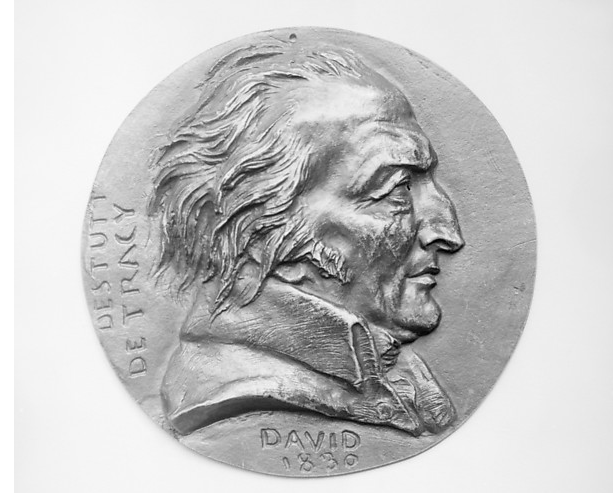
M. Destutt Tracy, Traité de la volonté, English translation titled A Treatise on Political Economy (Georgetown, D.C.: Joseph Milligan; W. A. Rind & Co. Printers, 1817).
Government is a very great consumer, living not on its profits but on its revenues.
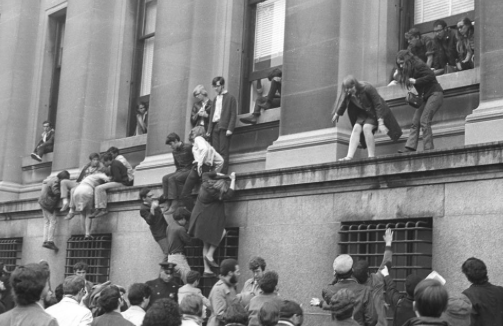
On April 23, 1968, students at New York City’s Columbia University held a demonstration to protest military research and the condemnation of part of the neighboring Morningside Heights section of Harlem to make way for a new student gymnasium. The protest escalated into a week-long occupation of five campus buildings before police moved in. Some 712 students were arrested, and over 100 injured during the forcible eviction. After the university-ordered police response, a student strike shut down the campus for the rest of the semester.

A major win — a double win! — for citizens-in-charge government.
Click on over to Townhall for the big story. And the come back here for a little more:
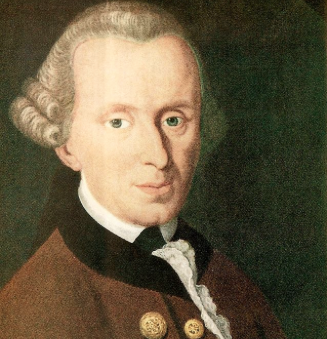
On April 22, 1724, philosopher Immanuel Kant was born.
Aside from being the pre-eminent modern philosopher and originator of transcendental idealism, Kant was also a major figure of Enlightenment thought, a classical liberal, and the originator of the notion of the Categorial Imperative. He was an early and important astronomical theorist in his early career, but produced his greatest works towards the end of his life, including The Critique of Pure Reason and The Groundwork for the Metaphysics of Morals. He was also author of the 1795 essay “Perpetual Peace: A Philosophical Sketch.”
Arthur Schopenhauer is widely known as an admiring and astute critic of Kant’s thought, while philosophical opponents include Friedrich Nietzsche and Ayn Rand. Kant’s approach to ethics continues to excite interest today, with some of the revival a result of the work of John Rawls.
Kant died on February 12, 1804, in Königsberg, Prussia (now Kaliningrad, Russia), where he had lived the bulk of his life.
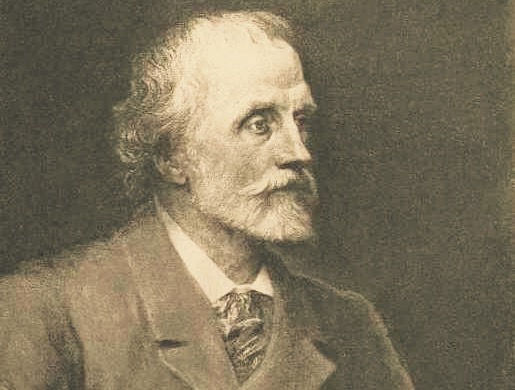
Kissing don’t last; cookery do!
George Meredith, The Ordeal of Richard Feverel (1859), chapter 28.