Categories
Thought

Destutt de Tracy

[W]ith respect to economy . . . [u]nder this relation society consists only in a continual succession of E X C H A N G E S, and exchange is a transaction of such a nature that both contracting parties both gain by it. . . .

We cannot cast our eyes on a civilized country without seeing with astonishment how much this continual succession of small advantages, unperceived but incessantly repeated, adds to the primitive power of man.

It is because this succession of changes, which constitutes society, has three remarkable properties. It produces concurrence of force, increase and preservation of intelligence and division of labour.

The utility of these three effects is continually augmenting.


M. Destutt Tracy, Traité de la volonté, English translation titled A Treatise on Political Economy (Georgetown, D.C.: Joseph Milligan; W. A. Rind & Co. Printers, 1817), pp. xvi-xvii.

Categories
Today

David Ricardo

April 18 marks the 1772 birthday of David Ricardo, English political economist and one of the most influential thinkers in economic theory. An advocate for free trade and the abolition of slavery, Ricardo’s most famous work is his Principles of Political Economy and Taxation (1817).

Categories
Accountability free trade & free markets general freedom local leaders moral hazard Regulating Protest responsibility

Less Bullying, S’il Vous Plaît

I oppose unions. Or, to speak more precisely, I oppose those tactics too often used by unions intended to render societies hostage to their demands — as we’re seeing in France.

For the last few months, a series of strikes has been conducted by various unionized workers in protest of reforms proposed by President Emmanuel Macron. Rail workers are a major focus of the fracas.

Ultimately SNCF, France’s state-owned railway company, should be privatized. But reducing too-generous pay and benefits, including automatic annual pay raises, is a step in the right direction. The Macron administration hopes to begin opening up the state railways to competition by 2023. The unions and their allies are willing to cripple the French economy to prevent any reforms.

It’s fine for employees to voluntarily get together to ask for better working conditions, or even to go on strike to protest terms of employment they regard as unfair. It’s fine, that is, if they also understand that employers have an equal right to replace them if willing and able to do so.

Workers should only peacefully petition employers. Nobody has an inalienable right to a particular job or to a particular wage higher than they can voluntarily negotiate.

According to the BBC, “Just over 11% of the French workforce is unionised,” one of the lowest levels in the EU. May the decline there and everywhere accelerate until unions cease bullying the entire French society, or any society.

This is Common Sense. I’m Paul Jacob.


PDF for printing


Categories
Today

Ronald Hamowy

April 17 marks the 1937 birth of Ronald Hamowy, Canadian historian, who first came to international prominence for his writings in the short-lived New Individualist Review. Hamowy died in 2012.

Categories
Thought

Camille Paglia

Society is a system of inherited forms reducing our humiliating passivity to nature. We may alter these forms, slowly or suddenly, but no change in society will change nature.


Camille Paglia, Sexual Personae: Art and Decadence from Nefertiti to Emily Dickinson, p. 1.

Categories
Accountability crime and punishment folly free trade & free markets general freedom media and media people moral hazard nannyism national politics & policies property rights Regulating Protest too much government U.S. Constitution

That Something You Do

Congress grilled Facebook CEO Mark Zuckerberg, last week, and as usual ended up roasting itself.

“Zuckerberg has already experienced the worst punishment of all,” quipped comedian Trevor Noah on The Daily Show. “He had to spend four hours explaining Facebook to senior citizens.”

Utah Sen. Orrin Hatch, retiring after his 42nd consecutive year in Washington, asked, “How do you sustain a business model in which users don’t pay for your service?”

“Senator,” Zuckerberg incredulously replied, “we run ads.”

Inc. magazine reported the obvious: “several of our elected leaders asked questions that were highly uninformed, or in some cases just plain weird.”

Uninformed. Weird. That’s them, alright.*

Still, the Washington establishment seems to seriously think these same congressmen ought to be re-writing privacy rules.

“Elected officials know the public wants them to do something to protect their privacy,” announced Chuck Todd, host of NBC’s Meet the Press. “The question now turns to what is that something?”

“Americans are largely together on this issue,” Todd said, citing a recent poll where a similar “66 percent of Democrats and 68 percent of Republicans say they want more control over the information companies have about them.”

But Democrats and Republicans are together on something else: Only 21 percent of Democrats and a tiny 14 percent of Republicans “trust the federal government” to act on the issue.

The senators, though obviously “confused about basic topics,” Emily Stewart wrote at Vox,  “seem to agree they want to fix something about Facebook. They just have no idea what.”

Please Congress: DON’T “do something.” Don’t do that thing you do.

This is Common Sense. I’m Paul Jacob.


* Reason TV has a very funny video on the Zuckerberg hearing.


PDF for printing

 

Categories
Today

Letter from Birmingham Jail

Dr. Martin Luther King, Jr., penned his Letter from Birmingham Jail while incarcerated in Birmingham, Alabama, for protesting segregation, on April 16, 1963.

Categories
Thought

Ronald Coase

If you torture the data long enough, it will confess.

Categories
links

Townhall: Don’t Fiddle with the Franchise

Well, the march to lower the voting age proceeds apace. Click on over to Townhall for Paul’s expanded thoughts from Thursday. Then come back here to expand thoughts on your own:

On Tuesday the 17th, this column appears on this site.

Categories
Today

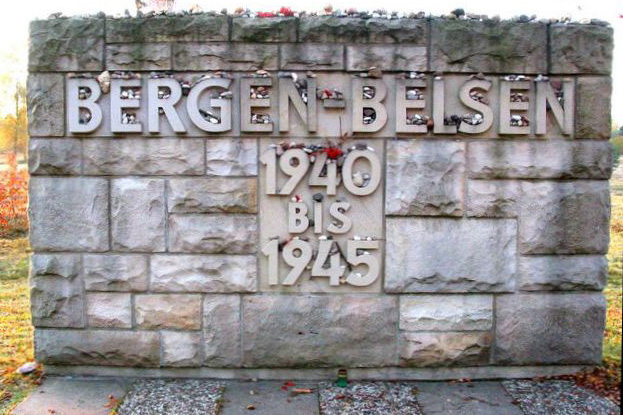
Bergen-Belsen Liberated

On April 15, 1945, the Bergen-Belsen concentration camp was liberated.