Categories
general freedom incumbents local leaders national politics & policies political challengers U.S. Constitution

The First Shall Be Last

We were taught in school that the first ten amendments to the Constitution make up the Bill of Rights. True enough.

But not completely true — as I pointed out at Townhall.

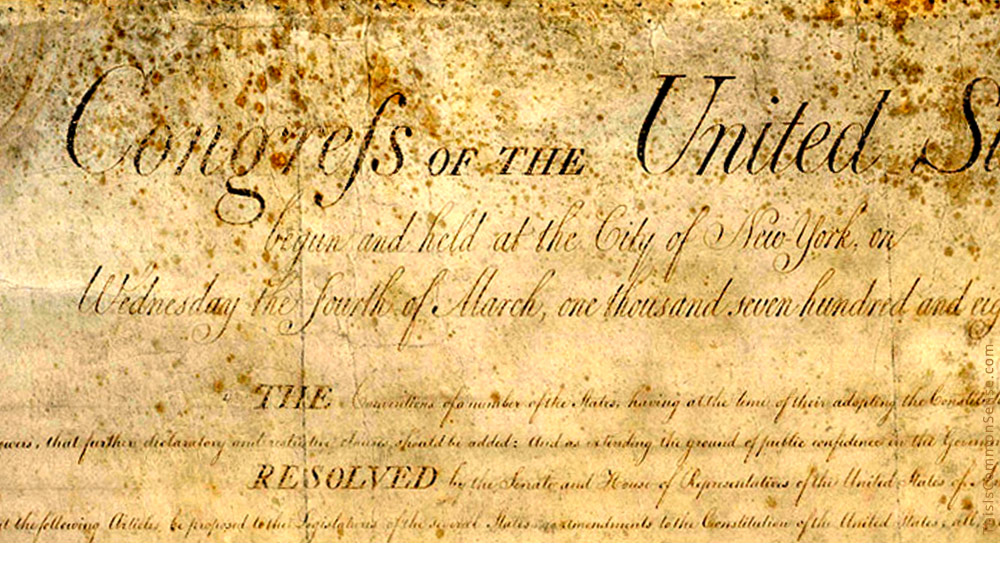
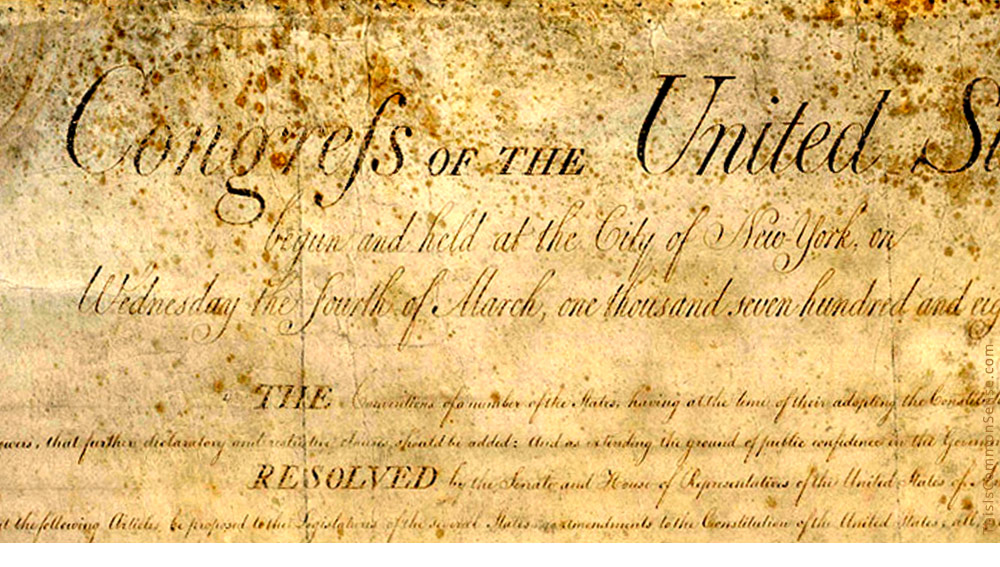
In 1789, Congress passed and sent to the states twelve constitutional amendments, called “articles.” Our current First Amendment was billed as Article the Third.

The first two of the original batch did not pass at that time: Article the First and Article the Second. That latter article, after more than two centuries of wandering around legislatures, was finally ratified by the necessary three-fourths of the states as the 27th Amendment to the Constitution. In 1992.*

As for the rejected Article the First, last Tuesday, Eugene M. LaVergne filed a motion, pro se, before a federal three-judge panel convened in the D.C. Circuit to hear his challenge to “the validity and Constitutionality of the 2010 Apportionment of the U.S. House of Representatives.” He and four other rabble-rousing New Jersey citizens are challenging the courts to acknowledge a surprising truth: the original Article the First was actually ratified.

On June 21, 1792, Kentucky’s legislature voted to ratify, making it the twelfth of fifteen states at that time to do so.

It’s a complicated story. One of the elements is a clerical error.

But rectifying this old mistake would have huge repercussions.

How huge? Currently the lower house of Congress has a mere 435 members. Were this amendment acknowledged, that number would soar to over 6,150 members.

And that would be a good thing.**

This is Common Sense. I’m Paul Jacob.


* Sadly, its sensible prohibition — “No law, varying the compensation for the services of the Senators and Representatives, shall take effect, until an election of representatives shall have intervened” — was immediately rendered toothless by the automatic cost of living salary adjustments congressmen had already provided themselves.

** Skeptical? Well, click here for a preview of more detailed arguments to come.
PDF for printing


Categories
Thought

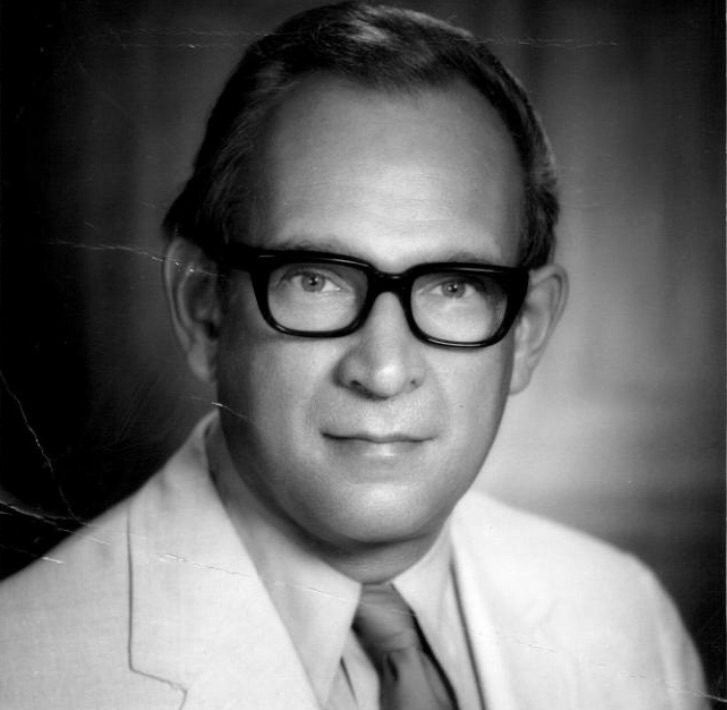
John Hospers

If each human being is to have liberty, he cannot also have the liberty to deprive others of their liberty.

Categories
Today

Nineteen Eighty-Four

On June 8, 1949, George Orwell’s dystopian novel Nineteen Eighty-Four was published.

Categories
crime and punishment general freedom moral hazard nannyism national politics & policies privacy responsibility too much government U.S. Constitution

Too Healthy to Play

Cannabis oil can prevent the seizures of at least some victims of epilepsy. But the hope this medicine provides is too often undercut by fear.

I discussed, a few days ago, the case of 15-year-old David Brill, whose life is in danger because officials forcibly removed him from the care of his parents. His mom and dad had (illegally) let him smoke pot — which stopped his seizures. Now they’re fighting to recover custody of David and save his life.

Somewhat different is the plight of an aspiring football player at Auburn University.

Early in 2017, the would-be safety in question, C.J. Harris, began taking cannabis oil to stop epileptic seizures. He has suffered no seizures in all the months since. And he’s in no legal trouble.

But Auburn University’s football team has rescinded its offer to join the team. Exactly why he won’t be allowed to play is unclear. One would guess it is because of the National Collegiate Athletic Association’s ban on cannabis oil, even if prescribed. But the team’s medical personnel says they’re only concerned about his health given his history and the roughness of football.

Does Auburn apply the same standard to all players who have recovered from major physical setbacks? Or, rather, does the team typically let players return to play as soon as they’re ready and able?

Whatever is keeping him off the field, the factors that should decide the question are being shunted aside.

One, is C.J. Harris healthy enough and skilled enough to play for Auburn?

Two, is C.J. Harris willing to accept the risks involved?

This is Common Sense. I’m Paul Jacob.


PDF for printing


Categories
Thought

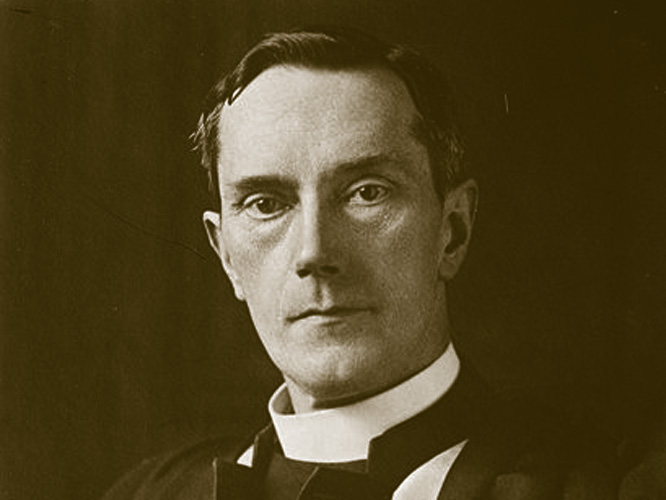
Dean Inge

There are two kinds of fools: one says, ‘This is old, therefore it is good’; the other says, ‘This is new, therefore it is better.’

William Ralph Inge was known as Dean Inge, in his heyday.

Categories
Today

Founders

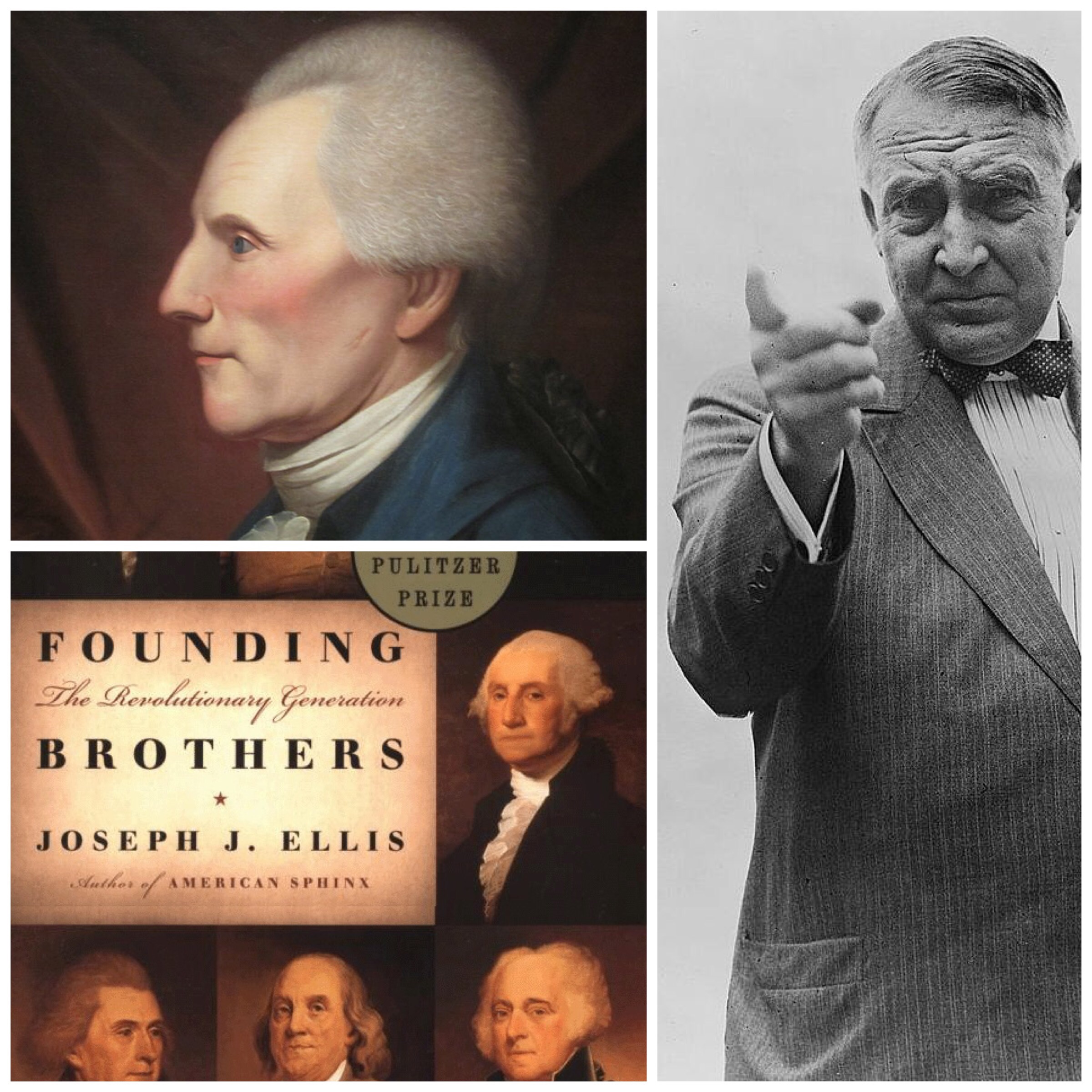
On June 7, 1776, Richard Henry Lee presented the “Lee Resolution” to the Continental Congress. The motion was seconded by John Adams, but was tabled for several weeks. The motion was finally passed on July 2, 1776.

During the 1916 Republican National Convention (June 7 – 10), Senator Warren G. Harding used the phrase “Founding Fathers” in his keynote address . . . and would go on using it in speeches thereafter. It caught on as a eulogistic way to refer to figures such as Thomas Jefferson and, yes, Richard Henry Lee, who orchestrated the American colonies’ break from England’s imperial monarchy.

Categories
Accountability crime and punishment folly general freedom government transparency local leaders moral hazard nannyism porkbarrel politics privacy property rights responsibility tax policy too much government

Progress, DC-Style

Is the black, Democratic mayor of Washington, D.C., actually a “racist”? What about the city council, which is 46 percent African-American, 85 percent Democrat, and 100 percent liberal/progressive?

That’s what a lawsuit argues — the DC ‘powers that be’ are racist in their development and housing policies. Filed on behalf of several African-American DC residents, it alleges that Mayor Muriel Bowser and the council have been striving mightily, as the Washington Post reported, “to ‘lighten’ African American neighborhoods and break up long-established communities.”

“Every city planning agency,” states the complaint, “. . . conspired to make D.C. very welcoming for preferred residents and sought to displace residents inimical to the creative economy.”

Nothing that a billion dollars couldn’t make right, of course — for which the plaintiffs ask.

But is gentrification a crime?

As American University professor Derek Hyra told the Post, “Developers want to maximize their return. This is not a conspiracy. This is capitalism.”

But no, this certainly isn’t laissez faire “capitalism.” It could be described as dirigisme — or “state capitalism” or “crony capitalism” or just a bad old-fashioned mercantilism, revised to work at the city level, where governments partner up with particular groups to extract as much wealth for the insiders as they can. Professor Hyra acknowledges that Bowser and the council were “providing subsidies” to bring in richer citizens and push out poorer ones.

Most importantly, we discover yet again that the power politicians claim they need to help the poor, is used to help the rich.

Way to go, “progressives.”

This is Common Sense. I’m Paul Jacob.


Note: The mayor is a Democrat and the 13-member council is composed of eleven (11) Democrats and two (2) independents. There are no Republicans.

PDF for printing


Categories
Today

Philosophers

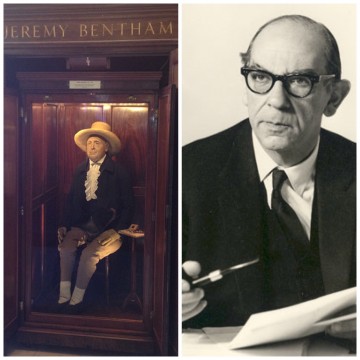
June 6 marks major life events of two eminent British philosophers, Jeremy Bentham’s death* (1832) and Isaiah Berlin’s birth (1909).

Bentham was known as a “philosophical radical” and a major influence on the British utilitarian tradition. He authored numerous books, including Defence of Usury (1787) and An Introduction to the Principles of Morals and Legislation (1789). Bentham started out advocating for laissez faire, became obsessed with his own specially designed prison design, the Panopticon, and argued for feminism and animal rights in public but kept his defense of homosexual rights private, to be published long after his death. His treatise on ethics, Deontology: Or, the Science of Morality, in Which the Harmony and Co-incidence of Duty and Self-Interest, Virtue and Felicity, Prudence and Benevolence, Are Explained and Exemplified, was published from his manuscripts two years after his death.

Berlin was best known for several dozen brilliant essays, including the famous, much-quoted “The Hedgehog and the Fox” (a study of Leo Tolstoy) and “Two Concepts of Liberty.”


* Pictured is his remains as housed in a special “closet” in the London Academy. Bentham specified this in his will, and he called this manner of posthumous presentation an “auto-icon.”

Categories
Thought

Margaret Atwood

‘Why do men feel threatened by women?’ I asked a male friend of mine. (I love that wonderful rhetorical device, ‘a male friend of mine.’ It’s often used by female journalists when they want to say something particularly bitchy but don’t want to be held responsible for it themselves. It also lets people know that you do have male friends, that you aren’t one of those fire-breathing mythical monsters, The Radical Feminists, who walk around with little pairs of scissors and kick men in the shins if they open doors for you. ‘A male friend of mine’ also gives — let us admit it — a certain weight to the opinions expressed.) So this male friend of mine, who does by the way exist, conveniently entered into the following dialogue. ‘I mean,’ I said, ‘men are bigger, most of the time, they can run faster, strangle better, and they have on the average a lot more money and power.’ ‘They’re afraid women will laugh at them,’ he said. ‘Undercut their world view.’ Then I asked some women students in a quickie poetry seminar I was giving, ‘Why do women feel threatened by men?’ ‘They’re afraid of being killed,’ they said.


Margaret Atwood, Words: Selected Critical Prose (1982), p. 413.

Categories
crime and punishment free trade & free markets general freedom ideological culture media and media people moral hazard national politics & policies privacy property rights responsibility U.S. Constitution

Wouldn’t Freedom Be … Easier?

To bake or not to bake, that is the question.

Actually, the question was may a state discriminate against Christians in regulating “public accommodations”? The Supreme Court has decided, in a supermajority 7-2 ruling, that the Colorado Civil Rights Commission wrongly prosecuted a Christian baker who would not make a special wedding cake for a gay couple — while the Commission shrugged when it came to bakers who wouldn’t bake Bible verse cakes.

The ruling came down along the lines I suspected in December: Equal protection. This narrow ruling focused “on what the court described as anti-religious bias on the Colorado Civil Rights Commission when it ruled against baker Jack Phillips,” Fox News informs us.

In his majority opinion, Justice Anthony Kennedy censured the “Commission’s hostility” to Phillips. And Kennedy recognized the root problem, the “difficult questions as to the proper reconciliation of at least two principles”:

  1. “the authority of a State and its governmental entities to protect the rights and dignity of gay persons”;
  2. “fundamental freedoms under the First Amendment, as applied to the States through the Fourteenth Amendment.”

Ah, discrimination. Has picking at this, like a scab, really increased comity? It sure would be easier were we to stick to freedom of association.

Wouldn’t that dredge up less animus?

States should not engage in invidious discrimination. Sure. Vital.

But businesses? Must they serve anyone and everyone? Even when it requires the baker or florist to create something custom — or the pianist to perform? Especially when customers can easily go to a competitor?

Besides, in Colorado, anti-discrimination laws were used by government to persecute Christians.

This is Common Sense. I’m Paul Jacob.


PDF for printing