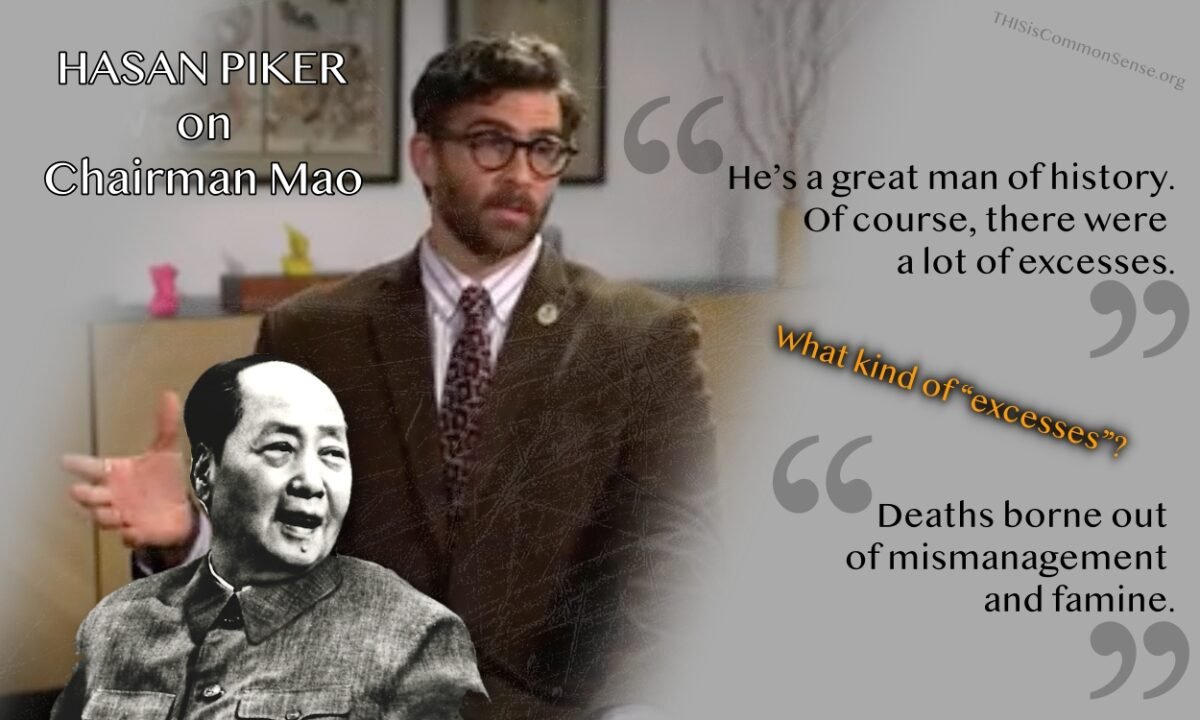
He’s a great man of history. Of course, there were a lot of excesses.
Hasan Piker, in interview with Alex Thompson, on Axios. When asked what kind of “excesses,” he responded: “Deaths borne out of mismanagement and famine.”
While the Space Force ramps up and military men say the darnedest things in public, President Donald Trump is now talking about a new “force” — one pertaining to artificial intelligence.
“The president posted on Truth Social that he wanted to appoint an ‘AI czar’ to lead a new ‘AI force,’” explains an article in The Verge. “He made the announcement amid growing calls from across the political spectrum and even within the industry to pump the brakes on AI development. He posted that his administration ‘will not in any way hinder or stifle the Growth of this incredible Industry. Rather, we will cherish it, help it, and watch over it, as it grows!’
So, just to be clear here, this is not the laissez faire president you may have been looking for.
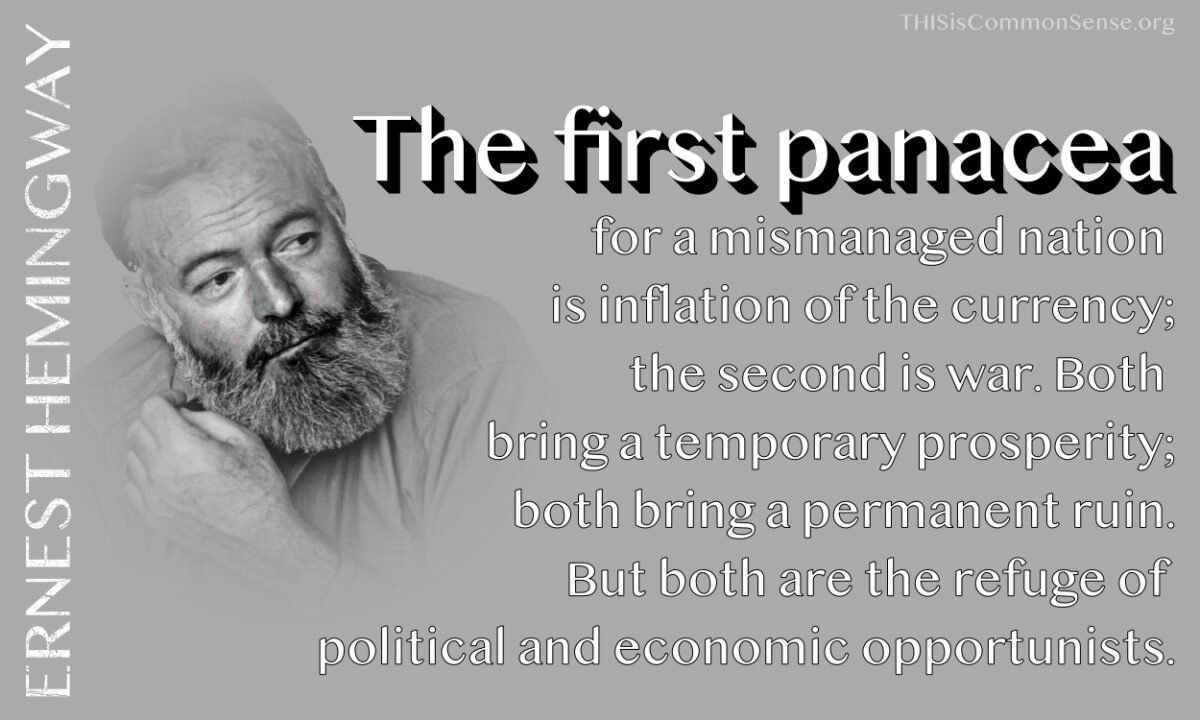
The first panacea for a mismanaged nation is inflation of the currency; the second is war. Both bring a temporary prosperity; both bring a permanent ruin. But both are the refuge of political and economic opportunists.
Ernest Hemingway, “Notes on the Next War: A Serious Topical Letter,” Esquire, Sept. 1935.
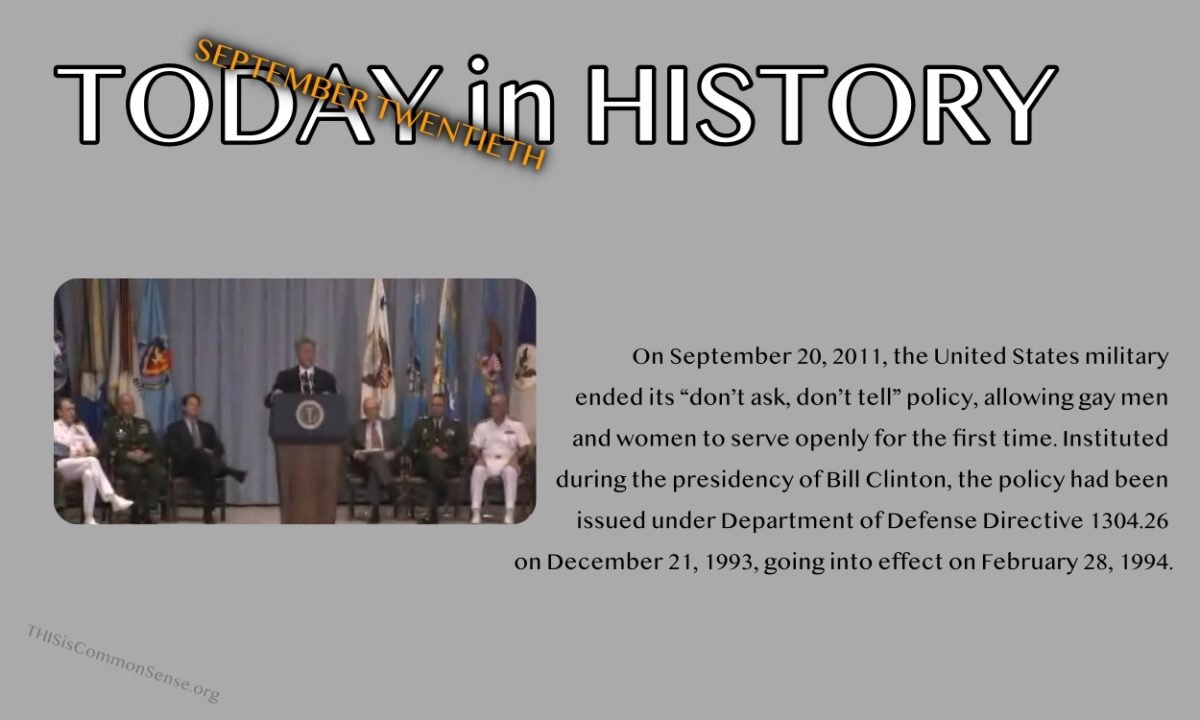
On September 20, 2011, the United States military ended its “don’t ask, don’t tell” policy, allowing gay men and women to serve openly for the first time. Instituted during the presidency of Bill Clinton, the policy had been issued under Department of Defense Directive 1304.26 on December 21, 1993, going into effect on February 28, 1994.
The endless fraud that is Social Security seems eternal to most Americans, and even those who prophesy its demise might feel a bit like Jonah outside the walls of Nineveh, under a gourd, cursing a worm. But the comedy of its seemingly stable instability aside, the basic truth remains quite clear: It was never constructed on a sound basis. There was never investment of funds taken in; that was prohibited by law. It was always pay-as-we-go. Surpluses were sent to Congress where they were spent. What Congress “owes” the program is vast.
And, because of its creaky, half-tontine/half-Ponzi scheme structure, “the deal” so many count on is repeatedly restructured, so to keep it going — each time the tax burden on non-retirement people raises.
None of this should be shocking to readers of Paul Jacob’s Common Sense column. Back in 1999 (that was quite some time ago!) Paul explained why the program has served as a “third rail” in American politics:
Politicians chasing votes have spent every dollar you’ve paid to Social Security. The money’s gone. There is no “trust fund” because Congress couldn’t be trusted. If a private pension fund was run this way, the people would be arrested. Managing your Social Security, Congress spent all the money and the program is headed for bankruptcy.
But why should Congress care? They’ve opted out of Social Security and their congressional pension makes them millionaires.
In 2007, Paul wrote of the first Boomers to apply for Social Security benefits under the standard retirement plan. In 2010, Paul directly contradicted a Nobel laureate economist (Paul Krugman, in case you are interested), calling him a liar. About Social Security.
Telling whoppers about Social Security is almost a national tradition at this point.
The battle over Social Security reform will be among the most consequential economic fights Washington has had in several generations. So why are some Republicans already preparing to surrender?
The issue has taken on new urgency as it becomes clear a legal cliff edge will force reform by 2032 or else. By that date the so-called trust fund for the old-age portion of Social Security will be exhausted. By law, annual benefit payouts then immediately shrink to match annual payroll-tax revenues. That would mean a 22% reduction in Social Security checks in the first year.
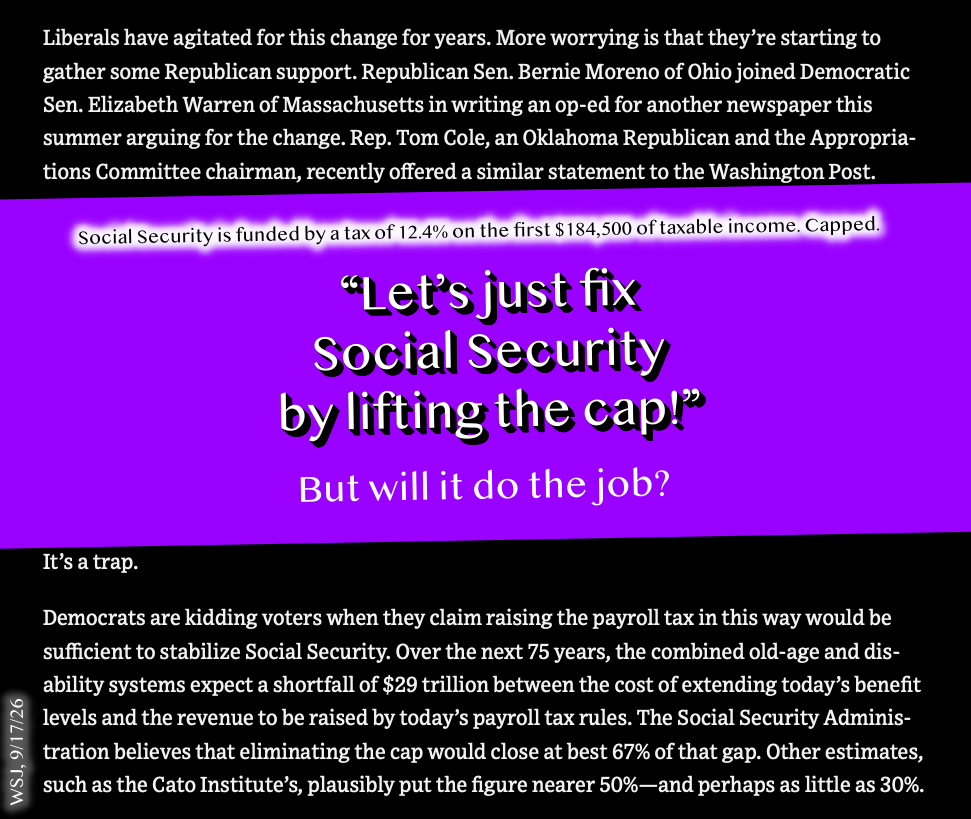
The standard proposal to forestall all this is the focus of Sternberg’s op-ed. And what is that proposal? Nothing other than the notion — beloved by Democrats, because it looks an awful lot like “sticking it to the rich” without saying so directly — of raising the cap on contributions.
The program is funded by a payroll tax of 12.4%, borne equally by employer and employee and applied to the first $184,500 of taxable income. The theory is that if higher-earning households pay the payroll tax on all their income, it removes a regressive element of the existing system and creates a fabulous new revenue stream.
But will that work? Sternberg says No:
This issue will likely gain coverage here at ThisIsCommonSense.org in the near future.
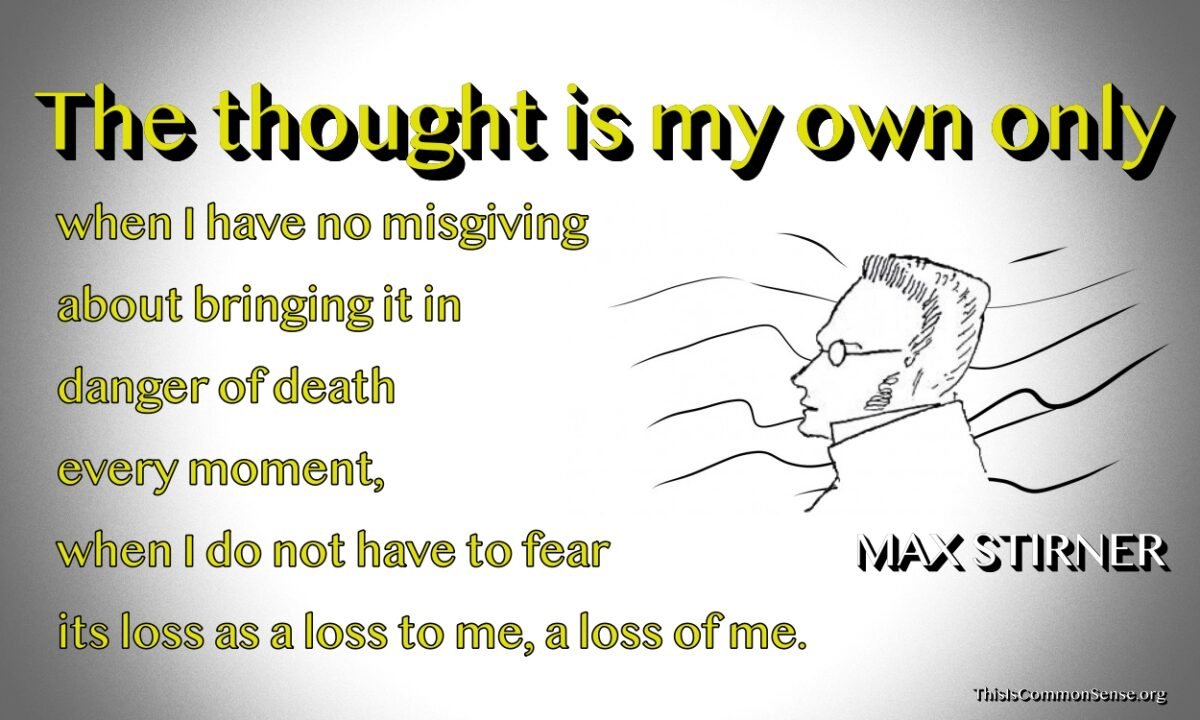
The thought is my own only when I have no misgiving about bringing it in danger of death every moment, when I do not have to fear its loss as a loss to me, a loss of me.
Max Stirner, The Ego and His Own: The Case of the Individual Against Authority, Steven E. Byington, translator, as quoted by Joel Spring, Wheels in the Head: Educational Philosophies of Authority, Freedom and Culture from Socrates to Human Rights (Second Edition, 1999).
The problem with all government activity is the difficulty of establishing accountability.
“As colleges across the country are reinstating standardized tests,” writes Meagan O’Rourke at Reason, “New York [government] high schools are taking another approach: eliminating the state’s longstanding Regents exam requirements.”
Thankfully, the tests are not to be completely junked: “This week, the New York Board of Regents, which oversees the state’s public schools, voted to make the standardized exams optional going forward. They are currently required for most high schoolers to graduate,” explains Ms. O’Rourke.
They want the exams to be “opt-in.”
While we’ve grown used to public school educators fiddling with grades, exams like those currently required — even if far from perfect — constitute an even better way to glean how well (or badly) teachers and students are doing.
Government schools suffer, of course, from “increased spending and mediocre results,” as Reason puts it. (I covered Michigan’s problems yesterday, for example.) The avoidance of “metrics” — in business lingo — is just the kind of evasion that one might expect from under-performing institutions. New York’s opt-in downgrade is comparable to a failing student doctoring his report card or forging a parent’s signature.
But what do they really hope to accomplish? The New York Timesquotes officials admitting they are trying to “eliminate barriers to graduation for some students.”
Ignorance and lack of skills are the barriers educators should be seeking to remove.
Through teaching stuff like math, reading, and science. And inculcating basic skills.
Graduation “magically” follows.
It is interesting — in a bad way — that education bureaucrats think their job is, instead, merely pushing the biggest number of students through the system.
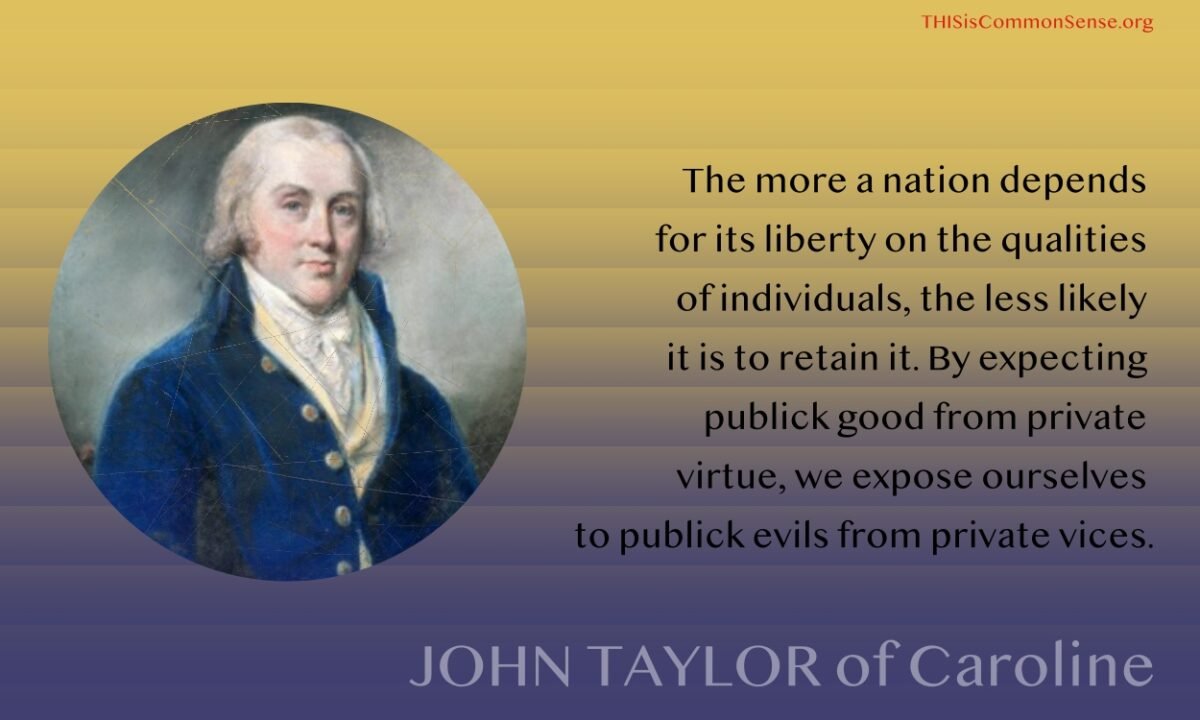
The more a nation depends for its liberty on the qualities of individuals, the less likely it is to retain it. By expecting publick good from private virtue, we expose ourselves to publick evils from private vices.
John Taylor of Caroline, as quoted by Forrest McDonald, in turn quoted by Donald Boudreaux at Cafe Hayek.