National defense is the usual pretext for the policy of fleecing the people.
Categories
John Taylor of Caroline
National defense is the usual pretext for the policy of fleecing the people.
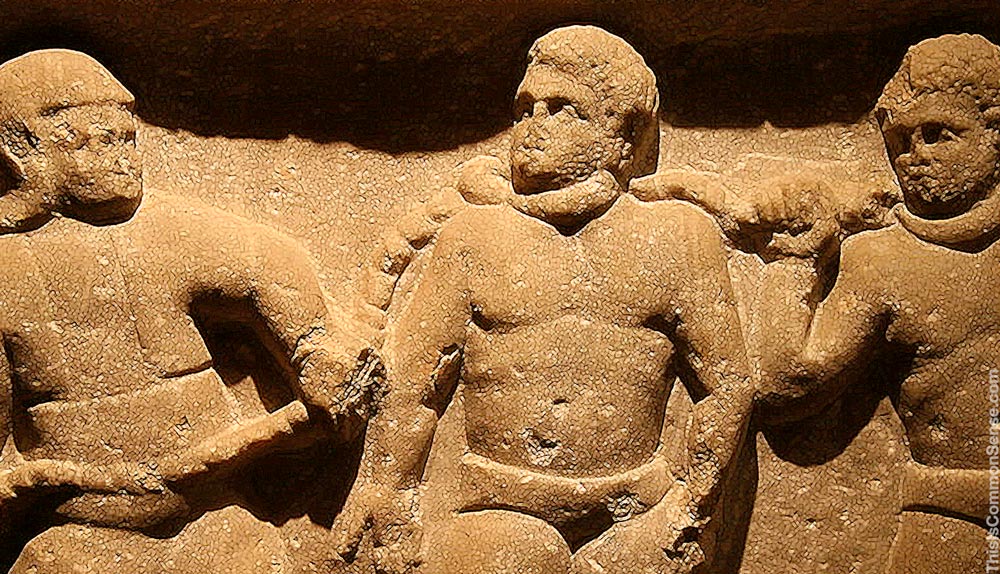
A bizarre argument is gaining popularity: the United States of America not merely allowed slavery in its first hundred years, it depended upon it, grew rich by it . . . and, “therefore,” not only the federal government but also its constitutional principles and even capitalism are all tainted . . . and . . . “therefore” . . . we must have socialism!
Why long-dead chattel slavery requires political slavery now is hard to figure.
And no, you should not need to read George Fitzhugh’s Cannibals All! or Sociology for the South to see that socialism is slavery.*
But these days it is more common to link slavery with . . . freedom (this is hard even to type) in the form of free markets.
Leftists who make this linkage are helped by some popular historians who argue that since the antebellum South (1) grew faster, economically, than the North, (2) slavery was profitable for slaveholders, and (3) slaves became more productive in picking cotton, the “peculiar institution” was key to American success. Vincent Geloso, a visiting assistant professor of economics at Bates College, writing for the American Institute for Economic Research, ably shows that not one of these three theses hold up to scrutiny.
Most importantly, though, Geloso demonstrates that the slavery system was like all other interventionist systems, with some people (slavers) benefiting at the expense of others (slaves, of course, but also free people . . . through a variety of subsidies).
Geloso uses the term “deadweight loss” to make his case that slavery made America poorer.
He is certainly not wrong. But once you understand why freedom and prosperity are linked, not much economic jargon is necessary.
This is Common Sense. I’m Paul Jacob.
* This pro-slavery southerner did argue against the very idea of liberty and free labor on the grounds that freedom is bad and socialism is good. Indeed, “Fitzhugh disliked ‘political economy’ (as economics was then called), which he saw as ‘the science of free society,’” economist Pierre Lemeiux explains, “as opposed to socialism, which is ‘the science of slavery.’” That forthright appraisal is about all that’s good in Fitzhugh.
See all recent commentary
(simplified and organized)
See recent popular posts

On August 28, 1833, the Slavery Abolition Act received Royal Assent, formally abolishing slavery throughout most the British Empire.
The end of law is not to abolish or restrain, but to preserve and enlarge freedom. For in all the states of created beings, capable of laws, where there is no law there is no freedom.
John Locke, Second Treatise of Government (1689), Ch. VI, sec. 57.

Politics today reveals a troubling dialectic.
Thesis: President Trump boasts that he is going to unilaterally “do something” as if he were Emperor, not President.
Antithesis: Then comes pushback from political opponents and the media, castigating our current commander-in-chief for imagining himself a lawless dictator.
Synthesis: This is soon followed, however, by the discovery that the president does have such awesome power.
Legally.
In our constitutional system, can a president can just wake up one day and slap tariffs on imports? Well, numbskulls in Congress passed a law handing the president that specific power.
When President Trump declared an emergency to re-direct money, appropriated by Congress for different purposes, toward building the Wall, many argued that the president cannot usurp Congress’s undisputed power of the purse. True, but irrelevant. Congress had indeed delegated all these undefined and largely unchecked “emergency” powers to the prez.
Last week, as the trade war with China was coming to a boil, Mr. Trump tweeted, “Our great American companies are hereby ordered to immediately start looking for an alternative to China, including bringing . . . your companies HOME and making your products in the USA.”*
I thought, “Does Trump really think he has the legal authority to order all U.S. businesses to leave China?”
Yes . . . and apparently he does. It’s called The International Emergency Economic Powers Act.
“One of the enduring phenomena of the Trump era,” University of Texas law professor Stephen Vladeck told CNN, “is going to be the list of statutes that give far too much power to the President, but that many didn’t used to worry about — assuming there’d be political safeguards.”
Or that “the right person” would always be in office.
This is Common Sense. I’m Paul Jacob.
* Note that Mr. Trump did not order the companies to leave, but did assert his “absolute right” to do so.

See all recent commentary
(simplified and organized)
See recent popular posts
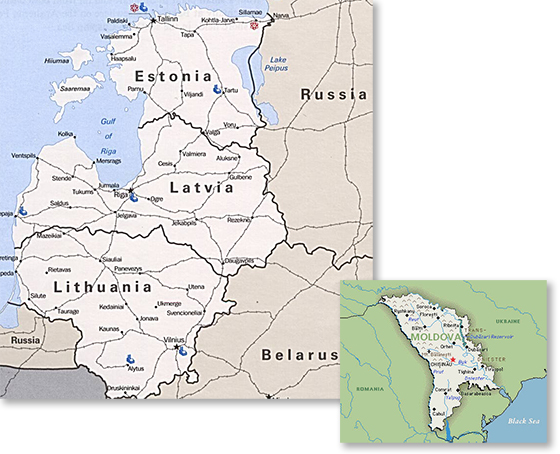
On August 27, 1991, the European Community recognized the independence of the Baltic states of Estonia, Latvia and Lithuania, and Moldova after they had declared their independence from the USSR.
There are many patriotic Americans who would put aside their own private careers to serve in office, if the cost to them and their families were not ruinous, and if they had some realistic hope of advancing the interests of the country and its people without being obstructed by career politicians.
Is any of this likely today? No!
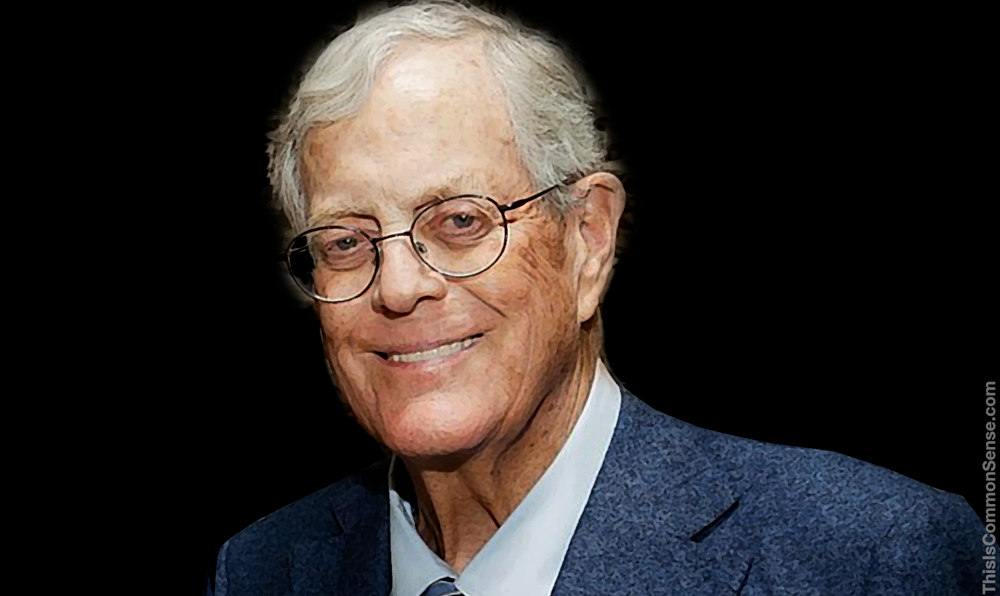
“Classy guy,” won’t be the moniker afforded comedian Bill Maher when his time on Earth comes to an end.
“I guess I’m going to have to reevaluate my low opinion of prostate cancer,” Maher told his HBO audience regarding the death of libertarian billionaire David Koch at 79.
“As for his remains,” continued Maher, “he has asked to be cremated and have his ashes blown into a child’s lungs.”
You get the tenor of his “humor.”
“[David Koch] and his brother have done more than anybody to fund climate-science deniers for decades, so f—k him!” Maher argued. “I’m glad he’s dead, and I hope the end was painful.”
The HBO celeb likely hoped his crass takedown of the already deceased would go viral. “I know these seem like harsh words and harsh jokes,” Maher conceded, “and I’m sure I’ll be condemned on Fox News . . .”
But perhaps not reprimanded more universally, since such political viciousness has become ubiquitous. For instance, when a questioner at the Minnesota State Fair mentioned Koch’s passing, applause erupted.
“I don’t applaud, you know, the death of somebody,” Sen. Bernie Sanders chided the crowd (to his credit). “We needn’t do that.”
Celebrating someone’s demise is sickening. Moreover, in the case of David Koch, and brother Charles, so many of the non-stop political attacks have been erroneous — condemnation for positions they do not hold, for things they have not done. Not to mention ignoring all the wonderful benefits they have provided our society.
Bill Maher is a professional punk, so I’m not shocked. But David Koch was a hero.
This is Common Sense. I’m Paul Jacob.
N.B. Lovers of liberty lost another champion last week: Eric Dixon. For years, Eric has been a huge help to Common Sense in a myriad of important ways. He also assisted a number of other liberty-oriented and free-market groups, including U.S. Term Limits, the Cato Institute, Missouri’s Show Me Institute, the Atlas Network, the Libertarian Party, and more. A lot of people will miss Eric, not the least of whom will be me.
See all recent commentary
(simplified and organized)
See recent popular posts
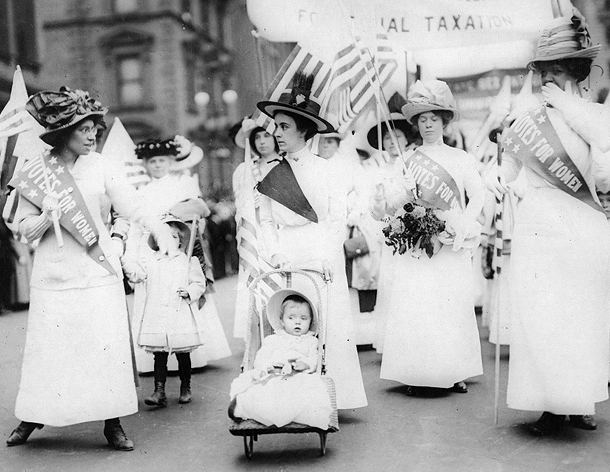
On August 26, 1920, the 19th amendment to United States Constitution took effect, giving women the right to vote in every state of the union.
Prior to the passage of this amendment, 15 states allowed women to vote. Most of them were west of the Mississippi. The territory of Wyoming was the first to extend voting rights to women in 1869.
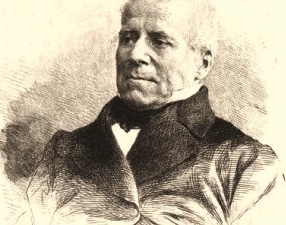
It is impossible for a government to levy taxes and distribute large amounts of money without by that very process creating large numbers of enemies of its authority and those jealous of its power.