January 17, 1918: The first serious battles take place between the Red Guards and the White Guard in the Finnish Civil War.
Categories
The Finns’ Civil War Begins
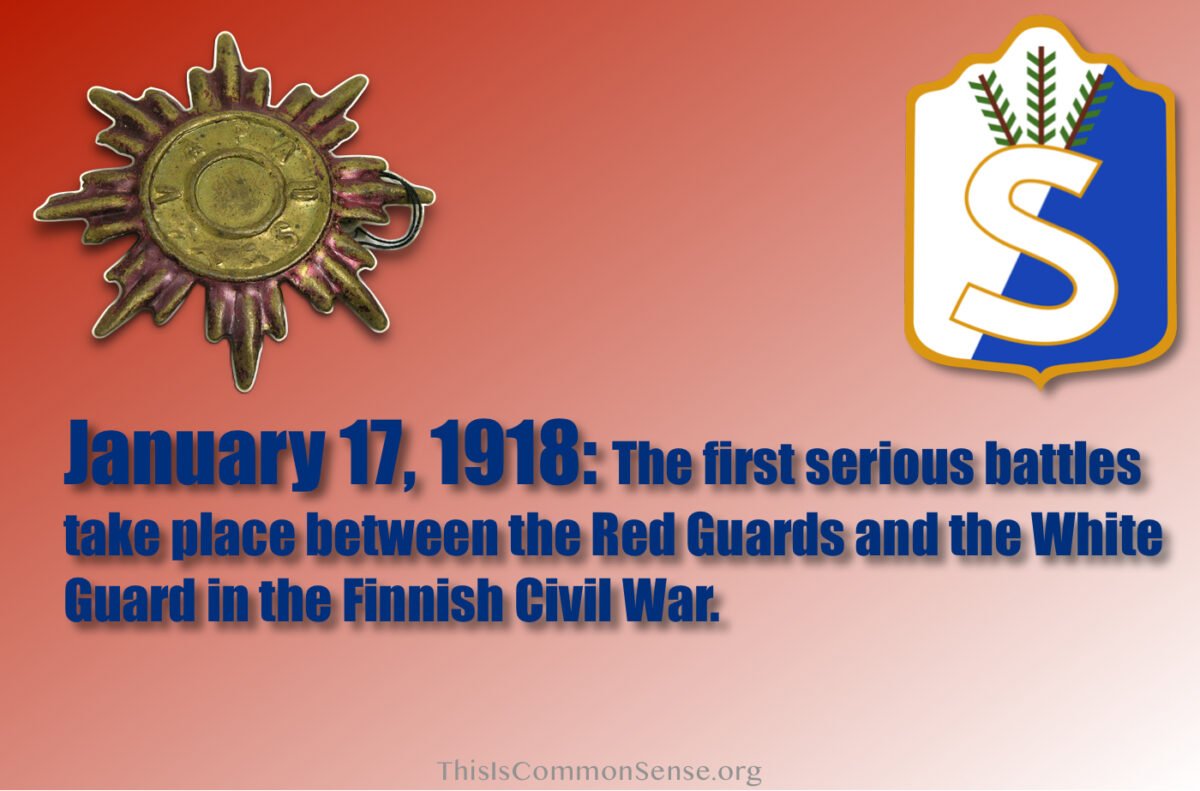
January 17, 1918: The first serious battles take place between the Red Guards and the White Guard in the Finnish Civil War.
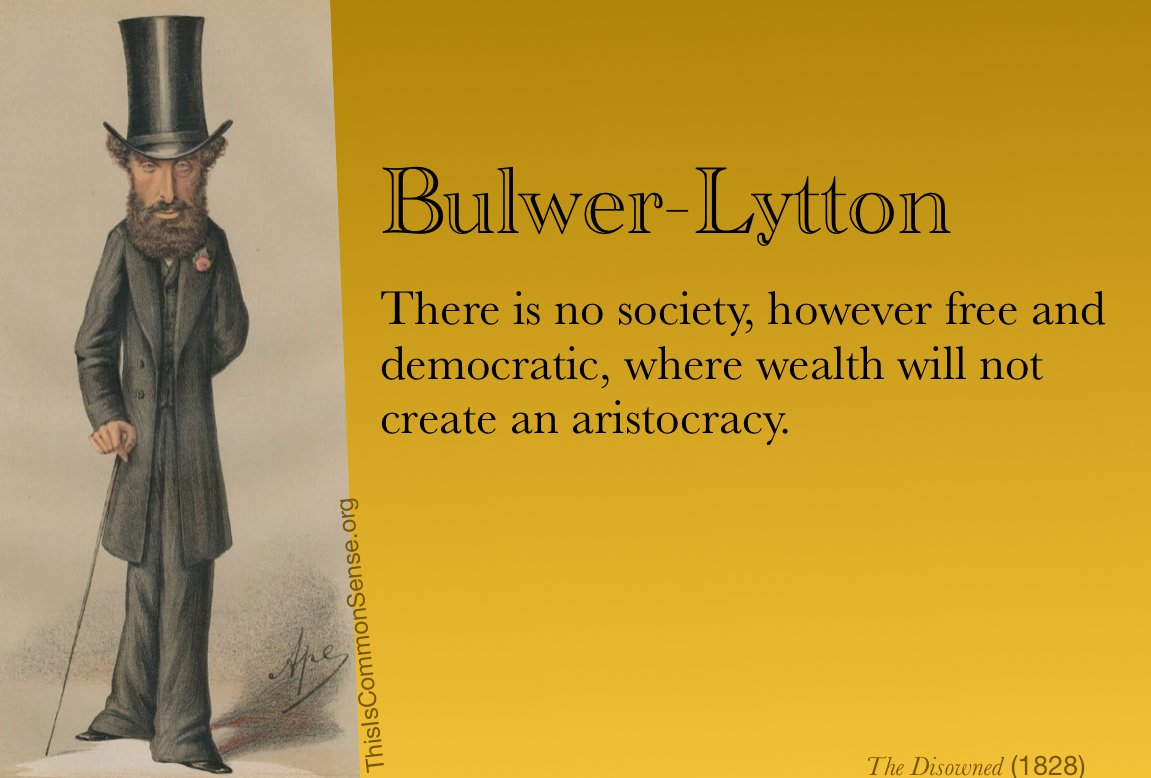
There is no society, however free and democratic, where wealth will not create an aristocracy.
Edward Bulwer-Lytton, The Disowned (1828).
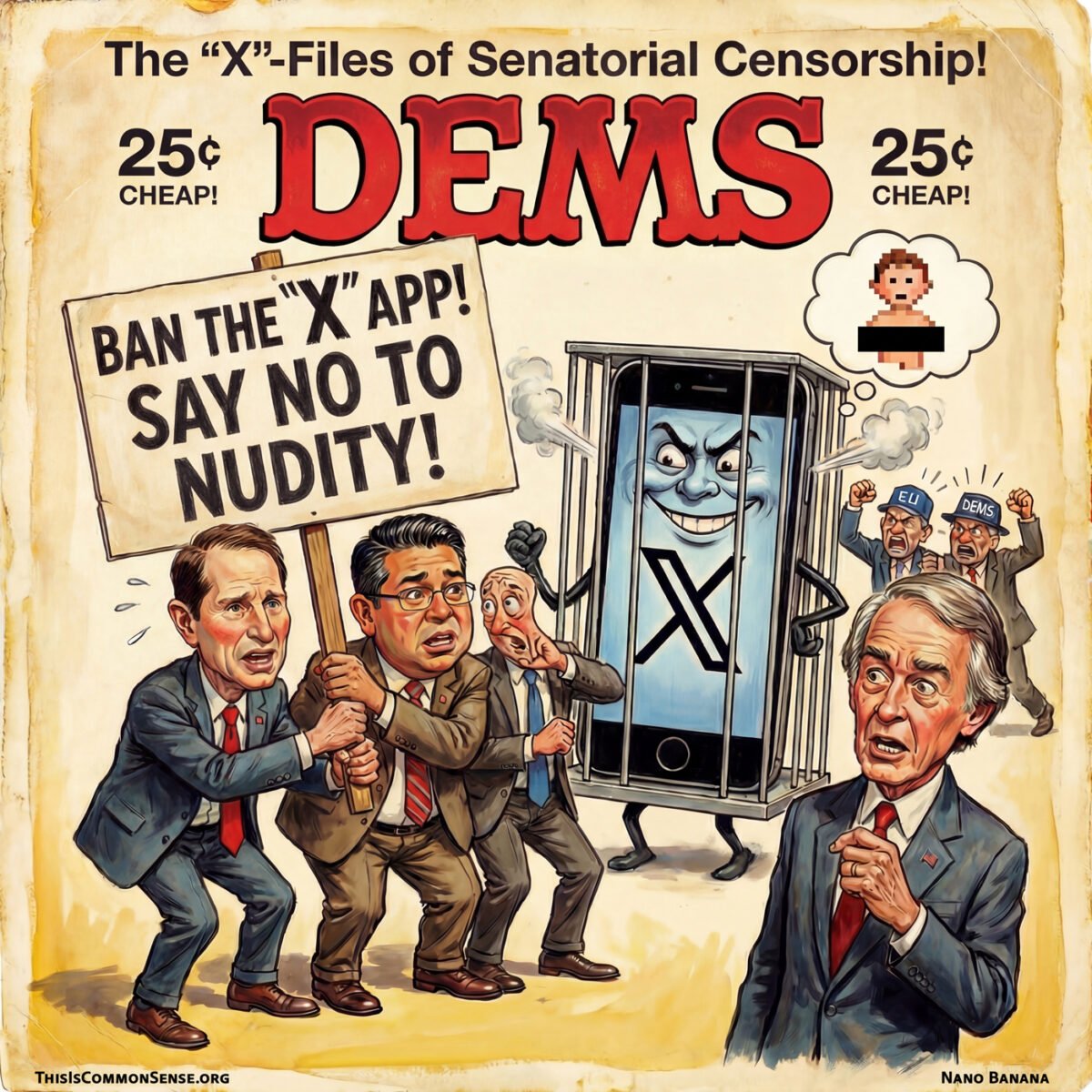
The current stage of the U.S. assault on the social media platform formerly known as Twitter takes the form of senatorial demands that X be removed from iOS and Android app stores.
Why the enmity?
Well, under the ownership of Elon Musk, X lets people say and write stuff that Democrats dislike. Such as criticism of Democratic policies and politicians, just the kind of speech the First Amendment was drafted to protect. (Criticism of Republican, Libertarian, communist, and anarchist policies and politicians? Also protected.)
The rationalization for the proposed ban is that X’s AI software, Grok, can generate pictures of nude or nearly nude people.
The ability to generate such images is hardly unique to this particular chatbot. If X is to be banned from app stores because of the possibility that users may post generated nudes on the platform, many more social media platforms would, logically, also have to be snared by the censorship net.
Yet, reports Reclaim the Net, the letter sent to the CEOs of Apple and Google “by Senators Ron Wyden, Ben Ray Luján, and Ed Markey asked the tech giants only about X and demanded that the companies remove X from their app stores entirely.”
Unsurprisingly, X has announced that the nude-ifying feature of Grok has been limited. I asked Grok, and it said that “there is now a taboo/restriction on generating or editing nudes (or near-nudes/revealing attire) of real, existing people from photos. It will refuse prompts to digitally ‘undress’ or sexualize identifiable real individuals. Attempts often result in refusal, blurring, or error messages.”
Fixed?
This is Common Sense. I’m Paul Jacob.
Illustration created with Nano Banana
See all recent commentary
(simplified and organized)
See recent popular posts
If printing money would end poverty, printing diplomas would end stupidity.
Argentine President Javier Milei, quoted by Rebecca Weisser, “Don’t Cry for Milei, Argentina,” Spectator Australia (December 2023).
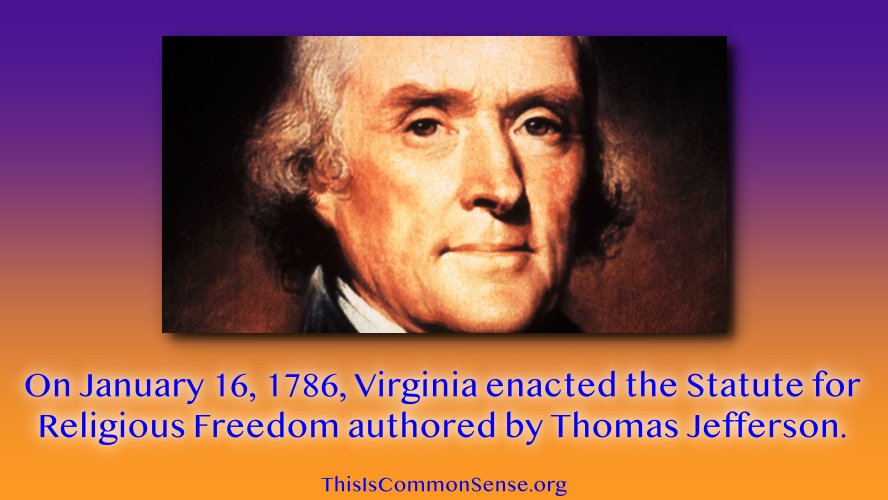
On January 16, 1786, Virginia enacted the Statute for Religious Freedom authored by Thomas Jefferson.
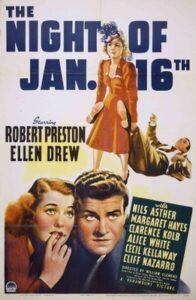
The day is also noted in the title of Ayn Rand’s hit play, Night of January 16th. First performed in 1934 as Woman on Trial, it continued on over the next few years under the title with which it is now famous, and (with the addition of the definite article before “Night”) under which it was filmed in 1941.
The First Amendment helped the United States — together and separately — protect religion from the ravages of regulation, taxation, suppression, and favoritism. Maybe it’s time to extend the concept.
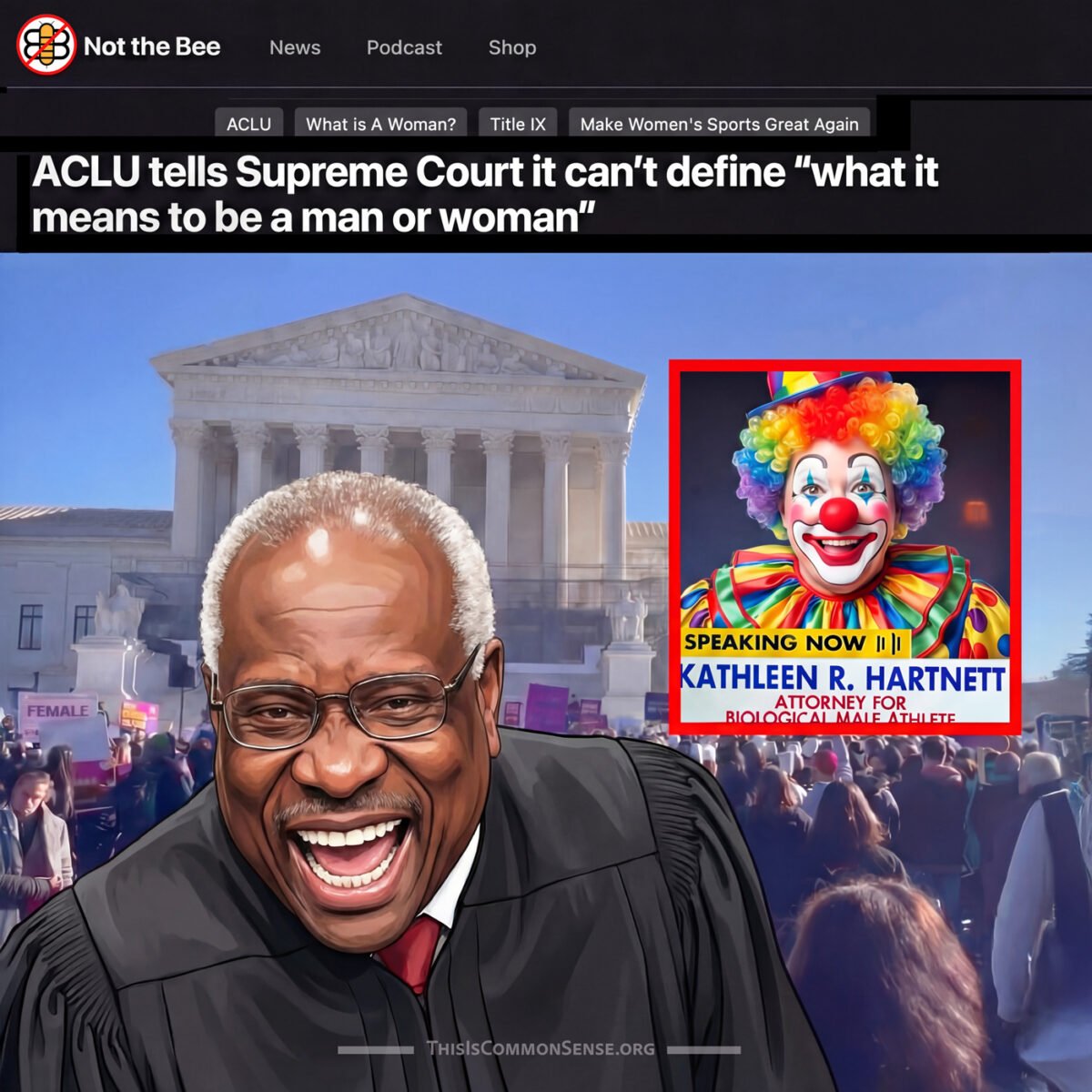
This came to mind as I skimmed through the transcript to a current case before the Supreme Court, Little v. Hecox (Docket No. 24-38), which involves a challenge to Idaho’s law restricting “transgender women and girls” from participating in women’s and girls’ sports.
I doubt the forthcoming ruling will get government out of sports generally, much less out of sports in public schools — which is what this is all about, Idaho’s law applying only to athletic teams sponsored by public educational institutions (or certain nonpublic ones competing against public ones), not to purely private teams.
One lawyer for the respondents, Kathleen R. Hartnett, Esq., got stuck with the “tough” job. She was asked by Justice Alito if an understanding of what men and boys are, and what women and girls are, was relevant to the Equal Protection Clause. She said yes, but then confessed to lacking a definition of the sexes for the Court.
Then “how can a court determine that there’s discrimination on the basis of sex,” Alito inquired, “without knowing what sex means. . . . ?”
Her answer started out on a most unpromising note: “I think here we just know . . .” immediately pivoting to the statute’s applicability. Alito went on to challenge her on a key notion in trans ideology, that one becomes trans just by saying so.
I see a lot of people online chortling on the comedy of it all.
But I think here we just know it’s … seriously troublesome.
This is Common Sense. I’m Paul Jacob.
Illustration created with Nano Banana
See all recent commentary
(simplified and organized)
See recent popular posts
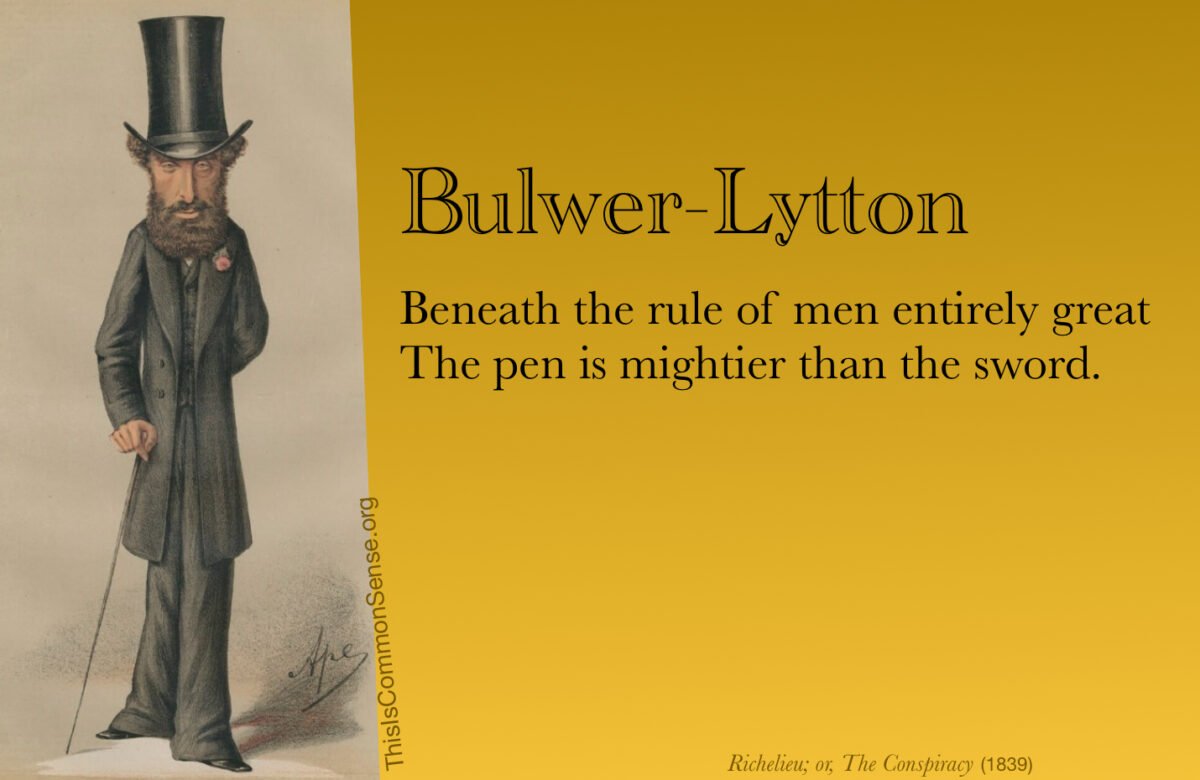
True, — this! [Richelieu holding a pen]
Edward Bulwer-Lytton, Richelieu; or, The Conspiracy: A Play in Five Acts (1839), Act II, Scene II.
Beneath the rule of men entirely great
The pen is mightier than the sword. Behold
The arch-enchanter’s wand! — itself a nothing!
But taking sorcery from the master-hand
To paralyse the Caesars — and to strike
The loud earth breathless! — Take away the sword
States can be saved without it!
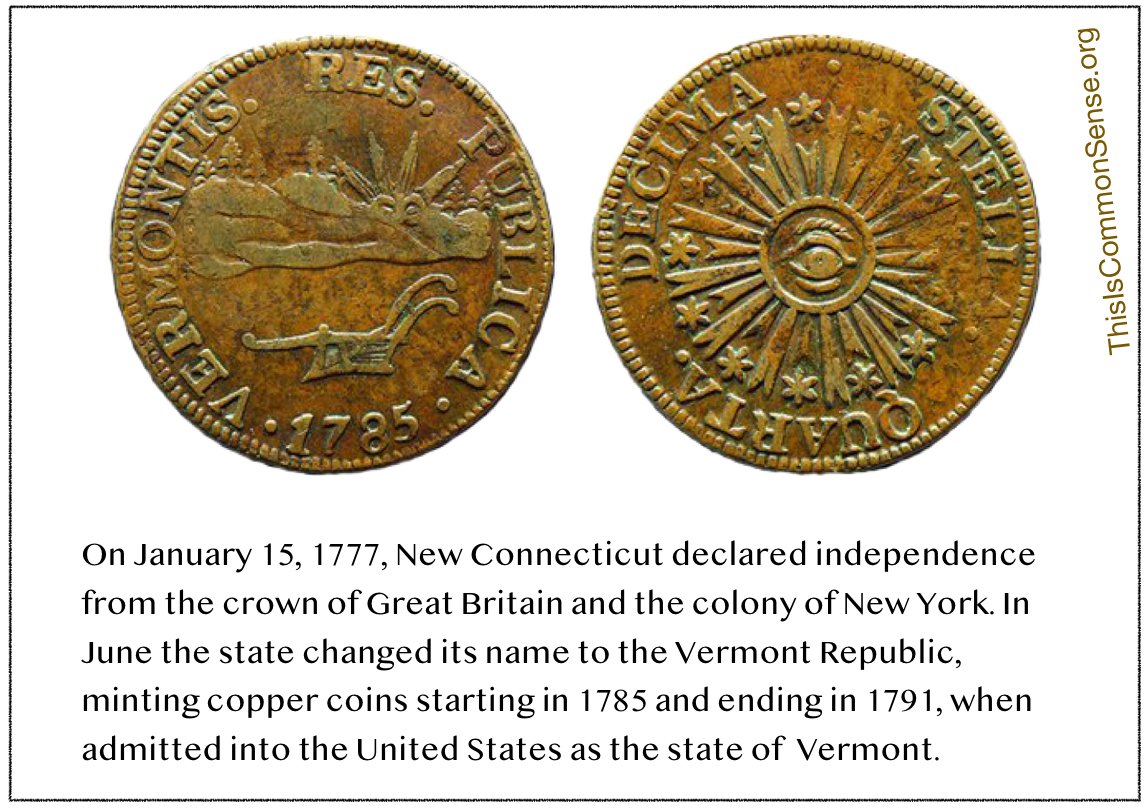
On January 15, 1777, New Connecticut declared independence from the crown of Great Britain and the colony of New York.
Delegates first named the independent state New Connecticut and, in June 1777, settled on the name Vermont, an imperfect translation of the French for Green Mountain.
This new “Vermont Republic” minted copper coins, starting in 1785. The people of Vermont took part in the American Revolution although the Continental Congress did not recognize the jurisdiction, because of vehement objections from New York, which had conflicting property claims.
In 1791, Vermont was admitted to the United States as the 14th state, upon which its minting of coins ceased.
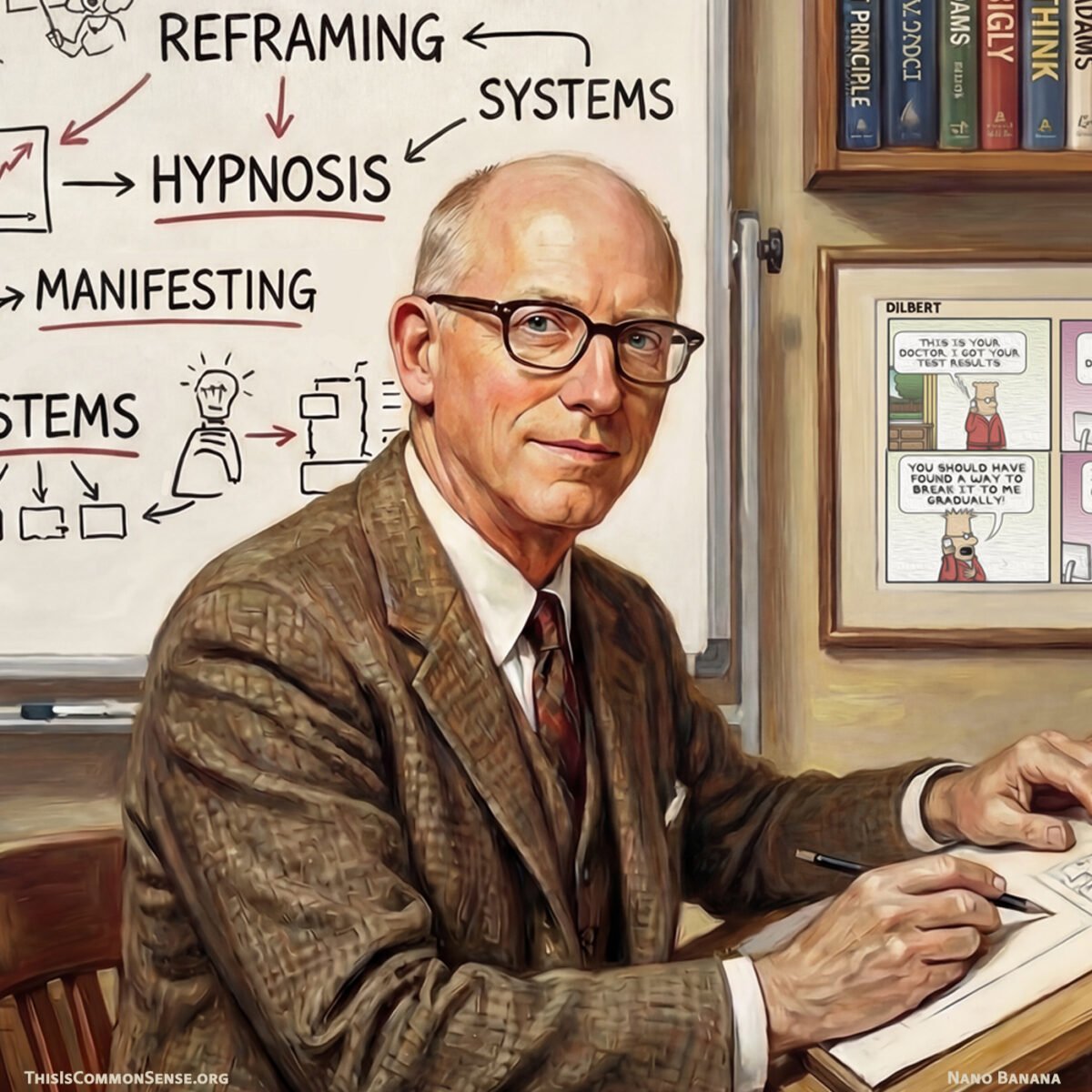
Ideas, principles, arguments — these mattered, too.
Which is probably what I will remember most about Scott Adams, who died yesterday.
He had been suffering from prostate cancer for some time. During the moment, last year, when President Joe Biden’s possible prostate cancer diagnosis became a matter of public discussion, Mr. Adams informed us that he, too, had been diagnosed with that form of cancer, and that he had not long to live.
Like most newspaper readers, I knew of Adams from his Dilbert comic strip. I missed his career in writing books, in the aughts and early teens. But I caught up with the man when he predicted, in 2015, that Donald Trump possessed a “talent stack” that would likely lead to winning the presidency — an insightful judgment — that may have helped the prophesied event to occur.
Adams became one of the more interesting podcasters, an intellectual powerhouse who urged us to reframe how we think about politics, culture, our very lives. I never became a fan, exactly, but I not only admired him, I liked him. He was quite a character; he was a man of character.
It was interesting, especially, to watch him develop in the context of our odd (transitional?) moment in history. On the late pandemic, for example, many of his early opinions and meta-opinions were misguided. But he changed his mind, as many of us have. And though, as I mentioned above, his most famous assertion was that, in matters of persuasion, “the facts don’t matter,” he was persuaded to change opinions when he learned more.
So may we all.
This is Common Sense. I’m Paul Jacob.
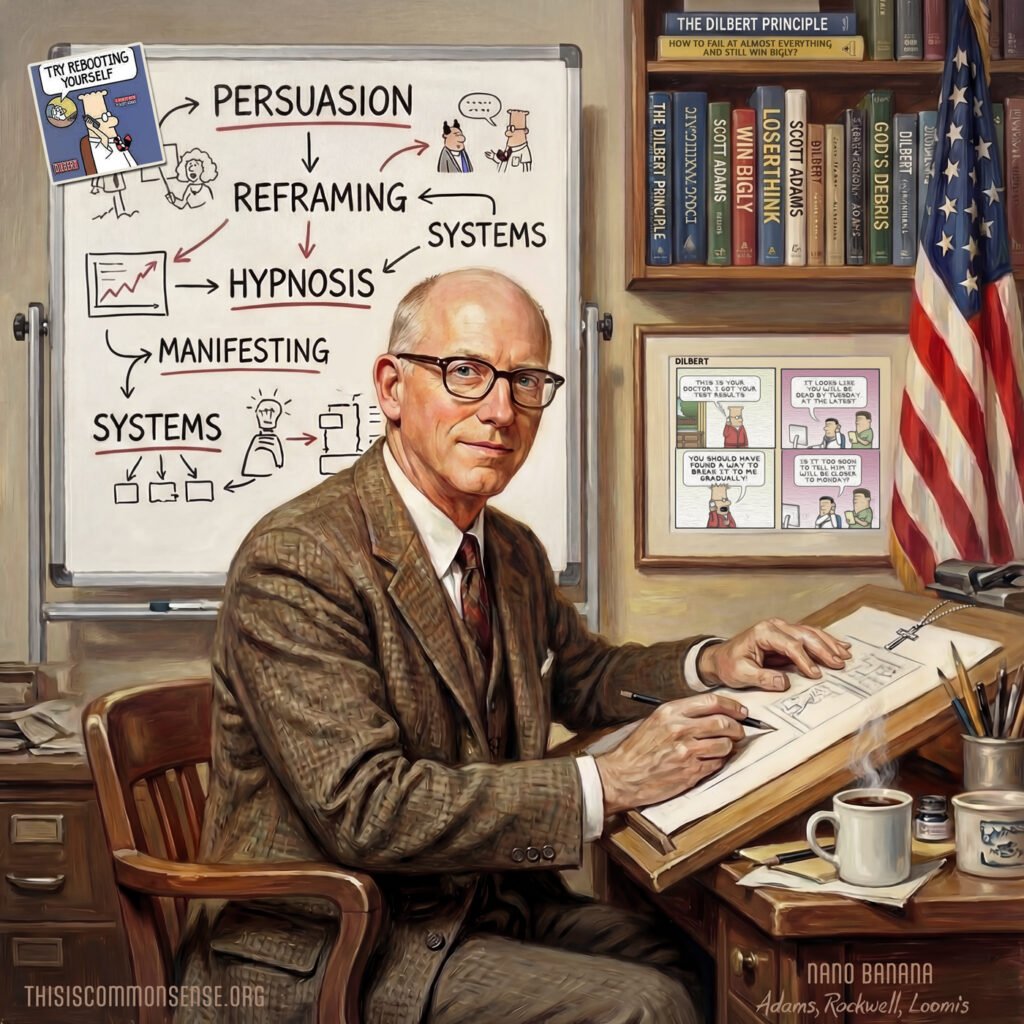
Illustration created with Nano Banana
See all recent commentary
(simplified and organized)
See recent popular posts
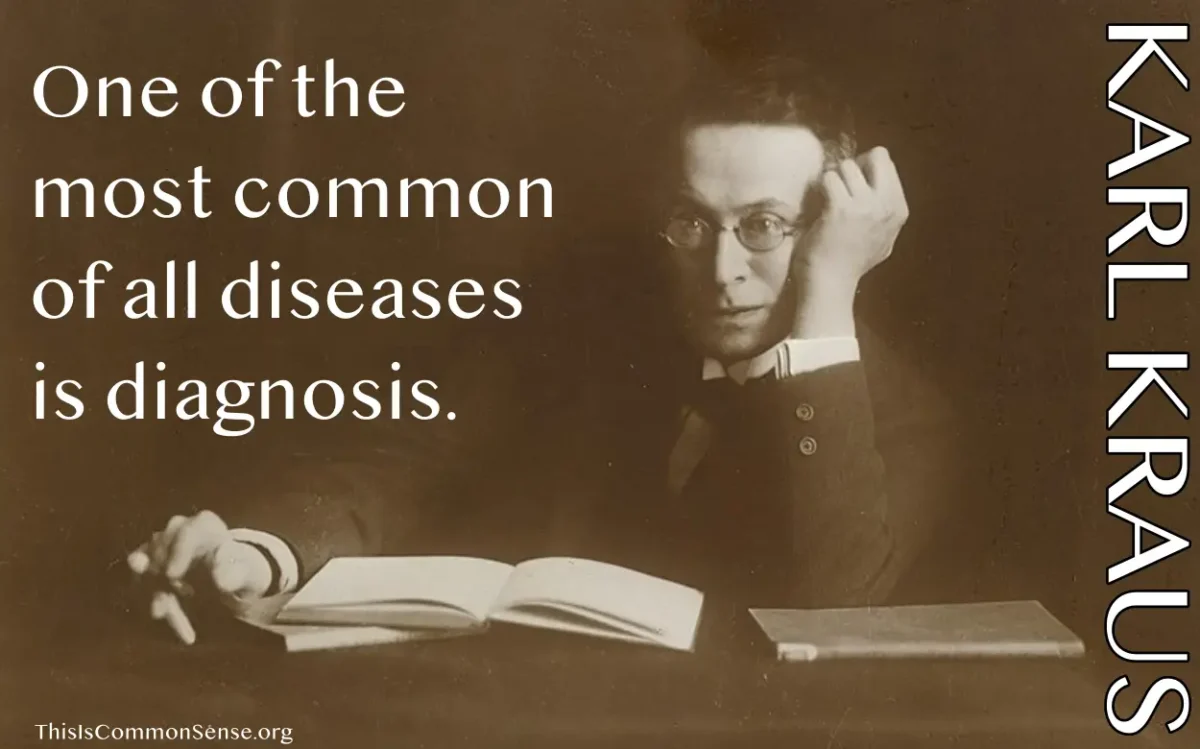
One of the most common of all diseases is diagnosis.
Karl Kraus, as quoted in The Portable Curmudgeon (1987).