Categories
Today

Rights

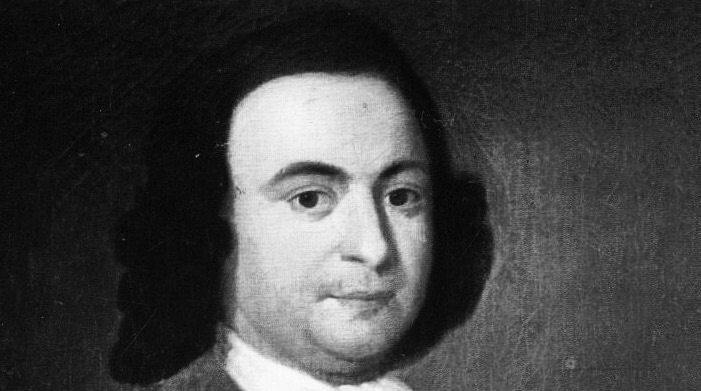
In 1776, on June 12, the Fifth Virginia Convention at Williamsburg, Virginia, unanimously adopted a Declaration of Rights, several weeks prior to the adoption of the state’s constitution. George Mason (pictured above), who drafted the document, stated clearly in the preamble that rights must be “the basis and foundation of Government.”

The first four planks run as follows:

I. That all men are by nature equally free and independent, and have certain inherent rights, of which, when they enter into a state of society, they cannot, by any compact, deprive or divest their posterity; namely, the enjoyment of life and liberty, with the means of acquiring and possessing property, and pursuing and obtaining happiness and safety.

II. That all power is vested in, and consequently derived from, the people; that magistrates are their trustees and servants, and at all times amenable to them.

III. That government is, or ought to be, instituted for the common benefit, protection, and security of the people, nation or community; of all the various modes and forms of government that is best, which is capable of producing the greatest degree of happiness and safety and is most effectually secured against the danger of maladministration; and that, whenever any government shall be found inadequate or contrary to these purposes, a majority of the community hath an indubitable, unalienable, and indefeasible right to reform, alter or abolish it, in such manner as shall be judged most conducive to the public weal.

IV. That no man, or set of men, are entitled to exclusive or separate emoluments or privileges from the community, but in consideration of public services; which, not being descendible, neither ought the offices of magistrate, legislator, or judge be hereditary.
Categories
crime and punishment national politics & policies

Police Incentives Matter

“For every bullet the German police fired on duty in 2016, American police killed 10 people,” writes Jason Brennan for MarketWatch. “Even overwhelmingly white states like Wyoming and Montana imprison citizens at higher rates than authoritarian Cuba.”

What is going on here?

And by here I mean “these United States of America.”

Well, Brennan, who is the Robert J and Elizabeth Flanagan Family Professor of Strategy, Economics, Ethics, and Public Policy at Georgetown University’s McDonough School of Business, has an answer.

“What matters even more than black and white is green,” he writes, referencing the current protests and riots sparked by coverage of the George Floyd killing by Minneapolis police. “Fixing our criminal justice system means fixing the incentives.”

Professor Brennan points the finger at a number of federal programs:

  • The 1981 Military Cooperation with Law Enforcement Act “authorized and incentivized the U.S. armed forces to train police in military tactics” while the 1990 National Defense Authorization Act established a pipeline from the military industrial complex to local police forces.
  • The drug war set up police theft of private property via civil asset forfeiture, and encouraged federal drug warriors to share the loot with local police departments.
  • In many localities, direct election of prosecutors leads to campaign boasts about prosecution stats and long sentences, even when these policies make us less safe.

There’s a lot here to mull over, and you may not agree with everything Brennan argues, but the basic point is quite clear: “Even if we magically erased all racism overnight, the U.S. would still be harsh and violent” — and that because our politics has skewed incentives all wrong.

Getting rid of programs and laws that disincentivize good policing is a must.

This is Common Sense. I’m Paul Jacob.


PDF for printing

See all recent commentary
(simplified and organized)
See recent popular posts

Categories
Today

Declarations

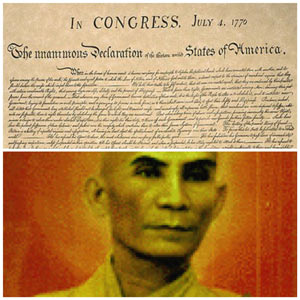
On June 11, 1776, the Continental Congress appointed John Adams, Benjamin Franklin, Thomas Jefferson, Robert R. Livingston, and Roger Sherman to draft a declaration of independence from Great Britain.

In 1963, Thich Quang Duc, a Buddhist monk, doused himself with gasoline and set himself aflame in a busy Saigon intersection as a protest against South Vietnam’s lack of religious freedom.

Categories
Thought

Aldous Huxley

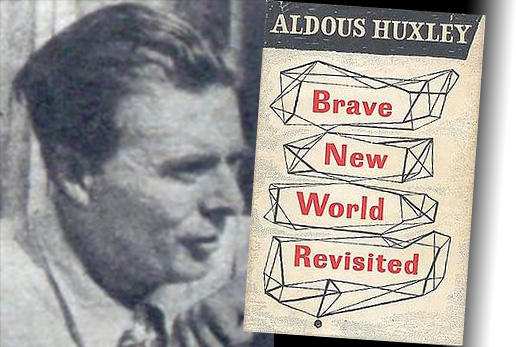
Propaganda in favor of action that is consonant with enlightened self-interest appeals to reason by means of logical arguments based upon the best available evidence fully and honestly set forth. Propaganda in favor of action dictated by the impulses that are below self-interest offers false, garbled or incomplete evidence, avoids logical argument and seeks to influence its victims by the mere repetition of catchwords, by the furious denunciation of foreign or domestic scapegoats, and by cunningly associating the lower passions with the highest ideals, so that atrocities come to be perpetrated in the name of God and the most cynical kind of Realpolitik is treated as a matter of religious principle and patriotic duty.

Aldous Huxley, Brave New World Revisited (1958), chapter four, p. 33.

Categories
media and media people

Wrong Field for You

“If you’re an emotionally unstable baby who regards disagreement as ‘violence,’” tweeted “roving journalist” Michael Tracey, “journalism is probably the wrong field for you.”

Only half-right. Given their goals, filling jobs that would otherwise be filled by journalists is indeed the right thing for hysterico-new-new-Left activists — just as bank-tellering is right for inside men helping bank robbers rob banks.

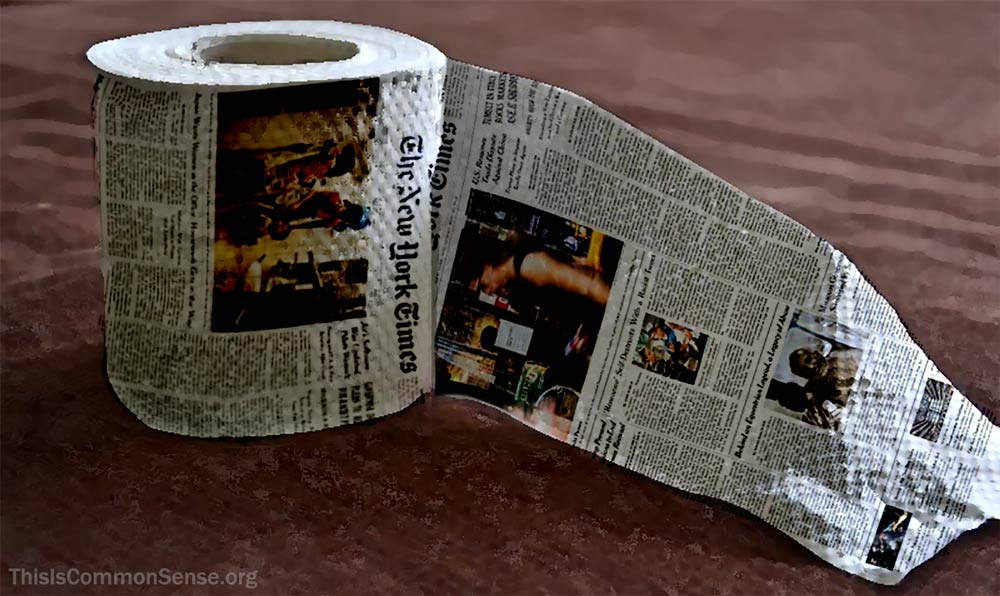
Tracey is commenting on how New York Times “journalists” — and others — apoplexed over the Times’ sin of permitting unqualified disapproval of mass rioting to grace its editorial pages. In his June Third op-ed, U.S. Senator Tom Cotton argued that the rioters, “if not subdued, not only will destroy the livelihoods of law-abiding citizens but will also take more innocent lives.” He recommended invoking the Insurrection Act in order to deploy the military.

One can argue about whether invoking the Act would be a good idea. 

Or one could, even in the Times . . . if one weren’t thereby invading the “safe space” of pseudo-journalists who had supposed that they need never face the hazards of fundamental debate within its pages.

An abject but vague apology now prefaces the op-ed. 

The Times has also fired the editor who let it be published. 

After all, by the time it reached print, Cotton’s piece did continue to contain evaluations with which someone might disagree.

This is a new low for the Times, which continues its downward spiral. The rest of us, I trust, will escape that vortex, resisting the great flush down to the sewer at civilization’s end.

This is Common Sense. I’m Paul Jacob.


PDF for printing

See all recent commentary
(simplified and organized)
See recent popular posts

Categories
Today

Birthdays

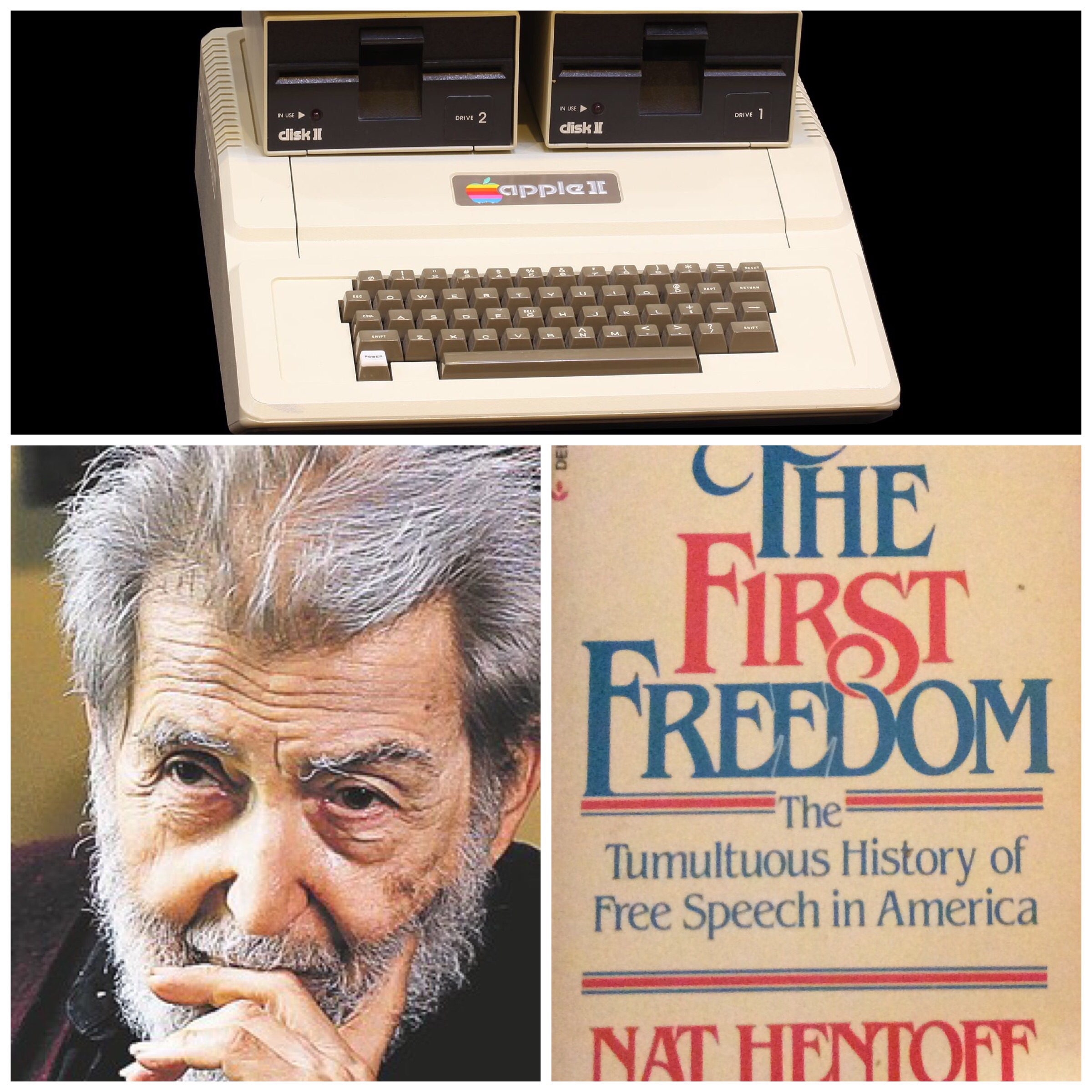
Born on this day: historian, jazz critic and civil libertarian Nathan Irving Hentoff (1925); children’s writer Maurice Sendak (1929); scientist and pioneer of “sociobiology,” E. O. Wilson (1929).

Hentoff wrote a good book on the history of free speech in America, The First Freedom (1980). Sendak is most famous for Where the Wild Things Are (1963). Wilson’s many books include Consilience: The Unity of Knowledge (1998).


Apple shipped the first Apple II computer on June 10, 1977. It was typographically styled as the “Apple ][” and the series continued long after the specific II model was superseded by the Apple II Plus and was discontinued in 1981. The last II-series Apple in production, the IIe card for Macintoshes, was discontinued on October 15, 1993.


Sendak died in 2012, Hentoff in 2017, while Wilson remains alive.

Categories
Thought

George Orwell

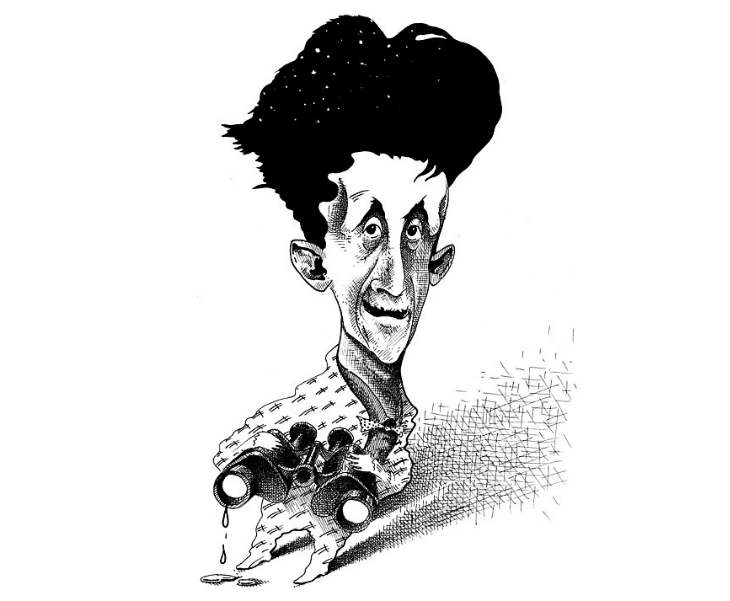
That was the ultimate subtlety: consciously to induce unconsciousness, and then, once again, to become unconscious of the act of hypnosis you had just performed. Even to understand the word ‘doublethink’ involved the use of doublethink.

George Orwell, Nineteen Eighty-four (1949), chapter 3.

Note: illustration by Bernd Pohlenz — CC BY-SA 3.0.

Categories
free trade & free markets national politics & policies

President Goes Postal?

A bullying bull in a China shop?

“President Donald Trump is taking another swipe at China,” Jen Kirby wrote for Vox back in 2018, “by ripping up an international treaty that’s more than a century old.”

We’re talking about the Universal Postal Union — or UPU. “At 144 years old, the UPU is one of the oldest intergovernmental agencies,” she explained. 

“The organization made possible the international mail system,” offered Washington-based attorney and UPU expert Jim Campbell. 

Wellesley College Professor Craig Murphy, “an international organizations expert,” called Trump’s threat “absurd.”

“It makes the international postal system run smoothly,” explained Kirby, “it’s the reason why you can get a package from South Africa or a postcard from your aunt on vacation in Bali.”

So why gum up the efficient delivery of letters and packages?

“Trump does have a legitimate gripe,” Kirby abruptly changed tone, “and administrations going back to Ronald Reagan have voiced similar complaints about the UPU.” 

But did nothing about it.

“Countries like China that were developing nations in 1969 . . . still pay the U.S. Postal Service a pittance to deliver mail,” Foreign Policy’s Keith Johnson clarifies, which “means that Chinese firms had a tiny edge in shipping goods to the U.S. market — making the Postal Service pick up much of the tab for actually delivering the package, even while costing U.S. firms potential sales.”

“Tiny edge”? 

Bull.

“[I]t’s actually cheaper to ship some products from certain places overseas to the US,” Kirby acknowledged, “than it is to deliver something between New York and Kansas.”

The gripe? 

The “disproportionately dramatic response . . . reveals the White House’s obsession with what it sees as China’s unfair advantage in global trade.”

Yet, this is an unfair advantage. 

Er, well . . . was. 

This is Common Sense. I’m Paul Jacob.


PDF for printing

See all recent commentary
(simplified and organized)
See recent popular posts

Categories
Thought

Aldous Huxley

To be able to destroy with good conscience, to be able to behave badly and call your bad behavior ‘righteous indignation’ — this is the height of psychological luxury, the most delicious of moral treats.

Aldous Huxley, attributed — on the Web and in many books it is cited as from his first comic novel of ideas, Crome Yellow, but it is not in there.
Categories
Today

John Hospers

Roman Emperor Nero committed suicide on this day in June, 68 AD, ending Rome’s Julio-Claudian Dynasty, later written about with verve by Suetonius and Robert Graves.

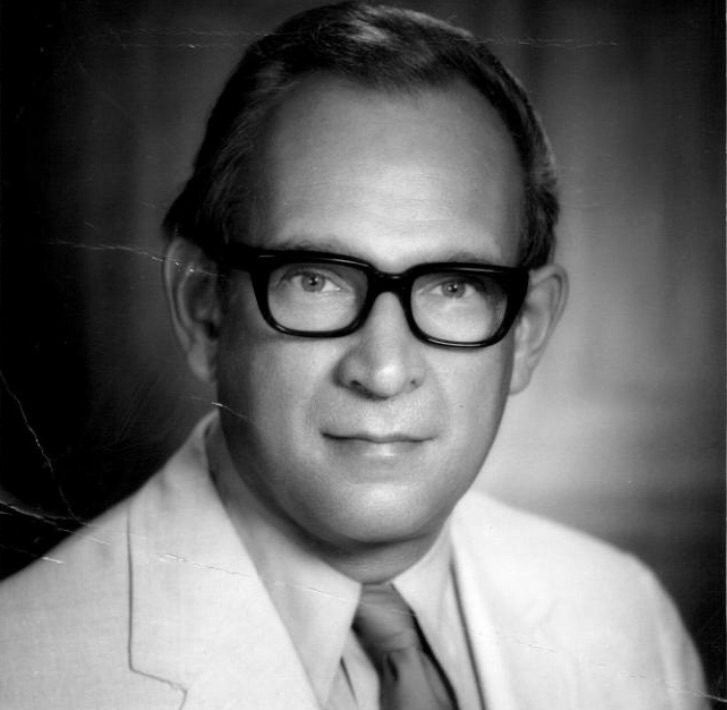
Also on June 9, James Oglethorpe received a charter from the British crown to start the Georgia colony (1732); William Jennings Bryan resigned his position as Secretary of State under Woodrow Wilson, disgusted over the handling of the sinking of the Lusitania (1915); philosopher John Hospers (pictured) — who would go on to run as a Libertarian candidate for the U.S. presidency in 1972 — was born in 1918.