Categories
Accountability national politics & policies

Up, Up and Away?

The new U.S. Space Force wants “flexibility.” It has requested from Congress the ability to purchase and use satellites and other developing technology with agility.

That is, it wants permission to follow an “alternative acquisition system” — as explained in a “23-page report to Congress from the U.S. Air Force, the current parent of the Space Force,” according to Ed Adamczyk for United Press International. Adamczyk says that “Congress mandated a retooling of the Space Force acquisition system when it created the new branch of the military in December.”

What the new Space Force yearns for certainly looks like off-budget funding of technological assets. 

The official wording speaks of a reduction in “space portfolio constraints via incremental funding,” which Adamczyk explains as an “expanded ability to pay for space systems without regular oversight or constant requests for congressional approval.” 

That, he writes, “is a constant in the report.”

The point? To “rapidly leverage industry innovation to outpace space threats.” 

While it is popular in ‘paranoid’ circles to warn of ‘one world government’ threats to form a ‘new world order,’ this is transparently a push to effect a breakaway above-world government that sure would change the balance of world power.

Scurrying further down a long and winding rabbit hole, it might also be a way to legitimize currently unconstitutional military-industrial complex programs, perhaps part of the black budget Pentagon/HUD double-digit unaccounted-for spending and income. 

Space Force is ambitious. Good. But it craves scant constraint from Congress.

Not to mention the citizens of these earthbound United States. 

Not good.

This is Common Sense. I’m Paul Jacob.


PDF for printing

See all recent commentary
(simplified and organized)
See recent popular posts

Categories
Today

Nineteen Eighty-Four

On June 8, 1949, George Orwell’s dystopian novel Nineteen Eighty-Four was published.

Categories
Thought

George Orwell

[I]f all others accepted the lie which the Party imposed — if all records told the same tale — then the lie passed into history and became truth. ‘Who controls the past,’ ran the Party slogan, ‘controls the future: who controls the present controls the past.’ And yet the past, though of its nature alterable, never had been altered. Whatever was true now was true from everlasting to everlasting. It was quite simple. All that was needed was an unending series of victories over your own memory. ‘Reality control,’ they called it: in Newspeak, ‘doublethink.’

George Orwell, Nineteen Eighty-four (1949), chapter 3.

Note: illustration by Bernd Pohlenz — CC BY-SA 3.0.

Categories
by Paul Jacob video

Watch: What’s In-Between Two Bad Systems?

Paul explores today’s situation, complete with its chaos and its power trips.

This Week in Common Sense, June 1 – 5, 2020.
Categories
Today

Founders

On June 7, 1776, Richard Henry Lee presented the “Lee Resolution” to the Continental Congress. The motion was seconded by John Adams, but was tabled for several weeks. The motion was finally passed on July 2, 1776.

During the 1916 Republican National Convention (June 7 – 10), Senator Warren G. Harding used the phrase “Founding Fathers” in his keynote address . . . and would go on using it in speeches thereafter. It caught on as a eulogistic way to refer to figures such as Thomas Jefferson and, yes, Richard Henry Lee, who orchestrated the American colonies’ break from England’s imperial monarchy.

Categories
audio podcast

Listen: What’s Between Anarchy and Tyranny?

Paul Jacob reviews the big stories of the week:

This Week in Common Sense, June 1 – 5, 2020
Categories
Today

Philosophers

June 6 marks major life events of two eminent British philosophers, Jeremy Bentham’s death* (1832) and Isaiah Berlin’s birth (1909).

Bentham was known as a “philosophical radical” and a major influence on the British utilitarian tradition. He authored numerous books, including Defence of Usury (1787) and An Introduction to the Principles of Morals and Legislation (1789). Bentham started out advocating for laissez faire, became obsessed with his own specially designed prison design, the Panopticon, and argued for feminism and animal rights in public but kept his defense of homosexual rights private, to be published long after his death. His treatise on ethics, Deontology: Or, the Science of Morality, in Which the Harmony and Co-incidence of Duty and Self-Interest, Virtue and Felicity, Prudence and Benevolence, Are Explained and Exemplified, was published from his manuscripts two years after his death.

Berlin was best known for several dozen brilliant essays, including the famous, much-quoted “The Hedgehog and the Fox” (a study of Leo Tolstoy) and “Two Concepts of Liberty.”


* Pictured is his remains as housed in a special “closet” in the London Academy. Bentham specified this in his will, and he called this manner of posthumous presentation an “auto-icon.”

Categories
Thought

Walter Bagehot

It is good to be without vices, but it is not good to be without temptations.

Categories
general freedom U.S. Constitution

Thoughts in Slo-Mo

“Oh my God,” my wife gasped after that eerie instant of calm when things stopped. She told me to call 911 just as I was pressing “9.”

We had been navigating the less-than-usually-clogged interstates up the East Coast when suddenly dirt and debris swept across the asphalt. As we quickly stopped, a small vehicle flipped back onto Interstate-84, rolling over twice, throwing its occupant — a 21-year-old woman — out of the car and onto the road some 30 feet in front of us.

As another man and I got to her, we saw she was breathing. Thankfully, a nurse came forward from the traffic, which would be stopped for hours. Within minutes, emergency personnel were on the scene.

The woman was airlifted to a hospital; she later died. 

Those slow-motion seconds of the accident stay with me, along with the surrealism of the aftermath, standing on a stopped superhighway — helpless — feeling amazingly connected to someone’s precious life. 

And death.

Back on the road, after giving a statement to police, my wife wondered aloud if, what with the current pandemic, the young woman’s parents would even be able to get into the hospital to see her.

Throughout this coronavirus crisis we have heard stories of people dying all alone because of policies designed to “keep us safe” — by keeping relatives and even spouses out. 

We like safety, but if either my wife or I lies dying in a hospital, regardless of the COVID-19 risk, each of us would wish to be with the other.

It’s “till death do us part,” not “till quarantine do us part.”

This is Common Sense. I’m Paul Jacob.


PDF for printing

See all recent commentary
(simplified and organized)
See recent popular posts

Categories
Thought

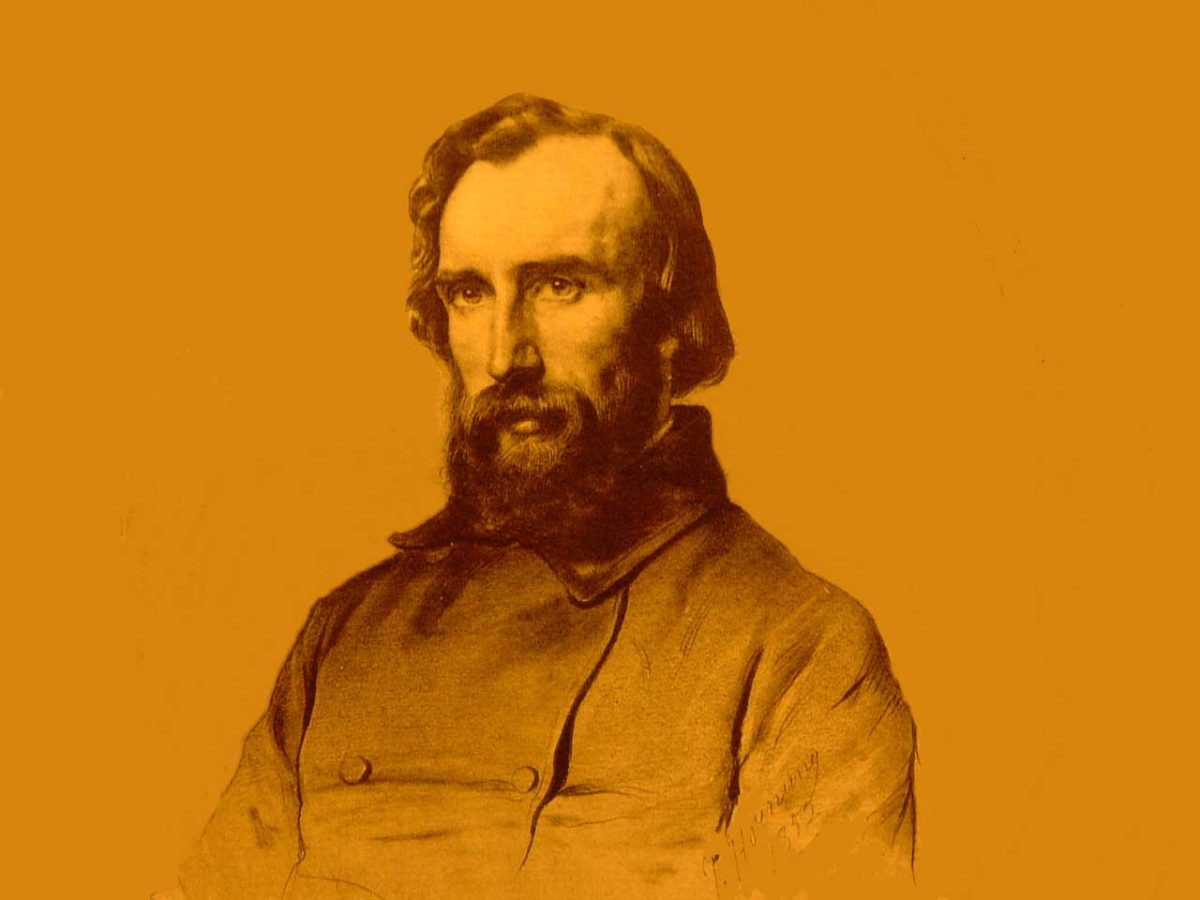
Henri-Frédéric Amiel

Habits count for more than maxims, because habit is a living maxim, becomes flesh and instinct. To reform one’s maxims is nothing: it is but to change the title of the book.

Henri-Frédéric Amiel (1821-1881), Swiss philosopher, poet and critic. Journal Intime (1882)