Categories
Today

Judiciary Act

On September 24, 1789, the United States Congress passed the Judiciary Act, creating the office of the United States Attorney General and the federal judiciary system, and ordered the composition of the Supreme Court of the United States.

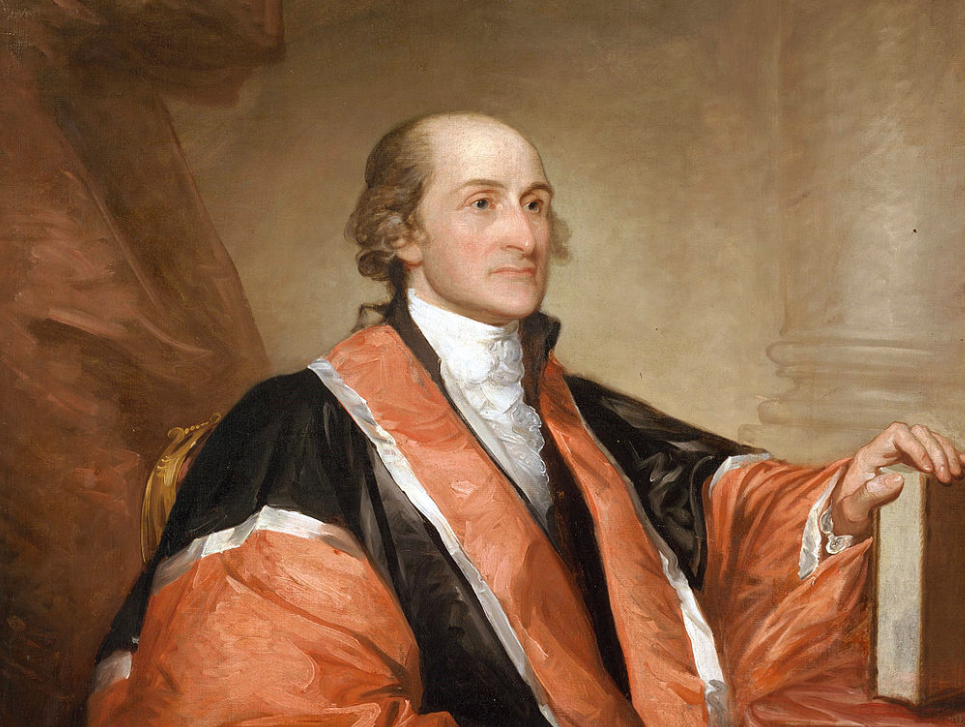
On the same day that President George Washington signed the bill into law, he officially nominated John Jay to the new position of Chief Justice of the Supreme Court. Jay (pictured in his official portrait, above) served in that position until 1795, when he resigned to take up his elected position as second governor of the State of New York. The Supreme Court heard only four cases during Jay’s Chief Justiceship; Jay refused to consult, officially, on legislation written by Alexander Hamilton, establishing the precedent that the Supreme Court has followed to this day: the Court would only rule on cases tried before it.

Categories
Thought

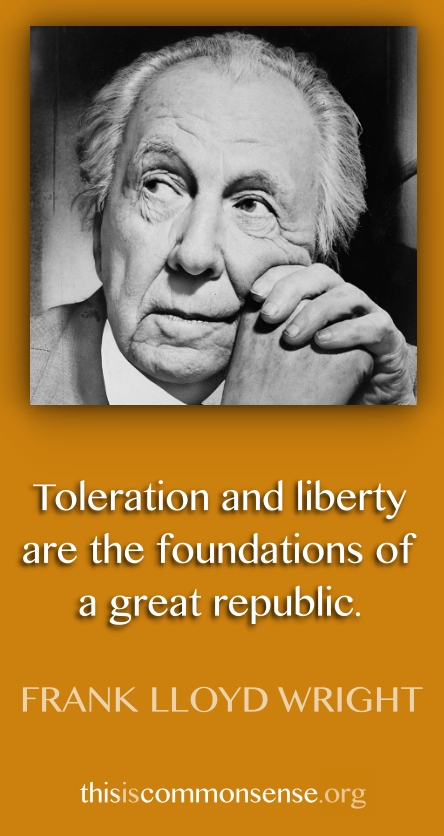
Frank Lloyd Wright

Toleration and liberty are the foundations of a great republic.

Categories
tax policy

Just Never Satisfied

The top federal income tax rate is currently 37 percent.

It’s been higher — 94 percent at one point during the Second World War, 91 percent in the 1950s . . . on income above a certain threshold.

Back in the 1890s, the federal government briefly taxed income at 2 percent. It was quickly struck down by the U.S. Supreme Court as unconstitutional. 

Those were the days.

In 1913, the 16th Amendment was ratified, giving Congress “power to lay and collect taxes on incomes” overriding the constitutional provisions that the high court had cited in 1895. The first federal rates were 1 percent for the lowest income bracket, 7 percent for the top bracket, on income above $500,000.*

By 1916, the lowest percentage was 2, the highest 25, on income above $2,000,000.

The good news: skyward tax rates aren’t set in stone. The bad news: once a precedent for a new tax has been established, you can expect worse to come.

So what happens if California Assemblyman Rob Bonda gets his way? He seeks a tax of “just” 0.4 percent on the accumulated wealth of “just” “the top 0.15%” wealthiest Californians, “about 30,000 people.” If these wealthiest leave the state, they would still be subject to the tax for ten years(!). 

Presumably, this latter, and quite brazen, aspect of an already brazen tax would be subject to constitutional challenges.

If Bonda’s proposal is enacted and upheld, would the scope of its reach stay put at 0.4 percent of holdings and 0.15 percent of Californian taxpayers?

It would not.

This is Common Sense. I’m Paul Jacob.


* That was a lot of money back then — worth $13 million today.

PDF for printing

Categories
Thought

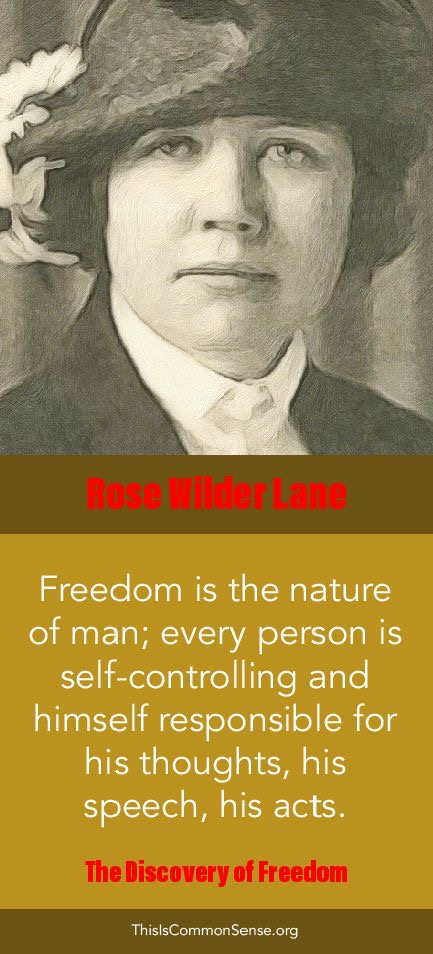
Rose Wilder Lane

Freedom is the nature of man; every person is self-controlling and himself responsible for his thoughts, his speech, his acts.

Rose Wilder Lane, Discovery of Freedom: Man’s Struggle Against Authority (1943).
Categories
Today

Sweden minus Norway

On September 23, 1905, Norway and Sweden signed the “Karlstad treaty,” peacefully dissolving the union between the two countries.

Categories
ballot access initiative, referendum, and recall Voting

Worms for Early Bird Voting?

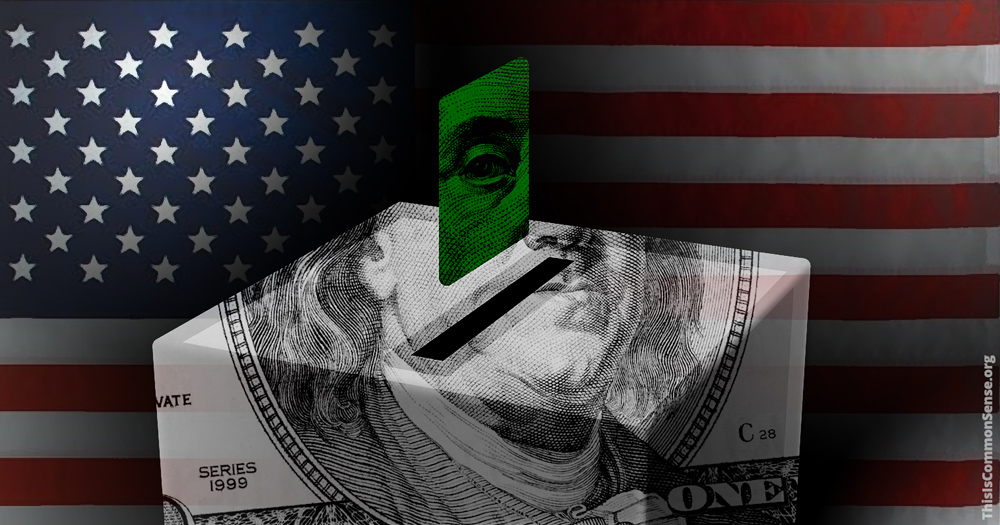
Election Day is six weeks away. Yet, in my home state of Virginia, voting began last week.

Is it responsible to cast a ballot so early? 

You may know with metaphysical certainty how you’re voting for president — even in the event of some major cataclysm — but have all the state rep and city council and ballot measure campaigns also played out fully enough for you?

Here in Virginia, we get few candidate races in our split-up state and federal elections, much less ballot issues to decide. I could have made all my (very few) choices months ago. But I trust that in a more competitive and healthy representative democracy we would more want to hear out the candidates.

A lot can happen in six weeks. And you cannot change your vote once it’s cast.*

The new Democratic-controlled Legislature — in reaction to the pandemic, to prevent crowding at the polls — expanded the early voting period this year. It started September 18 and ends October 31.** 

There are costs to expanding early voting — including making campaigns more expensive to run and win. Disabled from marshaling advertising into a two-or-three-week period before the vote, campaigns are forced to sustain publicity for a month. Or longer. 

While better-funded incumbents have little difficulty with the added cost, it cripples challengers. It especially handicaps grassroots ballot initiative proponents battling public employee unions or the Chamber of Commerce. 

Make the voting process comfortable and easy for citizens. But let’s be certain not to make it comfortable and easy for incumbents and special interests.

This is Common Sense. I’m Paul Jacob.


* In Sweden, you can change your early vote, informs my friend Bruno Kaufmann, a journalist and direct democracy advocate. They call it “second voting.” 

** Though several other states routinely allow more than six weeks of early voting.

PDF for printing

See all recent commentary
(simplified and organized)
See recent popular posts

Categories
Thought

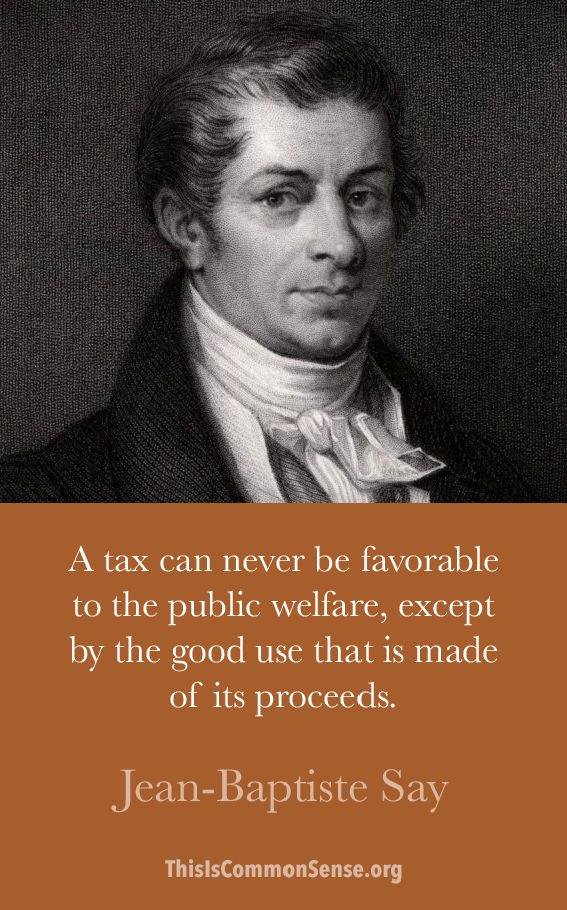
Jean-Baptiste Say

A tax can never be favorable to the public welfare, except by the good use that is made of its proceeds.

J.-B. Say, A Treatise On Political Economy (Fourth Edition, 1832), Chapter XVII, Section I, p. 168.
Categories
Today

Emancipation proclaimed

On September 22, 1862, U.S. President Abraham Lincoln issued a preliminary proclamation that he would order the emancipation of all slaves in any state of the Confederate States of America that did not return to Union control by January 1, 1863. None returned, and the subsequent order, signed and issued January 1, 1863, took effect except in locations where the Union had already mostly regained control.

Categories
judiciary national politics & policies

Yes, We Can

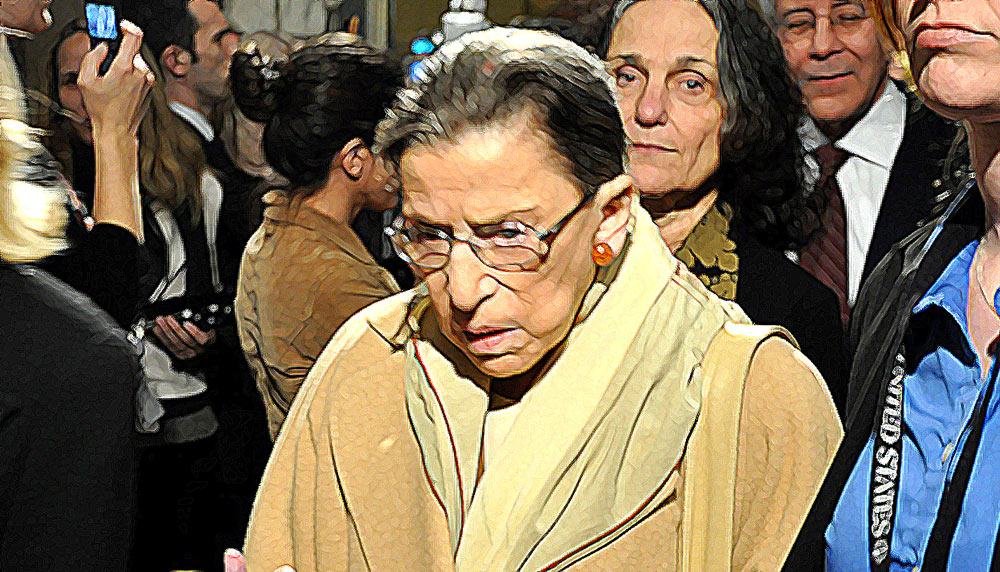
“She was an amazing woman, whether you agree or not,” a visibly saddened President Trump offered reporters upon hearing that Supreme Court Justice Ruth Bader Ginsberg had passed away. She had “led an amazing life,” he added.

Not amazing enough, however, to nudge Mr. Trump to wait and let the next president nominate Ginsberg’s successor — either himself or a coin toss between Joe Biden and Kamala Harris should Democrats win. 

That delay was reportedly the justice’s dying wish.

The president’s opponents would certainly prefer that, too, but Trump vows to quickly name his third High Court replacement. 

And why not? There is a vacancy; he has the constitutional power. 

Sure, Republican senators will be charged with hypocrisy. And accurately, because they blocked President Obama’s 2016 pick of Merrick Garland, claiming the voters should decide by choosing the “next president.” Just as Senate Democrats will be orating the opposite of what they said four years ago.

Hypocrisy is as close to half-right as folks in Washington ever seem to get.

But what should you want your so-called representative who currently takes up space in the U.S. Senate to do now?

Same as always: The right thing. 

Unfortunately, not likely. 

Always hyping violations of “democratic norms,” it may be the Democrats threatening (again) to blow up the democratic norm of a stable Court. In a Washington Post op-ed, attorney and journalist Jill Fillpovic urged Democrats to “pack the court” if Republicans move ahead in confirming a justice and Democrats win the White House and Senate this November. Though, she advises, “if they’re smart, Democrats will find a more palatable [term].” 

How about a more palatable approach than a Year Zero re-making of the SCOTUS every time party control of the White House and Senate changes?

This is Common Sense. I’m Paul Jacob.


PDF for printing

See all recent commentary
(simplified and organized)
See recent popular posts
Categories
Today

Santa Claus

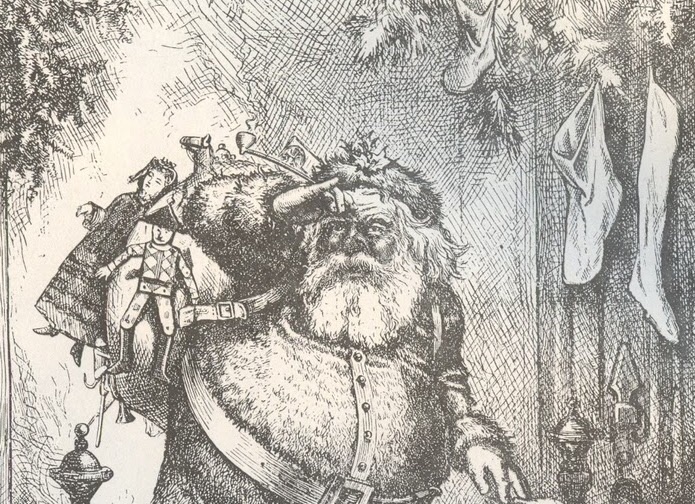
On September 21, 1897, the “Yes, Virginia, there is a Santa Claus” editorial was published in the New York Sun. Note how long before Christmas this is. The Christmas season has long been a long affair.