On April 20, 1657, freedom of religion was granted to the Jews of New Amsterdam (which was later renamed New York City).
Categories
New Amsterdam
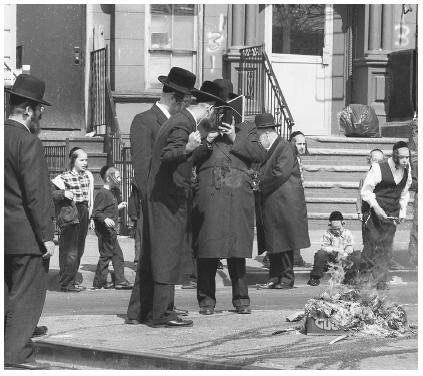
On April 20, 1657, freedom of religion was granted to the Jews of New Amsterdam (which was later renamed New York City).

Declaring a coming end to “the forever war,” President Joe Biden announced last week that U.S. military forces will be leaving Afghanistan by September 11th* — a four-month-and-ten-day delay from the May 1 deadline that was set for troop withdrawal by the Trump Administration last year.
“Apparently, we’re to help our adversaries ring in the anniversary of the 9-11 attacks, by gift-wrapping the country and handing it right back to them,” chided Minority Leader Mitch McConnell from the Senate floor.
But wait a second . . . McConnell knows that negotiating for the enemy Taliban, the horrific human rights violator and sponsor of terrorism, to put down arms and join the government to share power has been the U.S. policy objective from the Obama Administration’s embrace in 2013 to the Trump Administration actually inking the agreement.
Dealing the Taliban back into the political mix, after having gone to war to dislodge them, never made sense. But neither does an ad infinitum military occupation seem rational . . . chewing up generations of soldiers until Afghanistan miraculously metamorphoses into a sustainable democracy. Two decades of U.S. nation-building offer no serious promise that the mission could be accomplished in another decade.
Or two.
Or ever.
Plus, plugging the problem in Afghanistan has not worked more broadly. “The terrorist threat has changed dramatically since we went to war in Afghanistan 20 years ago,” National Security Advisor Jake Sullivan explained. “Al-Qaeda is in Yemen and Syria and Somalia. ISIS is across that border region in Iraq and Syria and in multiple countries in Africa.”
Policy futility is a bad thing. Recognizing it is good.
This is Common Sense. I’m Paul Jacob.
See all recent commentary
(simplified and organized)
See recent popular posts
When it comes to big government secrets, we usually only learn the truth after it becomes irrelevant.
Richard M. Dolan, on his YouTube channel.
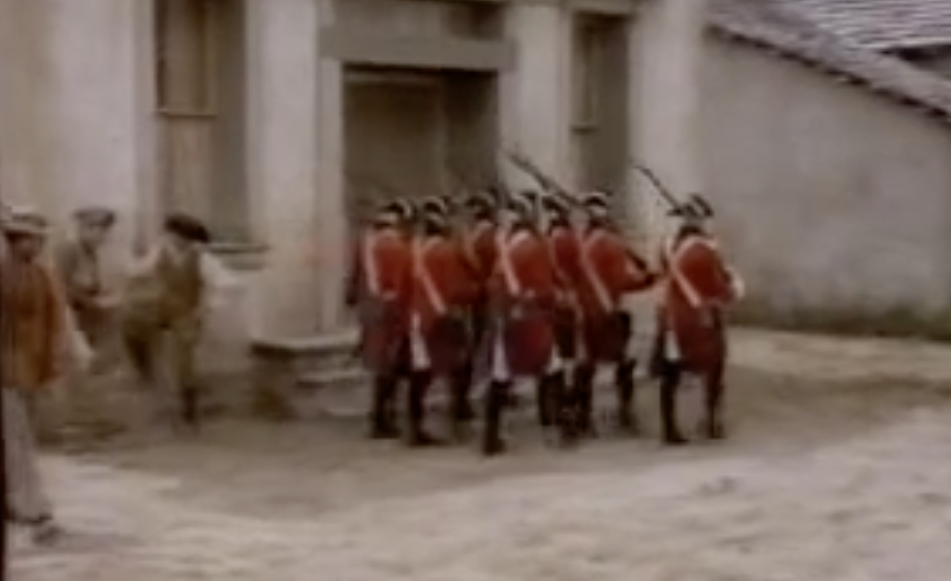
On April 19, 1775, the American Revolution began when the “shot heard around the world” was fired between the 700 British troops on a mission to capture Patriot leaders Sam Adams and John Hancock and to seize a Patriot arsenal and the 77 armed minutemen under Captain John Parker waiting for them on the Lexington town green. The Battle of Lexington ended with eight Americans killed and ten wounded, along with one wounded British soldier.
In Concord, a couple of hours later, British troops were encircled by hundreds of armed Patriots. The British commander ordered his men to return to Boston without directly engaging the Americans, but on the 16-mile journey they were constantly attacked by Patriot marksmen firing at them Indian-style from behind trees, rocks, and stone walls. By the time the British reached the safety of Boston, nearly 300 soldiers had been killed, wounded, or were missing in action. The Patriots suffered fewer than 100 casualties.
On April 19, 1782, John Adams secured the Dutch Republic’s recognition of the United States as an independent government.

If, as I believe, the ends of men are many, and not all of them are in principle compatible with each other, then the possibility of conflict — and of tragedy — can never wholly be eliminated from human life, either personal or social. The necessity of choosing between absolute claims is then an inescapable characteristic of the human condition. This gives its value to freedom as Acton conceived of it — as an end in itself, and not as a temporary need, arising out of our confused notions and irrational and disordered lives, a predicament which a panacea could one day put right.
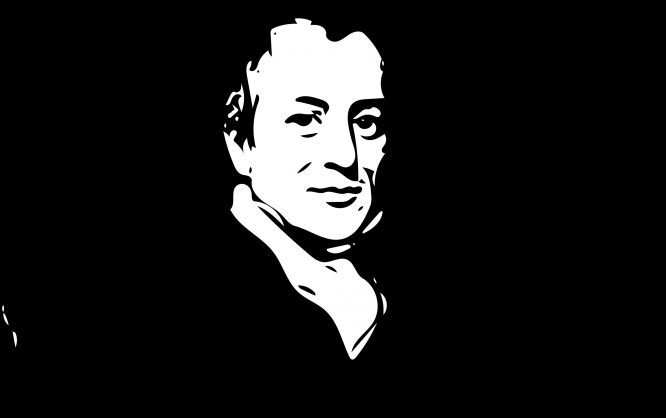
April 18 marks the 1772 birthday of David Ricardo, English political economist and one of the most influential thinkers in economic theory. An advocate for free trade and the abolition of slavery, Ricardo’s most famous work is his Principles of Political Economy and Taxation (1817).
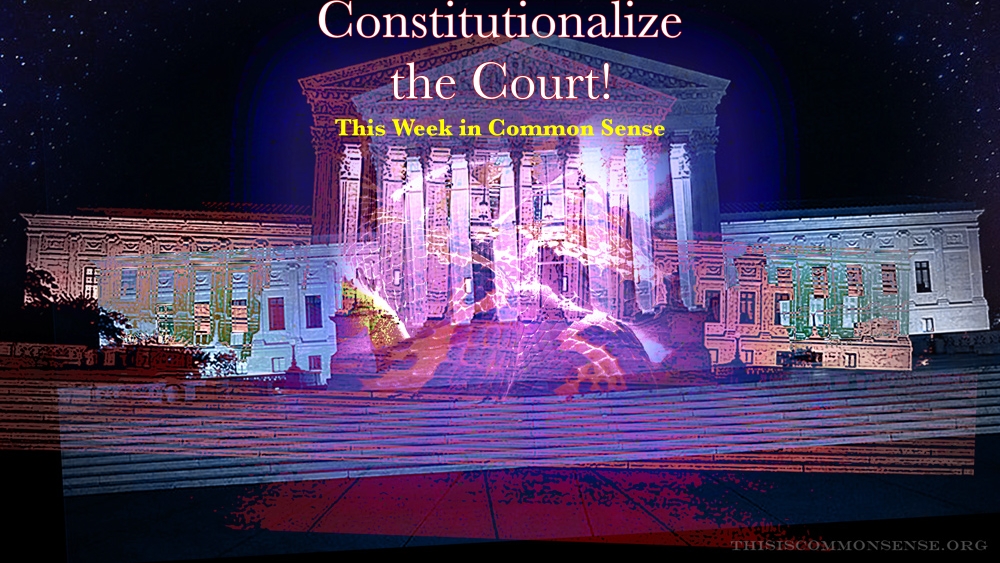
Paul recaps the biggest stories of the week, starting with the Supreme Court and politics:

Some stories linger in the background, under-acknowledged, never really addressed, driving us a bit crazy.
Example? Deficit spending and debt accumulation.
The problems that deficit financing inflicts upon us are many and devastating. We would be a lot wealthier, healthier, and wiser were the federal government not so madly out-of-control. We could invest in all sorts of great things, and prices would be more stable, and . . . and . . . and . . .
But what can we do about it?
It’s not obvious. So we don’t talk about it much.
And the debt only grows, with destructive hyperinflation looming as an ever-increasing danger.
The other under-discussed story is even more disturbing — so we ignore it even more studiously.
Within the last several years headlines in The New York Times and on TV have covered it, yet . . . very few people talk about it, despite the startling revelations.
The issue? UFOs — a strange subject at face value, which, once you poke into it, gets even weirder.
We level-headed yokels used to deny the existence of UFOs, but now the Pentagon has confirmed their persistent plaguing of Navy jets and seacraft, and the Army has acknowledged its ongoing study of UFO-derived “meta-materials.”*
In June, the Senate will be briefed on the subject, per instructions in a recent stimulus bill. (Which brings us back to our first blank-out issue.) Meanwhile, as we wait for what could be big news, new revelations of repeated incursions by UFOs against a Navy fleet 100 miles off the California coast back in 2019 appear in specialty media** but barely make a ripple in major media.
Wait — Fox just featured a segment on a Pentagon confirmation of flying pyramids!
Will we make headway on UFOs before the debt?
This is Common Sense. I’m Paul Jacob.
* French scientist and UFO researcher Jacques Vallee is also engaged in research on UFO-site-retrieved mystery alloys.
** See Richard Dolan discuss these recent Channel Island incursions, based chiefly on the report in The Warzone.
See all recent commentary
(simplified and organized)
See recent popular posts
previously on Common Sense with Paul Jacob:
It’s Aliens (May 30, 2019)
The Whys Behind the Whats (June 25, 2019)
Stranger Things 2019 (January 2, 2020)
Two Conspiracies Unearthed (December 10, 2020)
Why We Still Live (December 18, 2020)
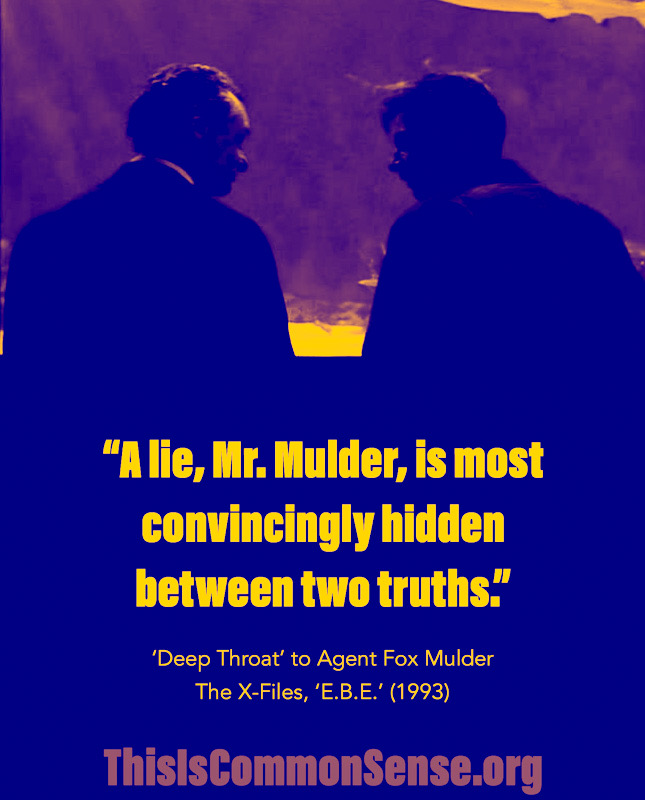
Deep Throat to FBI agent Fox Mulder The X-Files in the first season episode, “E.B.E.” (1993), written by Glen Morgan and James Wong.
A lie, Mr. Mulder, is most convincingly hidden between two truths.