Useless laws weaken the necessary laws.
Categories
Charles de Montesquieu
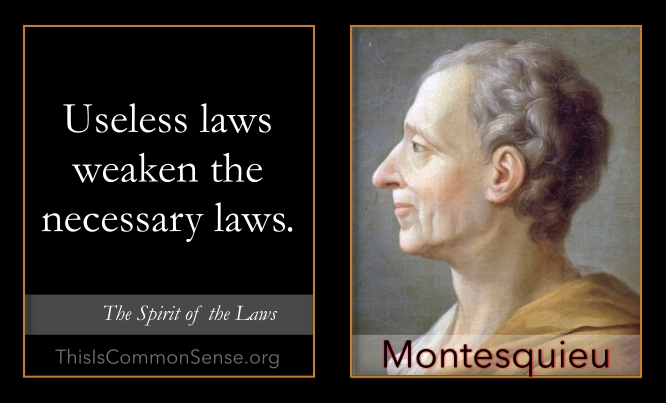
Useless laws weaken the necessary laws.

Has our ‘wife, mother, and daughter’ betrayed us?
In late March, Dr. Rochelle Walensky, the head of the CDC, went off-script (her words), reflecting on what she called her “recurring feeling” of “impending doom.”
COVID case numbers were up. “We have so much to look forward to, so much promise and potential of where we are and so much reason for hope,” she said. “But right now I’m scared.”
You might think this is no way to lead a country in a crisis — after all, she had just been given the top job at the Centers for Disease Control.
“I’m speaking today not necessarily as your CDC director,” she pressed on National Public Radio, “not only as your CDC director but as a wife, as a mother, as a daughter to ask you to just please hold on a little while longer.”
Last Monday, Dr. Walensky “first signed off on changing her agency’s mask guidance,” The Washington Post reported, only to continue “to defend the CDC’s sweeping guidance that Americans wear masks in public, including in a Senate hearing Tuesday,” before Thursday’s announcement that the vaccinated don’t need to go about wearing masks, indoors or outdoors, for their own sake or others’.
The policy lurch leaves us in some weird territory. If the vaccinated may go about un-masked, then the unvaccinated should remain masked — yet it remains illegal (courtesy of HIPAA regulations) for businesses to ask about our medical records. Which implies, for want of enforcement, the controversial (and unwanted) “vaccine passport” idea.
Further, many who have endured the disease claim immunity. Others who have had COVID, like Dr. Jordan Peterson, took the jab because they were told their immune levels were too low.
But “the science” on that is far from settled.
Thankfully, the CDC is not really in the regulation business. And increasingly Americans on all sides are ignoring Walensky, Fauci and Co.
This is Common Sense. I’m Paul Jacob.
See all recent commentary
(simplified and organized)
See recent popular posts
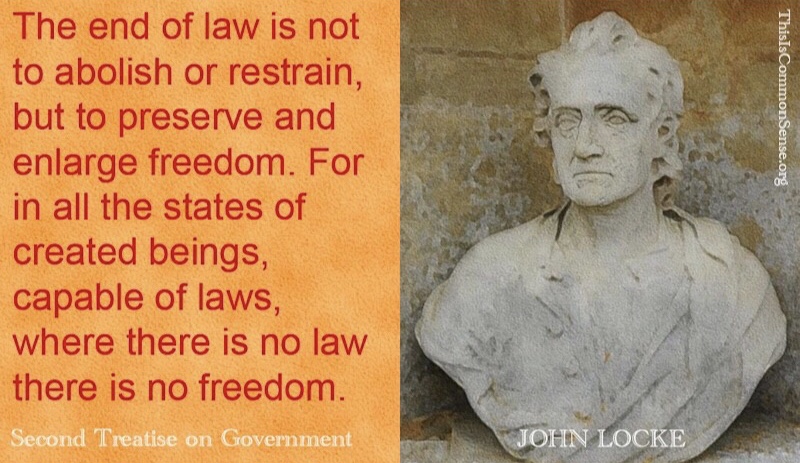
The end of law is not to abolish or restrain, but to preserve and enlarge freedom. For in all the states of created beings, capable of laws, where there is no law there is no freedom.
John Locke, Second Treatise on Government

On May 19, 1897, Irish author, playwright, and poet Oscar Wilde (October 16, 1854 – November 30, 1900) was released from Reading Prison, where he had finished, in ill health, his hard labor sentence for “gross indecency.” His “Ballad of Reading Gaol,” first published pseudonymously in a periodical with wide circulation amongst criminals, quickly achieved the status of a
He died less than three years later, in exile in Europe. His most famous works include the play The Importance of Being Earnest, the novel The Picture of Dorian Gray, and the fascinating essay “The Soul of Man Under Socialism.”

On May 18, 1652, Rhode Island passed the first law in English-speaking North America making slavery illegal.
On May 18, 1593, playwright Thomas Kyd’s accusations of heresy led to an arrest warrant for fellow playwright Christopher (“Kit”) Marlowe.
Kyd was the famed author of The Spanish Tragedy, and Kit Marlowe [pictured] was known for a number of plays, including The Jew of Malta and The Tragicall History of the Life and Death of Doctor Faustus.
Marlowe died a few weeks later, on May 30, without having been arrested. The circumstances of his death were bizarre, suspicious — as if written by a playwright.

Florida Governor Ron DeSantis is pardoning mask and social-distancing scofflaws.
He says the pandemic mitigation rules amount to overreach. “These things with health should be advisory, they should not be punitive.”
I agree. But could he (and other governors) do more to help non-criminals?
At Reason.com, Billy Binion argues that there’s lots of over-criminalization that DeSantis could tackle. Consider the drug war. If you’re arrested in Florida for possessing up to 20 grams of pot, you “face a $1,000 fine and up to a year in prison”; more than 25 grams, three to 15 years in the hoosegow.
DeSantis rejects the idea of legalizing recreational cannabis, so his “overreach” critique of public health law is limited.
Severely.
Yet it is not as if the states don’t take numerous punitive actions against persons guilty only of naivety, carelessness, or being in the wrong place at the wrong time:
That latter problem, of civil asset forfeiture, would be tricky to fix at the back end, since if you’re not arrested for having the money, you can’t exactly be pardoned. But surely chief executives could take other actions to right such obvious wrongs.
Any state governor (or president) could do worse than spend, say, half of his or her time issuing pardons and finding other ways to help people caught by unjust government snares.
This is Common Sense. I’m Paul Jacob.
See all recent commentary
(simplified and organized)
See recent popular posts
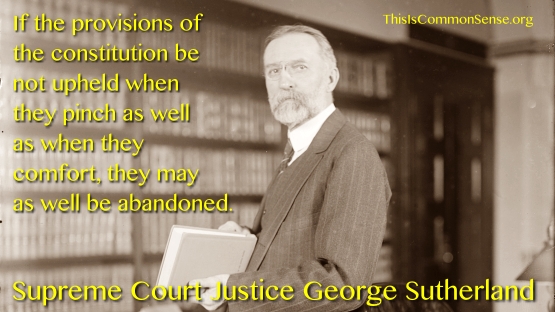
If the provisions of the constitution be not upheld when they pinch as well as when they comfort, they may as well be abandoned.
Associate Justice George Sutherland, Home Building & Loan Association v. Blaisdell, 290 U.S. 398, 483 (1934).
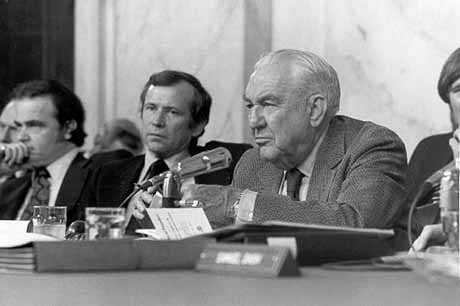
On May 17, 1973, televised hearings regarding the Watergate scandal began in the United States Senate. Sen. Sam Ervin chaired.
Little did participants know that the name of the hotel in which the White House-arranged break-ins occurred would provide a template for most future political scandals: “-gate” would be suffixed to nearly every other possible designator of scandal. The Democratic vendetta against Republican Donald Trump for winning the 2016 election has been called “Russiagate,” for example.
And on May 11, 2020, Trump retweeted a previous post with one additional word: “OBAMAGATE!”
This could be called a “suffix meme.” Or “insufferable meme,” if you prefer.

“I felt a great disturbance in the Force, as if millions of voices suddenly cried out in terror and were suddenly silenced.”
That’s Obi-Wan Kenobi’s line in the original Star Wars movie, sensing that the Empire’s Death Star had obliterated all the inhabitants of the Planet Alderaan.
It popped into my mind on Friday, after learning of the ruling handed down by the Mississippi Supreme Court that not only strikes down a medical marijuana ballot initiative passed by voters last November but “judicially kills Mississippi’s citizen initiative process,” as Justice James Maxwell wrote in his fiery dissent.
The Magnolia State’s entire initiative process has been destroyed.
When the direct citizen initiative process was enacted, in 1992, Mississippi sported five congressional representatives. The constitutional provision setting out how to qualify an initiative was worded to allow only “one-fifth” of the required petition signatures to come from any of the state’s five congressional districts (CDs). After the 2000 census, however, the state lost a congressional seat. Now with only four, simple math does not allow a way to get the prescribed balance of signatures.
Talk about a catch-22!
State officials just kept using their old maps with five CDs for ballot initiatives in order to comply with the letter of the law. But the court says that does not suffice.
Only a constitutional amendment can restore this citizen check on politicians, and after the court’s ruling, only the legislature can place that amendment on the ballot.
“Legislative leaders have not said clearly why they have not updated the initiative process in the 20 years since Mississippi lost a congressional district,” the Jackson Clarion Ledger reported Friday.
That’s simple: They don’t want citizens to have a check on them.
Can citizens strike back?
This is Common Sense. I’m Paul Jacob.
Note: Mississippi voters first passed an initiative and referendum process in 1914 and the state supreme court upheld the validity of the process against a legal challenge in 1916. But after a 1922 initiative ruffled establishment feathers, the state supreme court reversed its earlier ruling and struck down the process in total. It was not until 70 years later, that the legislature would act to restore some measure of citizen initiative.
starry sky /space ship / flag / JGill / 🎨
See all recent commentary
(simplified and organized)
See recent popular posts
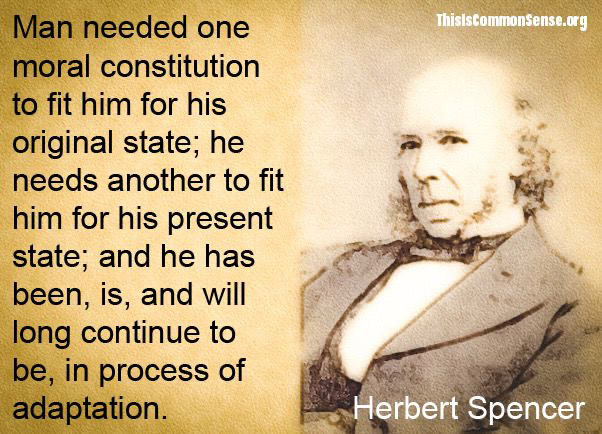
Man needed one moral constitution to fit him for his original state; he needs another to fit him for his present state; and he has been, is, and will long continue to be, in process of adaptation.
Herbert Spencer, Social Statics: or, The Conditions essential to Happiness specified, and the First of them Developed, (London: John Chapman, 1851), Pt. I, Ch. 2 : “The Evanescence of Evil,” from the concluding paragraph.