Categories
ideological culture partisanship

Authoritarian Ardor

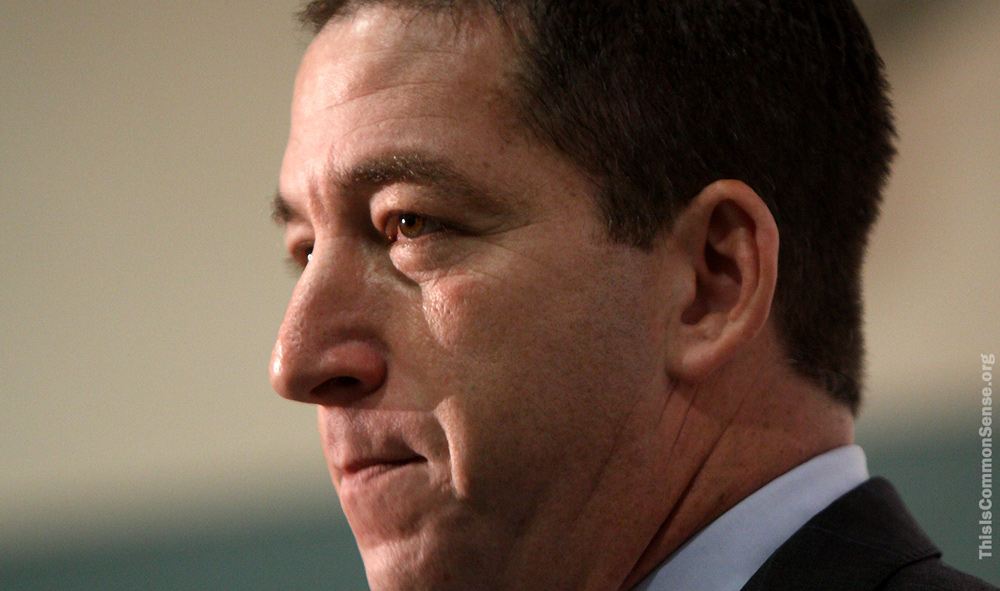
Glenn Greenwald calls it a “mountain of data.” 

On his Rumble account, “System Update,” the journalist shows “how authoritarian self-identified followers of the Democratic Party have become.”

While admitting that “authoritarian tendencies” are in every group, Greenwald insists that “when you examine this data . . . and really compile it, and look all at once at it, it is extraordinary — no matter how low your expectations are of Democrats — how authoritarian they have become, particularly in the wake of the Trump years.”

Citing Pew Research from August, the well-known reporter begins by showing how opinions on free speech have diverged over the last three years: while Republicans wanting the federal government to “take steps to restrict false info online” declined from 37 percent to 28 percent, Democratic support rose from 40 percent to 65 percent. 

And the itch to have tech companies do the dirty work for the federal government “even if it limits freedom of info” shows the same spread: R’s went down 9 points and D’s went up a whopping sixteen!

Greenwald also explores Democrats’ enduring affection for corporate media news, how enthusiastic Democratic politicians are for curbing the basic rights of their political opponents, and how much ardor Democrats show the CIA and the FBI.

All the data, Greenwald insists, shows Democrats getting “more authoritarian by the minute.”

Why?

It might best be looked at in an insider/outsider context. Democrats are becoming more authoritarian because it is their hold on power that they are defending, and Republicans are reacting against that stranglehold. An old principle may be at work: outside of power, people tend to demand freedom; inside, they demand more power.

Authoritarianism is more appealing to insiders, viewing themselves as “authorities.”

This is Common Sense. I’m Paul Jacob.


PDF for printing

Greenwald

See all recent commentary
(simplified and organized)
See recent popular posts
Categories
Thought

Hermann Hesse

Only the ideas that we actually live are of any value.

Hermann Hesse (1877-1962), Demian (1919).

Categories
Today

American boundaries

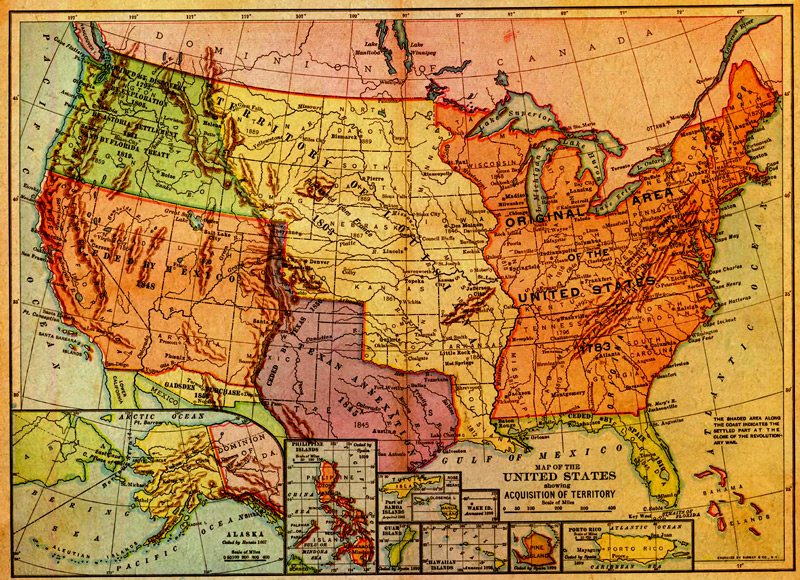
On October 20, 1803, the United States Senate ratified the Louisiana Purchase.

Exactly 15 years later, the Convention of 1818 signed between the United States and the United Kingdom which, among other things, settled the Canada-United States border on the 49th parallel for most of its length.

Categories
education and schooling general freedom government transparency

Virginia is for Parents?

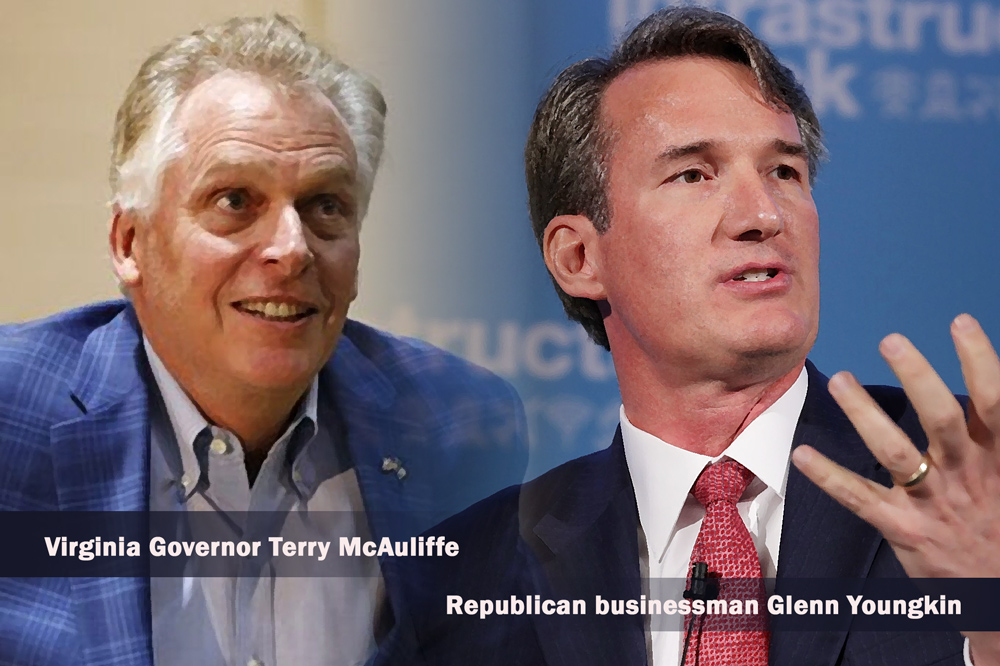
Virginia’s governor’s race offers 2021’s biggest prize. Might the outcome of the contest between former Governor Terry McAuliffe, the old Clinton pal, and Republican businessman Glenn Youngkin, portend partisan momentum going into 2022? 

In just the last dozen years or so, my adopted commonwealth has mutated politically from “Deep Red to Solid Blue.” There is, the FiveThirtyEight polling website explains, “a 13-election winning streak for Democrats in Virginia statewide races since 2012.” Though the McAuliffe/Youngkin race is “somewhat likelier to result in a Democratic victory,” it “could go either way.”

The biggest flashpoint? McAuliffe’s statement at the final debate: “I don’t think parents should be telling schools what they should teach.” 

I quoted that last week in “Burning Down the House.” But in a comment, a reader named Doug argued that I was “taking McAuliffe’s comment totally out of context.” 

Now, McAuliffe’s words had been widely reported in precisely the fashion I had placed them, so I felt comfortable. But I had not listened to the entire exchange, specifically to what McAuliffe was responding. So I listened.

“What we have seen over the course of the last 20 months,” Youngkin told the debate audience, “is our school systems refusing to engage with parents.” Noting how he had spoken with parents upset about “sexually explicit material,” Youngkin charged that McAuliffe “vetoed the bill that would have informed parents” about those materials.

“I believe parents should be in charge of their kids’ education,” concluded Youngkin.

In response, McAuliffe called Youngkin “clueless” and then famously dissed parents.

“School boards are best positioned,” McAuliffe wrote in vetoing that 2016 legislation, “to ensure that our students are exposed to those appropriate literary and artistic works that will expand students’ horizons and enrich their learning experiences.”

Whether their parents like it or not.

This is Common Sense. I’m Paul Jacob.


PDF for printing

See all recent commentary
(simplified and organized)
See recent popular posts
Categories
Thought

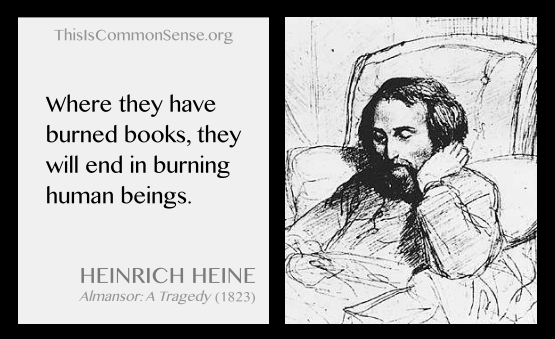
Heinrich Heine

Where they have burned books, they will end in burning human beings.

Heinrich Heine, Almansor: A Tragedy (1823).
Categories
Today

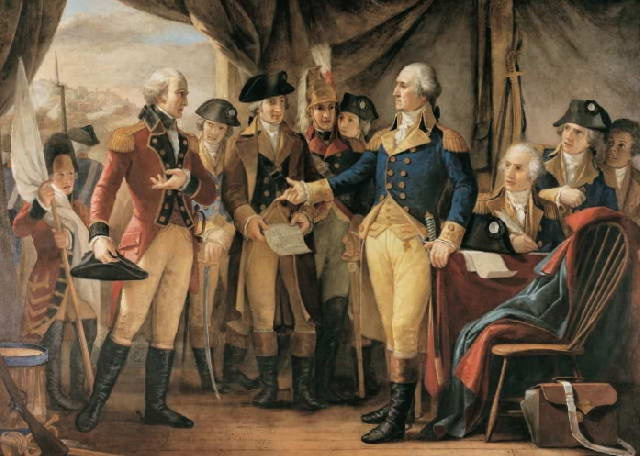
Cornwallis Surrenders

On October 19, 1781, representatives of British commander Lord Cornwallis handed over Cornwallis’s sword and formally surrendered to George Washington and the comte de Rochambeau, at Yorktown, Virginia. The Revolutionary War (or War for Independence, or Colonial Rebellion, or whatever you wish to call it) was over.


In 1918 on this date, conservative writer Russell Kirk was born.

Categories
crime and punishment

To Emancipate

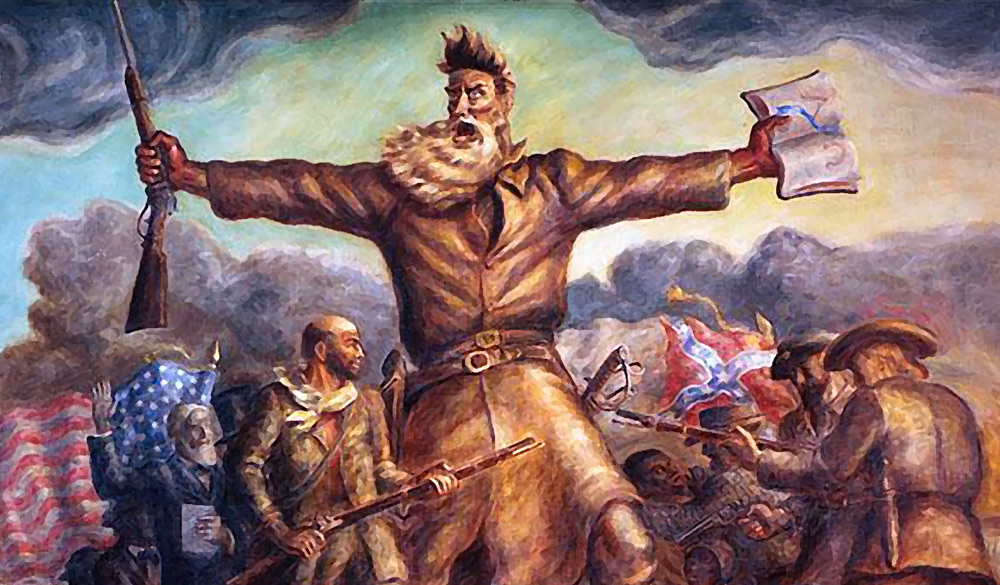
On this very day 162 years ago, federal troops re-captured the armory building at Harpers Ferry, Virginia, where John Brown and what was left of his raiders were holed up. 

Brown and 21 men — 14 white, seven black — had arrived on Oct. 16, 1859, to seize weapons to arm the slave revolt they attempted to spark. Even before federal troops arrived, townspeople and militiamen had trapped Brown.

Battling against the raiders, a Marine and four townspeople lost their lives, including the town’s mayor and a free African American. Ten of Brown’s men were killed, five escaped, and seven were captured, tried, convicted and executed, including Brown. Two enslaved African Americans who joined Brown also died in the fighting. 

Though the raid itself was a failure, it heralded that slavery could not stand.

“Until this blow was struck, the prospect for freedom was dim, shadowy and uncertain,” Frederick Douglass spoke decades after the Civil War ended. “The irrepressible conflict was one of words, votes and compromises.

“When John Brown stretched forth his arm the sky was cleared. . . . and the clash of arms was at hand.”

School kids learn that Brown was something of a madman, and indeed he was accused of atrocities in Kansas and elsewhere. But how long must a person allow a crime as serious as the enslavement of 4 million people to continue before taking up arms?

“It was his peculiar doctrine that a man has a perfect right to interfere by force with the slaveholder, in order to rescue the slave,” argued Henry David Thoreau in “A Plea for Captain Brown,” adding, “I agree with him.”

Peaceful democratic means are always preferred over violence. But had I been on John Brown’s jury, I would have voted to acquit.

This is Common Sense. I’m Paul Jacob.


PDF for printing

See all recent commentary
(simplified and organized)
See recent popular posts
Categories
Thought

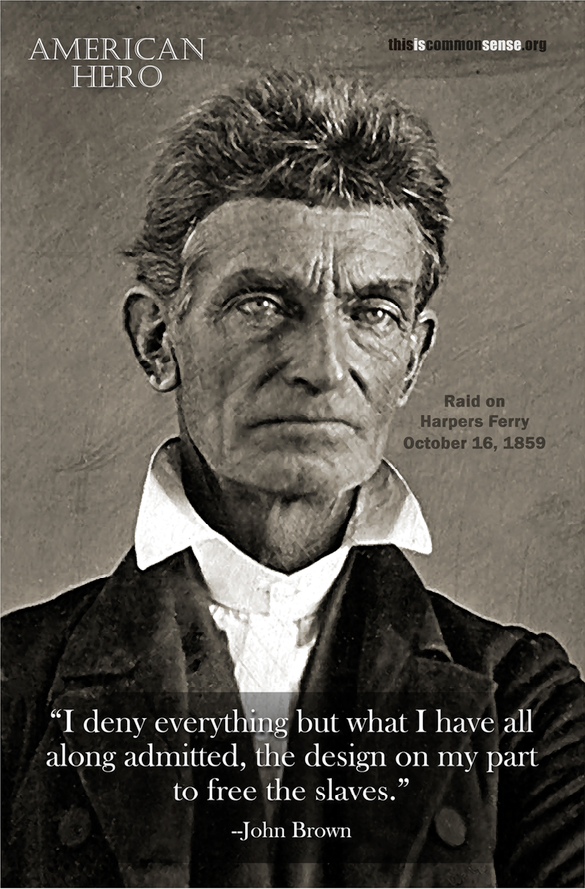
John Brown

I have, may it please the court, a few words to say. In the first place, I deny everything but what I have all along admitted, the design on my part to free the slaves. I intended certainly to have made a clean thing of that matter, as I did last winter when I went into Missouri and there took slaves without the snapping of a gun on either side, moved them through the country, and finally left them in Canada. I designed to have done the same thing again on a larger scale. That was all I intended. I never did intend murder, or treason, or the destruction of property, or to excite or incite slaves to rebellion, or to make insurrection.

John Brown, speech at court in his trial (November 2, 1859).

Print out a commemorative poster:

Categories
Today

An African-American First

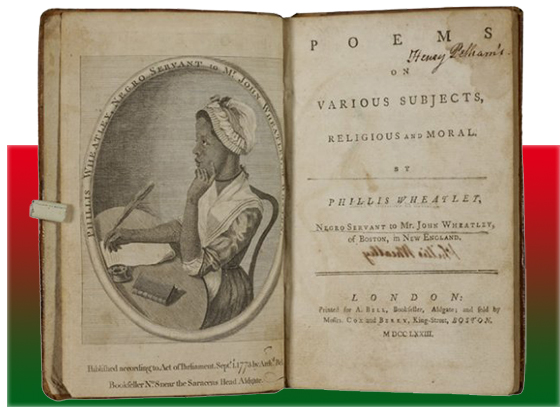
On October 18, 1775, African-American poet Phillis Wheatley was freed from slavery, upon the death of her master. Widely appreciated in her day, she was the first African-American to publish a book.

Categories
by Paul Jacob video

Watch: Follow the Bureaucrats!

Paul Jacob on Ray Bradbury, book-burning, and today’s tyrants — ripped from the headlines of this site for last week!