On March 26, 1991, local self-government in South Korea was restored after three decades of centralized control.
Categories
South Korea

On March 26, 1991, local self-government in South Korea was restored after three decades of centralized control.
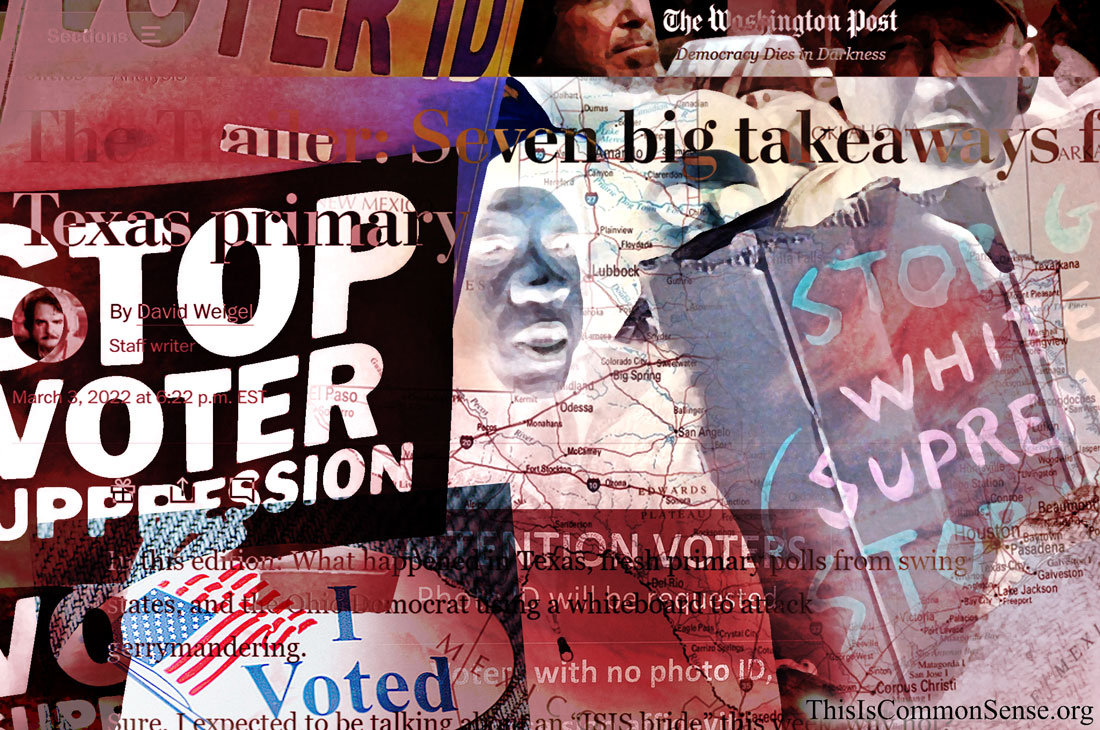
Democratic Rep. Chris Turner said he left “because we are in a fight to save our democracy” against what he dubbed “nationwide Republican vote suppression efforts.”
Eventually, however, Democrats returned home and legislation was passed that The New York Times reported would “cement Texas as one of the most difficult states in the country in which to vote.”
Fast-forward to this year’s March 1 Primary Election, which The Hill reminds us “came amid the state’s new, more restrictive voting laws.”
Well, a funny thing happened on the way to democracy’s grand destruction . . . Democratic turnout went not down but up! On the Republican side, the number of votes increased dramatically — by roughly 33 percent — “nearly 400,000 more than were cast in the 2018 primary, and more votes than had ever been cast in a midterm GOP primary.”
But there’s more.
In Harris County, the new voting law triggered an audit, which just so happened to find approximately 10,000 “mail ballots” that “were tabulated but not counted,” informs The Associated Press.
Oops! Those Houston-area Democrats and Republicans (roughly 6,000 and 4,000 respectively) would have had their votes obliterated . . . save for the legislation roundly attacked as “anti-voter.”
So much for suppression.
This is Common Sense. I’m Paul Jacob.
Note: A week after the election, Harris County Election Administrator Isabel Longoria announced her resignation.
See all recent commentary
(simplified and organized)
See recent popular posts
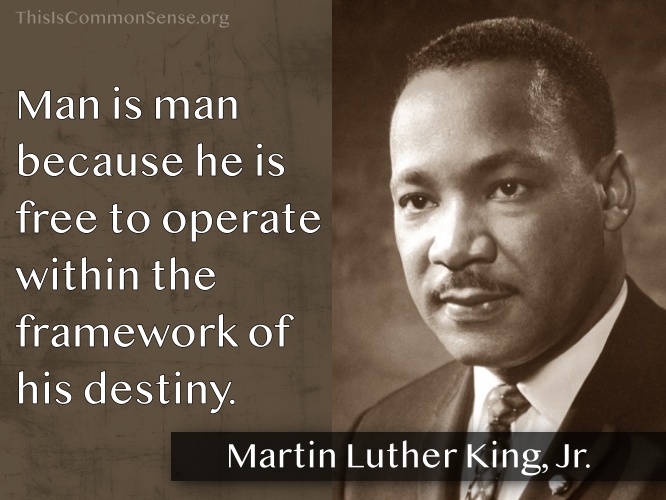
Man is man because he is free to operate within the framework of his destiny. He is free to deliberate, to make decisions, and to choose between alternatives. He is distinguished from animals by his freedom to do evil or to do good and to walk the high road of beauty or tread the low road of ugly degeneracy.
Martin Luther King, Jr., The Measure of a Man (1959).
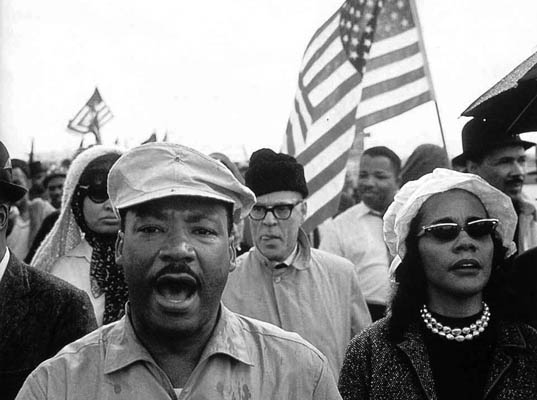
On March 25, 1965, civil rights activists led by Martin Luther King, Jr., successfully completed their four-day, 50-mile march from Selma to the capitol in Montgomery, Alabama.

A Wuhan wet market is ground zero of the pandemic;
COVID-19 could not have originated in a Wuhan laboratory.
At least, so say many “science reporters” commenting on recent research about the origin of the virus. Former New York Times science editor Nicholas Wade begs to differ.
Wade (whom we’ve cited before) says it’s possible that the virus jumped from an animal host or that it originated in a Wuhan lab. Although both can’t be true, “so far, no direct evidence exists for either.”*
He expounds:
But the outside-the-market cases selected for study by Chinese authorities — by Xi Jinping himself for all we know — were not randomly selected. One criterion was proximity to the wet market.
So: massive selection bias.
And a pandemic of unscientific reporting.
This is Common Sense. I’m Paul Jacob.
* Wade does not consider some of the smoking-gun type evidence for gain-of-function we’ve mentioned in the past, like the Moderna patent.
See all recent commentary
(simplified and organized)
See recent popular posts
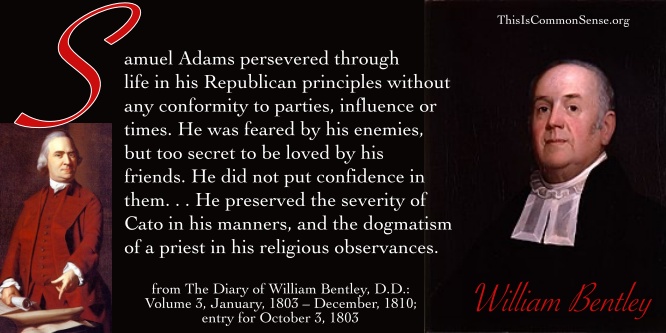
Samuel Adams persevered through life in his Republican principles without any conformity to parties, influence or times. He was feared by his enemies, but too secret to be loved by his friends. He did not put confidence in them. . . He preserved the severity of Cato in his manners, and the dogmatism of a priest in his religious observances.
William Bentley, D. D.,Pastor of the East Church, Salem, Massachusetts, as redacted by Diane Ackerman, “The Man Who Made a Revolution,” Parade, September 6, 1987. The complete diary entry can be found on Archive.org: The Diary of William Bentley, D.D.: Volume 3, January, 1803 – December, 1810 (Salem, Massachusetts: The Essex Institute, 1911), p. 49.
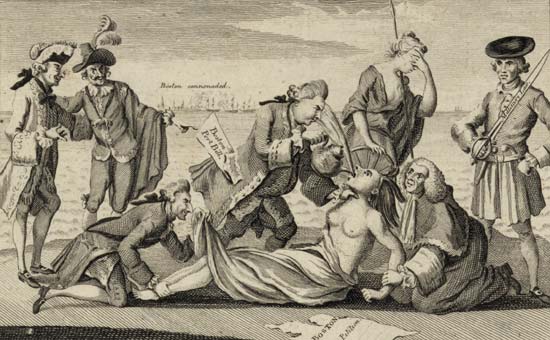
On March 24, 1765, the Kingdom of Great Britain passed the Quartering Act, which required the Thirteen Colonies to house British troops.
On the same date in 1855, slavery was abolished in Venezuela.
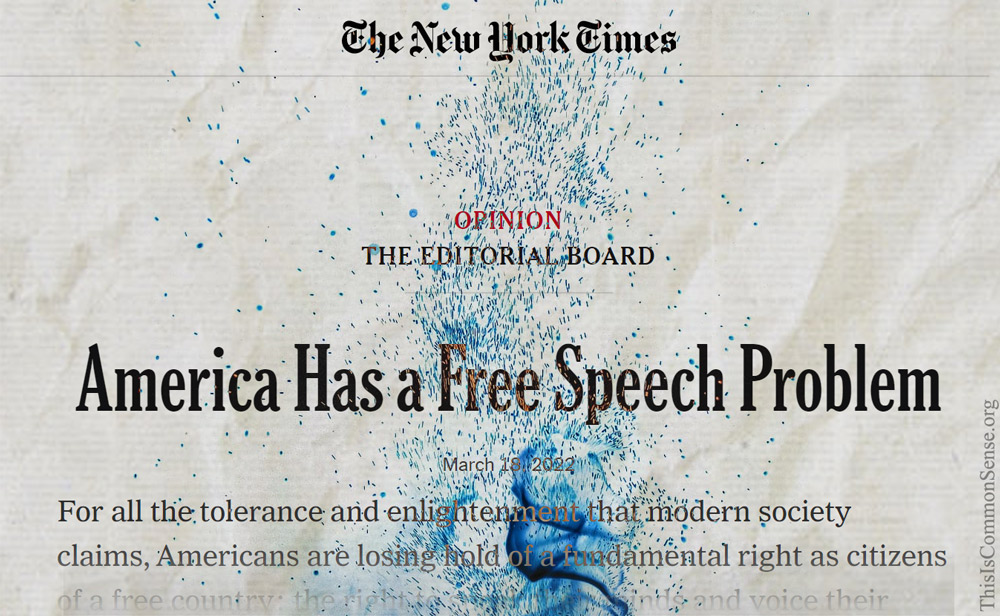
The trouble, you guessed it, is partly a left versus right issue: “Many on the left refuse to acknowledge that cancel culture exists at all, believing that those who complain about it are offering cover for bigots to peddle hate speech,” which strikes me as a fairly accurate account. But the Times cannot help itself — the right must be made to seem worse. “Many on the right,” the editorial goes on, “for all their braying about cancel culture, have embraced an even more extreme version of censoriousness as a bulwark against a rapidly changing society, with laws that would ban books, stifle teachers and discourage open discussion in classrooms.”
Sans persuasive examples — the Times provides none — I reject this claim as a grave misunderstanding of current trends. What has been happening is not the banning of books, but the mere removal of them from public school libraries and/or curricula.
“Stifling teachers” is not a thing, really. Taxpayer-funded teachers have no more right to teach anything they want than taxpayer-funded police have the right to enforce whatever laws they want.
The multi-racial backlash against the left, most recently in Virginia, was a movement of parents upset over cultural Marxist indoctrination on racial issues . . . taking the place of quality education.
Something else the Times missed: the extent to which cancel culture has worked hand-in-hand with social media companies under the influence of partisans in Congress and the Deep State.
That being said, the Times does get something right: “When speech is stifled or when dissenters are shut out of public discourse, a society also loses its ability to resolve conflict, and it faces the risk of political violence.”
Yes, it’s a problem.
This is Common Sense. I’m Paul Jacob.
See all recent commentary
(simplified and organized)
See recent popular posts
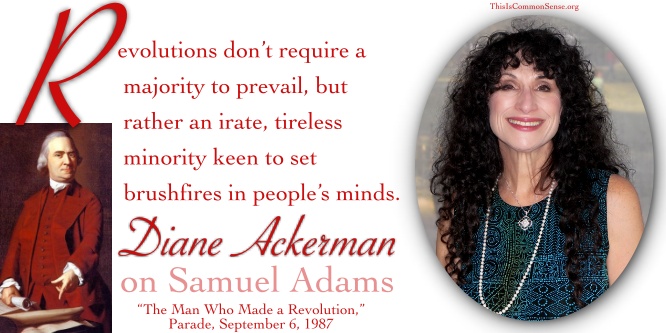
Early on, he realized that revolutions don’t require a majority to prevail, but rather an irate, tireless minority keen to set brushfires in people’s minds.
Diane Ackerman on Samuel Adams (“The Man Who Made a Revolution,” Parade, September 6, 1987), in a quote variants of which are often misattributed to Sam Adams.
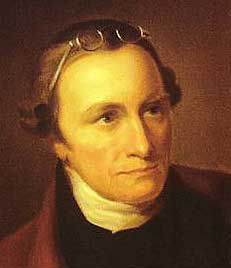
On March 23, 1775, Patrick Henry delivered his “Give me Liberty, or give me Death!” speech at St. John’s Church in Richmond, Virginia.
On this date in 1992, economist and social philosopher Friedrich August von Hayek died. He remains best known for his 1944 political tract The Road to Serfdom.