Categories
Thought

Albert Jay Nock

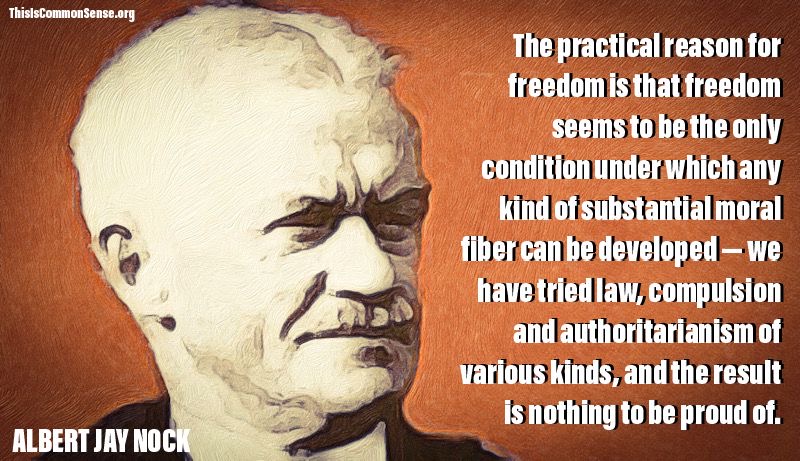
The practical reason for freedom is that freedom seems to be the only condition under which any kind of substantial moral fiber can be developed — we have tried law, compulsion and authoritarianism of various kinds, and the result is nothing to be proud of.

Albert Jay Nock, “On Doing the Right Thing,” The American Mercury (1925).
Categories
Today

The New World

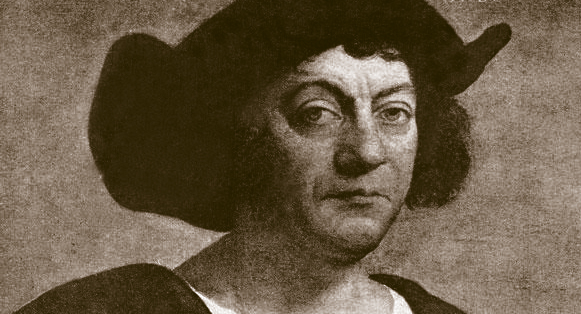
On October 12, 1492, Christopher Columbus landed in the Bahamas, thinking he had reached “the Indies.”

Exactly two hundred years later, a letter from Massachusetts Governor William Phips ended the Salem Witch Trials.

On this date in 1892, the Pledge of Allegiance was first recited by students in many U.S. public schools, as part of a celebration marking the 400th anniversary of Columbus’s voyage.

The Pledge had been composed that year by Francis Bellamy, a Christian Socialist minister, and was first published in Youth’s Companion magazine, September 8, 1892. The recital was accompanied with a salute to the flag known as the Bellamy salute. During World War II, the salute was replaced with a hand-over-heart gesture because the original form (described in detail by Bellamy) involved stretching the arm out towards the flag in a manner that resembled the later Nazi salute. The original form of the Pledge was somewhat less involved than later versions:

I pledge allegiance to my Flag and the republic for which it stands, one nation indivisible, with liberty and justice for all.

In October an editorial addition occurred, the word “to” prefixing “the republic.”

Categories
general freedom insider corruption international affairs

Musk Gone Mad?

Elon Musk, the world’s richest person, has often been lauded in this commentary — regarding SpaceX and the growth of private space travel, and recently for providing crucial internet access through his company’s Starlink satellites first to Ukraine and now for Iranian protesters.

I like that.

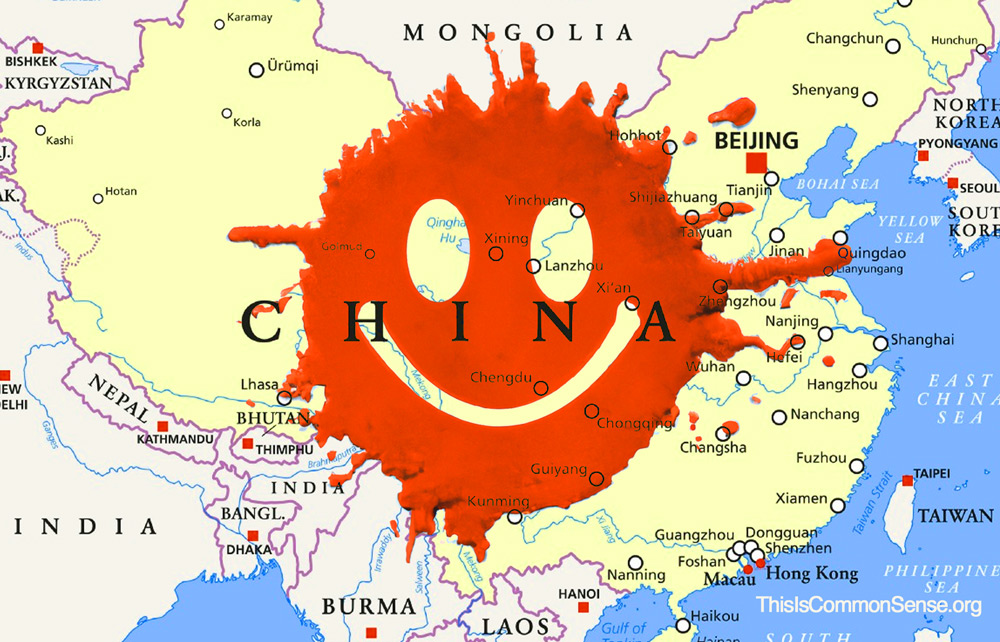
But the Chinese Communist Party (CCP) doesn’t like it at all. As Musk acknowledged last week in an interview with the Financial Times (FT), explaining that Chinese rulers wanted “assurances” he would not provide Starlink internet to the 1.4 billion people they actively repress.

With a Tesla plant in Shanghai, Musk is much more vulnerable to the dictates of Xi Jinping and the CCP than he is to Vladimir Putin or Iran’s Ayatollah. 

“Tesla, though headquartered in the U.S.,” Forbes notes, “made about half of its cars last year in mainland China, the world’s largest auto market.” 

Which amounts to an awful lot of leverage.

In that same FT interview, Musk floated a “solution” to the tensions between China, which threatens a military attack that might kill millions, and its target Taiwan, which overwhelmingly favors a war of resistance to CCP takeover and threatened re-education.

“My recommendation,” the usually innovative businessman told FT, “would be to figure out a special administrative zone for Taiwan [under China’s authority] that is reasonably palatable,” adding, “it’s possible, and I think probably, in fact, that they could have an arrangement that’s more lenient than Hong Kong.”

While the Chinese ambassador to the U.S. thanked Elon Musk for his idea, a senior Taiwanese official reminded, “The world has seen clearly what happened to Hong Kong.”

Does this brilliant businessman really think that the promise of a more “lenient” totalitarianism is any kind of solution?

This is Common Sense. I’m Paul Jacob.


PDF for printing

See all recent commentary
(simplified and organized)
See recent popular posts
Categories
Thought

Vladimir Nabokov

Satire is a lesson, parody is a game.

Vladimir Nabokov, published in Wisconsin Studies in Contemporary Literature, vol. VIII, no. 2, Spring 1967.
Categories
Today

The Revolution Remembered

October 11, 1890, marks the founding of the Daughters of the American Revolution.

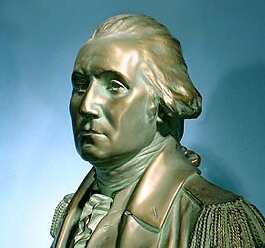
On the same date in 1976, President Gerald R. Ford approved a congressional joint resolution Public Law 94–479 to appoint, posthumously, George Washington to the grade of General of the Armies of the United States, as part of the bicentennial celebrations.

John J. Pershing (1860 – 1948) is the only other American to attain this high title, and the only one to achieve it while alive.

Categories
defense & war general freedom international affairs

Armageddon, Anyone?

Ah, the things one hears at high-dollar Democratic Party fundraisers!

Like declaring Russia’s threat to unleash nuclear weapons against Ukraine as the most serious “prospect of Armageddon in 60 years.”

Last week, Sleepy Joe “startled many Americans” with those remarks at a closed-door meeting of big donors.

Backpedaling on Friday, “U.S. officials stressed . . . that the United States has no reason to change its nuclear posture.” No reason? We’re backing one side in a war in which nukes are on the table!

Andrea Kendall-Taylor, director of the Transatlantic Security Program at the Center for a New American Security, didn’t defend Biden’s “Armageddon” terminology but offered that it was “useful for the president and the administration to be having a conversation with the public about the risk.”

Of course, the president gave this frank evaluation to his party’s top check-writers, not the public. And that’s the second biggest problem with U.S. foreign policy: it’s totally divorced from the people. 

The biggest? Headin’ towards Armageddon. If Mr. Biden is serious about slouching towards the End Times, he should do more than make it the subject of political locker-room talk. 

Like what? How about:

  1. Seek to reduce tensions, wherever possible, and help Mr. Putin find an off ramp from his war in Ukraine; 
  2. Double- and triple-down on technologically defending the American people from the threat posed by nuclear weapons and other weapons of mass destruction; and  
  3. Speak to the people about these threats and the U.S. response.

While security concerns may dictate that information not be shared publicly, if it’s good enough to share on the rubber-chicken circuit, it good enough for ‘We the People.’

We pay the highest prices; we deserve to hear the sales pitch.

This is Common Sense. I’m Paul Jacob.


PDF for printing

Illustration created with DALL-E

See all recent commentary
(simplified and organized)
See recent popular posts
Categories
Thought

Milton Friedman

It’s nice to elect the right people, but that isn’t the way you solve things. The way you solve things is by making it politically profitable for the wrong people to do the right things.

Milton Friedman, c. 1977
Categories
Today

Atlas?

On October 10, 1957, Ayn Rand’s dystopian/utopian novel Atlas Shrugged was published. Written to expound and defend an individualist, freedom/free-market point of view, it is one of the most influential and literarily successful didactic novels ever written.


On October 10, 1973, Austrian-born American economist, Ludwig von Mises* (pictured above) died.

Two-hundred fifty-nine years earlier, the French law-maker and Jansenist Pierre le Pesant, sieur de Boisguilbert died.

Both economists were known for their defenses of freer markets: le Pesant for pioneering the critique of mercantilism, arguing that a nation’s wealth consisted in what its people produce and trade; Mises for systematizing economic theory and advancing the critique of both socialism and latter-day mercantilism (what he called “interventionism”).


In January 1958, following the publication of Atlas Shrugged, Mises wrote Ayn Rand a letter of congratulations.

Categories
by Paul Jacob video

Watch: Politicians Against Term Limits, Voter ID, and Us!

In this weekend’s podcast, Paul Jacob starts off talking about what he has been working on in Michigan. Michigan voters have some No votes to place at the polls! So do Arkansans.

And the lessons from these two states are universal, or nearly so:

Categories
Thought

William Graham Sumner

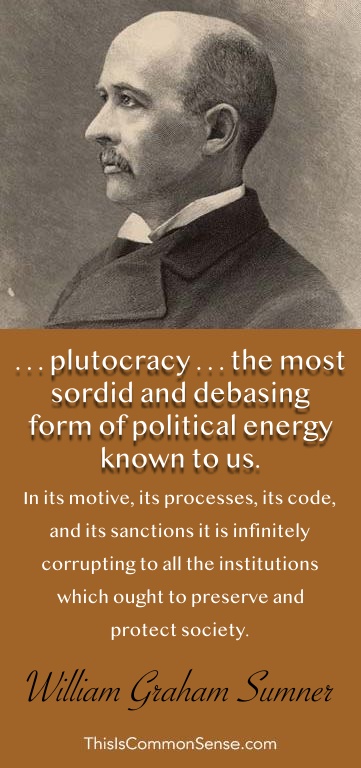
An amibitious Roman used to buy and bribe his way through all the inferior magistracies up to the consulship, counting upon getting a province at last out of whichhe could extort enough to recoup himself, pay all his debts, and have a fortune besides. Modern plutocrats buy their way through elections and legislatures, in the confidence of being able to get powers which will recoup them for all the outlay and yield and an ample surplus besides.

I regard plutocracy, however, as the most sordid and debasing form of political energy known to us. In its motive, its processes, its code, and its sanctions it is infinitely corrupting to all the institutions which ought to preserve and protect society. The time to recognize it for what it is, in its spirit and tendency, is when it is in its germ, not when it is full green.

William Graham Sumner, “Democracy and Plutocracy,” in Earth Hunger and Other Essays (1914), pp. 294–295.