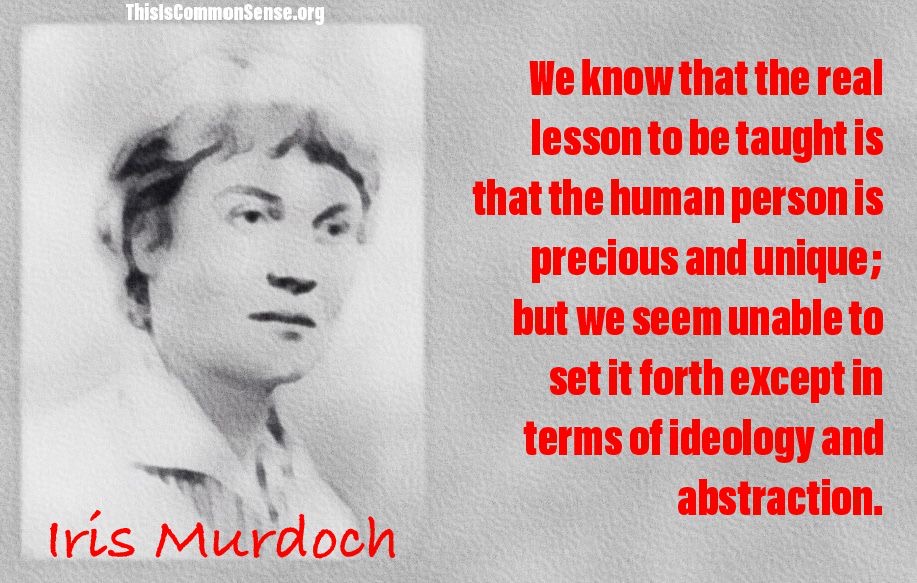
We know that the real lesson to be taught is that the human person is precious and unique; but we seem unable to set it forth except in terms of ideology and abstraction.
Iris Murdoch, concluding sentence to Sartre: Romantic Rationalist (1953).
On February 1, 1835, slavery was abolished in Mauritius. Twenty-six years later, in the American Civil War, Texas seceded from the United States. On this date in 1865, President Abraham Lincoln signed a Joint Resolution from Congress formally submitting the proposed Thirteenth Amendment to the United States Constitution to the states for ratification.
This Amendment abolished chattel slavery throughout the union.
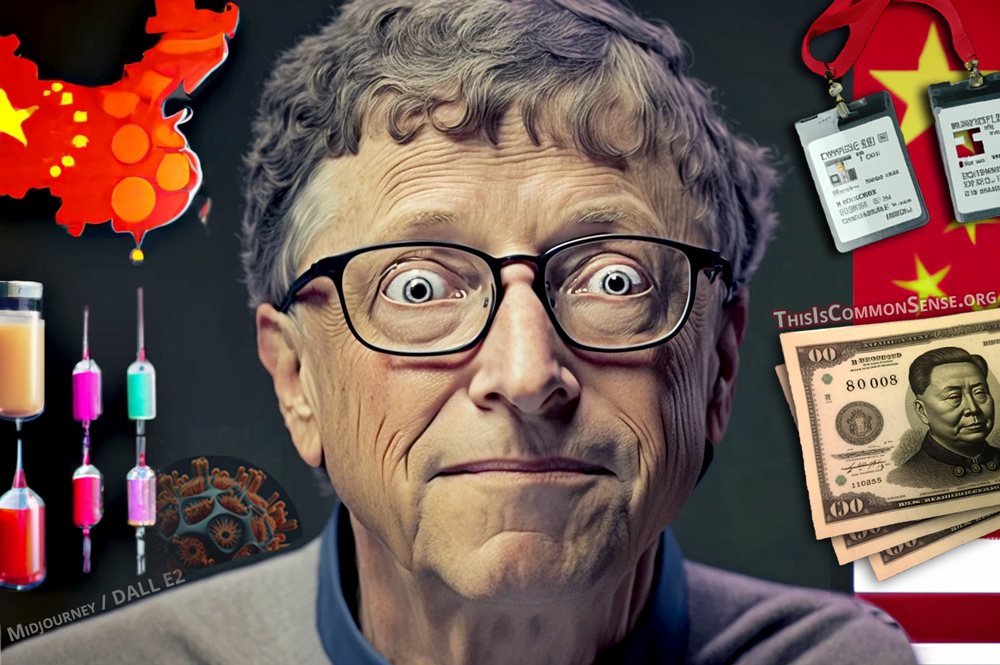
“[China’s] portion of the global economy and their portion of the global population match exactly,” Bill Gates informed his audience at Australia’s Lowy Institute. “Countries like Australia, U.S., we have per capita GDPs five times what the Chinese have, so we have a disproportionate share of the world’s economy.”
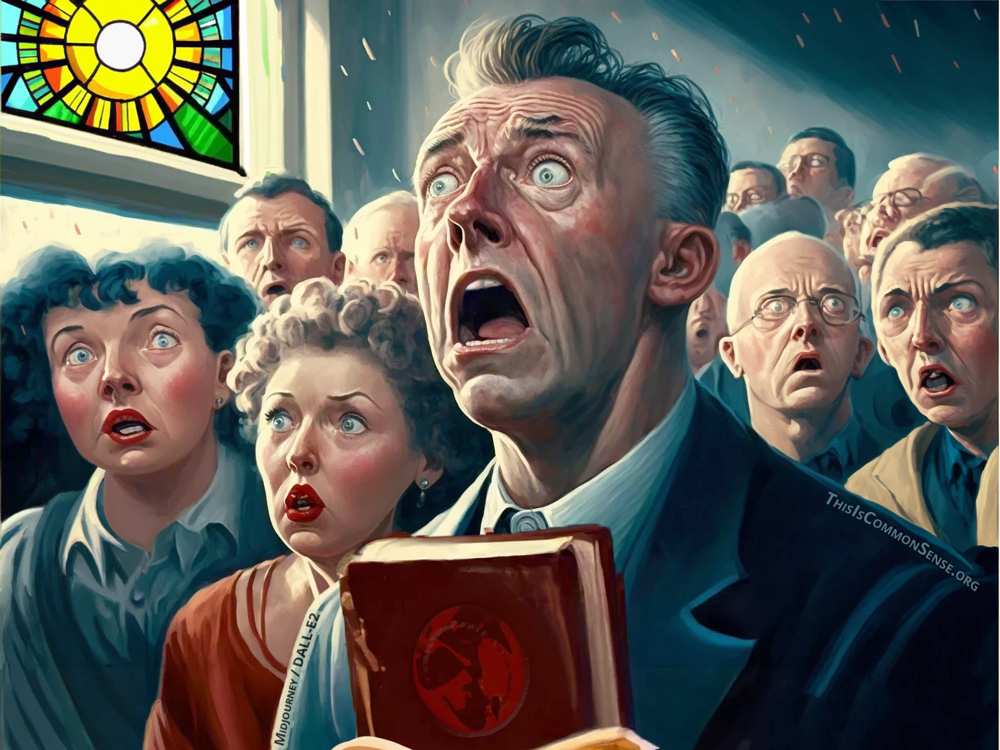
Funny that no one made a citizen’s arrest of the world’s fourth richest man, who, when it comes to personal wealth, is disproportionately disproportionate. But maybe the crowd has the respect for what people produce and earn that Mr. Gates appears to lack.
Gates main point was that China’s rise has been “great for the world.”
While I’m not rooting for the Chinese people to be impoverished, I note that Uyghurs, Hong Kongers, Taiwanese and dissident Chinese aren’t exactly singing the Chinazis’ praises.
. . . except when Uyghurs are forced to sing Chinese Communist Party (CCP) propaganda songs in those re-education camps.
Australians are also well aware of China’s ugly behavior, having suffered under punishing economic sanctions ever since the Australian government suggested an international investigation into COVID’s origin and the CCP’s cover-up.
“Gates also leveled criticism at China,” explained Fortune: the billionaire “philanthropist”
admitted that China is “not a democracy,”
rebuked the country for not getting people vaccinated faster and
referred to it as an “outlier today in terms of that level of wealth and still being as autocratic as they are.”
Actually, “autocratic” is the nicest term available for such a regime.
Bill Gates is a brilliant businessman, a billionaire many times over, but a complete buffoon (at best*) for failing to even mention the crimes against humanity being committed by the CCP government.
When he thinks about world governance, now we know what he doesn’t think about.
This is Common Sense. I’m Paul Jacob.
* “Evil” is another explanation I’ve heard, but I’m not making that case here.
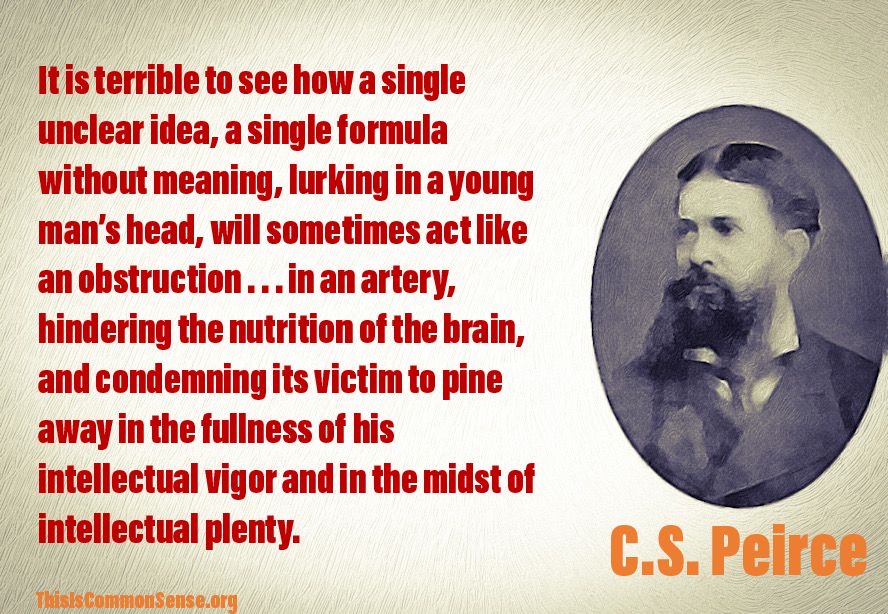
It is terrible to see how a single unclear idea, a single formula without meaning, lurking in a young man’s head, will sometimes act like an obstruction . . . in an artery, hindering the nutrition of the brain, and condemning its victim to pine away in the fullness of his intellectual vigor and in the midst of intellectual plenty.
Charles Sanders Peirce, “How to make our ideas clear,” Popular Science Monthly, Vol. 12 (January 1878).
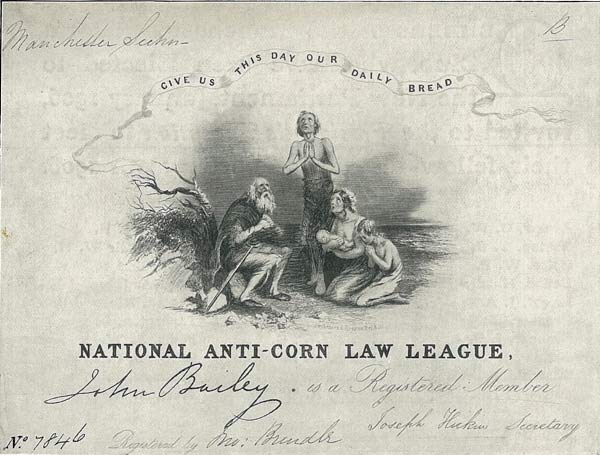
On January 31, 1849, the Corn Laws were abolished in the United Kingdom, one of the most impressive and far-reaching anti-protectionist moves of all time. “Corn” stood for all grains, including wheat, oats, barley, etc.; the free-trade agitation by John Bright and Richard Cobden was one of the main impetuses for the reform.
On Jan. 31, 1865, the United States Congress proposed the Thirteenth Amendment to the U.S. Constitution, submitting it to the states for ratification. The Amendment’s main section reads: “Neither slavery nor involuntary servitude, except as a punishment for crime whereof the party shall have been duly convicted, shall exist within the United States, or any place subject to their jurisdiction.”
On Jan. 31, 1990, the first McDonald’s fast food restaurant opened in the Soviet Union. In 2022 they were all closed in protest of the Ukraine war.
He’s vehement — vehement with the force of 600,000 Hiroshima-class atomic bombs exploding each and every day.
Because he cares.
He really does.
He really cares about putting the days of Wooden Al Gore behind him and ushering in Apoplectic Foaming-at-the-Mouth-While-Bleeding-From-Every-Pore Al Gore.
It’s just unfortunate though that whilst ratiocinating at Davos, Mr. Gore destroyed the atmosphere and disarranged the solar system, further accelerating global warming and cooling.
If you’re wondering whether I am now just making stuff up, thank you for noticing; yes: I learned it from the best. But I’m sincere. Okay? I’m emoting very hard right now, for which I fully expect to receive social-credit points that I can tape to my COVID-19 passport and wave at the grocery-store clerk as I pay a thousand dollars for a half-dozen eggs.
If only vehemence were facts and cogency, Al Gore would be the most empirical, most logical man alive. As it is, a billion flabbergasted refugees have fled before the force of his rhetoric.
If you don’t believe that Gore not whispered but roared, nay, expectorated, the following, etc., at Davos about how the (man-made) greenhouse effect is trapping “as much extra heat as would be released by 600,000 Hiroshima-class atomic bombs exploding every single day on the earth!!That’s what’s boiling the oceans, creating these atmospheric rivers, and the rain bombs, and sucking the moisture out of the land, and . . . and . . . and —”
. . . then I refer you to the videotape. Roll it, Hal.
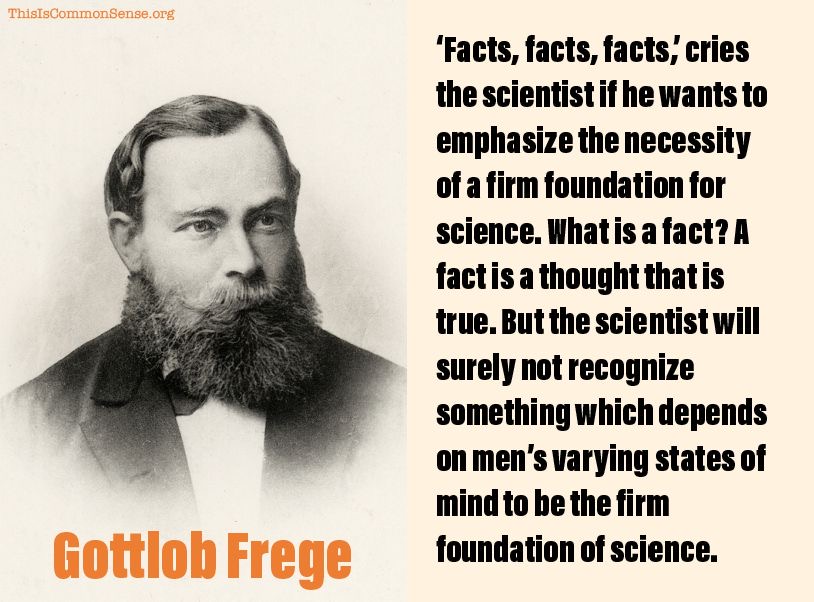
‘Facts, facts, facts,’ cries the scientist if he wants to emphasize the necessity of a firm foundation for science. What is a fact? A fact is a thought that is true. But the scientist will surely not recognize something which depends on men’s varying states of mind to be the firm foundation of science.
Gottlob Frege, “The thought: A logical inquiry,” in Peter Ludlow’s Readings in the Philosophy of Language (1997), p. 27.
On Jan. 30, 1948, Indian leader Mohandas K. Gandhi, known for his non-violent, non-cooperation struggle for freedom and national independence, was assassinated by a Hindu extremist.
On Jan. 30, 1956, Martin Luther King, Jr.’s home was bombed in retaliation for his work on the Montgomery Bus Boycott.
On Jan. 30, 1972, British soldiers killed fourteen unarmed civil rights marchers in Northern Ireland in what came to be known as “Bloody Sunday.” Soldiers shot 26 unarmed protesters and bystanders – 13 males, seven of whom were teenagers, died immediately, while another man died of his injuries nearly five months later. In the immediate aftermath, an investigation by the British Government largely cleared the soldiers and British authorities of blame. A second investigation begun in 1998, released a report in 2010 declaring that all of those shot were unarmed, and that the killings were both “unjustified and unjustifiable.”
Not quite fitting today’s “non-violence elicits violence” theme, on January 30, 1835, Richard Lawrence attempted to shoot former military leader and then-President Andrew Jackson, but failed. He was subdued by a crowd, including several congressmen. That marked the first attempt on the life of a sitting U.S. president.