Our evil people tend to lean to the silly side of the spectrum, as Paul Jacob explains in this weekend’s episode of This Week in Common Sense:
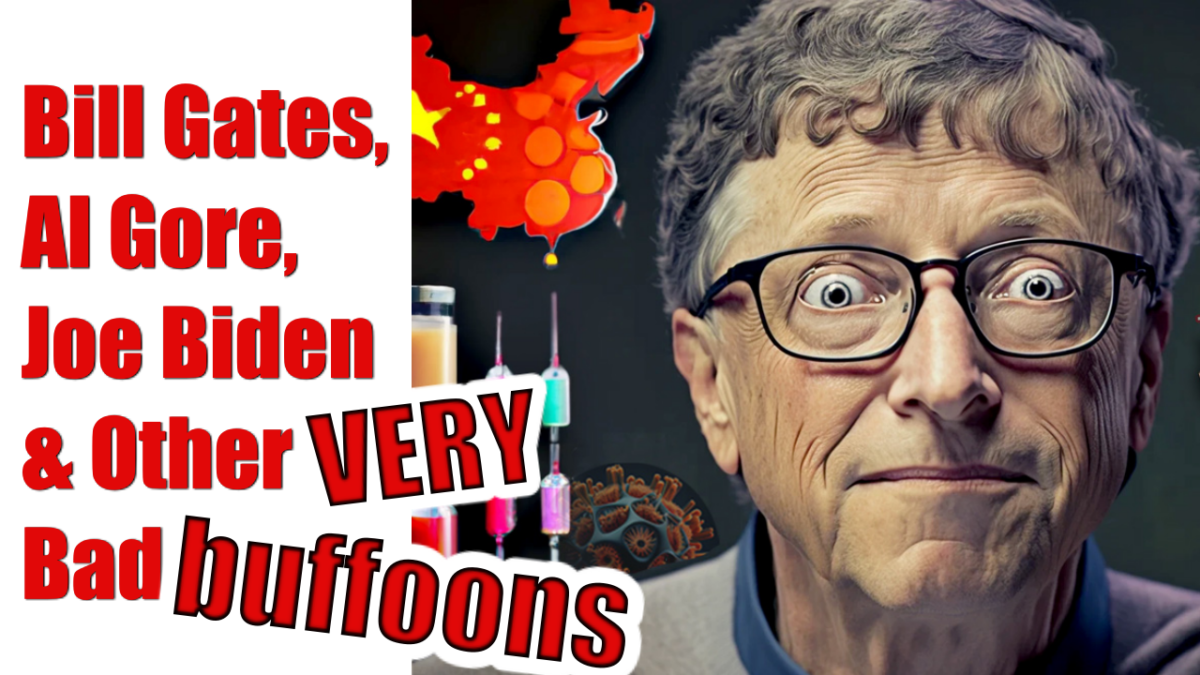
Our evil people tend to lean to the silly side of the spectrum, as Paul Jacob explains in this weekend’s episode of This Week in Common Sense:

WHATEVER YOU DO, TELL THE TRUTH.
Presidential candidate Stephen Grover Cleveland’s telegram response to a query as to what the Democratic Party should say about reports that he fathered a child out of wedlock. The issue was scandalous, but he won office and his first term in the presidency of the United States started in 1885.
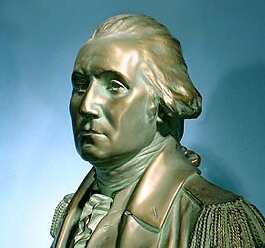
On February 4, 1789, George Washington was unanimously elected as the first President of the United States, under the new Constitution, by the U.S. Electoral College.
On the same date five years later, the French legislature abolished slavery throughout all territories of the French Republic.

I sure hope he’s found the bathrooms.
But have no fear: This rookie has already overcome that lack of experience, sponsoring a constitutional amendment, which faster than a Nebraska minute has 40 of 49 state senators enthusiastically signed on.
What has folks at the capitol so excited? His amendment, LR22CA, would dramatically weaken their current term limit by giving legislators an extra term, so they can serve 12 years, before taking a break, and not be limited to just eight.
“Dover,” the Nebraska Examiner informs, “said he quickly learned how term limits were a bad idea after talking with legislative veterans, state agency heads and lobbyists.”
“Everyone I talked to said it was a horrible thing,” he offered. “To a person, they said (term limits) took away from the consistency at the Capitol.”
By which he means, the senator elaborated — and as the Lincoln Journal Star reports — maintaining “the right relationships between senators or interest groups to strike compromise.”
Yes, indeed: the longer politicians stay in office the more they do “compromise” with special interests.
“Dover said he understands term limits ‘are very popular’ among the electorate,” the Journal Star noted. Apparently, he just doesn’t get that those are the folks he is supposed to work for.
The senator complained that Liberty Initiative Fund, my organization, is sending postcards to voters across the state to inform them about his bill, calling our effort “a waste of money.”
That tells me it is money well spent.
This is Common Sense. I’m Paul Jacob.
Note: Term limits have a long history of battling the political establishment in the Cornhusker State, which I wrote about back in 2011.
Illustration created with Midjourney and DALL-E 2
See all recent commentary
(simplified and organized)
See recent popular posts
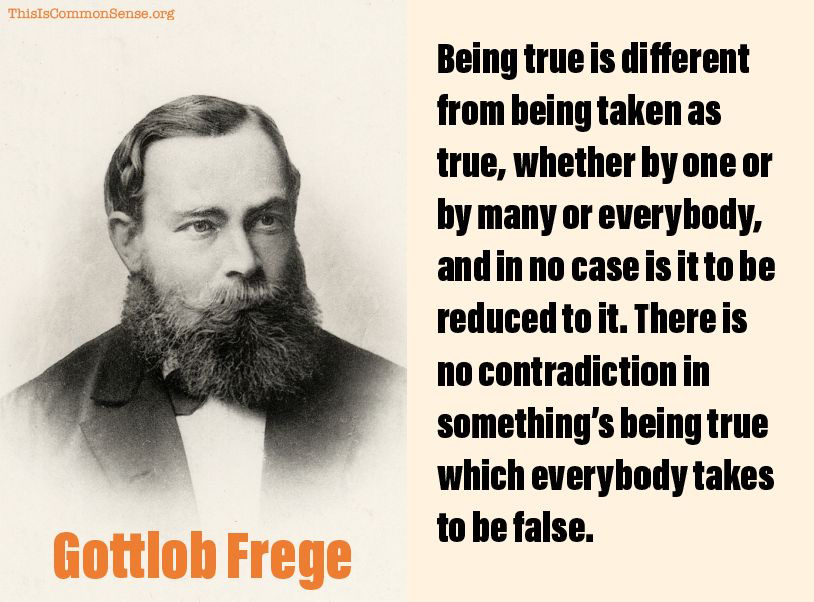
Being true is different from being taken as true, whether by one or by many or everybody, and in no case is it to be reduced to it. There is no contradiction in something’s being true which everybody takes to be false.
Gottlob Frege, Grundgesetze der Arithmetik (The Foundations of Arithmetic (vol. 1, 1893; vol. 2, 1903), Introduction, Montgomery Furth, translator (1964).
On February 3, 1783, Spain recognized United States independence.
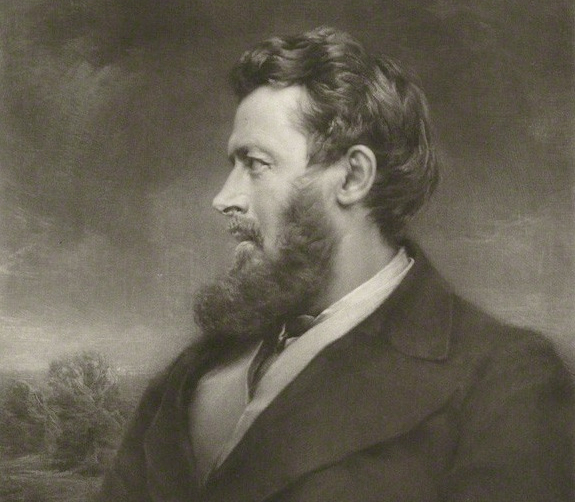
Walter Bagehot (pronounced “badge-it”; pictured), famed editor of The Economist and author of Lombard Street, was born on this date in 1826.

You might have laughed. If bitterly.
Van Jones’s headline seems, on the face of it, ridiculous: “The police who killed Tyre Nichols were Black. But they might still have been driven by racism” (January 27, 2023).
Yet, the actual arguments aren’t completely absurd.
Just the big picture is.
Today, we’ve been given a new set of definitions. Racism is no longer prejudiced discrimination against individuals based on antipathy against a hated group, now it’s “prejudice plus power,” and . . . somehow the new anti-racists don’t realize that power isn’t just about race.
It wasn’t likely internalized hatred for blacks that these black policemen exhibited. Far more likely it was exasperation and contempt for a man who wouldn’t submit to their control.
Police have a job, and are given a lot of license and leeway to take away our liberty after a suspected crime. Tyre Nichols did not readily submit to an arrest for reckless driving, but bolted, running away. When the cops caught up with him, they gave him a beating. Was it because he was black? Not likely, or at least not primarily. It was most likely because he wouldn’t obey.
This old police attitude is more understandable than racism, no?
But “understandable” isn’t excuse.
We can meaningfully talk about reforms — such as getting rid of qualified immunity — but first, let’s stop calling it racism and “white supremacy.” The issue is cop supremacy, and it’s not really a mystery.
This is Common Sense. I’m Paul Jacob.
Illustration created with Midjourney
See all recent commentary
(simplified and organized)
See recent popular posts

Of the fifty or hundred systems of philosophy that have been advanced at different times of the world’s history, perhaps the larger number have been, not so much results of historical evolution, as happy thoughts which have accidentally occurred to their authors.
Charles Sanders Peirce, “The Architecture of Theories,” in The Monist Vol. I, No. 2 (January 1891), p. 161. Reprinted in many collections, including Justus Buchler, editor, The Philosophy of Charles Peirce (1940).

On February 2, 1887, Punxsutawney, Pennsylvania, celebrated the first Groundhog Day. On the same day in 1976, the Groundhog Day gale hit the north-eastern United States and south-eastern Canada.
In 2009, the Reserve Bank of Zimbabwe officially devalued the Zimbabwean dollar for the third and final time, making Z$1 trillion now only Z$1 of the new currency, equivalent to Z$10 septillion before the first

Could this be the perspective of those demanding national rent control?
They forget — or ignore — the destruction of living space inflicted by incentive-incinerating rent controls in places like New York City and Santa Monica.
Rick Moran perceives that President Biden is making a “first move toward a radical national rent control law,” telling agencies to find ways to stop rent increases. Biden is doing so at the behest of 50 congressional communists who have implored him to take executive action to save tenants from rising rents.
According to their letter, “rent is too high and millions of people across this country are struggling to stay stably housed as a result.” Meanwhile, landlords are “increasing the rent for their own profit . . .”
Profit? In a market economy?
Rising rents! Caused by . . . ?
But if you just want to “solve the problem” and have been trained to be heedless of the destruction regulation can cause, you needn’t think about cause and effect — who did what and how and why. In the interventionist mentality, when oil or food or housing prices zoom upwards, only one cause is possible, and it has nothing to do with politics and policies already in place.
Even if the government’s central banks have been zanily pumping up the supply of money and credit while city and state bureaus have been going all-out to hamper and halt production.
That single cause, they contend, can only be the grasping, grabbing, profit-seeking capitalists. You know. The bums who make their riches (when they do) by supplying us with what we need.
This is Common Sense. I’m Paul Jacob.
Illustration created with Midjourney
See all recent commentary
(simplified and organized)
See recent popular posts