Categories
Today

Rothbard and Houston

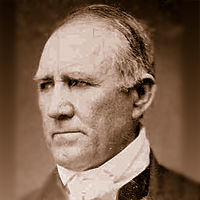
On March 2, 1793, Sam Houston (pictured above) was born.

On March 2, 1926, American economist and political theorist Murray N. Rothbard was born.

As President of the Republic of Texas, Houston (pictured above) cut the size of the Republic’s budget by a whopping amount, including selling the navy for scrap. Rothbard theorized about even more daring — and more permanent — cuts to (and limits upon) government.


On March 2, 1781, the Second Continental Congress convened as the new Congress of the Confederation, under the Articles of Confederation, ratified the day before. The congress elected no new president upon adoption of the Articles. This Confederation Congress oversaw the conclusion of the American Revolution.

Categories
First Amendment rights ideological culture media and media people

Roald’s Revenge

Two centuries after the heady days of Elizabethan drama, Thomas and Henrietta Bowdler produced The Family Shakespeare. 

In it they infamously “bowdlerized” the Bard. 

History has accelerated. Roald Dahl, the beloved author of arch children’s books (and more adult fare, too), had been dead only 33 years when it came out that his publisher is sanitizing his books. 

For the children.

For wokeness.

It’s not nice, you know, to call someone fat. Or to suggest that witches wore wigs because they were bald. 

So snip-snip and a trip to the thesaurus later, and British kids can now read the word “enormous” instead of “fat.” And learn, via addition (something the Bowdlers didn’t dare: they only made careful cuts), that “there are plenty of other reasons why women might wear wigs and there is certainly nothing wrong with that.”

Salman Rushdie called this “absurd censorship” and said that the culprits, Puffin Books and the Roald Dahl estate, “should be ashamed.”

The backlash has been huge, but the umbrella publishing house, Penguin, insists the unexpurgated Dahl will still be available, in a “Roald Dahl Classic Collection.”

Shades of New Coke versus Classic Coke!

In America, Penguin won’t even try to publish its sanitized editions.

There are several footnotes to the story. 

One: a four-decades old conversation “has come to light, revealing that [Dahl] was so appalled by the idea that publishers might one day censor his work that he threatened to send the crocodile ‘to gobble them up.’” 

Two: Ian Fleming’s James Bond is getting a similar treatment.

I’m reminded of the all-too-hungry crocs in Live and Let Die.

And where Dahl’s gobble-uppers should be when publishers place their toes in censorious waters.

This is Common Sense. I’m Paul Jacob.


PDF for printing

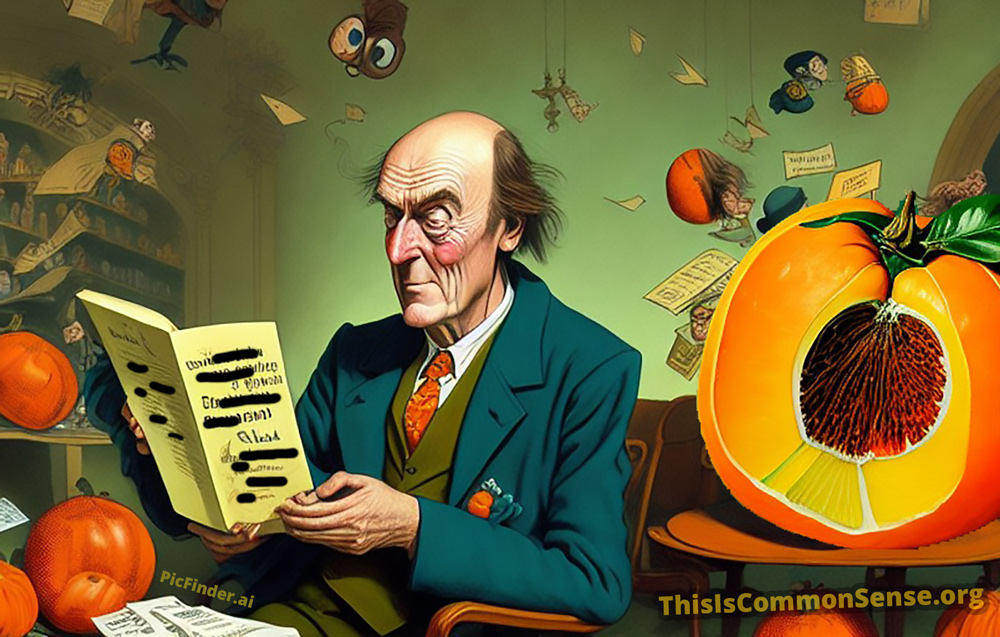
Illustration created with PicFinder.ai

See all recent commentary
(simplified and organized)
See recent popular posts
Categories
Thought

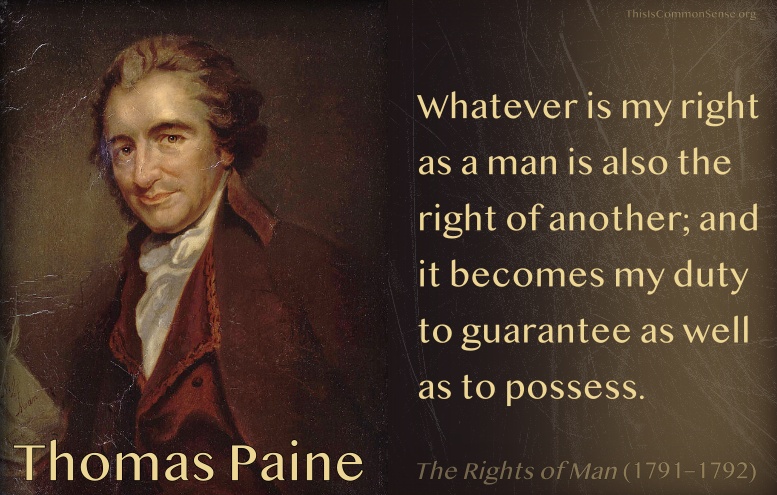
Thomas Paine

Whatever is my right as a man is also the right of another; and it becomes my duty to guarantee as well as to possess.

Thomas Paine, Rights of Man (1791-1792).
Categories
Today

March First Firsts

March 1st Firsts (and a 17th and a 37th):

| The first United States census was authorized, in 1790.

| Ohio was admitted as the 17th U.S. state, in 1803.

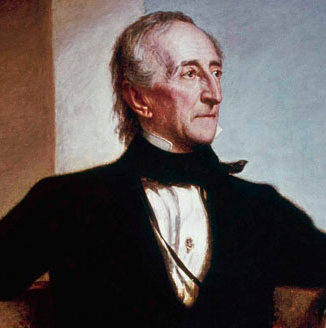
| President John Tyler [pictured above] signed a bill authorizing the United States to annex the Republic of Texas, in 1845.

| The state of Michigan formally abolished capital punishment, 1847.

| Nebraska became the 37th of the United States, in 1867.

On March 1, 1781, the Continental Congress of the United States adopted the Articles of Confederation. With this, the governing body became known, officially, as United States of America in Congress Assembled, more commonly as the Congress of the Confederation. The first session of this newly styled Confederation Congress took over without a break from the Second Continental Congress, adjourning on November 3. Samuel Huntington and Thomas McKean served as presidents during this first session.

Categories
media and media people national politics & policies tax policy

Decreases & Increases & Krugman

Social Security was never designed for sustainability. The “Ponzi” element was there at the beginning: early recipients received HUGE benefits over their contributions, but as the population matured, that ratio of what working taxpayers put in compared to what they received in benefits decreased. 

Further, because there never was a “lock box” much less any investment of funds — it was always a transfer scheme — as the system matured it hit the point of financial default. Back in the 80s this was fixed by raising the taxes on working people.

And then the kicker: with the rate of reproduction in the U.S. falling like Sisyphus’s rolling stone, the ratio of taxpayers to subsidized retirees went in the wrong direction. The folks assigned to keep track of the system’s finances predict that a major insolvency moment occurs about a decade from now, a few years ahead of earlier predictions.

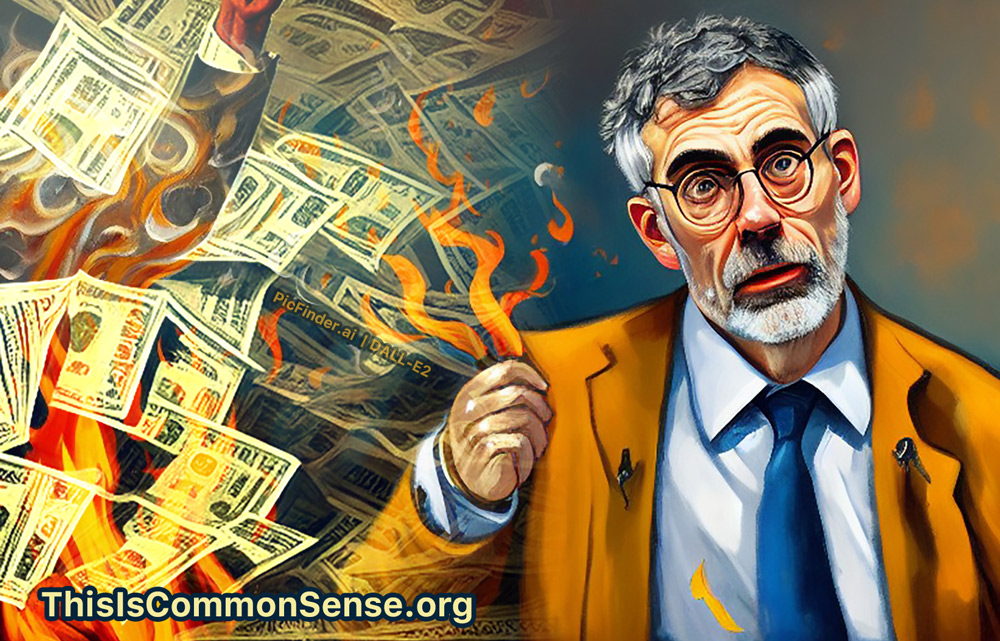
So what does Nobel-winning economist Paul Krugman, of The New York Times opinion page, advise?

While we fret about the devastation that benefit cuts and tax hikes would cause, Reason’s Eric Boehm notes that Krugman doesn’t think the cuts are necessary. “First, Krugman says the CBO’s projections about future costs in Social Security and Medicare might be wrong. Second, he speculates that they might be wrong because life expectancy won’t continue to increase. Finally, if those first two things turn out to be at least partially true, then it’s possible that cost growth will be limited to only about 3 percent of gross domestic product (GDP) over the next three decades and we’ll just raise taxes to cover that.”

Hope over reason! And the progressive’s blithe acceptance of always-increasing tax burdens.

Serious people should confront facts . . . and avoid Krugman.

This is Common Sense. I’m Paul Jacob.


PDF for printing

Illustration created with PicFinder.ai and DALL-E2

See all recent commentary
(simplified and organized)
See recent popular posts

Categories
Thought

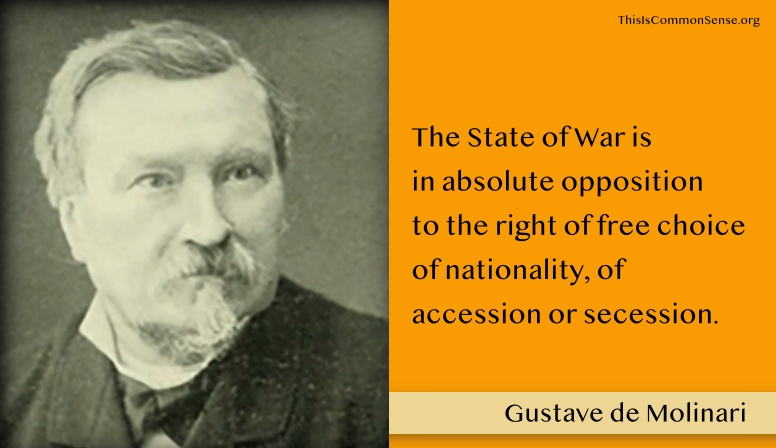
Gustave de Molinari

The State of War is in absolute opposition to the right of free choice of nationality, of accession or secession.

Gustave de Molinari, The Society of To-morrow (1899).
Categories
Today

Common Sleeper Struck Back

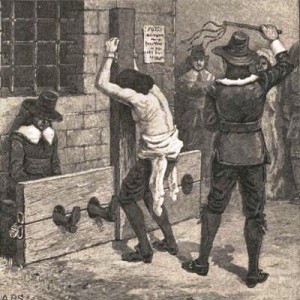
On February 28, 1646, Roger Scott, of Lynn, Massachusetts, was tried for sleeping in church. Awakened in church by a tithingman’s long, knobbed staff hitting him on the head, he struck back at the man, and garnered a whipping as punishment, as well as the dark designation as “a common sleeper at the publick exercise.”

Categories
Accountability media and media people national politics & policies

Lessons Not Yet Learned?

When will we learn to distrust big government?

While readers of this Common Sense have been tracking the Wuhan Lab Leak story for two years now, most people are still behind the curve. Fortunately, another government agency has weighed in on the Lab Leak side, as reported by Michael R. Gordon and Warren P. Strobel in the Wall Street Journal: “Lab Leak Most Likely Origin of Covid-19 Pandemic, Energy Department Now Says.”

No wonder there’s disagreement and confusion, though: “The Energy Department made its judgment with ‘low confidence,’ according to people who have read the classified report,” Gordon and Strobel explain. 

There remains much we do not know, of course. But we should understand that is largely because China’s totalitarian regime has purposely hidden information from the world. With the full assistance of Dr. Anthony Fauci and Big Government Science in the U.S. . . . and evasive coverage by our media.

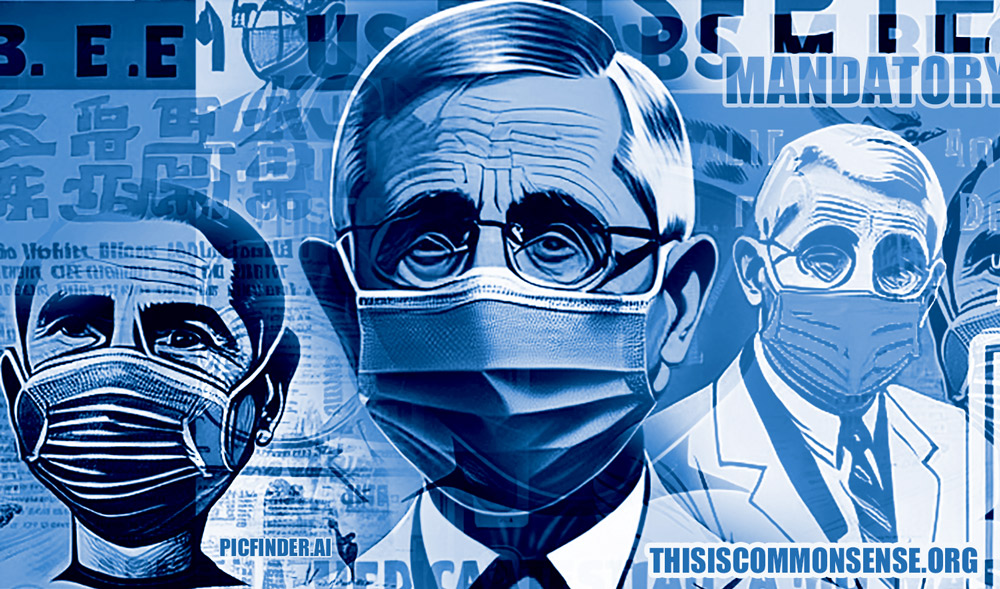
Then consult Brett Stephens’ “The Mask Mandates Did Nothing. Will Any Lessons Be Learned?” in The New York Times last week.

Now, many of us embraced masks early on, when little was known, bascally advising mask wearing as a signal of hope. We can do something. But soon the masks themselves masked something other than hope: the raw powerlust of the elites in their lockdown tyranny over the masses.

But for actual reduction in the contagion of a virus, Stephens reports, masks are useless. Citing an Oxford epidemiologist with the great name of “Tom Jefferson,” not even N-95 masks do the trick: “Makes no difference — none of it,” said Jefferson.

What about those studies we were informed proved the case? They were “nonrandomized,” “flawed observational studies.”

Yet lots of politicians and bureaucrats — including “the mindless” Centers for Disease Control — keep pushing masks.

It’s not that we cannot learn. It’s that they don’t want us to.

This is Common Sense. I’m Paul Jacob.


PDF for printing

Illustration created with PicFinder.ai

See all recent commentary
(simplified and organized)
See recent popular posts
Categories
Thought

Angelina Grimké

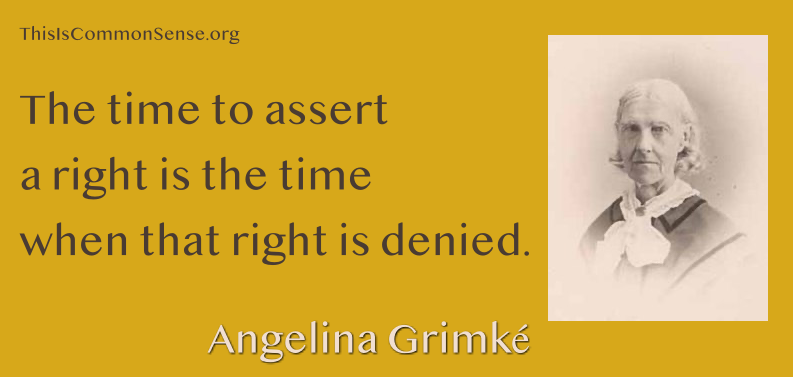
The time to assert a right is the time when that right is denied.

Angelina Grimké, Pastorial Letter, as quoted in Stephen H. Browne (January 1, 2012). Angelina Grimke: Rhetoric, Identity, and the Radical Imagination. MSU Press. p. 128..
Categories
Today

The XXIInd!

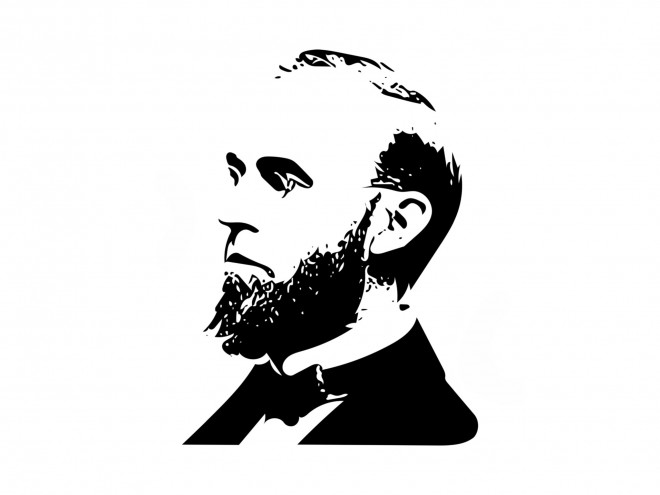
On February 27, 1830, American economist and free trade advocate Arthur Latham Perry (pictured above) was born.


The Twenty-second Amendment (Amendment XXII) of the United States Constitution, which sets a term limit for election and overall time of service to the office of President of the United States, was ratified by the requisite 36 of the then-48 states of the union on February 27, 1951.

Congress had passed the amendment on March 21, 1947.