A hallucination is a fact, not an error; what is erroneous is a judgment based upon it.
Bertrand Russell, On the Nature of Acquaintance: Neutral Monism (1914).
Categories
Bertrand Russell
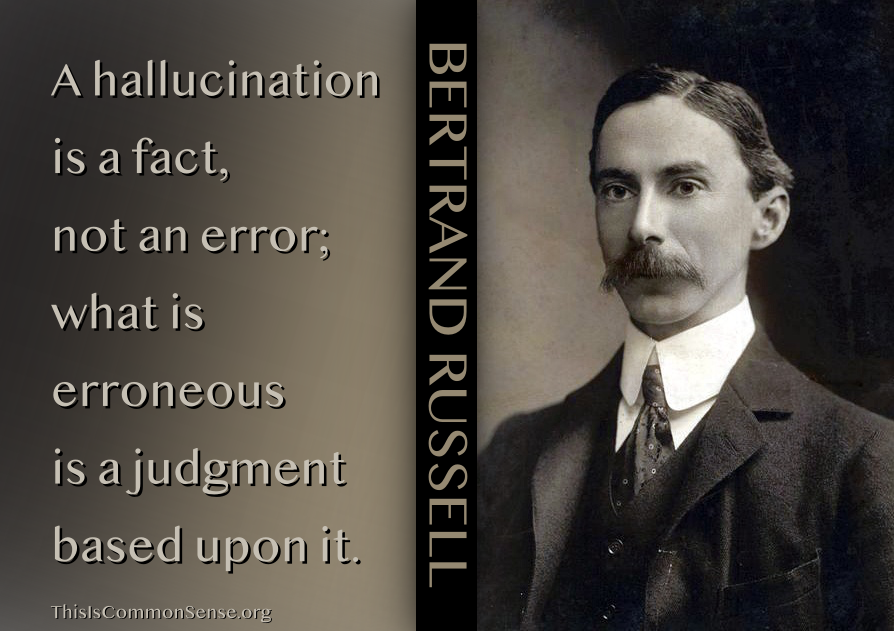
A hallucination is a fact, not an error; what is erroneous is a judgment based upon it.
Bertrand Russell, On the Nature of Acquaintance: Neutral Monism (1914).
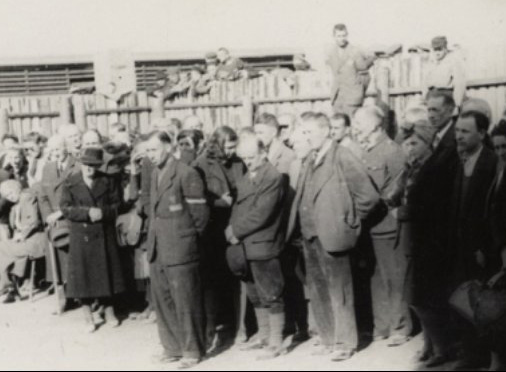
On April 11, 1945, the American Third Army liberated the Buchenwald concentration camp, near Weimar, Germany, a camp that would later be judged second only to Auschwitz in the horrors it imposed on its prisoners.
Among those in the camp saved by the American soldiers was Elie Wiesel, who would go on to win the Nobel Peace Prize in 1986.
Shown in photograph: German citizens ushered to the camp by American soldiers, post-conquest.
Obviously, this would be an attempt to foist a package deal consisting of unrelated or mutually contradictory elements.
Consider a more true-to-life example.
In the Wall Street Journal, Philip Hamburger argues that a congressional bill targeting TikTok would do much more than counter Chinazi spying on Americans (“The TikTok Bill Is a Sneak Attack on Free Speech”).
If curbing or even outlawing TikTok were the sole focus, one could argue the merits of the legislation given what is known about the company’s collecting of data and its relationship with the Chinese government. There’s no free-speech protection of foreign espionage.
However, as Hamburger points out, the bill gives the federal government “sweeping power over communications” and could be used to stifle speech protected by the Constitution.
The proposed statute would allow the Department of Commerce to undertake open-ended mitigation of “undue or unacceptable” risk regarded as arising from use of communications technology in which any entity subject to the jurisdiction of a foreign adversary “has any interest.”
This is very vague and very all-encompassing. The legislation thus confers power over domestic communication companies “that could be used to extort their cooperation in censorship.”
Attempts to resist such “mitigation” or censorship would risk administrative fines of $250,000, criminal penalties of $1 million, two decades in prison. For supporting freedom of speech?
Please walk away from this, Congress.
This is Common Sense. I’m Paul Jacob.
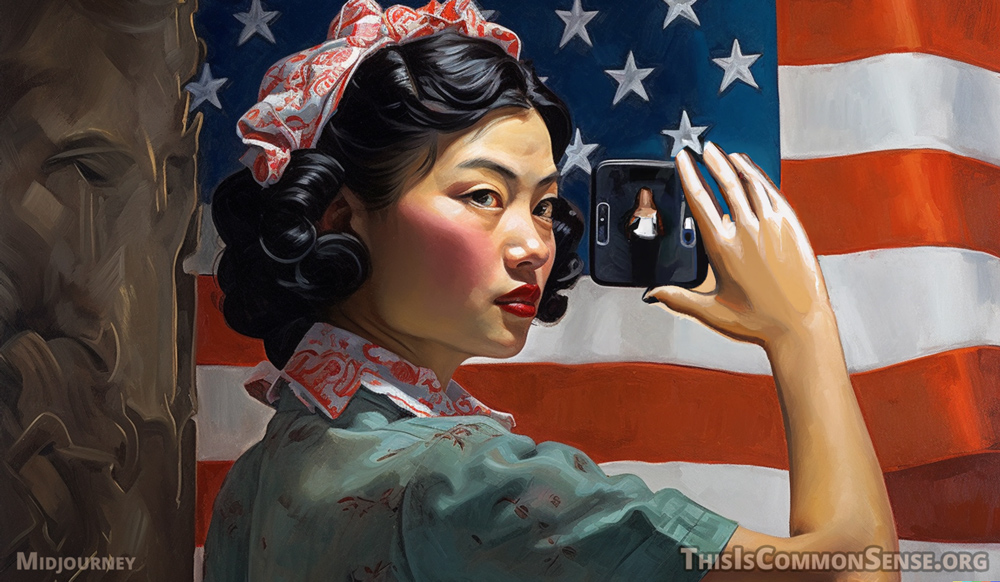
Illustration created with Midjourney / DALL-E2
See all recent commentary
(simplified and organized)
See recent popular posts
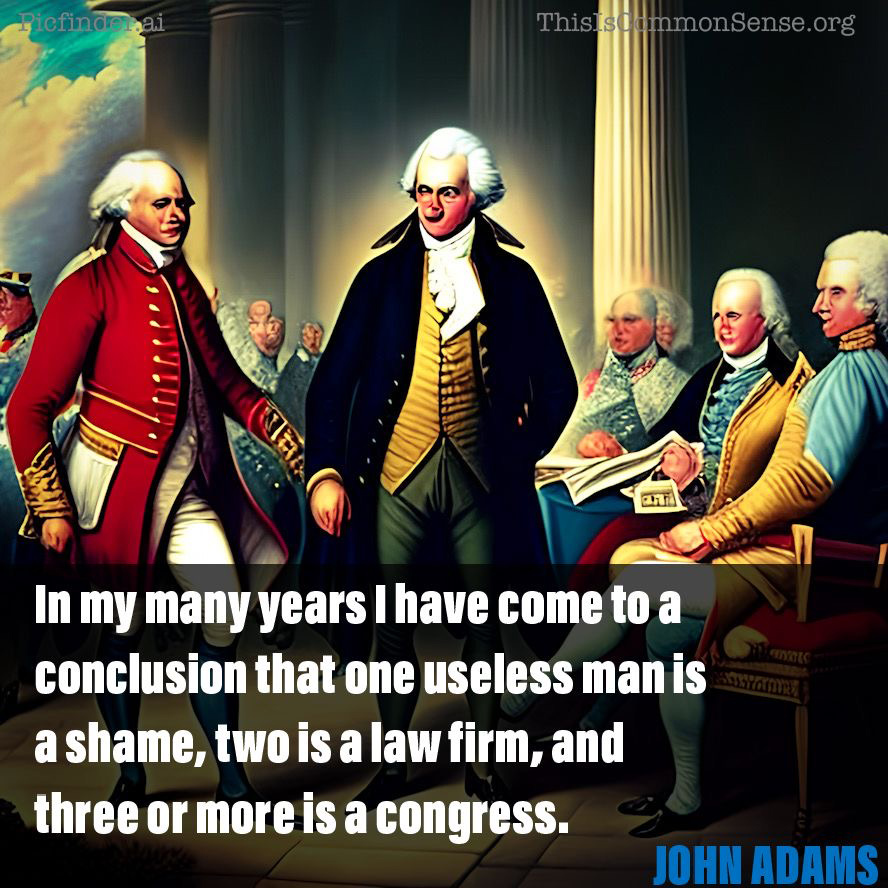
In my many years I have come to a conclusion that one useless man is a shame, two is a law firm, and three or more is a congress.
John Adams, as quoted in Thomas F. Shubnell, Greatest Jokes of the Century Book 22 (2008).

On April 10, 1998, the Northern Ireland peace talks ended with an historic agreement, dubbed the Belfast, or Good Friday Agreement. The accord was reached after nearly two years of talks and 30 years of conflict.
The agreement was approved by voters across the island of Ireland in two referendums held on May 22, 1998. The agreement came into force on December 2, 1999.
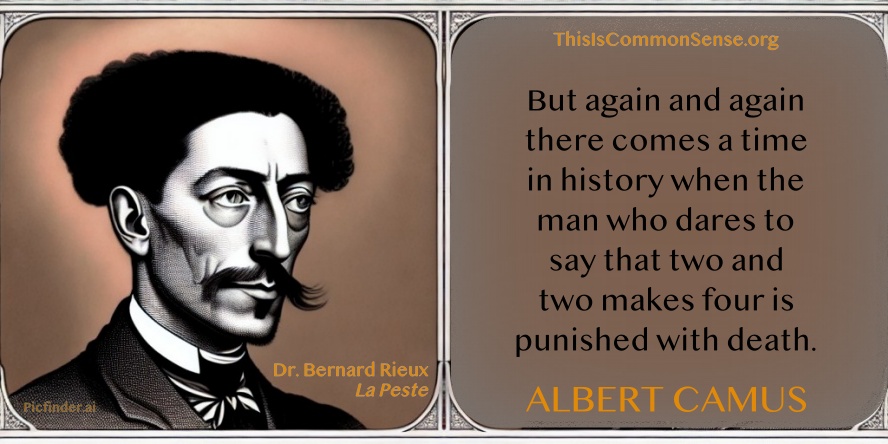
But again and again there comes a time in history when the man who dares to say that two and two makes four is punished with death.
Dr. Bernard Rieux in Albert Camus’s La Peste (The Plague, 1947).
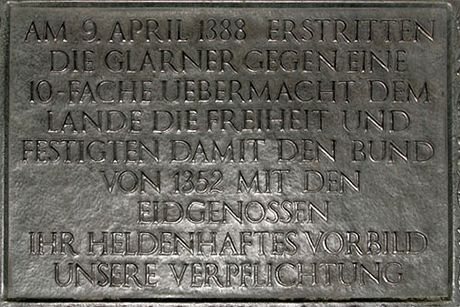
Despite being outnumbered 16 to one, forces of the Old Swiss Confederacy proved victorious over the Archduchy of Austria in the Battle of Näfels, April 9, 1388.
On this date in 1991, Georgia declared its independence from the Soviet Union.
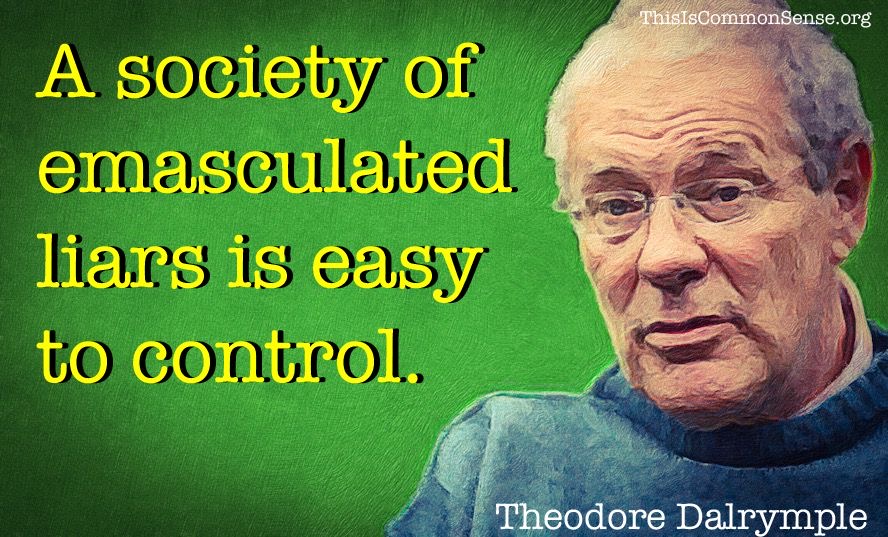
Political correctness is communist propaganda writ small. In my study of communist societies, I came to the conclusion that the purpose of communist propaganda was not to persuade or convince, nor to inform, but to humiliate; and therefore, the less it corresponded to reality the better. When people are forced to remain silent when they are being told the most obvious lies, or even worse when they are forced to repeat the lies themselves, they lose once and for all their sense of probity. To assent to obvious lies is to co-operate with evil, and in some small way to become evil oneself. One’s standing to resist anything is thus eroded, and even destroyed. A society of emasculated liars is easy to control. I think if you examine political correctness, it has the same effect and is intended to.
Theodore Dalrymple, in “Our Culture, What’s Left Of It,” by Jamie Glazov, FrontPage Magazine, August 31, 2005.
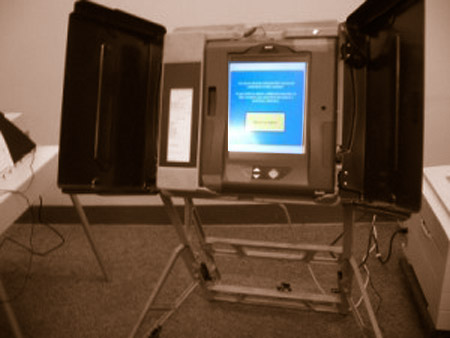
On April 8, 1913, the 17th amendment to the Constitution, providing for the popular election of U.S. senators, was ratified.
Speaking on a panel on Election Systems Reform, I highlighted the rhetoric of expanding voting rights. For example, the New York City Council decided to swell those rights by giving non-citizens the vote — even while a solid majority of New Yorkers were opposed. Recently Washington, D.C.’s Council bestowed local voting rights to people in the city (and country) illegally, as well as to foreign nationals working for foreign governments at the city’s many foreign embassies.
Allowing the staff at the Chinese and Russian embassies to cast ballots is clearly an expansion of voting rights. But does it make sense?
I also pointed out that making it easier to vote by having, say, six weeks of early voting (as we do in my home state of Virginia) comes with a cost: more expensive campaigns. And anything that increases the price tag of running for office decidedly benefits incumbents.
My key message, however, was this: In a representative democracy, even if the rules and mechanics of the election process are spectacular, we still need someone to vote for, someone to actually represent us.
Making it easier or more efficient or transparent to go through the frustration and angst of our current contests between candidates Bad and Worse, both soon to be bought off, seems of limited appeal.
The change that would best overcome big money political influence and provide real representation to citizens — improving both elections and governance — is simple: a far smaller ratio of citizens to elected representatives.
Stephen Erickson, executive director of Citizens Rising, specifies “small political districts of 30,000 inhabitants or less, at all levels of government throughout the United States.” Compare that to the average of over 700,000 people in today’s congressional districts.
The audience seemed to think this “Small District Democracy” made common sense.
I’m Paul Jacob. And I think it is the very best reform we could make.
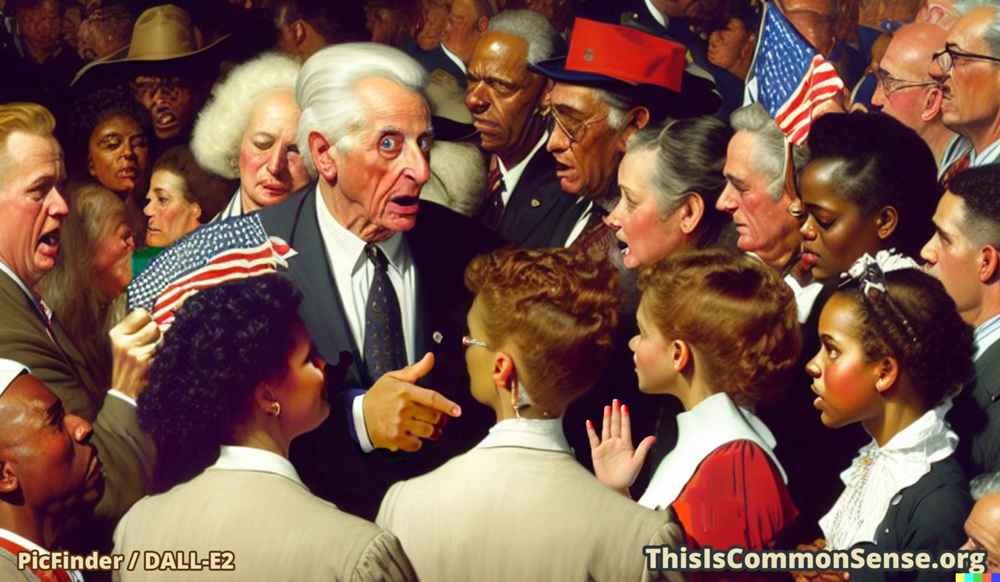
Illustration created with PicFinder.ai and DALL-E2
See all recent commentary
(simplified and organized)
See recent popular posts