On May 28, 1952, the women of Greece gained the right to vote.
Categories
Greek voters

On May 28, 1952, the women of Greece gained the right to vote.

The week ended on a slightly depressing note. So we bring on the levity. And Richard Nixon, who’s always good for a laugh.
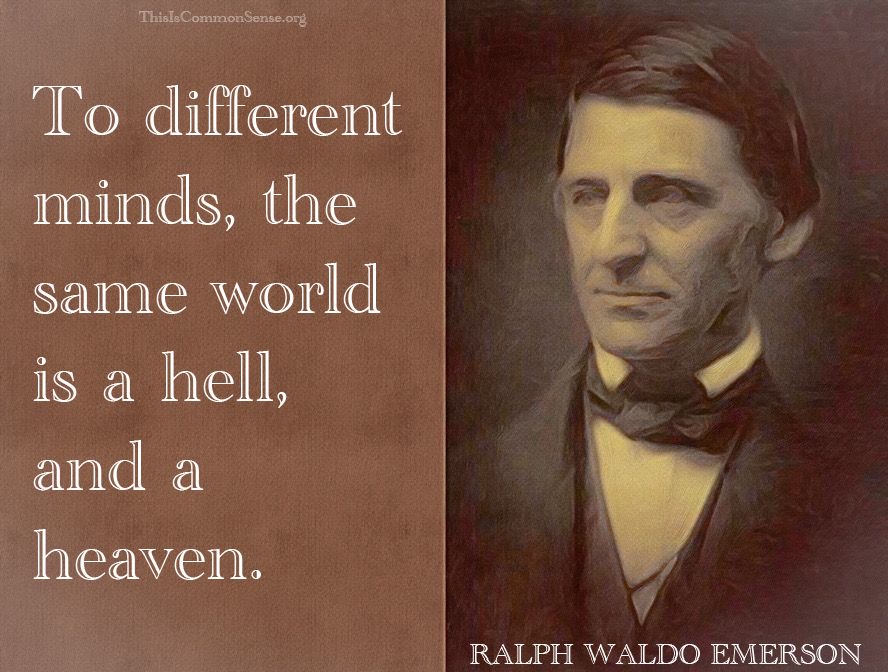
To different minds, the same world is a hell, and a heaven.
Ralph Waldo Emerson, Journal, December 20, 1822.

On May 27, 1860, Giuseppe Garibaldi began his attack on Palermo, Sicily, as part of the Italian unification.
In 1927 on this date in May, the Ford Motor Company ceased manufacture of the Ford Model T (pictured above), the last of this model coming off the line the day previous. Over 16 million Model T Fords had been sold; it was a world-transformative product. On the 27th, the company began to retool plants to make the Ford Model A.
Exactly 70 years later, the U.S. Supreme Court ruled that Paula Jones could pursue her sexual harassment lawsuit against President Bill Clinton while he was in office.
In 2015 on the 27th of May, the commercial space company SpaceX was approved as a contractor to the U.S. military for satellite launches; SpaceX has since led the world in its use of

“‘This link works,’ Biden posted on his Twitter account,” The Epoch Times attempted to regale us, “sharing a link to a donation page for his campaign as the DeSantis team and Twitter owner Elon Musk struggled to resolve the glitches plaguing their scheduled Twitter Spaces interview.”
But the worst was also from The Biden — nobody believes that Joe himself is in charge of his own Twitter account — in which a few “positions” of DeSantis received mockery, leading popular YouTuber/Rumblist Viva Frei to respond with “Is this really the best you could piece together? You couldn’t fragment the sentences more if you tried. Pathetic.”
And that’s really where we’re at. Newscasters and the Twitterati made much of the Twitter Space glitch, but not even Donald Trump, Jr., with his hashtag “#DeSaster,” did much more than weakly echo his father’s heyday on Twitter.
This is not 2016.
Everybody seems tired.
There are a number of challengers, already, in the running to oust feeble Joe Biden. Donald Trump himself, of course, and now Ron DeSantis, whom we are told runs a distant second to the former president. Neither man seems likely to reach beyond the conservative half of the electorate. Only Robert F. Kennedy, Jr., a Democrat, offers much “newness,” and he’s afflicted by a hard-to-listen-to cracked voice: spasmodic dysphonia, “a specific form of an involuntary movement disorder called dystonia that affects only the voice box.”
Metaphor for the race so far? There’s a lot of “dys” in the tone of our times, but it’s just not very profound. If the future weren’t at stake, one wouldn’t even bring it up.
This is Common Sense. I’m Paul Jacob.
Illustration created with PicFinder.ai and DALL-E2
See all recent commentary
(simplified and organized)
See recent popular posts

I don’t think politicians are natural crooks. . . . I think they are actors. And actors are neither men nor women. Actors belong to a third sex. Actors are actors, and one aspect of it is the political game. But that kind of acting is not lying, as long as it refers to, and reflects, and exalts the essential commonly held ideals of a culture.
Orson Welles, in conversation with Michael Parkinson (BBC, 1974).
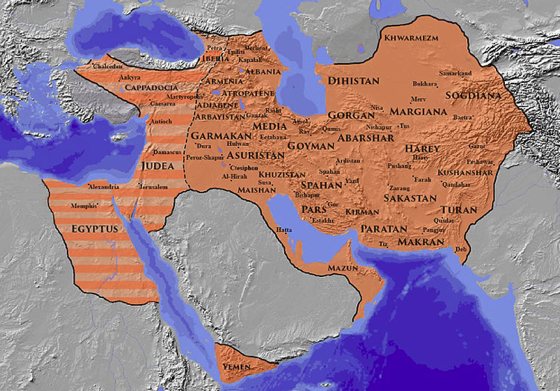
On May 26, 451, the Sassanid Empire defeated the Armenians at the battle of
On May 26, 1328, scholastic philosopher and Franciscan friar William of Ockham and other Franciscan leaders secretly exited Avignon, fearing a death sentence from Pope John XXII. On the same day in 1538, the city of Geneva expelled John Calvin and his followers, who headed to exile in Strasbourg.

Democrats have succeeded by pushing “victimhood,” gaining power by focusing on special groups, declaring them oppressed and offering compensation — though still never comes the day of full escape from the burden of this oppression.
Many stories of oppression are true.But no sized sliver of truth can guarantee that compensation attempts will redound to the liberation of the aggrieved.
California’s Democrats will face this soon.
Over slavery! And racism.
Never a slave state, California has been flirting, officially, with reparations. Several cities have “explored” the idea. An official “Reparations Task Force,” established by state law, has recommended a formal apology for slavery (in other states, over a hundred-and-fifty years ago). It’s also talking about giving away hundreds of billions of dollars in compensation to Black Californians, descendants of slaves or not.
The task force is scheduled to make explicit and detailed recommendations — on July 1.
Which puts Democrats on the spot.
Powerful Democrats such as Governor Gavin Newsom. Considered a rising presidential aspirant should the current 82-year-old decide not to run again, Newsom signed the law to officially look at reparations . . . but then seemed less than fond of the price-tag. More than twice the yearly state budget!
Now the governor is keeping his mouth shut awaiting the final report.
And, as George Skelton at the L.A. Times asks, then what? Well, that is when “the governor and lawmakers will need to emerge from cover, face the public and devise a better response.”
But up until July they can still pretend.
Then, Democrats will have to face the reparations issue squarely — and in the context of the complete failure of their state, the blame for which they cannot place upon Republicans, much less long-dead racist slave-owners.
This is Common Sense. I’m Paul Jacob.
Illustration created with PicFinder.ai and DALL-E2
See all recent commentary
(simplified and organized)
See recent popular posts

Even when you have a president who you know would like to fix the vote, or whatever, there is a lot of checks and balances. But what happens when the CIA is interfering in elections? There’s no checks and balances. That is a real threat to American democracy.
Robert F. Kennedy, Jr., talking to comedian Dave Smith on the Part of the Problem podcast.

May 25, 1818, the Swiss historian and academic Jacob Burckhardt was born. Burckhardt’s best-known work is The Civilization of the Renaissance in Italy (1860), but is remembered here as the author of Reflections on History (1905).
Burckhardt died on August 8, 1897.