Categories
First Amendment rights general freedom judiciary too much government

Hollowed-Out America

While Supreme Court Justice Neil Gorsuch’s comments in Arizona v. Mayorkas are worth studying in full — the case is about immigration — his thoughts on the late pandemic panic stand out.

“Since March 2020,” Justice Gorsuch writes, “we may have experienced the greatest intrusions on civil liberties in the peacetime history of this country. Executive officials across the country issued emergency decrees on a breathtaking scale. Governors and local leaders imposed lockdown orders forcing people to remain in their homes,” and the judge goes through a long list of decrees, including:

  • Closing churches but not casinos
  • Threatening violators with both civil penalties and criminal sanctions
  • Surveilling church parking lots, recording license plates, and issuing warnings against attending even outdoor services.

And he adds that the federal government got in on the tyrannies.

“Fear and the desire for safety are powerful forces,” he notes. “They can lead to a clamor for action — almost any action — as long as someone does something to address a perceived threat.” Gorsuch acknowledges this is not exactly a revelation: “Even the ancients warned that democracies can degenerate toward autocracy in the face of fear.”

There is a deeper problem, though, for the “concentration of power in the hands of so few may be efficient and sometimes popular. But it does not tend toward sound government.”

All the way through the pandemic, and even now, we have been barraged by messages about “misinformation and disinformation” about the disease and the treatments (proactive and reactive) against it. And the people in power — bureaucrats as well as politicians — were called “experts” while actual experts (along with earnest amateurs) were hounded, their ideas suppressed. 

Now we know that much of what was then held as good information was in error, even lies. 

Very unsound governance: Gorsuch characterizes it “a shell of a democracy.” 

“Hollow.”

This is Common Sense. I’m Paul Jacob.

PDF for printing

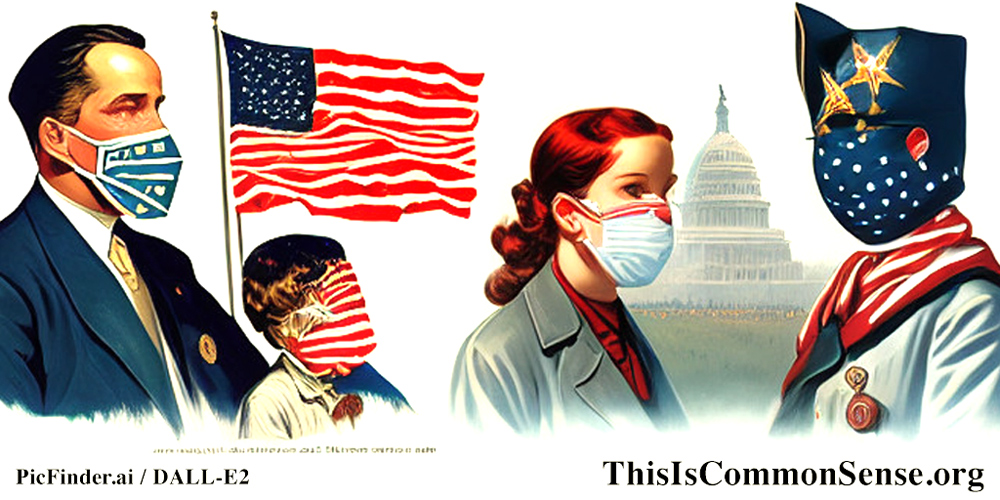
Illustration created with PicFinder.ai and DALL-E2

See all recent commentary
(simplified and organized)
See recent popular posts
Categories
Thought

Jordan Peterson

on the usual excuse of radical socialists:

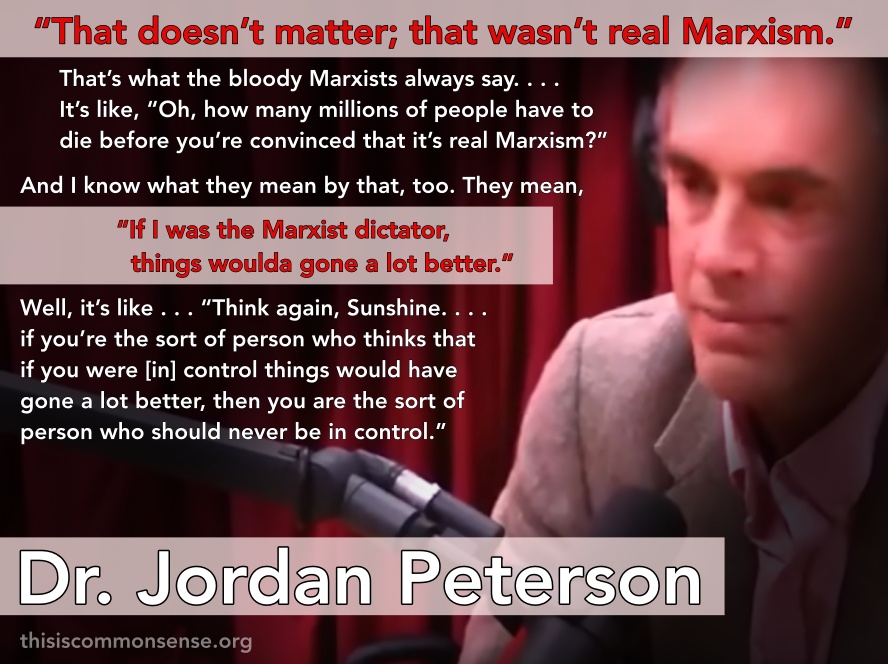
“That doesn’t matter; that wasn’t real Marxism.”

That’s what the bloody Marxists always say. . . . It’s like, “Oh, how many millions of people have to die before you’re convinced that it’s real Marxism?”

And I know what they mean by that, too. They mean,

“If I was the Marxist dictator, things woulda gone a lot better.”

Well, it’s like . . . “Think again, Sunshine. . . . if you’re the sort of person who thinks thatif you were [in] control things would have gone a lot better, then you are the sort of person who should never be in control.”

Jordan Peterson to Joe Rogan, on Rogan’s podcast, The Joe Rogan Experience.

Categories
Today

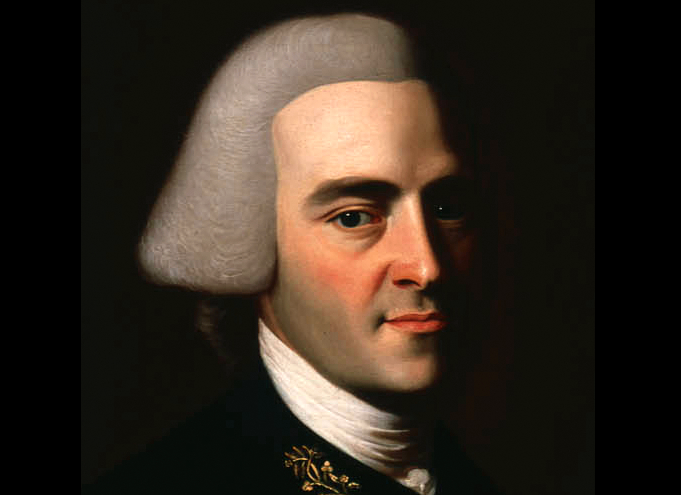
John Hancock

On May 24, 1775, John Hancock was elected president of the Second Continental Congress.

Hancock’s involvement with Samuel Adams and his radical group, the Sons of Liberty, won the wealthy merchant the dubious distinction of being one of only two Patriots (the other being Sam Adams) that the Redcoats marching to Lexington in April 1775 to confiscate Patriots’ arms were ordered to arrest. When British General Thomas Gage offered amnesty to the colonists holding Boston under siege, he excluded those same two men from his offer.

Categories
national politics & policies too much government

Survival Requirements

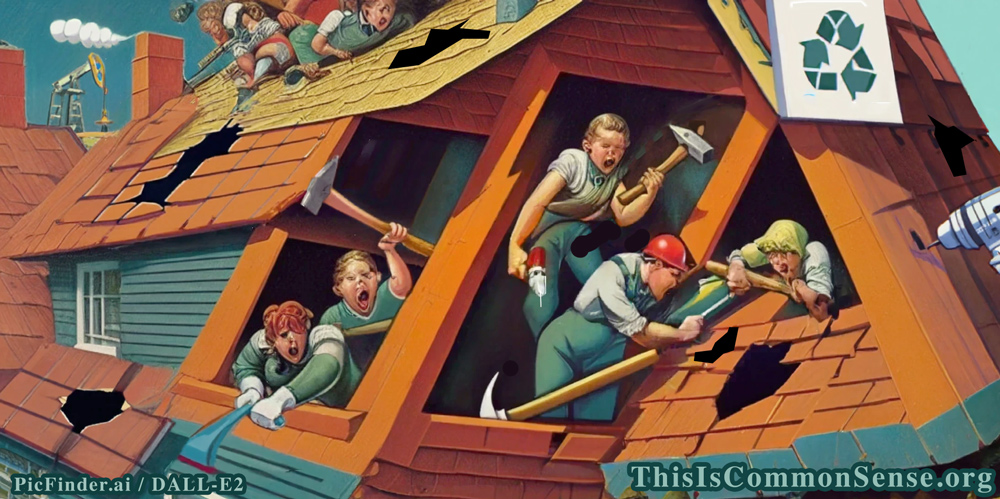
Suppose you have a roof. Now you punch holes in the roof. The next time it rains, do the holes help or hurt? You’ve still got a roof, right? Mostly?

Actually, it’s bad to have holes in your roof. And the more holes you have, the worse it gets.

I elaborate this object lesson not primarily for you and your common-sensical friends, but to those determined to make it ever-harder for us to provide ourselves with food, clothing, and shelter by progressively crippling our means of doing so.

Example? The Environmental Protection Agency is trying to kill uninterrupted generation of power in the United States.

New rules the EPA has proposed would require plants powered by coal or gas to eliminate almost all of their carbon emissions by 2040. The plants would have to shut down or switch to less reliable sources of electricity like the sun (unhelpful when it’s cloudy or post-sunset), wind (unhelpful when there’s no wind), and wishful thinking (never helpful).

Fossil-fueled power plants provide some 60 percent of production of electricity in the country. Jim Matheson, head of National Rural Electric Cooperative Associations, warns that the EPA rules would put the reliability of the power grid at risk.

Yes. Rolling blackouts currently the norm in a few states especially plagued by anti-energy policies would become the norm throughout the country.

Like us, proponents of such policies may already know that deliberately creating shortages of energy is bad. 

Unlike us, though, they may think that others, and not themselves, will bear the brunt of the downpour.

This is Common Sense. I’m Paul Jacob.


PDF for printing

Illustration created with PicFinder.ai and DALL-E2

See all recent commentary
(simplified and organized)
See recent popular posts
Categories
Thought

J. S. Mill

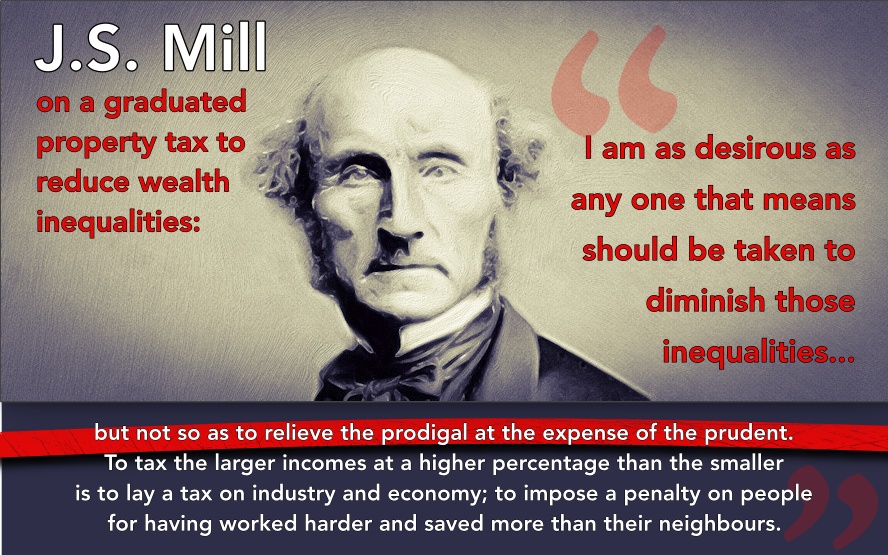
Both in England and on the Continent a graduated property tax (l’impôt progressif) has been advocated, on the avowed ground that the state should use the instrument of taxation as a means of mitigating the inequalities of wealth. I am as desirous as any one that means should be taken to diminish those inequalities, but not so as to relieve the prodigal at the expense of the prudent. To tax the larger incomes at a higher percentage than the smaller is to lay a tax on industry and economy; to impose a penalty on people for having worked harder and saved more than their neighbours.

John Stuart Mill, Principles of Political Economy (1848), Book V, Chapter II.
Categories
Today

The Liberator

On May 23, 1788, South Carolina became the 8th state to ratify the U.S. Constitution.

Other May 23 events include:

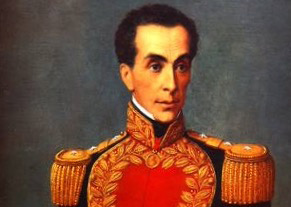
* 1813: South American independence leader Simón Bolívar (portrait, above) entered Mérida, where he was proclaimed El Libertador (“The Liberator”), leading the invasion of Venezuela.

* 1900: Sergeant William Harvey Carney became the first African American to be awarded the Medal of Honor, for his heroism in a Civil War battle fought 37 years prior, in 1863.

* 1958: Birthday of American comedian and game show host Drew Carey.

Categories
First Amendment rights general freedom ideological culture

No Laughing Matter

Without freedom of speech, the jester’s art can be perilous.

Chinese comedian Li Haoshi, who performs under the name House, recently did stand-up comedy at a Beijing club, after which, reports Reuters, “an audience member posted online a description of a joke he had made . . . describing it as demeaning to China’s People’s Liberation Army (PLA).”

That went viral on Chinese social media.

“In the joke,” Reuters explains, “Li recounted seeing two stray dogs he had adopted chase a squirrel and said it had reminded him of the phrase ‘have a good work style, be able to fight and win battles,’ a slogan Chinese President Xi Jinping used in 2013 to praise the PLA’s work ethic.”

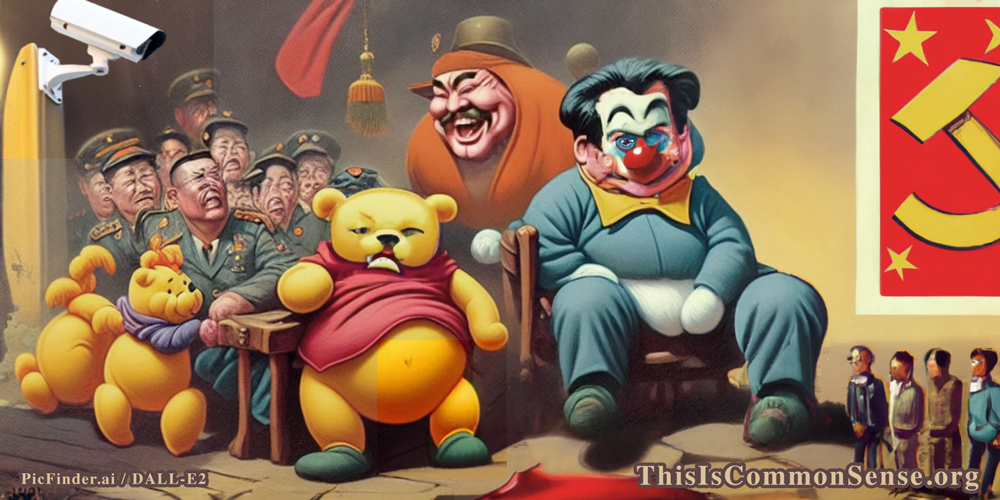
Not exactly a ripsnorter, it is hardly biting satire, either — after all, Li steered clear of any mention of Winnie the Pooh.

But no matter. Next thing the funny man’s employer knew, “China’s Ministry of Culture and Tourism Bureau said it would fine Shanghai Xiaoguo Culture Media Co 13.35 million yuan and confiscate 1.35 million yuan in ‘illegal gains’ from the firm.”

That’s a cool $2 million U.S. for the ever-so specific crime of “harming society.”

“In response to the fine, Xiaoguo Culture . . . said it had terminated Li’s contract,” and, for good measure if you are a totalitarian, Reuters adds that “Weibo appears to have banned him from posting to his account there.”

“We will never allow any company or individual [to] use the Chinese capital as a stage to wantonly slander the glorious image of the PLA,” declared China’s cultural ministry.

Suffice it to say, China isn’t currently known for its comedy. 

And won’t be until more people perform their own stand-up act.

This is Common Sense. I’m Paul Jacob.


PDF for printing

Illustration created with PicFinder.ai and DALL-E2

See all recent commentary
(simplified and organized)
See recent popular posts
Categories
Thought

Aristotle

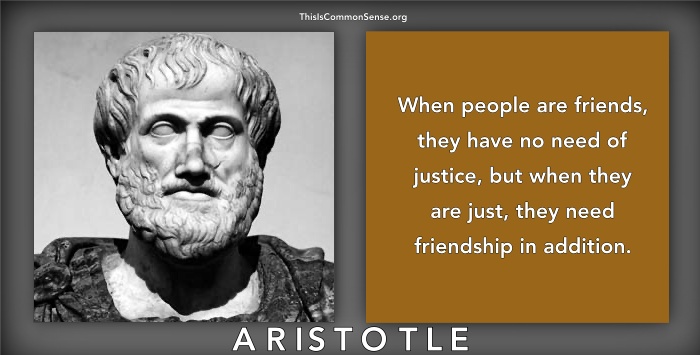
When people are friends, they have no need of justice, but when they are just, they need friendship in addition.

Aristotle, Politics, Book Eight.
Categories
Today

U.S. Term Limits v. Thornton

On May 22, 1995, in U.S. Term Limits v. Thornton, the U.S. Supreme Court struck down Arkansas’s congressional term limits law, 5-4, overturning the congressional term limits then the law in 23 states: Arizona, Arkansas, California, Colorado, Florida, Idaho, Louisiana, Maine, Massachusetts, Michigan, Missouri, Montana, Nebraska, Nevada, New Hampshire, North Dakota, Oklahoma, Ohio, Oregon, South Dakota, Utah, Washington and Wyoming.

Other May 22 events include

  • 1856: South Carolina Congressman Preston Brooks savagely beat Massachusetts Senator Charles Sumner in the halls of Congress as tensions rise over the expansion of slavery. Sumner did not return to the Senate for three years while he recovered.
  • 1848: Slavery was abolished in Martinique.
  • 1807: A grand jury indicted former Vice President of the United States Aaron Burr on a charge of treason. Burr (in portrait, above) was later acquitted.
Categories
video

Watch: The Hong Konger

No podcast this weekend, but — apropos of Thursday’s commentary, “A Life of Meaning” — please give The Hong Konger: Jimmy Lai’s Extraordinary Struggle for Freedom a look. You will be glad you did.