Categories
Thought

Gore Vidal

The folly of the clever is always more than that of the dull.

Gore Vidal, Julian (1964).
Categories
Today

Nineteen Eighty-Four

On June 8, 1949, George Orwell’s dystopian novel Nineteen Eighty-Four was published.

Categories
education and schooling general freedom media and media people

People Lover

Steven Mosher loves people.

Mosher is a student of China who, according to the bio at his Population Research Institute website, pop.org, “has worked tirelessly since 1979 to fight coercive population control programs. . . .”

In 1979, the Chinese government let him pursue research in a village where he observed many instances of compulsory abortions under the country’s one-child policy. Some of the women were in their eighth or ninth month of pregnancy.

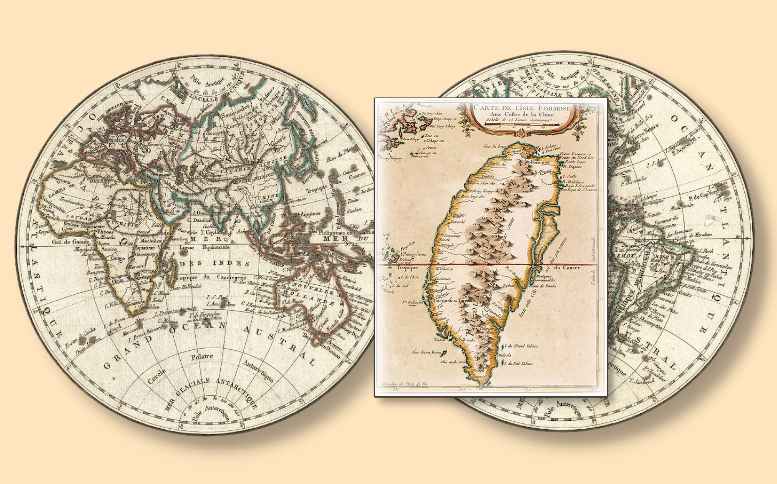
Perhaps the Chinese government expected Mosher to produce rosy-eyed, footnoted rationalizations of what he saw. When he published his unvarnished findings in a Taiwanese magazine, officials complained to the U.S. Embassy and to Stanford University.

Stanford appeased China by denying Mosher his PhD. I note the university’s injustice in part because Mosher tends to omit this detail. But it should not be forgotten.

Back then, he said he “did what was right to do. I told the truth.”

He opposes population control because, in his view, people are a good thing, not a bad thing.

This viewpoint is beautifully conveyed in a video on the pop.org home page, in which Mosher says that people “are the ultimate resource, the one resource that you cannot do without.” The Institute works to expose “the myth of overpopulation” and the violations of human rights that occur in the name of population control.

The prolific scholar argues that people “can become the agents of their own development without having to sacrifice their children in the process.”

My wife and I glad to hear it. We’ll let the kids know.

This is Common Sense. I’m Paul Jacob.


PDF for printing

Illustration created with PicFinder.ai and DALL-E2

See all recent commentary
(simplified and organized)
See recent popular posts
Categories
Thought

Karl Kraus

It is better not to express what one means than to express what one does not mean.

Karl Kraus, as quoted in Half-Truths and One-And-A-Half Truths: Selected Aphorisms (1976) as translated by Harry Zohn.
Categories
Today

Founders, Fathers

On June 7, 1776, Richard Henry Lee presented the “Lee Resolution” to the Continental Congress. The motion was seconded by John Adams, but was tabled for several weeks. The motion was finally passed on July 2, 1776.

During the 1916 Republican National Convention (June 7 – 10), Senator Warren G. Harding used the phrase “Founding Fathers” in his keynote address . . . and would go on using it in speeches thereafter. It caught on as a eulogistic way to refer to figures such as Thomas Jefferson and, yes, Richard Henry Lee, who orchestrated the American colonies’ break from England’s imperial monarchy.

Categories
media and media people national politics & policies

He Is the Eggman

Humpty Dumpty was a good egg. 

Well, that’s what we tend to think, but the original nursery rhyme doesn’t specify an eggman (goo goo g’joob) at all. And says nothing about his character. 

All the rhyme says? He had a great fall, and the king’s forces — masculine and equine — couldn’t make him whole.

This was brought to mind with yet another pratfall by President Joseph Robinette Biden, Jr., along with yet another stream of journalistic puffery trying to make the octogenarian seem like a good egg — and the falls insignificant.

That was the general tenor of Adele Suliman’s Washington Post article, “Biden isn’t the only politician to fall: Why we can’t look away,” last Friday. Ms. Suliman provides a history of stumbling pols, which she relates to Biden’s most recent tumble, at the Air Force Academy after his commencement speech.

But it’s the New York Times that went all out, with four authors explaining our shared Biden moment: “The two Joe Bidens coexist in the same octogenarian president: Sharp and wise at critical moments, the product of decades of seasoning, able to rise to the occasion even in the dead of night to confront a dangerous world.”

Yet, also, Biden’s “a little slower, a little softer, a little harder of hearing, a little more tentative in his walk, a little more prone to occasional lapses of memory in ways that feel familiar to anyone who has reached their ninth decade or has a parent who has.”

The article has been roundly ridiculed, but the problem is, if anything, underplayed. 

Now is not the time to be worrying about an eggman president.

It’s our eggshell republic that should be on our minds.

Goo goo g’joob.

This is Common Sense. I’m Paul Jacob.


PDF for printing

Illustration created with PicFinder.ai and DALL-E2

See all recent commentary
(simplified and organized)
See recent popular posts
Categories
Thought

H. L. Mencken

The only good bureaucrat is one with a pistol at his head. Put it in his hand and it’s good-bye to the Bill of Rights.

H. L. Mencken, On Politics: A Carnival of Buncombe (1920-1936), p. 279.
Categories
Today

Two Philosophers, Many Concepts

June 6 marks major life events of two eminent British philosophers, Jeremy Bentham’s death* (1832) and Isaiah Berlin’s birth (1909).

Bentham was known as a “philosophical radical” and a major influence on the British utilitarian tradition. He authored numerous books, including Defence of Usury (1787) and An Introduction to the Principles of Morals and Legislation (1789). Bentham started out advocating for laissez faire, became obsessed with his own specially designed prison design, the Panopticon, and argued for feminism and animal rights in public but kept his defense of homosexual rights private, to be published long after his death. His treatise on ethics, Deontology: Or, the Science of Morality, in Which the Harmony and Co-incidence of Duty and Self-Interest, Virtue and Felicity, Prudence and Benevolence, Are Explained and Exemplified, was published from his manuscripts two years after his death.

Berlin was best known for several dozen brilliant essays, including the famous, much-quoted “The Hedgehog and the Fox” (a study of Leo Tolstoy) and “Two Concepts of Liberty.”


* Pictured is his remains as housed in a special “closet” in the London Academy. Bentham specified this in his will, and he called this manner of posthumous presentation an “auto-icon.”

Categories
general freedom international affairs

Look Around

Yesterday marked the 34th anniversary of the Tiananmen Square massacre. Not in China, where the Communist Party (CCP) has always clubbed down any public remembrance of the thousands murdered on that day by the bullets from the so-called People’s Liberation Army. 

While Hong Kong long witnessed massive June 4 vigils — even under COVID restrictions — that changed after the draconian National Security Law in 2020. Still, this year public silence required the Chinazis to arrest more than 30 Hong Kongers, some for “suspicion of carrying out acts with seditious intent.”

Seems our “leaders” quite quickly forgot about the Butchers of Beijing . . . and only now are waking up to the threat the CCP poses via their embrace of totalitarianism, their military build-up, the biggest since World War II, and their claims to Taiwan as well as the entire South China Sea.

“China has been bullying its neighbors for years,” explains Chris Chappell, host of China Uncensored on Rumble, before adding: “Now its bullying is coming back to bite it.”

Chappell notes that “[e]ven countries that kinda hate each other, like Japan and South Korea, have been teaming up because of the China threat.”

Mr. Chappell offers:

  • “Thanks to China, last year Japan announced a plan to double its military budget.”
  • South Korean President Yoon Suk Yeol recently called Taiwan “a global issue” and joined President Biden in “[opposing] any unilateral attempts to change the status quo.”
  • “Australia is beefing up its military — specifically in response to China.”
  • “The Philippines . . . has moved back to closer ties with the United States, allowing the U.S. to expand its military presence there.” 
  • “India is also increasing its defense budget.”

This allied response has been spurred not by U.S. arm-twisting, but good old-fashioned fear. 

Chappell also applauded open collaboration with the U.S. and NATO by South Korea, Japan, Australia, and New Zealand. But he dubbed NATO’s declaration of China as “a security challenge” “the understatement of the year.”

Attested by the weekend’s near collision of Chinese and U.S. naval vessels in the Taiwan Strait.

This is Common Sense. I’m Paul Jacob. 


Note: China Uncensored also plays on YouTube, but, as Chappell complains, “YouTube frequently demonetizes, suppresses, and secretly unsubscribes people from this channel.” 

PDF for printing

Illustration created with PicFinder.ai / DALL-E2

See all recent commentary
(simplified and organized)
See recent popular posts
Categories
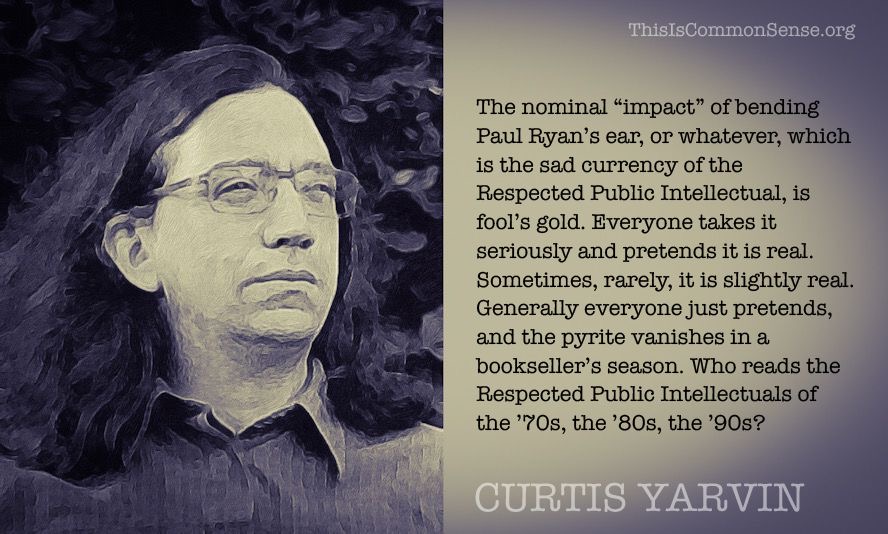
Thought

E. O. Wilson

The real problem of humanity is the following: we have paleolithic emotions; medieval institutions; and god-like technology. 

Edward Osborne Wilson, as quoted in Harvard Magazine from a public discussion between Wilson and James Watson moderated by NPR correspondent Robert Krulwich, September 10, 2009.